





 Portuguese
  English
  Spanish
 5 min of reading
  1 comment


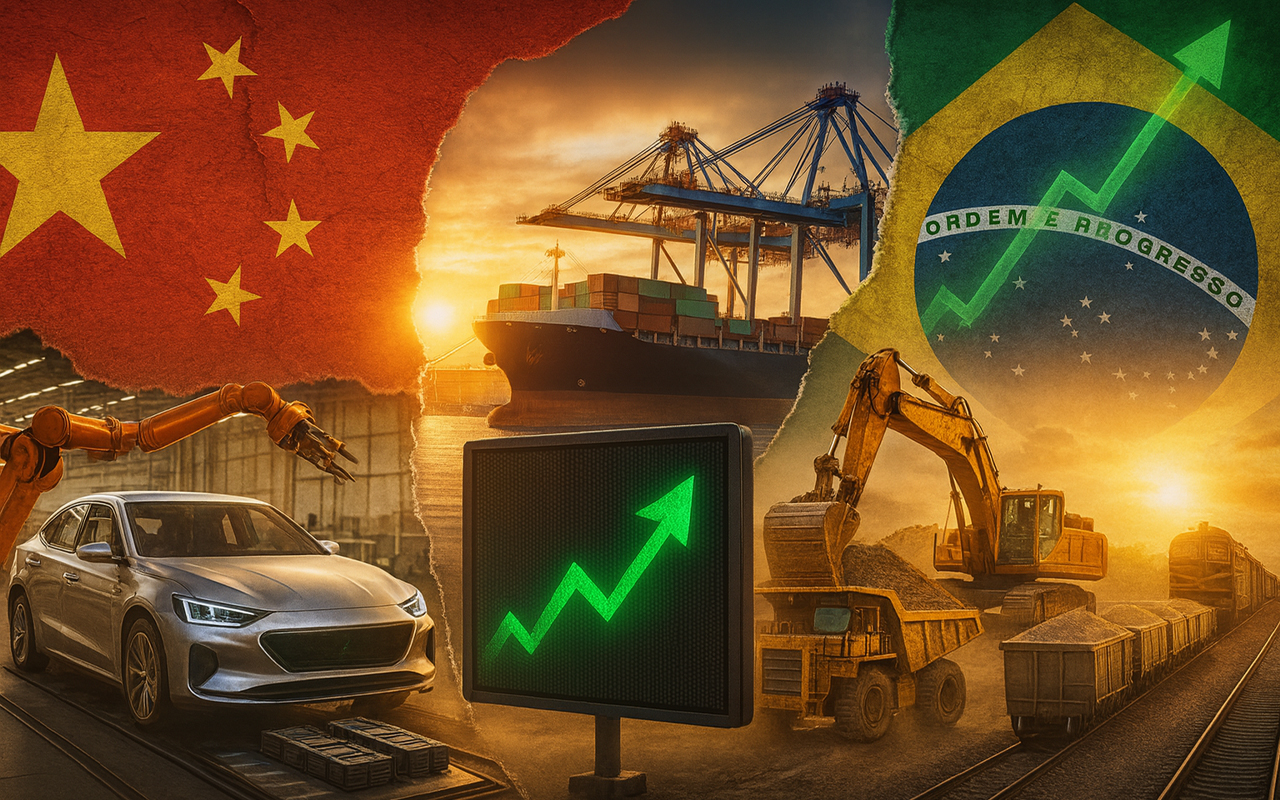


Brazil Is Back on China’s Radar, with Capital Targeting Electrics, Mining, and Logistics. Higher Tariffs in the U.S. and the Strategy to Produce Where You Sell Accelerate Factories and Projects, with Direct Impact on Employment and Technology.
Brazil entered 2025 as one of the main destinations for direct investment from China, benefiting from a global shift that accelerates the flow of capital and trade to the Global South. The reconfiguration occurs as the United States raises tariffs and strengthens barriers, pushing Chinese companies to diversify markets and produce closer to the end consumer.
In the short term, the new 50% U.S. tariffs on Brazilian products opened a dispute at the WTO. Washington accepted the consultations requested by Brasília but invoked the “national security” exception, an argument that tends to prolong timelines and reduce predictability for exporters.
As the dispute advances in multilateral forums, data on Chinese investment in Brazil shows momentum in strategic areas. The movement includes agricultural logistics, critical minerals, and a new round of industrialization with electrified cars and digital services.
-
Unemployment rises again to 5.8% at the beginning of 2026, raising alarms about the end of temporary positions and its impact on the Brazilian job market.

-
Document organization can cut invisible costs in small businesses, a simple step that prevents waste, rework, and losses in daily operations.

-
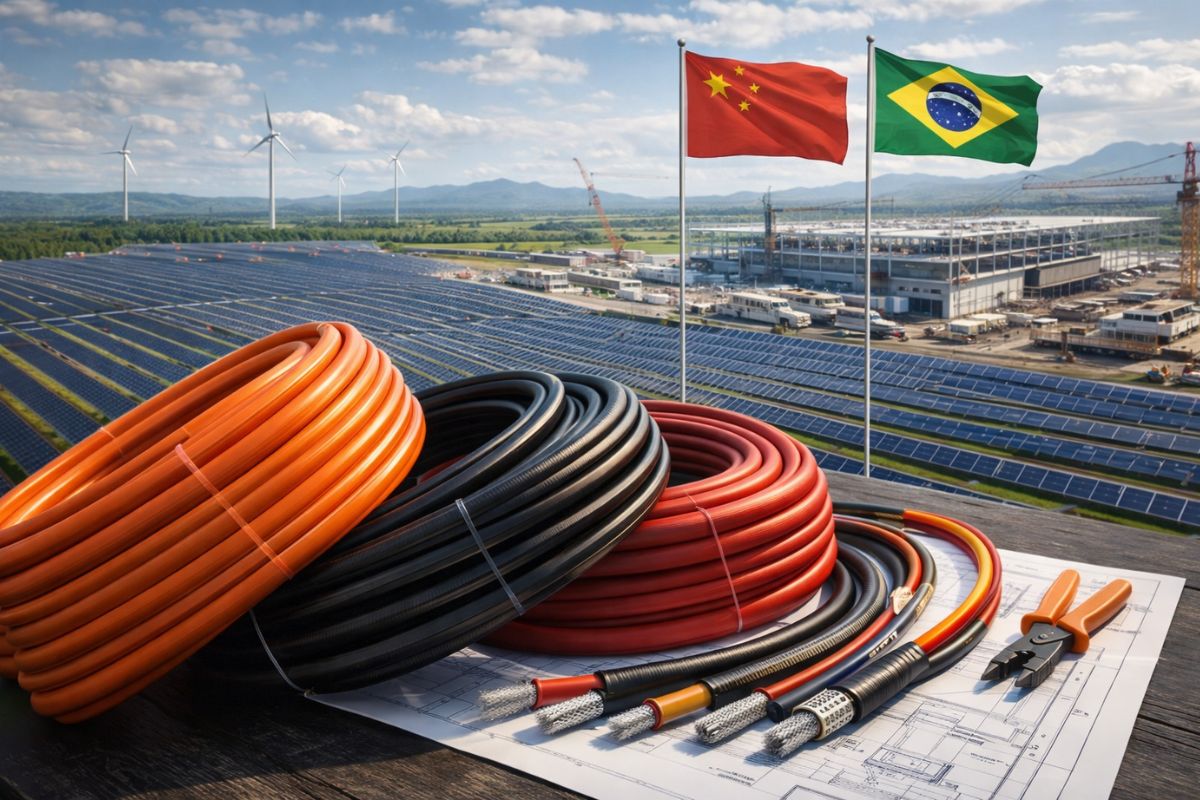
Chinese giant worth nearly R$ 4 billion that manufactures cables for electric cars, solar energy, and robotics wants to open a factory in SC.
-
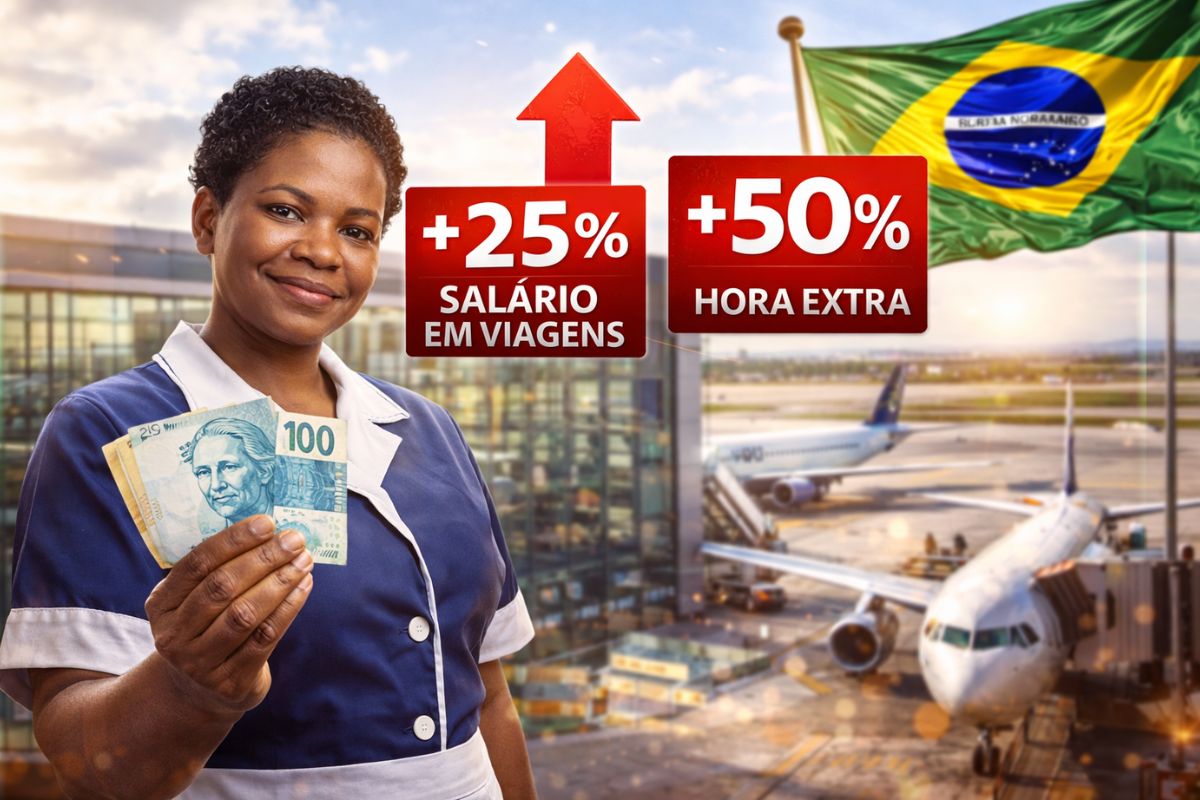
Many employers do not know, but the law guarantees domestic workers a 25% increase in salary during trips, 50% for overtime, 20% for night shifts, and 17 additional benefits that can lead to labor lawsuits if not paid.

U.S. Tariffs and the Redirecting of Chinese Investment to the Global South
A special report from S&P Global indicates that China’s exports to the Global South reached around $1.6 trillion, over 50% higher than the total sent to the combined United States and Western Europe. The interpretation is that elevated tariffs and regulatory uncertainties in developed markets accelerate the search for new customers and value chains in emerging economies.
In this scenario, Brazil gained traction as a capital destination. The China Global Investment Tracker from the American Enterprise Institute shows that Indonesia and Brazil led the reception of Chinese investments in the first half of 2025, signaling a diversification that goes beyond classic heavy infrastructure projects.
The movement is also reflected in merger and acquisition statistics. A survey by Mergermarket indicates that the volume of Chinese M&A in Brazil in 1H25 rose 64% and reached about $1.7 billion, the highest level for a first half since 2017, focusing on logistics, energy, and mining.
Where Chinese Money Is Going in Brazil: Agricultural Logistics and Critical Minerals
In agricultural logistics, COFCO has become an emblematic case. The company structured a new bulk terminal at the Port of Santos and, in operational partnership with Rumo, announced R$ 1.2 billion for 979 wagons and 23 locomotives, enhancing the flow of soybeans, corn, and sugar by railway, with productivity gains and emission reductions.
In mining, nickel, copper, and other metals linked to the energy transition are at the center of the strategy. In February, Anglo American entered into an agreement to sell its nickel business in Brazil to MMG for up to $500 million, including the Barro Alto and Codemin complexes in Goiás and development projects in Pará and Mato Grosso. Anglo’s divestment and the acquisition by MMG expand the Chinese presence in battery metals.
In copper, Baiyin Nonferrous completed the acquisition of Mineração Vale Verde, owner of the Serrote mine in Alagoas, for $420 million in April. The asset provides copper concentrate, a critical input for electrical networks and electrified vehicles, and strengthens the mining corridor in the Northeast.
The common thread of these projects is clear. According to the CGIT and sector analyses, China combines access to natural resources with local capillarity to reduce tariff, logistics, and governance risks. For Brazil, this means new capital in infrastructure and mining, provided that there are counterparties and adequate controls.
Electric Cars and Digital Services: Local Production and “Delivery War”
The bet on local production became clear with the opening of GWM’s factory in Iracemápolis, São Paulo, on August 15. The plant was inaugurated with the presence of Brazilian government authorities and plans for capacity of 20,000 to 50,000 vehicles/year, starting with the Haval H6, H9, and the Poer pickup. Producing in Brazil reduces exposure to tariffs and shortens supply chains.
BYD is advancing in Bahia. The company began assembly by CKD in 2025 and expects full operation by the end of 2026, after timeline revisions. The project at the former Ford complex includes planned capacity of up to 150,000 annual vehicles in phases and integrates the nearshoring strategy for the Brazilian market.
Another vector is Geely, which partnered with Renault in Paraná. The agreement stipulates that Geely will hold 26.4% of the new joint venture, focusing on low-emission models and utilizing Renault’s distribution network in the country. The goal is to accelerate local content and reduce logistics costs.
In digital services, the competition intensified with the arrival of Meituan, which announced R$ 5.6 billion to launch Keeta in Brazil, and with the relaunch of 99Food by DiDi. Both companies, both Chinese, are already engaged in legal disputes in São Paulo over branding and alleged anticompetitive practices, highlighting the extent of their investment in the local delivery market.
Chinese Investments in Brazil Offer Opportunities, but Also Risks
For the Brazilian economy, the combination of productive investment with demand for local suppliers can generate qualified jobs, technological diffusion, and an increase in exports of auto parts, embedded software, and equipment. S&P Global evaluates that the South-South axis tends to gain structural weight, favoring countries with a large market, industrial base, and infrastructure projects.
However, there are risks to monitor. Experts warn about dependence on critical inputs and differences in technical standards compared to the U.S. and the European Union, which may hinder the regulatory compatibility of Brazilian products. Policies for local content with clear goals, technical convergence, and R&D programs help mitigate these risks.
The issue of labor compliance gained prominence with the investigation of analogous to slavery labor practices at works linked to the BYD factory in Bahia, which resulted in termination with a subcontractor and actions by Brazilian authorities. The company denies wrongdoing and claims to follow local laws, but the episode reinforces the need for strict governance at major construction sites.









Que venha a China , investir no Brasil é bom para o Brasil e para China.