





 Portuguese
  English
  Spanish
  3 min of reading
  0 comments


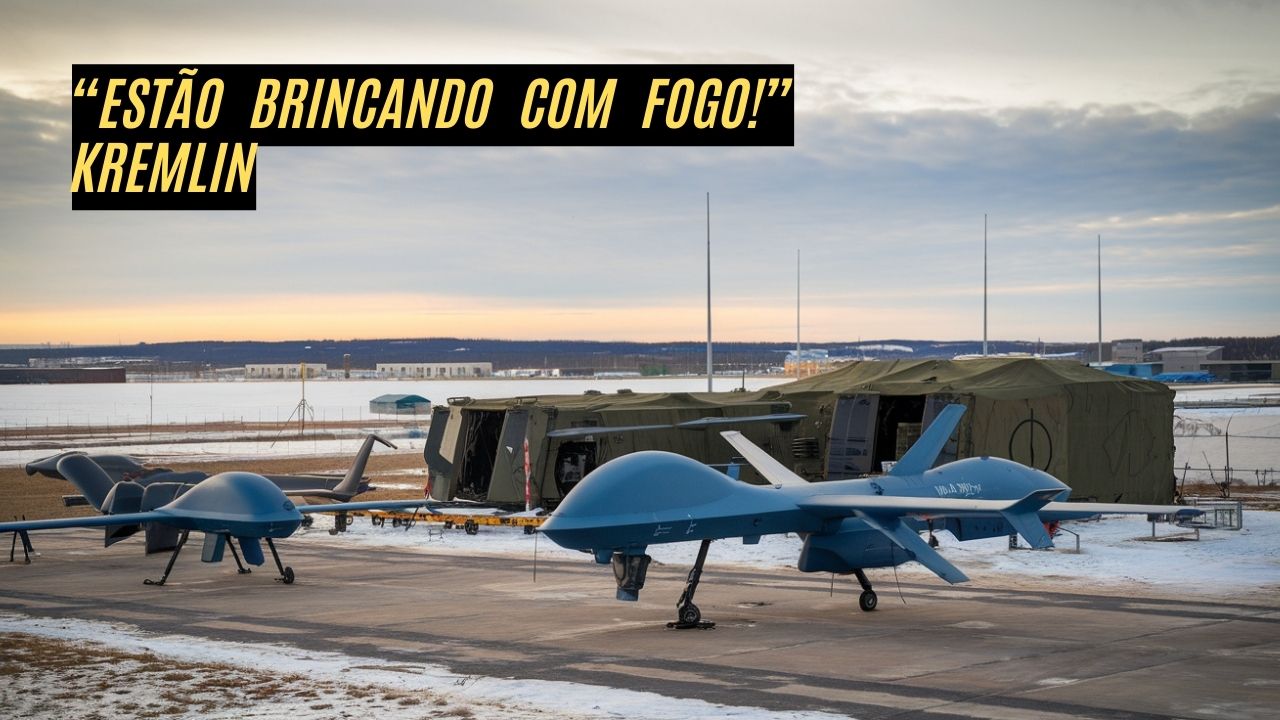
This NATO Decision Has Provoked A Strong Reaction From The Kremlin, Which Accused The Alliance Of “Playing With Fire.” With Advanced Drones Like The MQ-9 Reaper, The Base Promises To Monitor And Collect Detailed Information About Russian Military Activities, Escalating Geopolitical Tensions In The Region.
NATO’s decision to install a spy drone base on the border between Finland and Russia is generating tensions in the European geopolitical landscape. The Kremlin has already reacted, stating that the organization “is playing with fire” by approaching areas that are so sensitive to Russian security. The installation of this new drone base aims to intensify surveillance and monitoring of Russian military activities in the region, a measure that the Kremlin sees as a direct threat.
NATO Expands Presence On The Russian Border With Advanced Drone Base
NATO, in response to recent tensions between the West and Russia, announced the construction of a drone base in Finland, just a few kilometers from the Russian border. This base will feature MQ-9 Reaper drones, capable of conducting espionage and precision strike operations. This drone model, developed by General Atomics, is widely used in conflict zones, such as the Middle East, and has prolonged operational capabilities, allowing for constant monitoring in strategically important regions.
In the last 20 years, drones like the MQ-9 Reaper have transformed the military field, enabling long-term missions without the need for crew. These aircraft can fly for over 24 hours, covering large areas and transmitting data in real time, which represents an advantage for NATO in intelligence gathering. With advanced sensors, the Reaper identifies movement patterns and locates military installations, being a crucial tool for monitoring the Russian border.
-
If the USA were to go to war with Brazil, Washington’s greatest fear would not be the attack itself, but facing a vast territory, prolonged resistance, and a costly, chaotic, and unpredictable occupation.

-
In 2013, Nicaragua sold the concession for a canal to rival Panama to a Chinese billionaire who lost 85% of his fortune, disappeared, and was declared bankrupt. Now the project resurfaces with a new route, a new Chinese partner, and a cost of $64.5 billion.

-
The USA announces a mysterious billion-dollar vault project to store critical minerals, but what intrigues experts is not just the plan itself, but why Latin America, including Brazil, has entered the center of this global dispute against China.

-
Trump Announces Bombing of U.S. Military Targets on Iranian Island Responsible for About 90% of Iran’s Oil Exports, Warns of Further Attacks if Navigation in Strategic Strait of Hormuz Is Threatened


Kremlin Reaction And Possible Developments
The construction of NATO’s drone base in Finland occurs in a context of high tension. Since the Russian invasion of Ukraine, Finland has opted to join the military alliance, reinforcing its defensive position. However, the Kremlin views NATO’s expansion on its borders as an affront and has already signaled that it may intensify its military presence in the region, including the possible installation of long-range S-400 missile systems and an increase in electronic warfare capabilities to neutralize drones.
Although Russia faces limitations due to its current involvement in Ukraine, experts suggest that the Russian response may come through military exercises close to the border, as well as counterintelligence measures and cyber warfare operations. These actions aim to interfere with the drone base and the communication of MQ-9 Reapers, weakening NATO’s monitoring and hindering the success of surveillance operations.
Growing Tension And Impact On European Security
The installation of a drone base by NATO in Finland highlights a turning point in relations between the West and Russia. Experts assess that the measure has a deterrent character, projecting strength in the region to prevent any Russian military action. However, the line between deterrence and provocation is thin, and escalating tensions could lead to further militarization in the Baltic region, with possible violations of airspace and intensification of aggressive rhetoric.
The presence of MQ-9 Reaper drones at the new base reinforces NATO’s strategy to monitor Russian movements in real time, but it also exposes Europe to an insecurity scenario. In the event of an aggressive response from the Kremlin, the stability of Northern Europe could be threatened, influencing the defense policies of neighboring countries, such as Sweden, which recently also joined NATO.
Strategic Presence In The Region
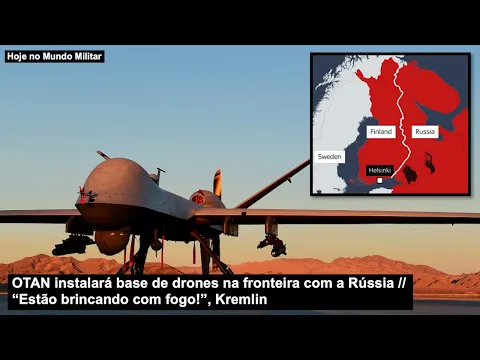

The installation of NATO’s drone base on the border with Russia symbolizes an increase in tensions in the European geopolitical landscape. With MQ-9 Reaper drones operating full-time, NATO seeks to consolidate a strategic presence in the region, but the Kremlin’s reaction shows that this movement is viewed as a direct threat. This development could define the future of relations between Russia and the West in a dispute that involves technology, security, and a delicate balance of power in the region.










Seja o primeiro a reagir!