





 Portuguese
  English
  Spanish
  7 min of reading
  0 comments


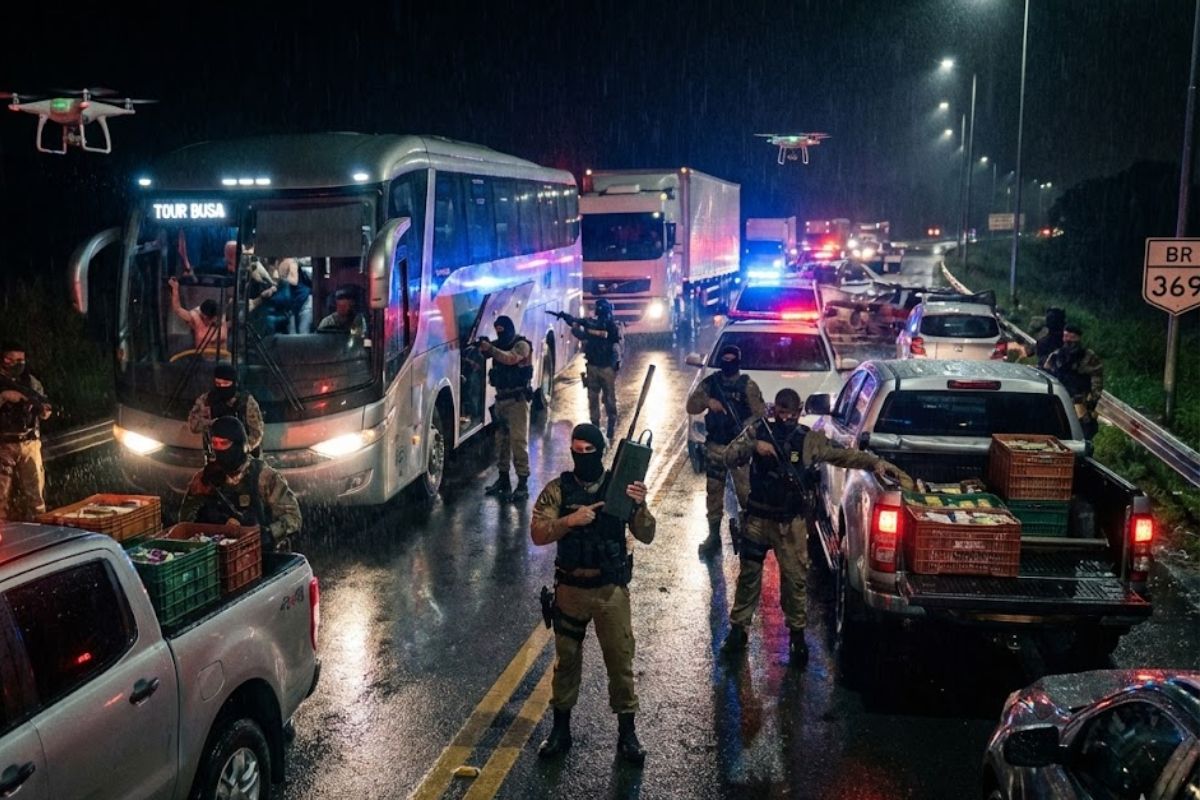
As Asphalt Pirates Advance Over Buses and Trucks Loaded from Paraguay, Armed Gangs Choose Empty Sections of BR 369, Use Trackers and Cell Phone Blockers, Impose Panic on Smugglers, and Challenge the Response Capacity of Security Forces in the Middle of the Night and Ordinary Days of the Entire Week.
According to a report from Domingo Espetacular that aired this Sunday, drivers, passengers, and small traders crossing the roads between Foz do Iguaçu, northern Paraná, and the interior of São Paulo are living with increasingly sophisticated ambushes. Recent images, recorded in the early hours of November 22, show buses being forcibly stopped on BR 369, drivers under the gunpoint, and vehicles diverted to isolated rural roads. Since 2022, investigations by the Civil Police indicate a rise in organization and violence in the actions of asphalt pirates.
At the same time, police officers report that these criminal groups take advantage of the smuggling and tax evasion routes to map targets, track vehicles from Paraguay, and act precisely where the presence of the state is weaker: sections without houses, lighting, and often without cell phone signal. The result is a scenario where cargo theft adds to the constant fear of serious assaults and even death on federal and state highways.
Roads Under Siege: How Asphalt Pirates Operate on BR 369

In the images obtained by Domingo Espetacular, asphalt pirates are seen setting up ambushes right in the highway, choosing specific points on BR 369 in the Mamborê region, in northern Paraná, about 130 kilometers from Maringá.
-
Brazilian city gains industrial hub for 85 companies that is equivalent to 55 football fields.

-
Peugeot and Citroën factory in Argentina cuts production by half and opens a layoff program for more than 2,000 employees after Brazil drastically reduced purchases of Argentine vehicles.

-
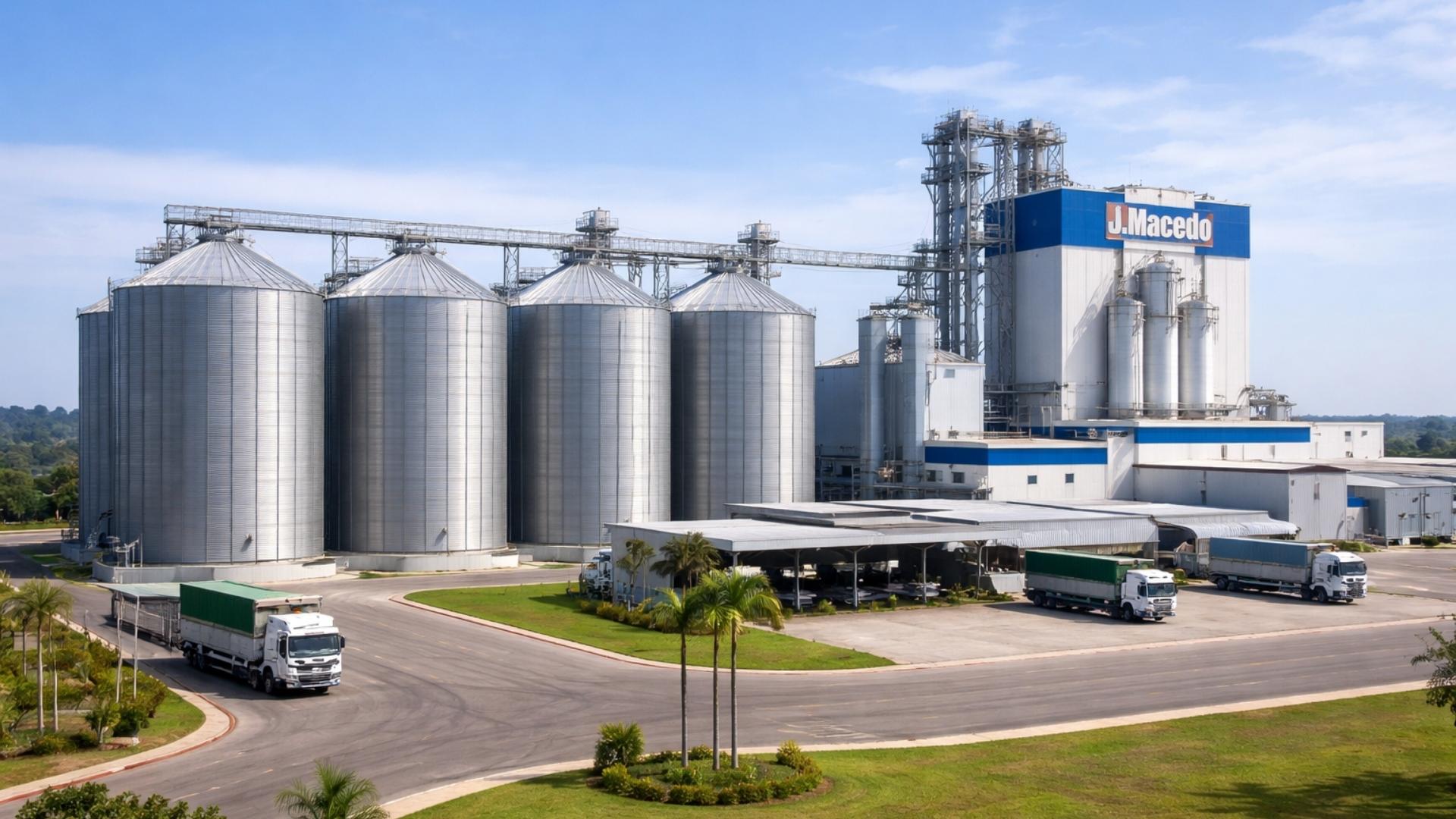
A Brazilian city gains a factory worth R$ 300 million with the capacity to process 200 thousand tons of wheat per year, a mill of 660 tons/day, silos for 42 thousand tons, and an industrial area of 276 thousand m².
-
Havan will leave the shopping mall in Blumenau to inaugurate something that the chain has never done before: a megastore in half-timbered style in the Historic Center of the city, which is expected to be completed in May and change the landscape of local retail.

The main targets are smugglers’ buses and vehicles loaded with goods from Paraguay.
The route described by investigators is nearly mandatory for those leaving Foz do Iguaçu headed to São Paulo.
BR 369 connects to other highways, such as BR 27, forming a corridor through which most of the smugglers’ loads pass while trying to evade inspection.
This same corridor has become ideal territory for the asphalt pirates.
The environment favors criminal activity: next to the main road, dirt roads, local roads, and rural accesses multiply, allowing the group to stop the bus or truck, force the driver off the highway, and take the vehicle to an isolated area.
Far from the flow of cars and police presence, the criminals have time to search trunks, threaten passengers, and select the cargo to be taken.
From Border to Interior: Tracking Begins Still in Paraguay


Investigations indicate that the actions of asphalt pirates start even before the vehicles cross the border.
According to the Civil Police assessment, there is a communication network between those involved in smuggling and those executing the robberies on the roads.
In Paraguay, when buses, trucks, or cars are loaded with goods, members of the criminal network identify the vehicles and, in some cases, install trackers in inconspicuous points on the chassis.
As soon as the transport leaves the border zone, it begins to be monitored from a distance.
Over distances of 200 or 300 kilometers, asphalt pirates can track the exact location of the target up to the BR 369 region.
This model creates a sort of “second layer” of crime: first the smuggling and tax evasion of the goods, then the armed robbery of the cargo by gangs specialized in intercepting smugglers already in Brazilian territory.
For the delegate interviewed in the report, these are groups that “have no love for the life of others and, if they need to kill, they will kill.”
Criminal Technology: Trackers and Cell Phone Blockers
In addition to monitoring via trackers, the asphalt pirates use electronic equipment to block cell phone signals in the areas where they commit the robberies.
In sections without phone towers, the blockage reinforces the victims’ isolation, as they cannot contact the police, family, or emergency services during the approach.
According to investigators, the combination of trackers and blockers creates a critical time window: while the vehicle is taken to a rural road, the criminals remain virtually invisible to remote monitoring systems and patrol teams.
This communication vacuum increases the firepower of the gangs and makes it difficult for security forces to respond quickly.
Reports indicate that the operation rarely involves just one car.
In many cases, three or four vehicles surround the bus or truck, forcing the driver to stop.
If the driver hesitates or tries to flee, it is common for shots to be fired at the vehicle to force it to stop by the roadside.
Direct Violence: Threats, Weapons, and Theft of Entire Loads
Victim testimonies reinforce the degree of violence employed by asphalt pirates.
A driver returning from Paraguay reported that, while stopped at a traffic light, his car was closed in by armed criminals.
On the passenger side, one of the assailants pressed a gun against his back, forcing him to hand over everything he had bought, in goods valued at around 22 thousand reais.
In videos analyzed by the police, buses with up to 57 passengers are taken to the edges of highways and dirt roads.
The criminals get into the cabin, shout orders, demand that the driver follow narrow accesses and dictate the opening of specific trunks.
Inside the bus, passengers are verbally threatened while bags, boxes, and parcels are sorted.
These scenes show that asphalt pirates do not act in an improvised manner.
They know the route, study escape points, choose times with less traffic, and rely on organized logistics to quickly transfer the stolen loads to other vehicles, which will go to clandestine warehouses or reception points in nearby cities.
Underreporting and Fear: Why Many Crimes Don’t Become Police Reports
One of the central obstacles to combating asphalt pirates is underreporting.
Some victims are involved with the transport of irregular goods, which increases the fear of filing a report.
Those who lose cargo from smuggling tend to avoid contact with authorities, fearing charges for tax evasion or other infractions.
Delegates emphasize that often the same smuggler who had cargo stolen returns to the road days later, with another vehicle and new goods.
This creates a continuous cycle where criminals have a constant supply of high-value targets with a low probability of formal reporting.
For security forces, the challenge is twofold: map the actions of asphalt pirates and at the same time dismantle the network of receivers who buy and resell stolen goods without fiscal documentation.
The police emphasize that it is not enough to arrest those executing the robbery; it is necessary to target the entire chain that profits from the diverted products.
State Response: Police Integration and Focus on Receiving
In light of the escalating attacks by the gang, Military Police, Highway Police, and Federal Police have begun to work together in the BR 369 region.
The actions combine visible patrolling, barriers at strategic points, and specific operations aimed at identifying suspicious vehicles.
At the same time, the Civil Police intensifies intelligence work to locate clandestine warehouses, cross license plate information, map alternative routes on dirt roads, and target merchants who receive stolen loads and put them into circulation without proper documentation.
The assessment is clear: without receiving, the business model of asphalt pirates loses economic attractiveness.
The strategy also includes analyzing images from monitoring cameras, testimonies from victims willing to cooperate, and cross-referencing data from different occurrences.
Even so, the scenario remains complex, as criminal activity takes advantage of a consolidated smuggling route and a geography favorable to attack and quick escape.
How to Reduce the Risk on Target Routes of Asphalt Pirates
Although the primary responsibility for confronting falls on the state, security experts recommend that professional drivers and smugglers adopt basic risk-reduction measures in regions dominated by asphalt pirates.
These include planning travel times to avoid more deserted stretches at night, traveling in organized convoys, maintaining prior contact with police bases along the route, and avoiding prolonged stops in isolated areas.
Another recurring recommendation is to file police reports whenever possible, even when the cargo comes from purchases in Paraguay.
For the authorities, each report adds a piece to the map of the gangs’ actions, helping to identify patterns of timing, locations of approaches, and evolutions in criminal strategy.
In practice, however, the fear of retaliation, the informality of cargo transportation, and the economic dependence on the route keep many cases off official statistics, making it difficult to quantify the total impact of asphalt pirates on Brazilian highways.
For you, who closely follow this reality or know someone who crosses these roads, what should be the public authority’s number one priority to effectively confront asphalt pirates: permanent police reinforcement on BR 369, direct attacks on receivers, or tightening the rules on smuggling goods from Paraguay?








-

-

-

-

-

-

15 pessoas reagiram a isso.