





 Português
  Inglês
  Espanhol
  4 min de leitura
  0 comentários


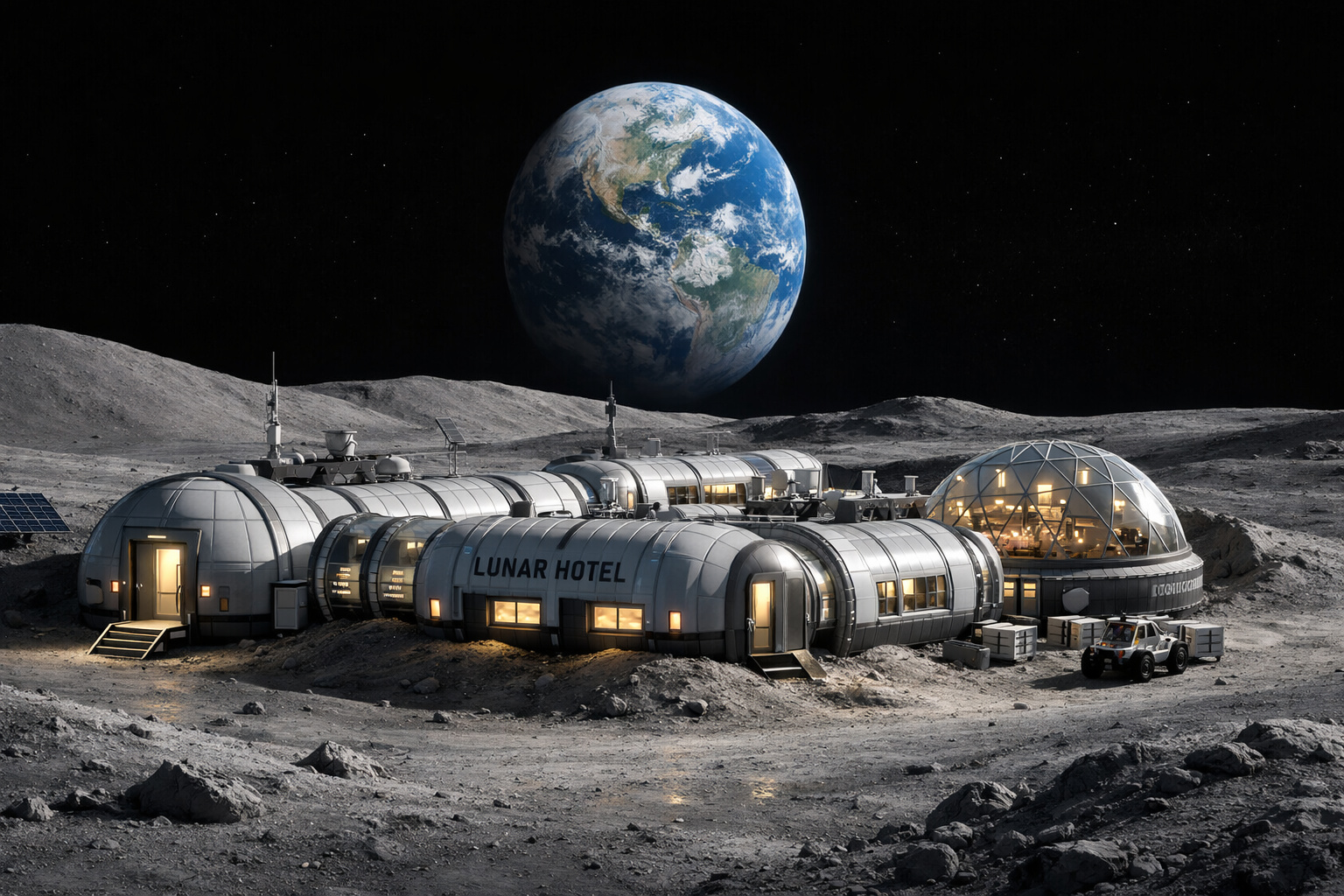
American Startup Bets on Luxury Space Tourism and Plans to Build Habitable Modules with Lunar Soil, Aiming for Inauguration by 2032
A California-based startup has taken a bold step toward space tourism by launching a pre-sale of reservations for a hotel project on the Moon. The company announced that interested parties can already secure a future stay in what would be the first permanent structure built outside Earth, with an initial deposit of US$ 1 million, equivalent to about R$ 5 million. The initiative, while ambitious, still depends on regulatory approvals and the technological advancements necessary to enable construction in the lunar environment.
The information was disclosed by Veja magazine, based on documents and official statements from the company itself, detailing plans for the inauguration of the venture by 2032. According to the startup, the project represents not only a unique tourism experience but also the first concrete step toward creating a sustainable and long-term lunar economy.
How the Planned Lunar Hotel by GRU Would Work

According to Galactic Resource Utilization Space, known by the acronym GRU, the hotel will be composed of interconnected pressurized modules designed to ensure basic human survival conditions on the Moon. These modules are expected to maintain controlled temperatures, adequate oxygen levels, and protection against cosmic radiation, one of the biggest challenges for any human presence outside Earth.
-
A bright yellow mushroom imported from Asia escaped from a cultivation farm in the United States in 2010 and is now aggressively spreading across 25 states, destroying entire communities of native fungi in American forests.

-
Buried under China, a colossal machine weighing 20,000 tons began operating as the largest neutrino detector on the planet and, in just 59 days, surpassed results that science took half a century to achieve.

-
Iran enters the center of a climate alert after the war emitted 5.6 million tons of CO2 in two weeks, surpassing the annual pollution of entire countries.

-
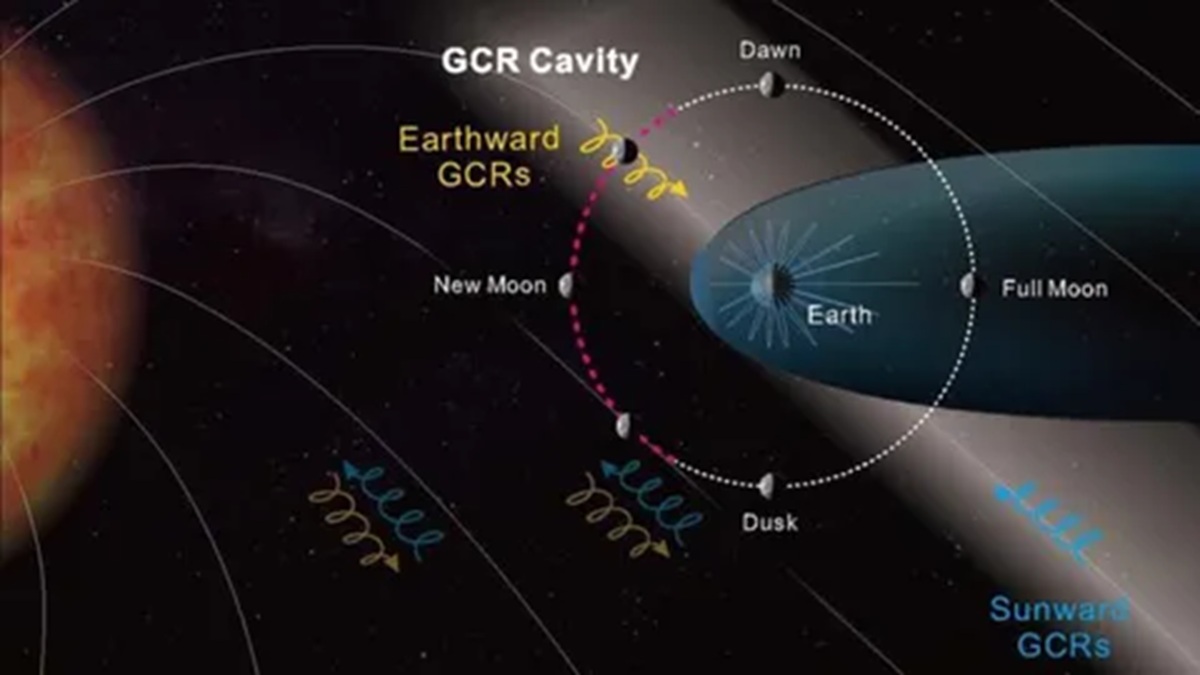
Lunar exploration may change after a Chinese probe finds a “cavity” of radiation that reduces the impact on astronauts by up to 20% at certain times on the Moon.
Additionally, the company claims it intends to drastically reduce logistics costs by using lunar soil as raw material. To achieve this, GRU has developed an automated process capable of transforming lunar regolith — the layer of dust and fragments covering the surface of the Moon — into resistant structural blocks, similar to bricks. This technology, according to the startup, would reduce the need to transport large quantities of material from Earth, a factor that traditionally increases the costs of space missions.
Conceptual images released by the company show futuristic structures partially buried in the lunar soil, a strategy that would also help protect guests from extreme temperature variations and radiation. In the laboratory, GRU has already presented samples of materials produced from lunar soil simulants, reinforcing the technical viability of the concept, at least in a controlled environment.
Who Are the First Customers and the Profile of Space Tourism
The first individuals interested in staying at the lunar hotel, according to GRU, are space tourists who have already participated in commercial orbital or suborbital flights, in addition to high-net-worth couples seeking unique experiences, such as honeymoons off Earth. The company targets an audience willing to pay high prices to experience something truly exclusive, reinforcing the luxury aspect of the project.
In this context, space tourism is presented as a strategic initial phase. The startup claims that commercial experiences are the fastest way to finance and justify investments in permanent infrastructure on the Moon. In an official statement, the company declared that the presence of tourists could accelerate the creation of logistics chains, life support systems, and continuous operations beyond the planet.
Even so, the timeline is ambitious. GRU claims that construction of the hotel would begin in 2029, with the initial transport of modules from Earth, followed by the expansion of structures with locally produced materials. All of this, however, is contingent upon the approval of regulatory bodies and coordination with international space authorities.
Who Is Behind the Project and What Are the Next Steps
The Galactic Resource Utilization Space was founded by Skyler Chan, an engineer graduated from the University of California, Berkeley. The idea for the lunar hotel emerged during his participation in a startup acceleration program focused on space technologies. Since then, Chan claims to have secured funding from investors connected to aerospace and defense companies, including those associated with SpaceX and Anduril, which specializes in autonomous systems.
In a technical document released by the company, the lunar hotel is described as only the first phase of a broader plan. The long-term vision includes expanding human presence on the Moon with the construction of other housing structures and the development of economic activities related to research, mining, and support for deeper space missions.
Although the project still faces significant technological, financial, and regulatory challenges, the opening of reservations indicates that lunar tourism has moved beyond mere science fiction and is beginning to enter the realm of concrete commercial plans. It remains to be seen if the timeline will be met and if, in fact, the Moon will become humanity’s next luxury destination.
How far does the boundary lie between technological innovation and science fiction when it comes to living outside Earth?





-

-

-

-

8 pessoas reagiram a isso.