





 Portuguese
  English
  Spanish
  4 min of reading
  0 comments



Chinese Companies Have Invested Billions in Brazil, Dominating Strategic Sectors Like Energy, Oil, and Infrastructure. In 2024, Contributions Have Already Surpassed R$ 280 Billion, Raising Questions About the Impact of This Presence on Sovereignty and the Brazilian Economy.
In recent years, Brazil has become a strategic battleground for Chinese state giants. If you think Chinese influence here is limited to low-cost products, prepare for a surprise.
In a bold and meticulous move, these companies are literally taking over the country, investing in crucial sectors like energy, oil, and transportation infrastructure. With billions of reais at stake, the lingering question is: how far will this economic invasion go?
According to a survey conducted by the website Poder360, Chinese investments in concessions and infrastructure projects in Brazil have already surpassed R$ 280 billion.
-
Unemployment rises again to 5.8% at the beginning of 2026, raising alarms about the end of temporary positions and its impact on the Brazilian job market.

-
Document organization can cut invisible costs in small businesses, a simple step that prevents waste, rework, and losses in daily operations.

-
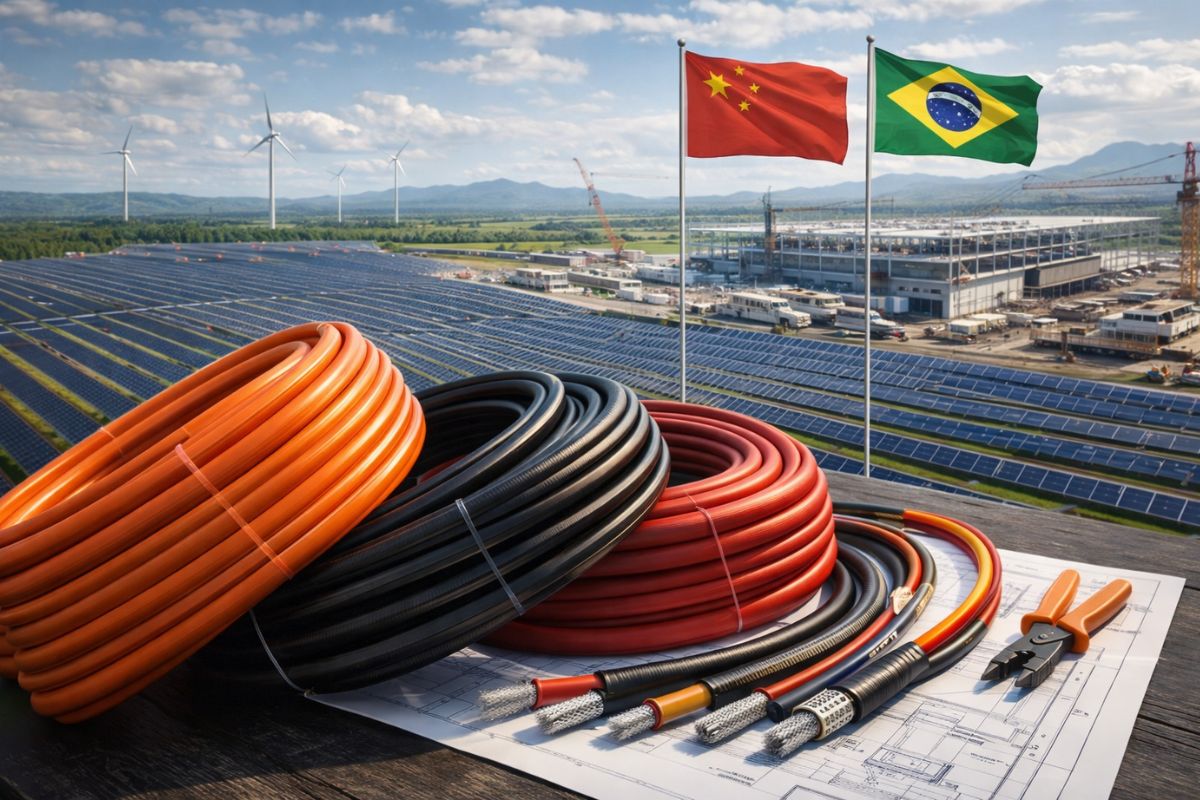
Chinese giant worth nearly R$ 4 billion that manufactures cables for electric cars, solar energy, and robotics wants to open a factory in SC.
-
Many employers do not know, but the law guarantees domestic workers a 25% increase in salary during trips, 50% for overtime, 20% for night shifts, and 17 additional benefits that can lead to labor lawsuits if not paid.


And China’s appetite seems far from satisfied. Last Thursday (15th), as reported by CPG, Brazil and China celebrated 50 years of diplomatic relations, and this partnership, which started timidly in 1974, reached a new level in the last decade.
Rapid Growth of Chinese Investments
The jump in Chinese investments in Brazil is impressive. Chinese state-owned companies have been winning important concessions in several states, especially in the energy and infrastructure sectors. State Grid, one of the largest energy companies in the world, is leading this movement.
The company has already heavily invested in Brazil, controlling CPFL (Companhia Paulista de Força e Luz), which has energy distribution concessions, transmission lines, and generation assets in states like São Paulo, Minas Gerais, Paraná, and Rio Grande do Sul.
And the plans don’t stop there. State Grid aims to invest R$ 28.4 billion by 2028 to enhance the distribution network of its concessions, in addition to winning the largest lot in a power transmission auction held in 2023. This project, which includes building a high-voltage line between Maranhão and Goiás, will require an investment of R$ 18.1 billion.
The Expansion of State Grid in Brazil
The megaproject granted to State Grid for 30 years includes the construction of 1,513 km of direct current transmission lines and the maintenance of another 1,468 km, spread across Maranhão, Tocantins, and Goiás.
The completion deadline for this project is 72 months, but Chinese investments in the electric sector go beyond. State Grid holds a total of 24 transmission concessionaires in the country, including wholly owned subsidiaries and joint ventures, totaling over 16,000 km of transmission lines.
In addition to the already mentioned investments, State Grid plans to invest another R$ 150 billion in the coming years in new transmission lines and generation projects focused on renewable sources. The goal is clear: by 2028, contributions should reach R$ 200 billion.
Other Chinese State Companies Eyeing Brazil
It’s not just State Grid that is increasing its presence in Brazil. Other Chinese state-owned companies in the energy sector also have ambitious plans.
Energy China announced in 2023 an investment of US$ 10 billion in renewable energy and green hydrogen generation projects. This figure, which amounts to approximately R$ 50 billion, marks one of the largest recent contributions to the Brazilian energy sector.
CTG (Companhia Três Gargantas), known for operating the world’s largest hydroelectric plant, completed 10 years of operations in Brazil in 2024. Since acquiring several Brazilian hydroelectric plants in 2010, the company has been expanding its investments.
In the coming years, CTG plans to invest R$ 3 billion to increase the efficiency of the Ilha Solteira (SP) and Jupiá (SP/MS) plants, in addition to exploring new opportunities in wind and solar energy, with an estimated investment of R$ 6.4 billion.
The Diversification of Chinese Investments
Meanwhile, SPIC, another Chinese giant, announced in June 2024 the construction of a wind farm in Rio Grande do Norte, with an investment of R$ 780 million. This project will add 105.4 MW of installed capacity to the Brazilian energy matrix, a significant step toward increasing the share of renewable energies in the country.
In addition to the electric sector, the Chinese are also advancing in the oil sector. In 2023, Cnooc, in partnership with Petrobras and Shell, won the concession for three exploration blocks in the Pelotas basin, in southern Brazil. The estimate is that the consortium will invest around R$ 100 million in the research of oil and gas reserves in the region.
State Concessions and the Impact on Infrastructure
The Chinese presence in Brazil also extends to the infrastructure sector, especially in state concessions. This year, CRRC, in partnership with the Brazilian group Comporte, won the concession for the São Paulo-Campinas Intercity Train. This project, budgeted at R$ 14.6 billion, includes the construction of a medium-speed passenger train and the concession of the Line 7-Rubi of the Greater São Paulo metropolitan train system.
With so many investments, the lingering question is: to what extent is this Chinese presence beneficial for Brazil, and what is the long-term impact on national sovereignty? It is undeniable that the contributions have the potential to boost the economy and improve infrastructure, but it is crucial to evaluate the developments of this Chinese “invasion” on Brazilian soil.









Seja o primeiro a reagir!