





 English
  Francês
  Alemão
  Italiano
  Japonês
  Norueguês
  Portuguese
  Spanish
  5 min of reading
  0 comments



US closes billion-dollar deal to end offshore wind projects and expand oil and gas, marking a strategic turn in global energy policy
The U.S. Secretary of the Interior, Doug Burgum, stated this Monday, March 23, 2026, that the United States has made a decision that repositions part of its energy strategy: a deal with TotalEnergies to end offshore wind energy projects and redirect investments to oil and natural gas. The move, estimated at around $1 billion, comes at a time of increasing pressure for energy security, lower costs, and supply stability.
The decision is not isolated. It reflects a broader change within the American energy system, where the accelerated expansion of renewable sources coexists with technical, economic, and structural limitations that hinder their large-scale integration. At the same time, oil and gas remain reliable pillars in times of global instability.
Agreement between US and TotalEnergies: what changes in practice in the energy sector
The agreement stipulates the termination of offshore wind energy projects that were under development in the United States, especially along the Atlantic coast. In return, TotalEnergies will be compensated for the licenses and investments already made, allowing capital to be redirected to projects considered more strategic in the short and medium term.
-
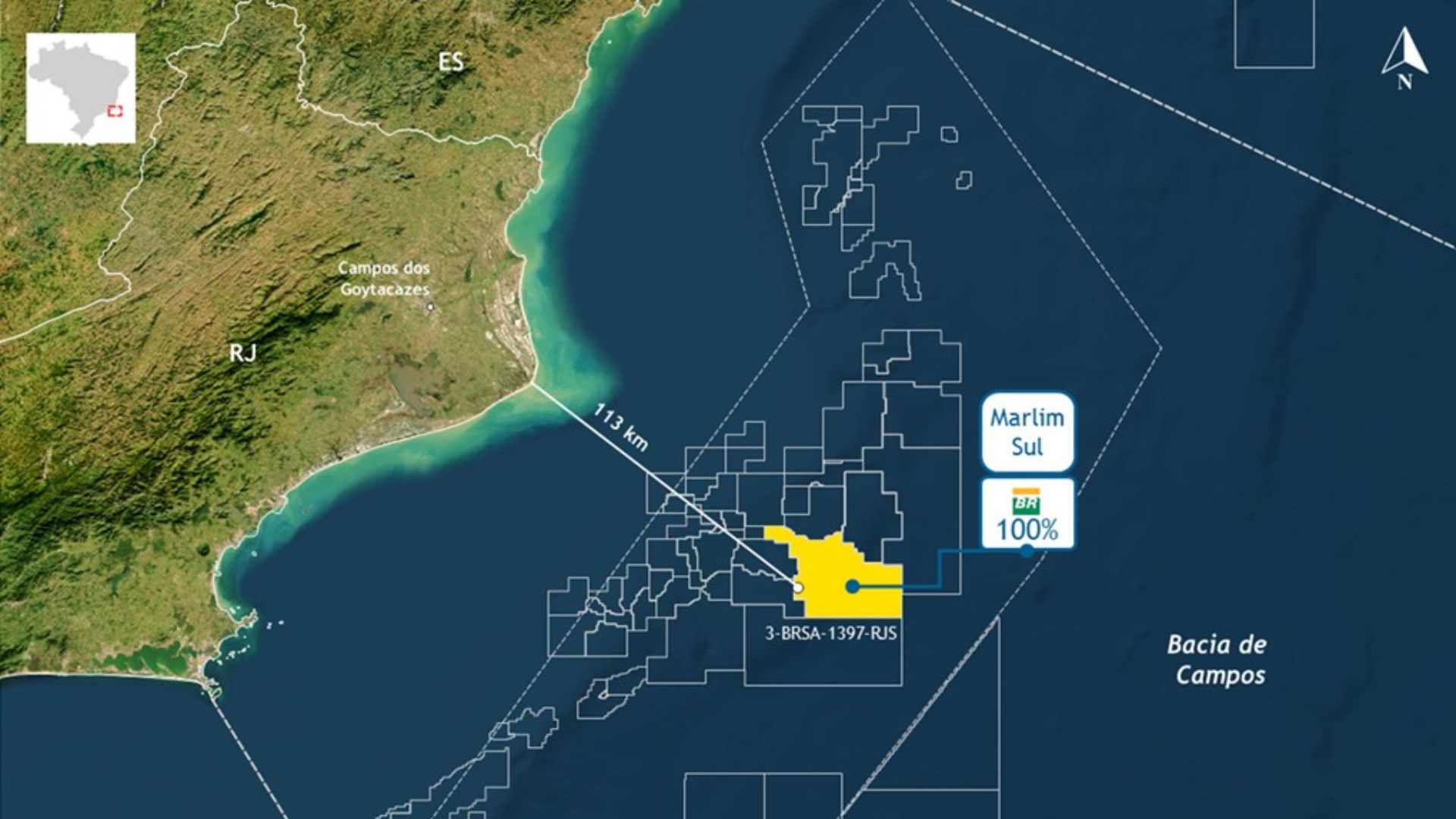
Petrobras announces new oil discovery in the pre-salt of the Campos Basin and reinforces Brazil’s prominence with high-quality reserves that can increase production and energy revenues.
-
Alert in the fuel market: Analysts and a former director of ANP warn that oil prices may worsen in the coming months due to global instability.

-
Ocyan brings executives and digital solutions to Macaé Energy 2026 and highlights offshore expansion with Nexio and a new base in Macaé.

-
Petrobras advances 4.6% with rising oil prices and the dollar, reigniting the debate on macro risks, pricing policy, and fiscal impact in Brazil.




In practice, this means a reallocation of resources to areas such as oil exploration, natural gas production, and the expansion of liquefied natural gas infrastructure. These segments present greater predictability of financial return and less dependence on government subsidies, factors that weigh in large-scale investment decisions.
Furthermore, the redirection of capital reinforces the position of the United States as one of the leading global producers of fossil energy, especially in a scenario of increasing international demand for natural gas.
Why offshore wind energy faces resistance in the United States
Offshore wind energy has been treated as one of the main bets for the decarbonization of the American energy matrix. However, various obstacles have begun to compromise its economic viability.
The high installation cost is one of the main factors. Offshore projects require complex infrastructure, including maritime foundations, submarine cables, and grid connection systems, which significantly raise the initial investment. Additionally, regulatory delays, logistical difficulties, and rising financing costs have made many projects economically unviable.
Another critical point is the intermittency of generation. Wind energy depends on variable weather conditions, which requires complementary systems to ensure supply stability. In an electrical system that demands predictability, this characteristic limits the role of renewables in certain contexts.
These factors have contributed to a strategic revision by companies and authorities, leading to the cancellation or postponement of various offshore wind projects.
Energy security and energy prices: the factors that drove the decision
The decision to prioritize oil and gas is directly linked to the need to ensure energy security. In a global scenario marked by geopolitical conflicts and volatility in energy prices, predictable and responsive sources become essential.
Natural gas, for example, plays a central role as a transition source, offering greater flexibility to meet peak demand. Meanwhile, oil remains fundamental for sectors such as transportation, heavy industry, and petrochemicals.
Another relevant factor is the final cost of energy. Offshore renewable sources, despite being environmentally advantageous, still face challenges to compete economically without robust government incentives. In contrast, oil and gas infrastructure is already established, allowing for more competitive costs in many regions.
This set of factors has led American authorities to prioritize a pragmatic approach focused on stability and cost-effectiveness.
Expansion of natural gas and LNG: the new axis of US energy strategy
The redirection of investments also strengthens the expansion of liquefied natural gas, one of the main energy products exported by the United States. The country already holds a prominent position in the global LNG market and seeks to further increase its share.
Projects in states like Texas and Louisiana are being accelerated to meet the growing international demand, especially from Europe and Asia. These markets seek to diversify their energy sources amid geopolitical tensions and reduce dependence on traditional suppliers.
The expansion of LNG not only reinforces internal energy security but also consolidates the United States as one of the leading global energy exporters, with a direct impact on the balance of the international market.
The global impact: how the US decision affects the energy transition
The shift in direction in the United States has implications that go beyond its borders. As one of the largest economies in the world and one of the main carbon emitters, any change in its energy policy directly influences the pace of the global energy transition.
The reduction in investment in offshore wind energy may slow similar projects in other countries, especially those that rely on international financing. At the same time, the strengthening of oil and gas may pressure global prices and influence strategic decisions of other nations.
However, this does not mean the abandonment of renewable energies. What is observed is a reconfiguration, where different sources begin to play complementary roles within a more diversified energy matrix.
Oil versus renewables: a conflict or an adaptation of the energy system
The current scenario does not necessarily represent a direct conflict between fossil fuels and renewable energies, but rather an adaptation of the energy system to its real limitations.
The energy transition, often presented as linear, in practice occurs unevenly and is conditioned by economic, technological, and political factors. In many cases, the advancement of renewables depends on the existence of a stable base guaranteed by traditional sources.
The movement of the United States illustrates this dynamic. While investing in clean technologies, the country maintains and expands its oil and gas production to ensure stability and economic competitiveness.
What this movement reveals about the future of energy
The billion-dollar agreement to end offshore wind projects and expand oil and gas production reveals a central point: the energy transition is not just a technological issue, but a complex process that involves costs, infrastructure, security, and economic viability.
The United States is adjusting its strategy based on these factors, prioritizing sources that ensure stability in the short term, without necessarily abandoning investments in energy innovation.
The result is a hybrid scenario, where different sources coexist and compete, shaping an increasingly complex and interdependent global energy system.
The decision to end offshore wind projects and redirect billions to oil and gas does not represent an isolated setback, but rather a strategic repositioning within a system that still heavily relies on traditional sources to function.










Seja o primeiro a reagir!