





 Português
  Inglês
  Espanhol
  4 min de leitura
  0 comentários


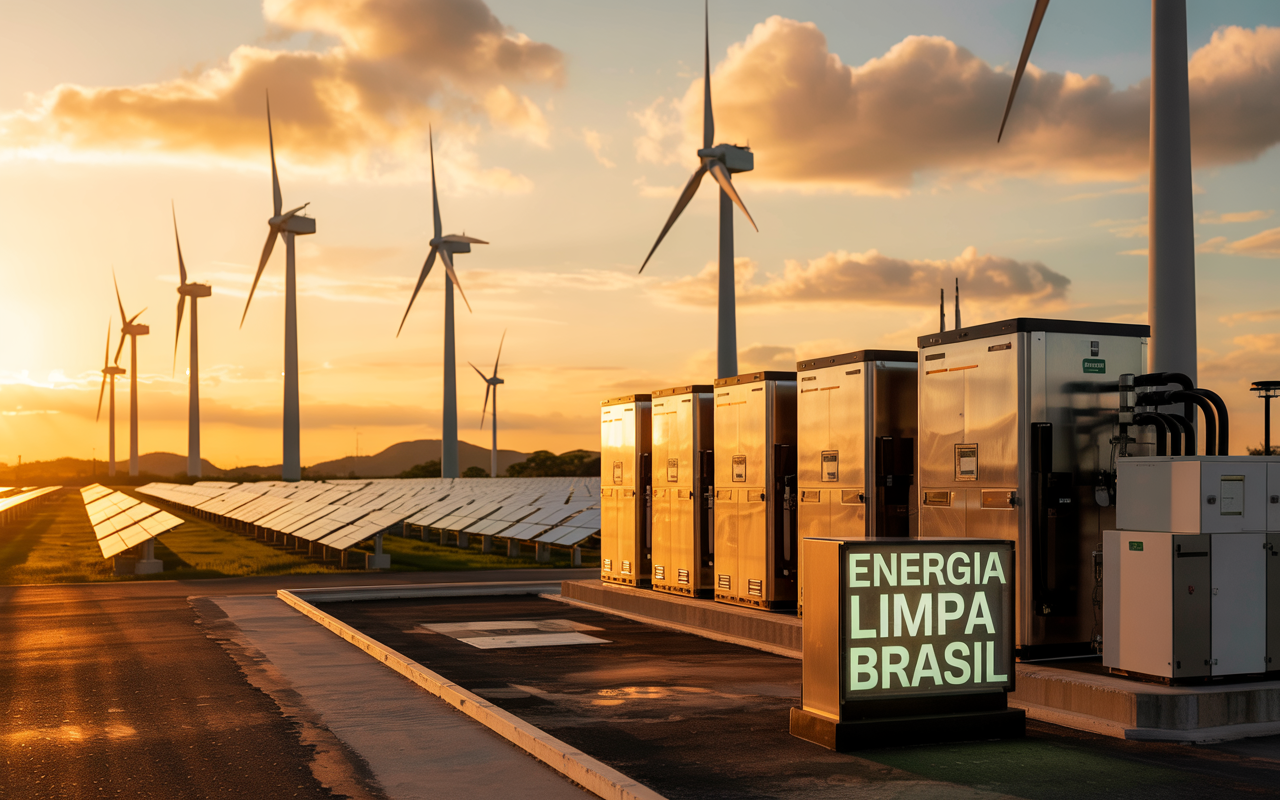
Enel Wants to Bypass Curtailment with Batteries in Renewable Energy Plants in Bahia, but Awaits Regulatory Framework and Tax Exemption to Start Investments in the Sector.
Enel is evaluating the use of batteries as an alternative to continue investing in renewable energy in Brazil in light of the current curtailment scenario, the mandatory cuts in generation. The statement was made by the company’s president in the country, Antônio Scala, during an event held this weekend in Bahia.
The executive participated in the official inauguration of the Pedra Pintada wind farm, located in Ourolândia, about 400 kilometers from Salvador. The unit was built with an investment of R$ 1.8 billion and has a generation capacity of 194 megawatts (MW). However, since the start of commercial operation, the plant has been operating at reduced generation, reaching 11% less than expected due to scheduled cuts.
Enel Projects Hybridization of Plants Using Batteries
According to Scala, the future of Enel’s investments in renewable energy generation depends on the adoption of storage technologies. “Batteries can be the way to continue making investments in Brazil,” said the executive, explaining that the hybridization of plants will begin in Bahia.
-
Renewable energy advances over protected areas in Brazil, and a survey by the Energy Transition Observatory reveals silent impacts that challenge environmental conservation and pressure sensitive traditional territories.

-
Rio Grande do Sul accelerates energy transition: State invests in renewable technologies and consolidates decarbonization strategies and pathways to attract billions in new industrial investments.

-
With 160,000 m² of collectors, an area larger than 20 football fields, Silkeborg, in Denmark, hosts a solar thermal plant that heats 19,500 homes and could become the largest solar heating plant in the world.

-
A study reveals the expansion of renewable energy procurement in Brazil and shows how companies are taking advantage of opportunities to reduce expenses, ensure energy efficiency, and strengthen strategic environmental commitments.


The company is already structuring plans to implement storage systems at wind and solar plants, but it is awaiting regulatory progress for the sector. Scala also advocated for the need for tax incentives to enable the installation of batteries in the country. “We will need an Ex-tariff to introduce batteries. The technology is more accessible in the international market, but in Brazil, costs are still high due to import taxes and fees.”
Company Projects R$ 25 Billion in Investments by 2025
According to Scala, Enel plans to invest R$ 25 billion in Brazil by 2025, with R$ 24 billion concentrated in the distribution area. Investments in generation will depend on the evolution of the curtailment problem. The company’s president emphasized that the impasse needs to be resolved to enable new renewable energy projects.
The company’s operations in Bahia, with 1.6 gigawatts (GW) of installed capacity, are among the most affected by the cuts. In some units, curtailments have already reached 35%, according to the company. At the Pedra Pintada plant, for example, only one of the 43 wind turbines was operating on the morning of the inauguration due to operational restrictions.
Curtailment Affects Recovery of Investments in the Sector
During the event, Enel Green Power’s director, Bruno Riga, highlighted that the cuts in generation have delayed the financial return of projects. “With this level of curtailment, we need an additional four or five years to recover the investment compared to what was planned. This can compromise the financial sustainability of companies,” said Riga.
According to him, the initial estimate for the return on investments ranged between 10 and 15 years. With the current cuts, this period may extend up to 20 years. “If the problem persists, there is a risk that plants will end their useful life without complete financial return,” he stated.
Company Advocates Legislative Solution for Curtailment
Scala also mentioned that the most immediate solution for the curtailment could come through Provisional Measure (MP) 1,300, which addresses the reform of the electricity sector. The proposal being discussed in Congress could include economic compensation for generators affected by the cuts.
According to him, the joint action of the three branches of government is necessary to resolve the problem. “We have the Legislative, Executive, and Judiciary in action, which shows the relevance of the issue,” said the executive. Scala emphasized that the Ministry of Mines and Energy is already working on a technical proposal based on the rebalancing of generation sources.
Sector Also Seeks Judicial and Regulatory Alternatives
While the legal framework does not progress, sector associations have turned to the Judiciary to defend the interests of generators. Abeeólica (Brazilian Wind Energy Association) and Absolar (Brazilian Solar Photovoltaic Energy Association) lead actions to seek compensations and define more stable rules for the market.
Deputy João Carlos Bacelar (PT-BA), present at the event, stated that including the issue in the MP would bring more legal security for investors. He argued that a decree from the Ministry would not carry the same legal weight as a measure approved by Congress.
Wind Harvest Intensifies Effects of Curtailment
According to Scala, the problem is likely to worsen in the coming months, a period that marks the wind harvest in the Northeast. During this time, there is increased energy generation from wind farms, but local demand is reduced due to lower energy use for air conditioning.
The limitation on the capacity of transmission lines means that excess energy must be curtailed. “This is when the effect of insufficient electric infrastructure becomes more evident,” stated the president of Enel.
Financial Sustainability Is at Risk for Smaller Operators
Riga warned that smaller operators may be more vulnerable to the current scenario. Companies with a high degree of leverage, structured on a project finance basis, face difficulties operating with frequent generation cuts. “A smaller operator cannot sustain one or two years with losses of 15%, 20%, or 30%,” he said.
Even large groups like Enel assert that the problem could compromise decisions on new investments if there is no consistent institutional response. According to the company, battery storage represents a medium-term solution that could maintain the expansion of renewable energy in Brazil.










-

Uma pessoa reagiu a isso.