





 Portuguese
  English
  Spanish
  3 min of reading


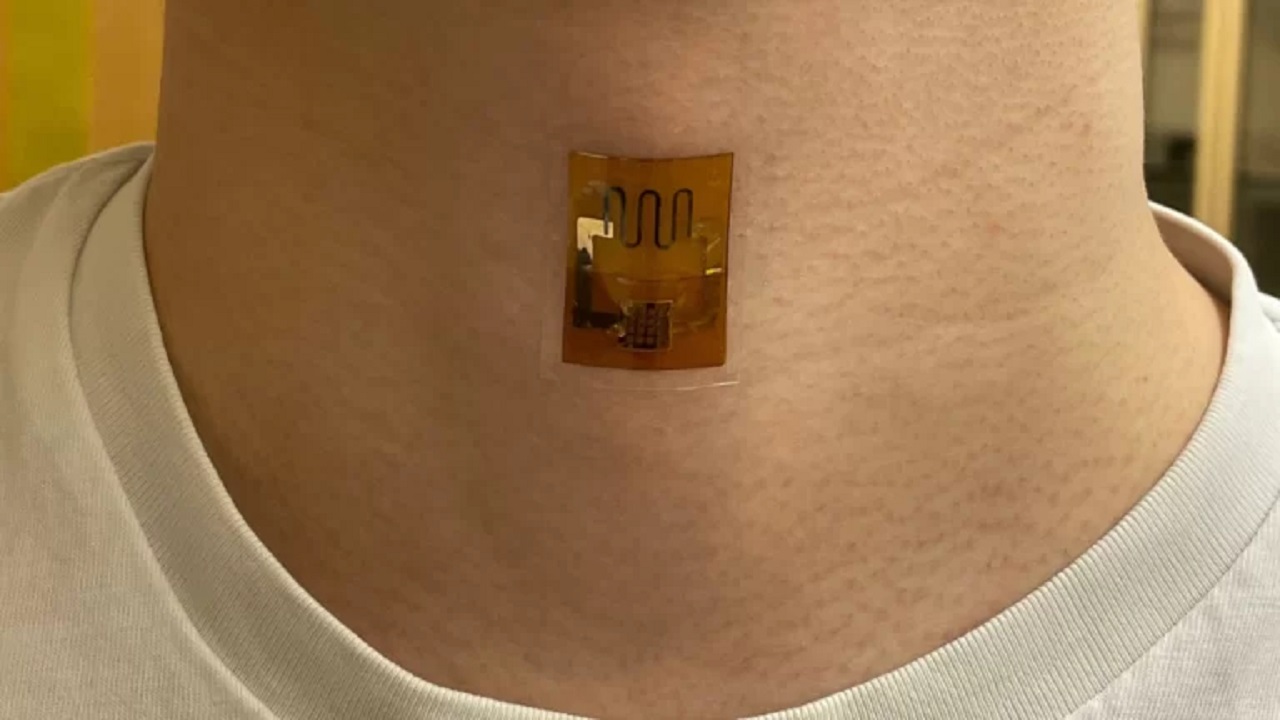
Massachusetts Researchers Developed An Adhesive Biofilm Capable Of Generating Renewable Energy From Human Sweat. The Innovation Could Completely Change The Device Charging Market.
A team of researchers from University of Massachusetts Amherst, in the United States, developed a Biofilm that can harness a source of energy that has not been widely explored until now: evaporation. In summary, the researchers can generate renewable energy from human sweat.
Biofilm Can Generate More Energy Than Battery In The Field
The team of researchers developed a biofilm that converts skin moisture into energy, successfully generating clean, continuous, and stable energy that can be used as an adhesive applied directly to the skin.
According to Xiaomeng Liu, a graduate student in electrical and computer engineering at the College of Engineering at UMass Amherst and lead author of the paper, this is a very exciting technology and represents true renewable energy, which, unlike other sources called clean energy, has a completely green production.
-
A “silent skill” is allowing Brazilians to earn up to R$ 22,000 per month without a degree and become indispensable for companies that rely on millions of data to survive.

-
Researchers at the Toyota Research Institute found that if a human uses robotic arms to flip a pancake 300 times in an afternoon, the robot learns to do it on its own the next morning, and this is currently the most promising method to solve the biggest bottleneck in modern robotics.

-
Goodbye iron: a common item in households is starting to lose space to technology that smooths clothes in minutes without an ironing board and with less energy consumption.

-
Antarctica reveals an unusual clue high in the Hudson Mountains, and what appeared to be just an isolated rock began to expose a secret hidden under the ice for ages.

The biofilm is the result of the bacterium Geobacter sulfurreducens. These specific types of bacteria are known to conduct electric energy, which is why they were previously used to power devices. However, the old methods had disadvantages, such as requiring live bacteria that needed constant feeding and care.
“The beauty of this new biofilm is that it uses colonies of dead bacteria, so there’s no need to feed them. By generating energy with human sweat, the biofilm can provide the ideal amount or even more energy than a similarly sized battery,” highlights the American university in a statement.
Biofilm Converts Energy Locked In Evaporation Into Clean Energy
According to the microbiology professor at UMass Amherst and one of the senior authors of the paper, Derek Lovley, scientists simplified the process of generating renewable energy, drastically reducing the amount of processing required. They sustainably cultivated the cells in a biofilm and then used cell agglomeration, reducing energy inputs and making everything simpler while expanding potential applications.
The scientists noted that a large part of the solar energy that reaches the Earth is used to evaporate water, representing a large and unexplored energy source, according to Jun Yao, professor of electrical engineering and computer science at UMass.
Due to the surface of our skin being constantly moist with sweat, the biofilm can convert the energy locked in evaporation into clean energy sufficient to charge small devices. The biofilm could change the entire wearable electronics market, generating energy for everything, from medical sensors to personal electronics. The goal is to replace large batteries with this small, transparent, thin, adhesive, and flexible version.
Human Movements Can Also Generate Renewable Energy
Researchers developed a soft and flexible bioelectronic device last year that transforms human body movements, from bending the elbow to subtle movements like a wrist twist, into electrical energy.
A generator built with the device can then be used to power small electronic devices, diagnostic sensors, electronic fabrics, and even implants. This innovation became possible when the scientist from the University of California, Los Angeles, Yihao Zhou, discovered the possibility of generating the magnetoelastic effect in a flexible and soft material.
This effect is the change in how much a material is magnetized when small magnets are constantly approached and separated by mechanical pressure, which had only been documented in rigid systems until now.
To demonstrate their concept, the team used microscopic magnets dispersed in a thin silicone matrix like paper to generate a magnetic field that changes intensity according to the strength of the magnetic field, generating electricity.







Seja o primeiro a reagir!