





 Portuguese
  English
  Spanish
 5 min of reading
  0 comments


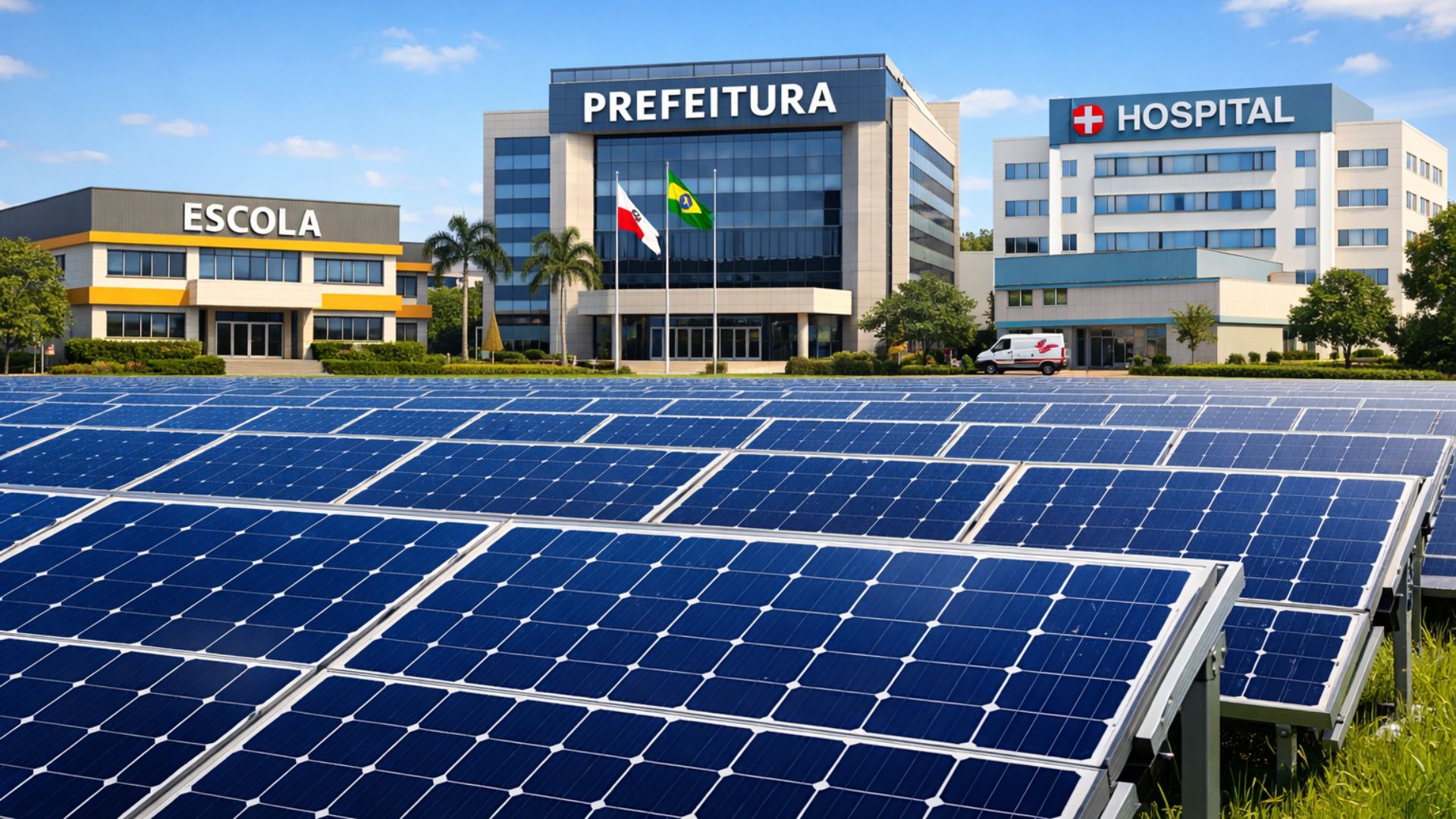
Renewable Energy Gains Space in Uberlândia with New Contract for Public Buildings, Generating Economy for Municipal Coffers and Strengthening Urban Sustainability
On December 23, 2025, the City Hall of Uberlândia announced a new advancement in the municipality’s energy policy by signing a contract for the supply of solar photovoltaic energy intended for public buildings. The partnership, celebrated with Cemig SIM, a wholly-owned subsidiary of Companhia Energética de Minas Gerais (Cemig), reinforces the city’s commitment to sustainability, administrative efficiency, and responsible use of public resources.
The contract will last for five years and anticipates a estimated savings of R$ 12.4 million over this period, with no need for initial investment by the municipality. This initiative places Uberlândia among Brazilian cities that adopt structured solutions for renewable energy to reduce costs, increase energy security, and decrease environmental impacts.
Renewable Energy in Uberlândia Strengthens Public Management
The signing of the contract took place at the Municipal Administrative Center and was attended by Mayor Paulo Sérgio. According to the manager, the adoption of renewable energy represents an important advancement in the modernization of public administration and the rationalization of electricity spending.
-
Renewable energy advances over protected areas in Brazil, and a survey by the Energy Transition Observatory reveals silent impacts that challenge environmental conservation and pressure sensitive traditional territories.

-
Rio Grande do Sul accelerates energy transition: State invests in renewable technologies and consolidates decarbonization strategies and pathways to attract billions in new industrial investments.

-
With 160,000 m² of collectors, an area larger than 20 football fields, Silkeborg, in Denmark, hosts a solar thermal plant that heats 19,500 homes and could become the largest solar heating plant in the world.

-
A study reveals the expansion of renewable energy procurement in Brazil and shows how companies are taking advantage of opportunities to reduce expenses, ensure energy efficiency, and strengthen strategic environmental commitments.


According to the City Hall, part of the public buildings in the municipality will start consuming 100% clean energy, sourced from solar plants remotely operated by Cemig SIM. The supply will be made through the shared distributed generation modality, as provided in the regulations of the National Electric Energy Agency (Aneel).
This model allows for a reduction in fixed expenses without compromising service quality, in addition to providing budget predictability in a scenario of constant tariff fluctuations in the Brazilian electric sector.

Sustainability and Energy Efficiency in Public Buildings
The gradual replacement of conventional energy with solar sources reinforces the sustainability policy adopted by Uberlândia in recent years. The use of clean energy reduces indirect emissions of greenhouse gases and decreases the pressure on fossil sources or those with a greater environmental impact.
According to sector data, solar energy is one of the fastest-growing sources in Brazil, especially in the distributed generation segment. The adoption of this model by municipalities contributes to a more diversified and resilient electrical matrix.
By prioritizing sustainability in public buildings, the municipality sends a clear signal of environmental commitment, encouraging good practices also in the private sector and among citizens.
Economy for the Public Coffers with Renewable Energy Without Initial Investment
One of the most relevant points of the signed contract is the economy directly to municipal coffers. The estimated R$ 12.4 million in five years considers the reduction in electricity bills, with no need for construction, equipment purchases, or maintenance by the City Hall.
This characteristic makes the model especially attractive for public administrations, which often face budget constraints. Shared distributed generation eliminates implementation costs and transfers operational responsibility to the supplying company.
The savings generated can be redirected to essential public policies, such as health, education, urban mobility, and social assistance, amplifying the positive impact of the initiative.
Certified Renewable Energy Guarantees Security and Traceability
All energy supplied to the public buildings of Uberlândia will be certified by the Cemig SIM I-REC seal. This international certificate ensures the traceability of the renewable origin of the consumed energy, guaranteeing transparency and credibility to the contract.
The I-REC certification is widely used by companies and governments seeking to prove the use of renewable energy in their operations. In addition to the environmental benefit, it strengthens the institutional image of the municipality and facilitates alignment with climate policies and decarbonization goals.
Energy security is also enhanced, as the diversification of sources reduces dependence on the traditional system and mitigates risks associated with water crises or extreme price fluctuations.
History of Economy and Sustainability in Uberlândia
The initiative announced in December 2025 is not isolated. In 2023, during the management of Odelmo Leão and Paulo Sérgio, Uberlândia signed a contract with Cemig GT for the supply of renewable energy to the Municipal Department of Water and Sewage (Dmae). Since then, the authority has been operating with clean energy, reducing environmental impacts and operational expenses.
Considering the contracts already in effect, the expectation of the municipal administration is to achieve a cumulative reduction of around R$ 82 million in electricity expenses. This history demonstrates a continuous strategy, based on planning, technical data, and a focus on the efficiency of public spending.
Sustainability and Energy Inclusion for the Population
In addition to the direct benefits to the municipal administration, the contract foresees a new phase with relevant social impact. Starting in January 2026, Cemig SIM intends to expand access to clean energy for residents and public servants of Uberlândia.
According to the company, a promotional code and an exclusive online service channel will be created, facilitating the adhesion to solar distributed generation. The initiative aims to promote energy inclusion and extend the reach of sustainability beyond public buildings.
The democratization of access to clean energy is a national trend, especially in cities seeking to reduce inequalities and encourage conscious consumption.
Uberlândia Advances in Economy, Sustainability, and Energy Security
The new contract signed on December 23, 2025 consolidates Uberlândia as a reference in energy management in the public sector. By adopting renewable energy, the municipality reduces costs, strengthens sustainability, and enhances the security of electricity supply.
The combination of economy, environmental responsibility, and long-term planning demonstrates that it is possible to modernize public administration without increasing expenses. This is a strategic decision, with lasting benefits for the city and the population.
With well-structured initiatives and the use of clean sources in public buildings, Uberlândia is consistently advancing towards a more efficient, resilient urban model aligned with the demands of Brazil’s energy future.








-

-

2 pessoas reagiram a isso.