





 Portuguese
  English
  Spanish
  4 min of reading
  1 comment


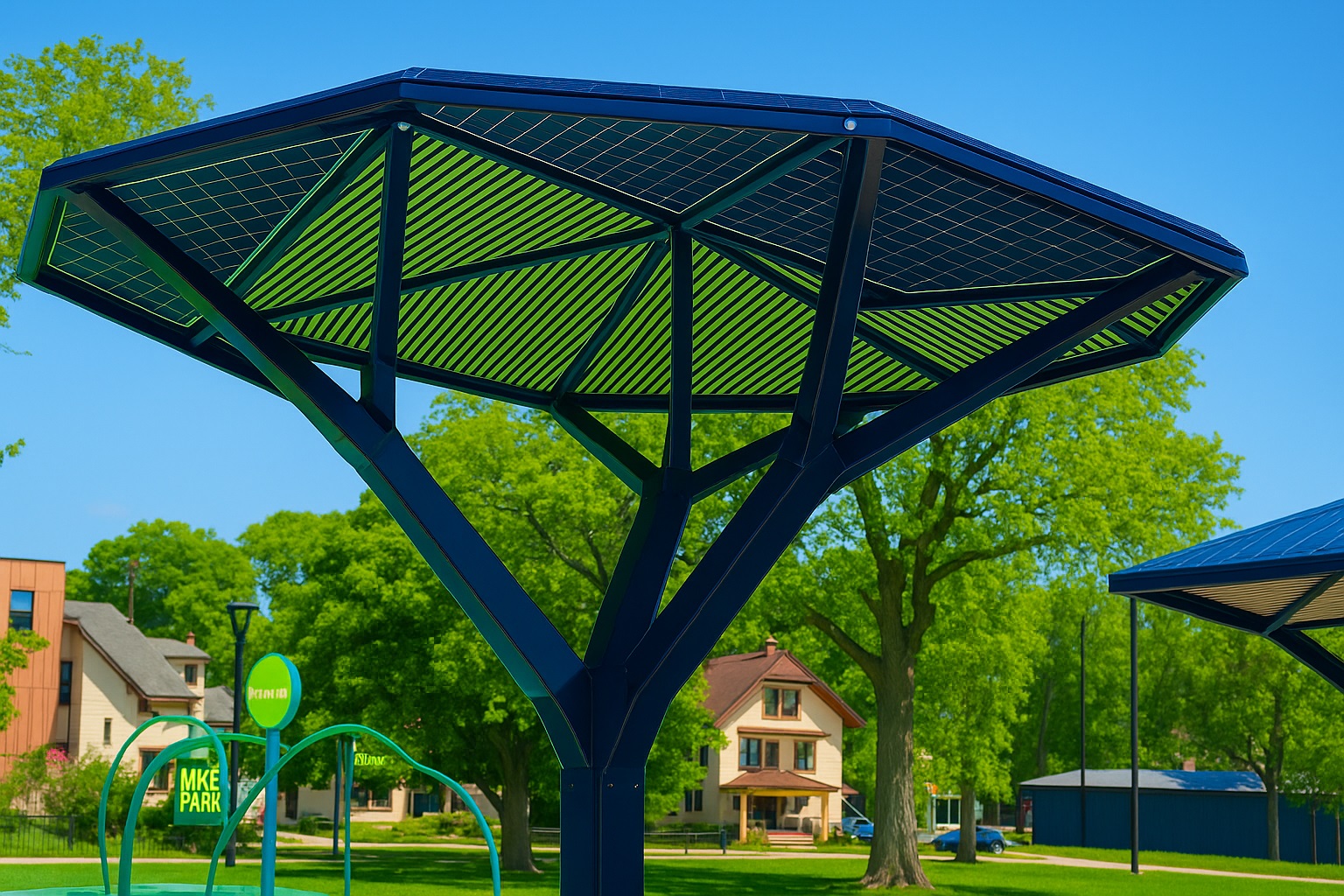


Installed in Milwaukee, the solar sculptures E-Cacias provide shade, lighting, and clean energy in urban areas. Innovative design elevates solar panels and transforms public spaces into showcases of sustainability.
The advancement of renewable energy is not limited to fields of solar panels or large wind farms. In Milwaukee, United States, solar energy has taken on a new and creative form with the installation of the so-called “solar trees” — structures that mimic the appearance of trees and function as true urban sculptures capable of generating electricity, providing shade, and illuminating public spaces.
Installed at Wick Playfield in May, the structures named E-Cacias combine urban design, functionality, and sustainability. Created by the startup Solar Forma Design, based in Eau Claire, the solar trees are an attempt to make renewable energy more accessible, visible, and integrated into the everyday landscape of cities.
Elevated Solar Energy That Saves Space
One of the main advantages of E-Cacias over traditional solar panels is the optimized use of urban space. While ground-mounted panels require large open areas and barriers, the solar trees keep the photovoltaic panels elevated, allowing the ground to remain free for recreation or pedestrian traffic.
-
Renewable energy advances over protected areas in Brazil, and a survey by the Energy Transition Observatory reveals silent impacts that challenge environmental conservation and pressure sensitive traditional territories.

-
Rio Grande do Sul accelerates energy transition: State invests in renewable technologies and consolidates decarbonization strategies and pathways to attract billions in new industrial investments.

-
With 160,000 m² of collectors, an area larger than 20 football fields, Silkeborg, in Denmark, hosts a solar thermal plant that heats 19,500 homes and could become the largest solar heating plant in the world.

-
A study reveals the expansion of renewable energy procurement in Brazil and shows how companies are taking advantage of opportunities to reduce expenses, ensure energy efficiency, and strengthen strategic environmental commitments.


“This is something that generates quantifiable value. Lighting and shade are essential for modern public space design,” said Brian Graff, CEO and founder of Solar Forma Design.
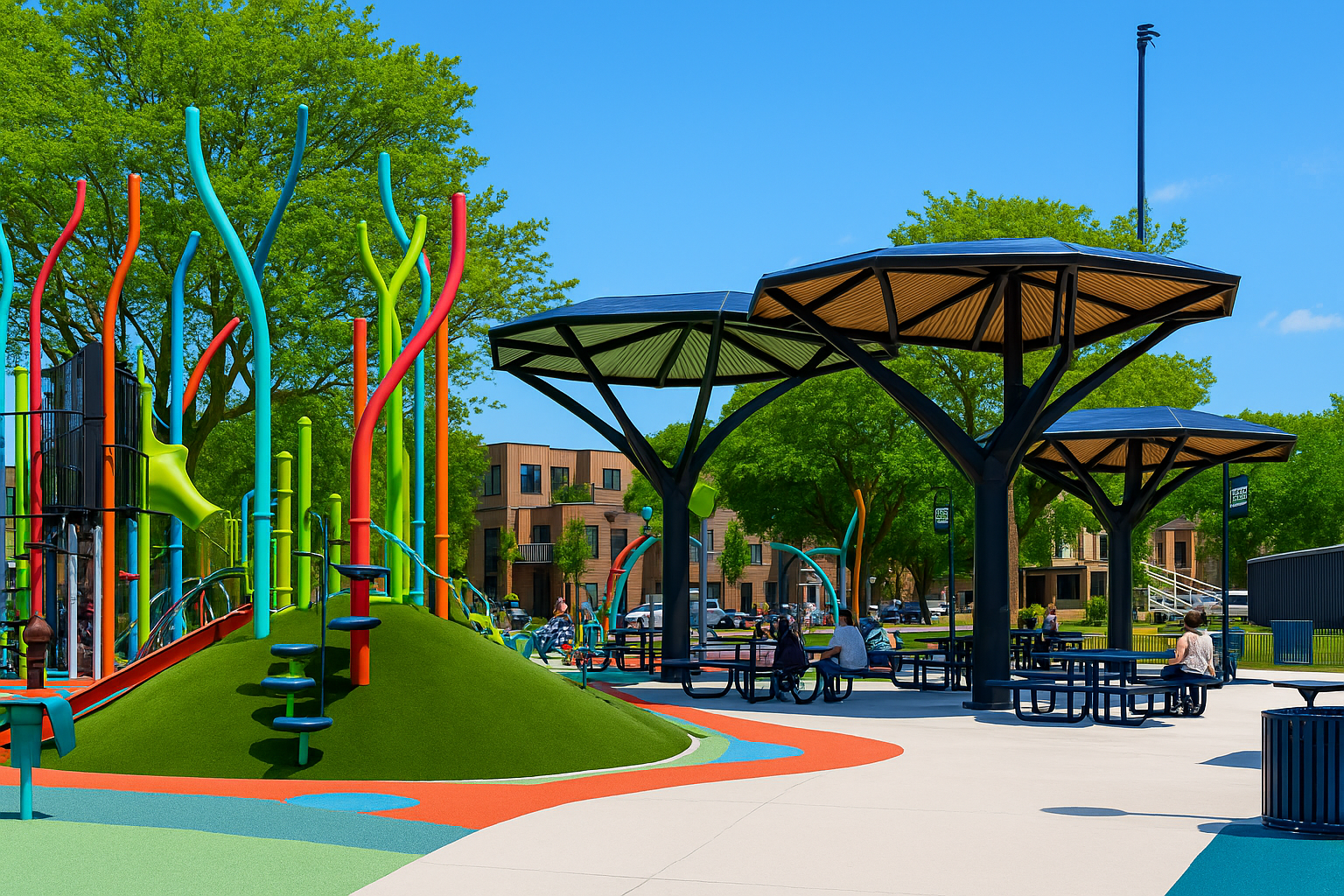
The trees are connected to the local power grid and directly feed systems such as street lighting and the park’s electronic scoreboard. As a result, they not only reduce municipalities’ energy bills but also serve as educational tools and symbols of environmental innovation.
Design Inspired by African Nature
The name E-Cacia is a tribute to the acacias of the Serengeti, in Africa. The choice is not only aesthetic but also functional: the “inverted umbrella” shape helps capture maximum sunlight while providing ample shade around the base.
In addition to Milwaukee, other cities like Sheboygan, Eau Claire, and Discovery World, also in Milwaukee, have already received the structures. New installations are planned for Madison (Wisconsin) and Houston (Texas), expanding the project’s reach and positioning solar energy as a key player in urban architectural solutions.
Investment and Incentives
The cost to install an E-Cacia ranges from US$ 135,000 to US$ 140,000 per unit. Despite the high price, Solar Forma Design reports that federal and local incentives can significantly reduce the final value for municipalities, schools, and interested institutions.
According to Graff, the educational and inspiring function of these solar trees can be as important as their ability to generate energy:
“When we creatively integrate solar energy into human spaces, we can inspire confidence in the technology and encourage the adoption of sustainable solutions.”
Shade as an Ally of Quality of Life
During the hot days of the North American summer, E-Cacias have offered refuge from the extreme heat. For residents like Tom Serafin, a family man who frequents Wick Playfield, the shade generated by the solar trees makes all the difference:
“Brutal. Like, the worst of all,” commented Serafin about the heat. “Having a bit of shade here on a hot day is great.”
The presence of shaded elements in public spaces is recognized by architects and urban planners as an essential factor for urban quality of life, especially during times of global warming and heat islands in cities.
Functional Public Art: The New Benchmark of Sustainability
The proposal of E-Cacias also connects with the role of public art. Instead of being just aesthetic sculptures, these structures serve practical functions. Graff compares the project to other iconic urban art pieces, such as Cloud Gate (the “Bean”) in Chicago, which cost over US$ 20 million and has become a symbol of the city, attracting thousands of tourists each year.
“It’s not just about energy. It’s a visual statement. It’s something that draws attention, that teaches, and that improves urban life,” explains Graff.
For him, solar energy integrated into public art can become a powerful tool for civic engagement and environmental awareness, demonstrating that sustainability and beauty can (and should) coexist.
Schools and Municipalities Show Interest
Solar Forma Design claims that it has been receiving inquiries from schools, local governments, and cultural institutions interested in bringing solar trees to their spaces. The educational potential is enormous: by showing how solar panels work in visible and accessible structures, E-Cacias help popularize the concept of renewable energy, bringing it closer to people’s daily lives.
Additionally, schools can use the structures as outdoor laboratories to teach science, energy, and sustainability.
For the project’s creators, more important than generating megawatts is generating trust and understanding about renewable energy. At a time when the world urgently discusses the energy transition, initiatives like the solar trees of E-Cacia show that it is possible to rethink how society relates to electricity and urban space.









Qual o nome do Fabricante, poderia colocar en contacto com a empresa