





 Portuguese
  English
  Spanish
  5 min of reading
  0 comments


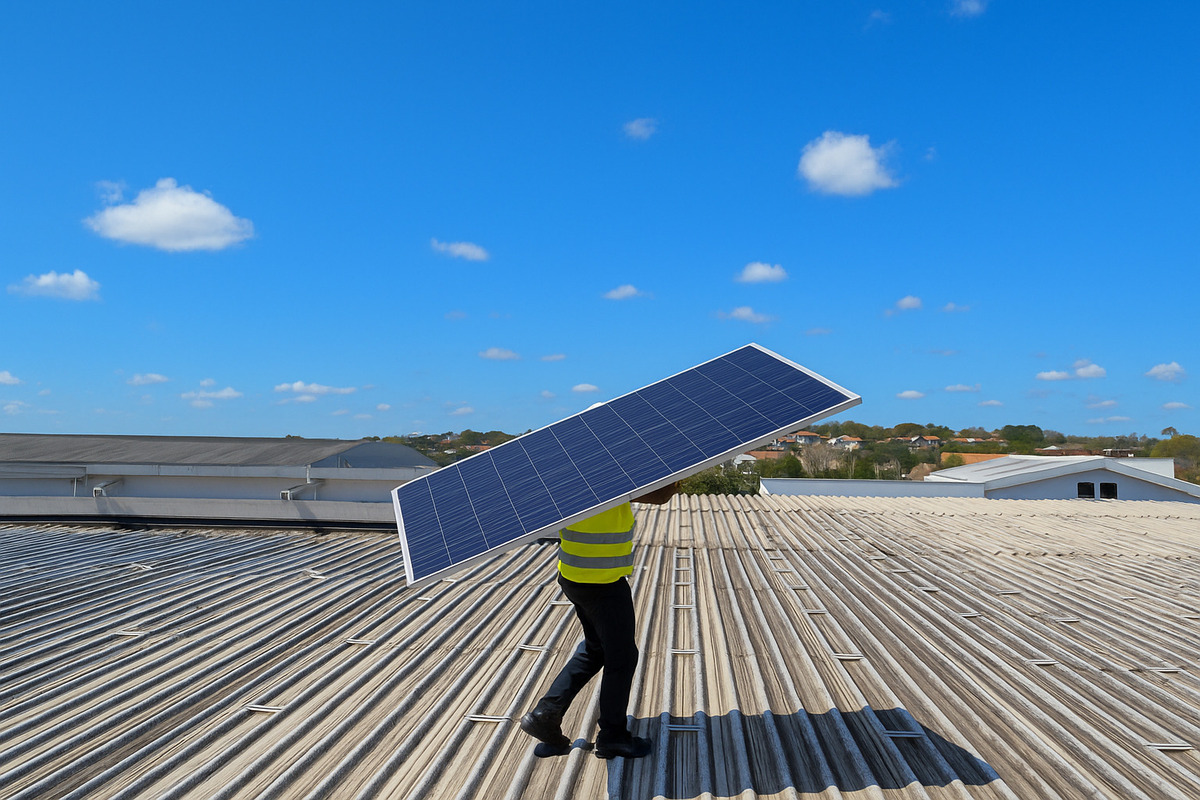
Cotia Bets On Sustainability When Investing In Solar Energy That Will Supply Public Buildings, Reducing Costs And Promoting The Use Of Renewable Sources.
The city of Cotia, located in the Metropolitan Region of São Paulo, has taken an important step towards sustainability and the modernization of public management. The city hall has launched an innovative project that will bring solar energy to various municipal buildings. This initiative reinforces the city’s commitment to the environment and, at the same time, represents an economic alternative for public finances.
The project started at the Caucaia do Alto Daycare Center, officially called the Benedicta Stefano Antunes de Oliveira Educational Center. This location will be the first to operate with 100% supply from clean and renewable energy. By the first half of October, the school unit will be fully adapted to the new system, serving as a model for future installations in Cotia.
Gradually, the solar energy system will supply public buildings in different areas, such as schools, health units, and other spaces that consume a lot of energy. The idea is for this implementation to bring permanent benefits and significantly reduce dependence on traditional energy provided by the utility company Enel.
-
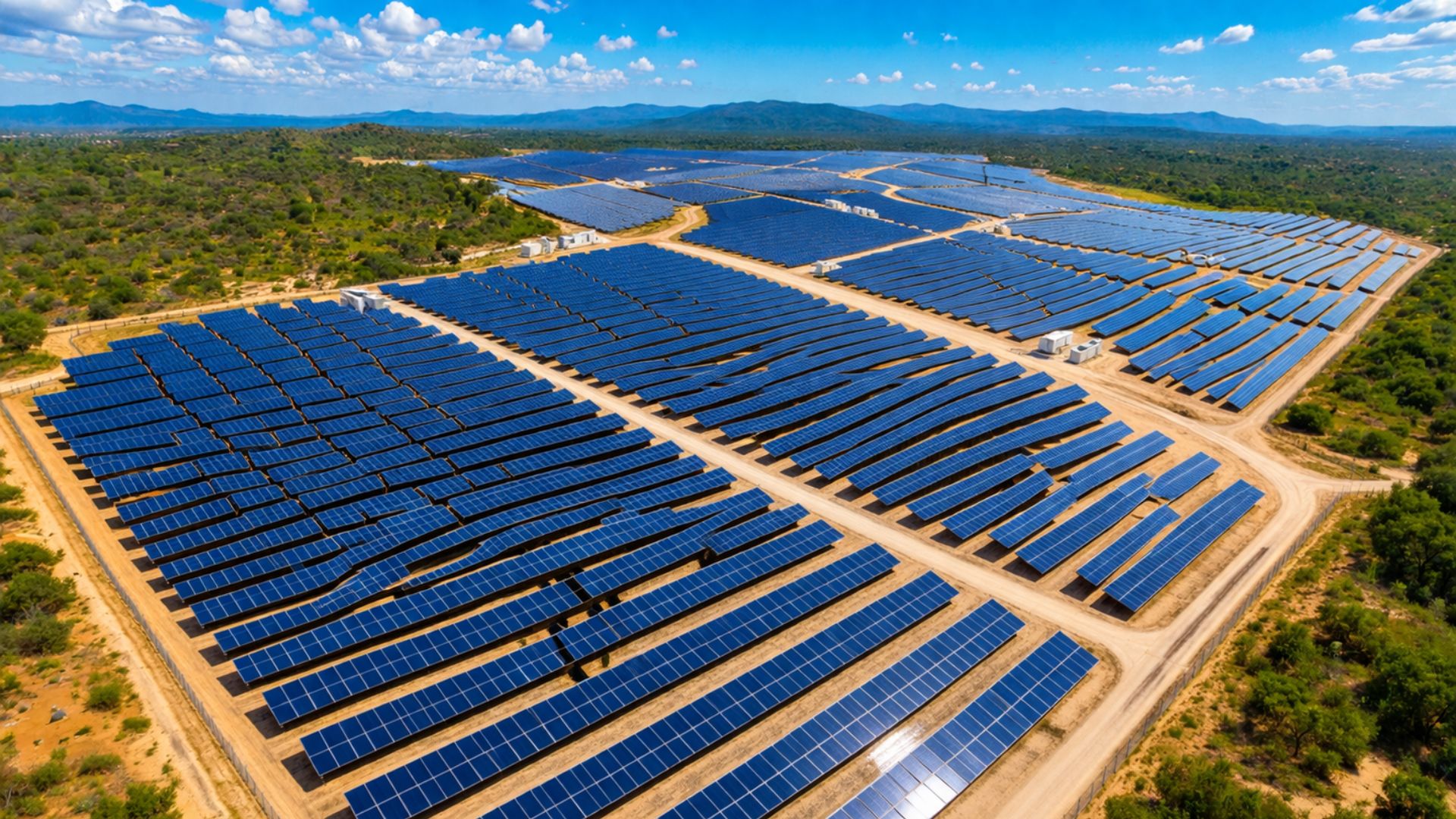
The Sol do Agreste Photovoltaic Complex begins operations in Pernambuco and accelerates the expansion of solar energy in Brazil, directly impacting the reduction of emissions and strengthening the sustainable energy matrix.
-
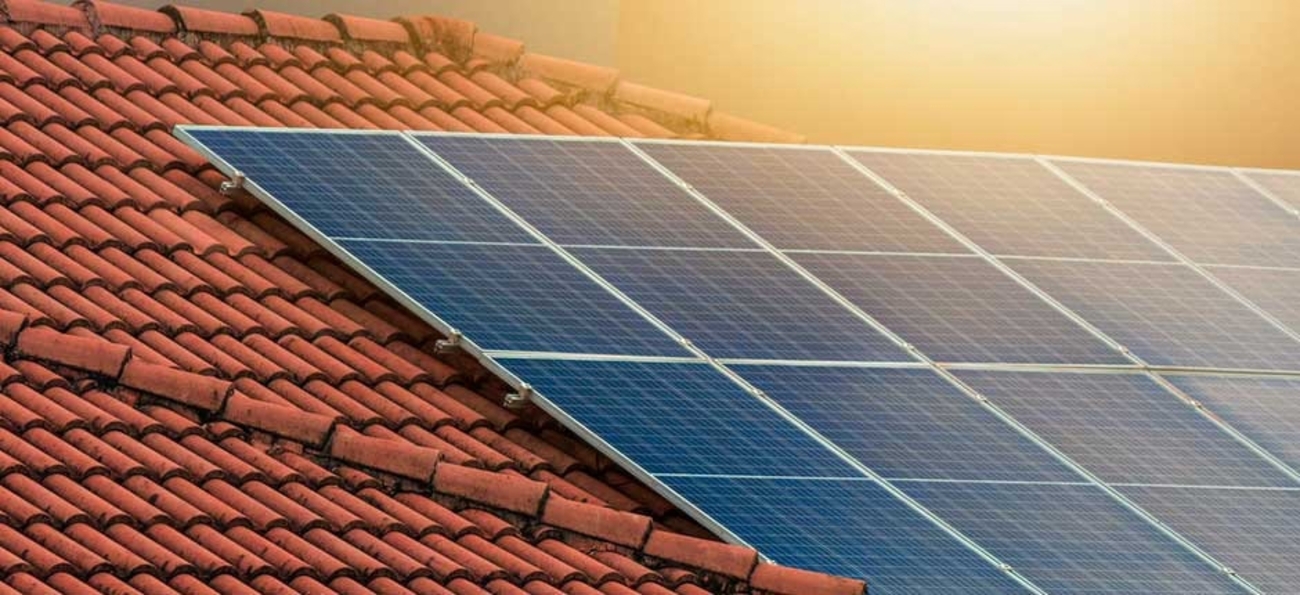
Roraima bets on the sun to escape high tariffs: Amid the energy crisis and price hikes, solar energy is growing in Roraima and transforming consumption in the North region.
-
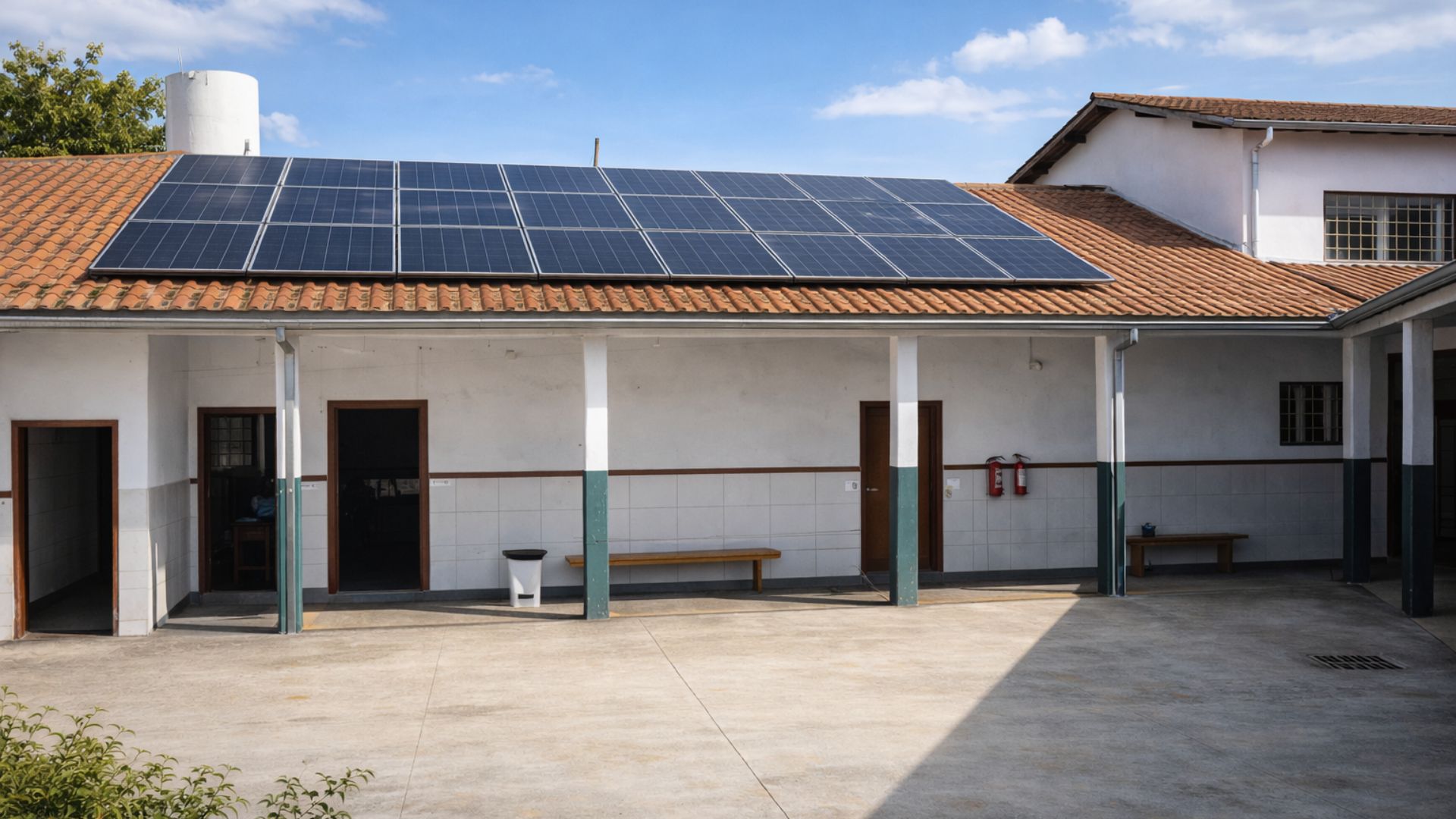
Copel boosts solar energy in Paraná and brings innovation to public schools, promoting savings on electricity bills, energy efficiency, and a direct impact on the quality of education.
-
Brazil reaches historic milestone in solar energy: Sector surpasses 2 million accumulated green jobs and generates billions in the national economy even under market pressure.
Moreover, the project helps the city align with international environmental policies, reinforcing its commitment to sustainability and reducing greenhouse gas emissions. This action demonstrates that public management can invest in innovative solutions while also generating savings of public resources.
The Evolution Of Solar Energy In Brazil
Solar energy began to gain traction in Brazil over the last two decades. Initially, the high cost of equipment hampered expansion. Over time, prices for photovoltaic panels fell and government incentives increased, making investment more accessible.
In medium and small cities like Cotia, the adoption of this type of technology has become increasingly common. This is because managers realized that the savings obtained from reduced energy bills can be reinvested in other important areas, such as education and health.
Additionally, the advancements in energy efficiency research have allowed solar panels to become more powerful. Thus, they can meet large consumption demands, as seen in schools and hospitals. This context helps explain why projects like Cotia’s are considered strategic for the future.
In recent years, Brazil has also seen a significant increase in the participation of distributed solar energy generation. More and more residences, businesses, and public institutions are adopting the technology, contributing to the decentralization of energy production. This trend strengthens the country’s energy security and reduces dependence on non-renewable sources.
Furthermore, incentive and financing programs make it easier for smaller municipalities to implement robust projects. For example, credit lines with reduced interest and federal subsidy policies allow solar energy to become viable even in locations with limited budgets.
Details Of The System Installed In Cotia
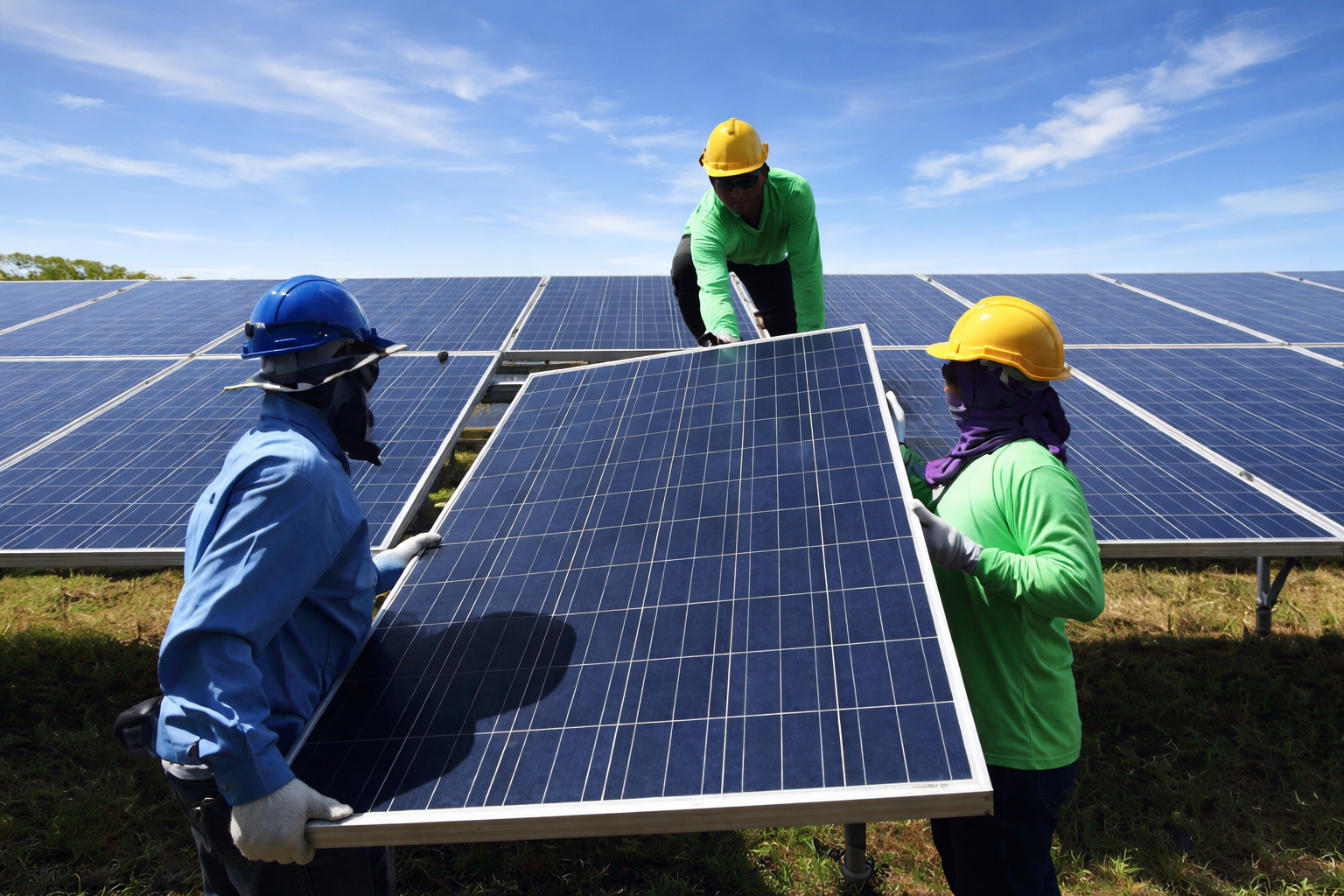
At the Caucaia do Alto Daycare Center, 428 photovoltaic modules are being installed. The structure will have the capacity to generate 300 kilowatts-peak (kwp), enough to meet 100% of the needs of the school unit.
Whenever there is excess production, the unused energy will be sent back to the Enel power grid. This process is made possible thanks to a device called a bidirectional meter, which records the amount of energy generated, consumed, and injected into the grid.
Thus, when a school or another public building uses less energy than the system produces, the surplus can be converted into energy credits. These credits, in turn, will reduce costs for other municipal units, amplifying the initiative’s gains.
Additionally, the installation of solar systems creates opportunities for learning and research. Schools receiving photovoltaic panels can develop educational projects related to energy generation, energy efficiency, and sustainability. This type of initiative increases the engagement of students and teachers and promotes practical environmental education.
The project also strengthens the local economic chain. Companies specialized in installation, maintenance, and equipment supply are contracted, generating direct and indirect jobs and boosting the renewable energy sector in the region.
Solar Energy As An Economy And Sustainability Strategy
The Cotia project shows how solar energy will supply public buildings efficiently, bringing positive economic and environmental impacts. First, there’s the direct savings, as the energy bill represents one of the largest fixed costs of municipal administrations.
With the reduction of this expense, the city hall can redirect the saved resources to other investments. Additionally, there’s the environmental factor, as replacing the conventional energy matrix with renewable sources contributes to a decrease in pollutant gas emissions.
It is worth noting that Brazil, despite being one of the countries with the highest solar incidence potential in the world, still relies heavily on sources such as hydropower and thermoelectric plants. Projects like Cotia’s reinforce the need for diversification of the energy matrix.
Another relevant point is that solar energy can reduce the risk of blackouts and issues related to overloading the power grid. With the decentralization of production, each public building generates its own energy, reducing pressure on the system and increasing reliability in supply.
Future Perspectives For Cotia And Other Cities
The initiative by the Cotia city hall may inspire other Brazilian cities. The investment in solar energy will supply public buildings increasingly broadly, consolidating a sustainable model that tends to become a national reference.
As the costs of the technology decrease and positive results emerge, more municipal managers feel encouraged to adopt similar solutions. This trend creates a virtuous cycle, in which sustainability and economy go hand in hand.
Furthermore, solar energy allows the integration of other sustainable solutions, such as rainwater harvesting systems and efficiency in lighting and climate control. Together, these measures help make public buildings more modern, economical, and environmentally responsible.
Finally, Cotia’s experience reinforces a clear message: betting on renewable sources is not only an environmentally correct choice but also a smart decision from an economic and social standpoint. The future of Brazilian cities depends on projects like this.
The fact that solar energy will supply public buildings in Cotia represents more than a local achievement. This is because the example shows how municipal policies can transform the way Brazil consumes energy. By installing photovoltaic systems, the city unites economy, sustainability, and innovation for the benefit of the population.
Therefore, this movement reinforces that the future of energy in Brazil depends on the diversification of the matrix, highlighting clean and renewable sources. Thus, Cotia advances on this path and inspires other municipalities to adopt sustainable practices and modernize their public management.
With schools, daycare centers, and administrative buildings lit by solar energy, the city reaffirms its commitment to a greener, more conscious, and efficient future.








Seja o primeiro a reagir!