





 Portuguese
  English
  Spanish
  3 min of reading
  0 comments


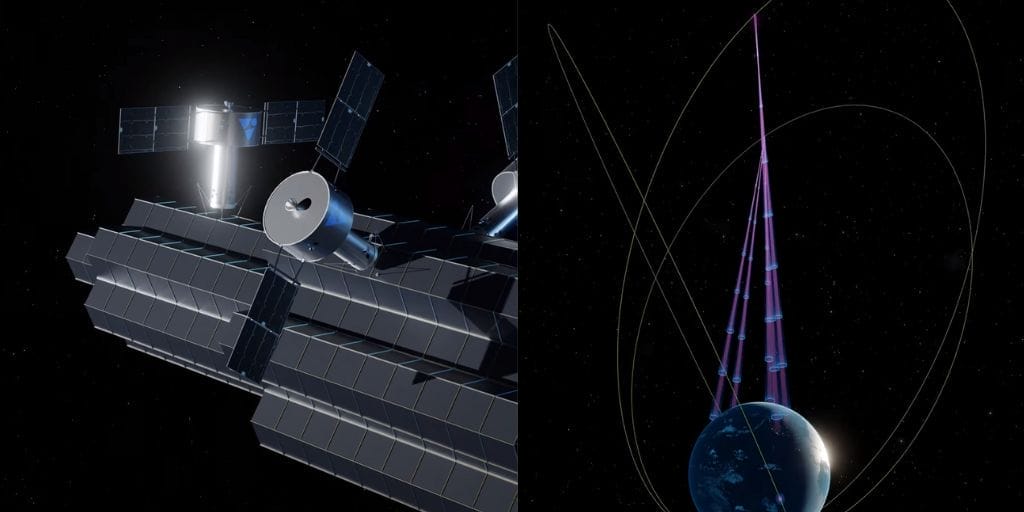
A Rocket That Goes to Space and Brings Back Solar Energy. It Seems Like a Science Fiction Plot, but in Reality It Is a Plan That Could Be Implemented Very Soon by a Company Owned by Billionaire Elon Musk.
According to information from the Terra portal, the idea emerged from John Bucknell, founder of the company and former engineer at SpaceX, who aims to change the history of space transportation.
This is because he wants the startup Virtus Solis to have the opportunity to use SpaceX rockets to collect solar energy generated in space, a process that, according to him, would make energy cheaper than that derived from currently used methods.
According to John Bucknell, “for space-based solar energy to work, it is necessary to have a heavy launch, wireless power transfer, and economy.”
-
A “silent skill” is allowing Brazilians to earn up to R$ 22,000 per month without a degree and become indispensable for companies that rely on millions of data to survive.

-
Researchers at the Toyota Research Institute found that if a human uses robotic arms to flip a pancake 300 times in an afternoon, the robot learns to do it on its own the next morning, and this is currently the most promising method to solve the biggest bottleneck in modern robotics.

-
Goodbye iron: a common item in households is starting to lose space to technology that smooths clothes in minutes without an ironing board and with less energy consumption.

-
Antarctica reveals an unusual clue high in the Hudson Mountains, and what appeared to be just an isolated rock began to expose a secret hidden under the ice for ages.


In this sense, despite confessing to the challenge of accessing space at low cost, the expert highlighted that, in recent years, due to the investment needed to launch satellites into space, the costs of reusable SpaceX rockets have decreased significantly.
The proof of this is that, currently, Elon Musk’s company can send satellites for less than US$ 3,000 per kilogram of payload. However, this price is still high when it comes to solar energy, given that producing it requires solar panels even larger than those on the International Space Station.
Today, the plan of Virtus Solis is to build panels that are 1 km long. These panels, according to the project, would be assembled in orbit by robots.
The Cost to Send SpaceX Rockets May Decrease
The hope of the former engineer from Elon Musk’s company is that, very soon, SpaceX rockets will lower the operating cost to US$ 10 per kilogram due to the start of their operations.
For Bucknell, once the launch costs to low Earth orbit drop below US$ 200, solar energy in space will already be cheaper than alternatives on Earth, such as nuclear plants.
Energy for the Whole World
According to the expert, SpaceX could send hundreds of modules to the Molniya orbit, whose nearest and farthest points from the planet are 800 km and 35,000 km, respectively.
In this sense, a constellation of two or more panels could be sufficient to provide energy to a region, while 16 units could provide energy to the entire world through microwaves.
Challenges Still Exist
Although the idea seems cool, there are still challenges before it comes to fruition. According to Bucknell, the startup is still looking for ways to improve wireless power transmission, one of the main obstacles for solar energy in space.
This is because, currently, the efficiency found in the systems is only 5%, whereas, for practical use, it needs to be increased to 20%.







Seja o primeiro a reagir!