





 Portuguese
  English
  Spanish
  4 min of reading
  0 comments


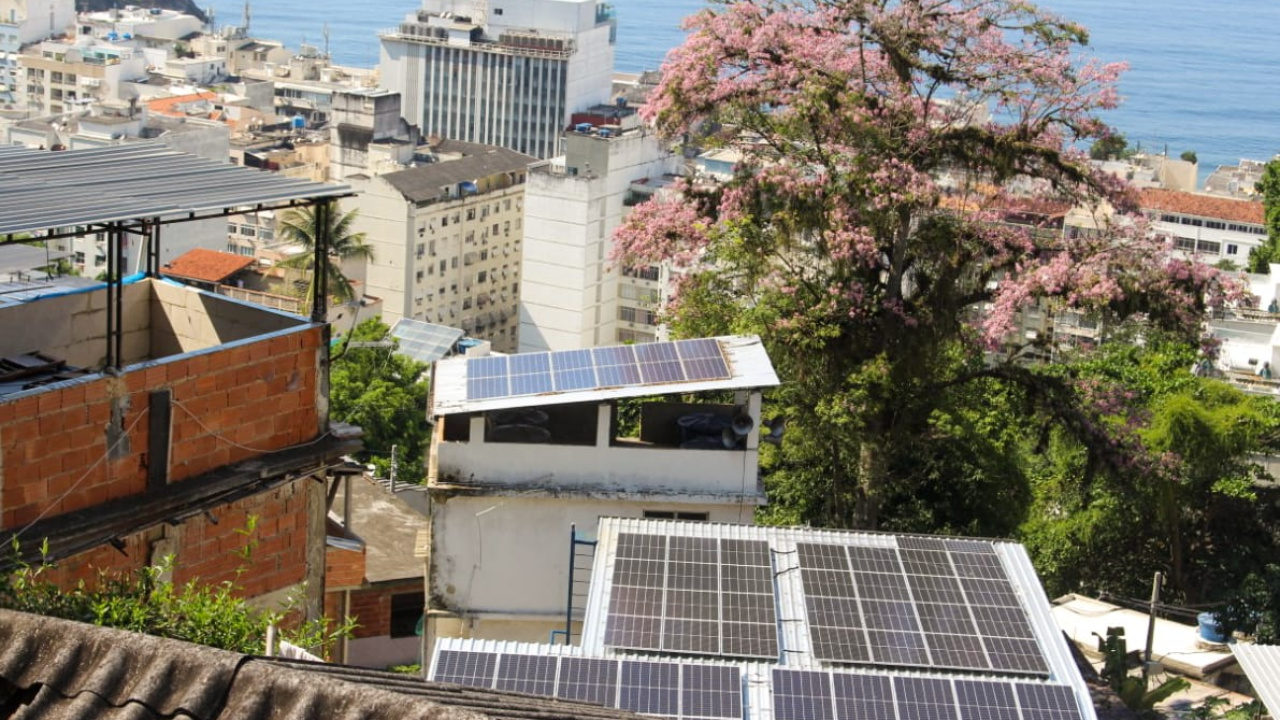
Solar Panels Occupy Neighborhoods in Brazil, Making Solar Energy a Clean, Accessible, and Community Alternative. Find Out How Schools, Cooperatives, and Residents Are Transforming Their Relationship with Electricity.
Solar energy has become visible in various Brazilian neighborhoods, according to a publication made this Monday, 29. In cities like Icaraí de Minas (MG) and Palmas (TO), solar panels installed in schools, health posts, and even low-income condominiums show how solar energy can be not only clean and accessible but also collective and democratic.
In the interior of Minas, for instance, residents gather monthly to monitor the results of solar generation. On the walls of the public school, a digital panel displays the production for the month. Students explain how the photovoltaic system works, and neighbors discuss savings on their electricity bills. There, energy has become a topic of assembly, learning, and citizenship.
Solar Panels as a Tool for Social Transformation
When energy generation begins to happen in the neighborhood, the impact goes beyond reducing the tariff. The presence of solar panels in communities creates new forms of learning and strengthens local ties.
-
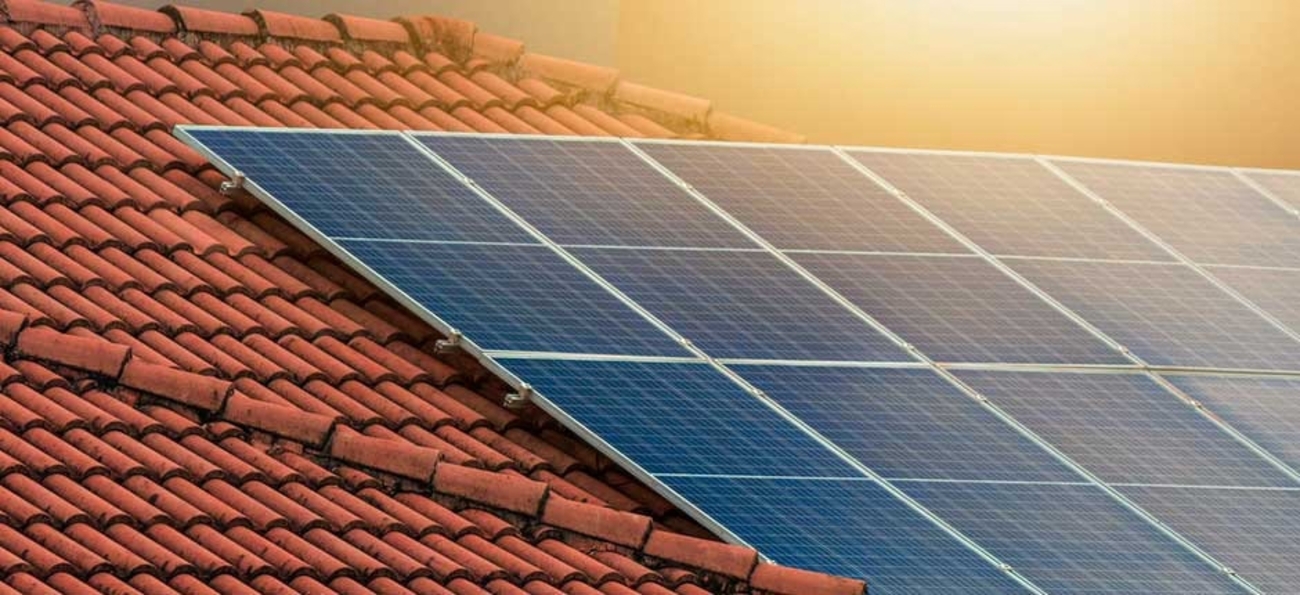
Roraima bets on the sun to escape high tariffs: Amid the energy crisis and price hikes, solar energy is growing in Roraima and transforming consumption in the North region.
-
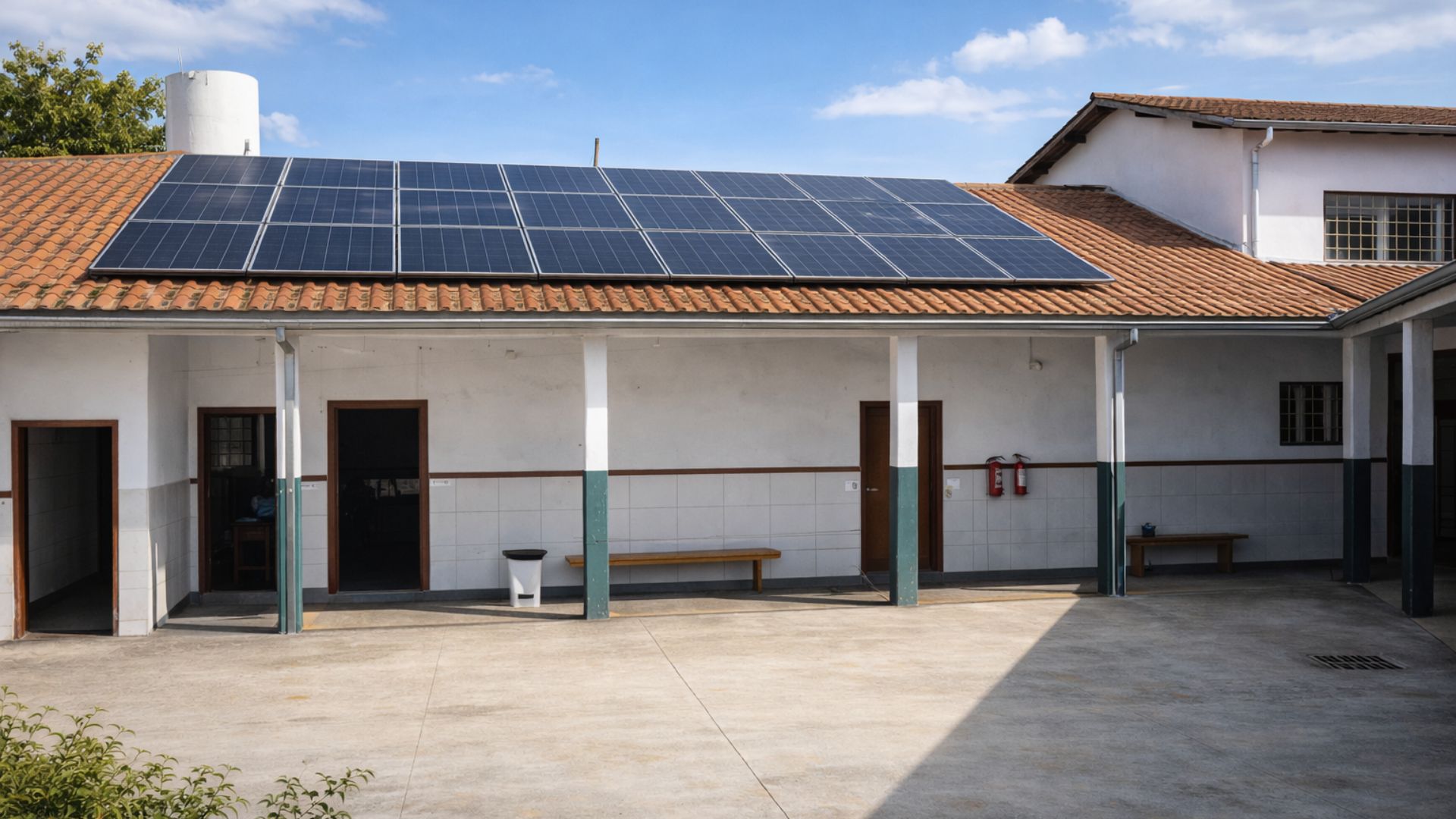
Copel boosts solar energy in Paraná and brings innovation to public schools, promoting savings on electricity bills, energy efficiency, and a direct impact on the quality of education.
-
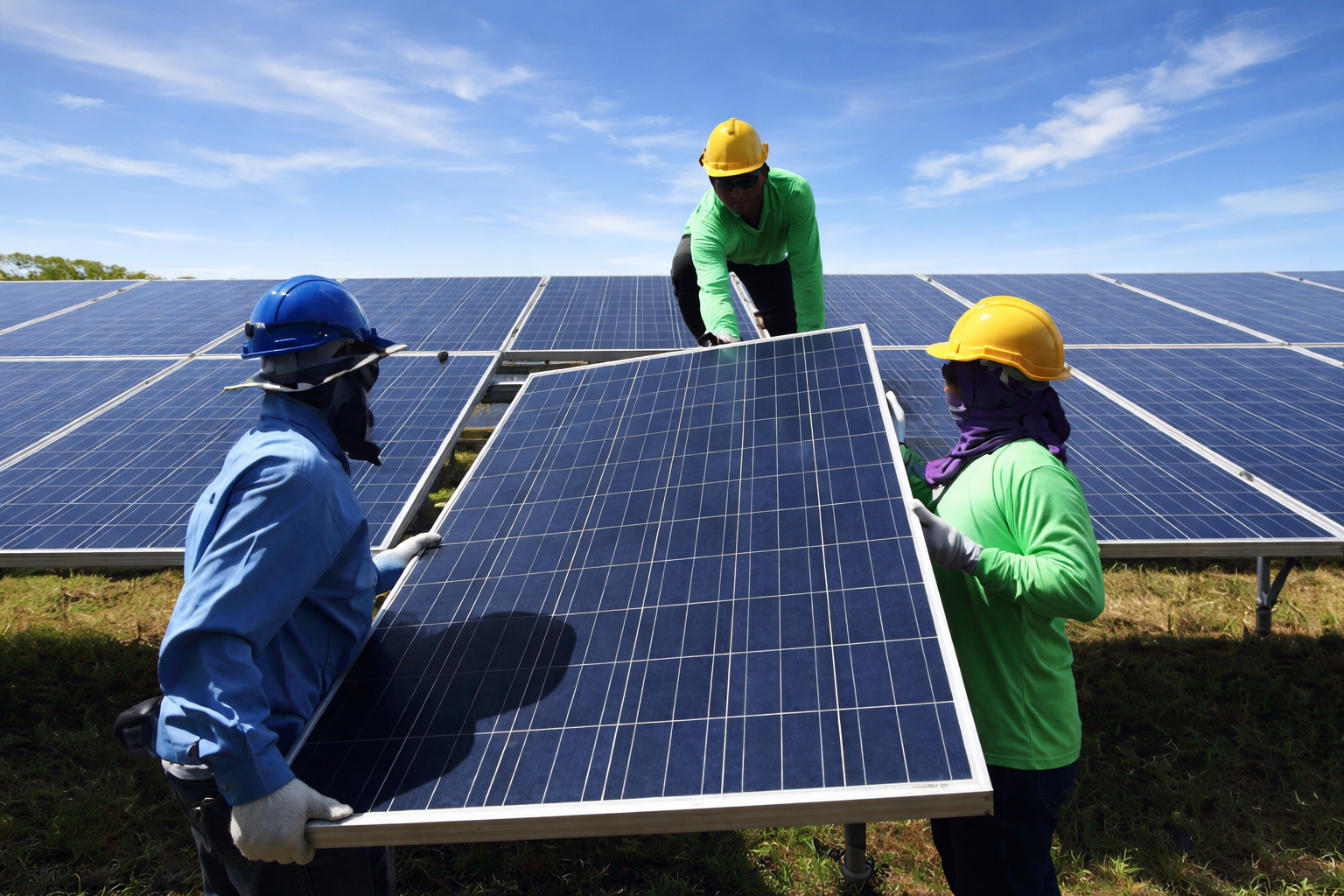
Brazil reaches historic milestone in solar energy: Sector surpasses 2 million accumulated green jobs and generates billions in the national economy even under market pressure.
-
Minas Gerais takes the lead in renewable energy: State surpasses historic mark of 14 GW in solar energy generation in MG and consolidates dominance in the Brazilian electric sector.

Students monitor the school’s consumption. Families debate energy efficiency. Associations make collective decisions about investments. In this scenario, solar energy stops being just a technical solution. It becomes part of everyday life, gaining a pedagogical and cultural character.
This model, which links solar energy to social participation, has already shown positive results in various European Union countries, where collective self-consumption projects have increased public engagement. In Brazil, this movement is beginning to grow, showing that decentralizing electric generation can be a way to enhance energy citizenship.
Decentralization: Energy That Lives in the Neighborhood
The decentralization of electric generation is considered one of the pillars of the Brazilian energy transition. According to the National Energy Plan 2055, the growth of distributed generation, especially of solar energy, will be fundamental for building a more sustainable system.
When solar panels are close to communities, energy stops being something distant and technical. It becomes tangible, understandable, and shared. This reinforces the idea that the energy transition needs to be experienced in the territory, involving residents in decisions that were previously restricted to technicians and managers.
Moreover, solar energy is intermittent. Its efficiency also depends on user behavior. The closer the consumer is to the system’s logic, the more they can contribute to the network’s balance. Thus, solar panels represent not only a technological solution but also an invitation for active participation from society.
The Role of Schools and Cooperatives
Schools have proven to be great allies in this process. Projects like Procel Educação, from Eletrobras, and Energia que Transforma, from Instituto Ideal, have shown that it is possible to teach sustainability practically through the use of solar panels.
By monitoring solar energy generation on rooftops, students practically understand the benefits of conscious consumption. They learn to calculate the environmental impact, discuss changes in habits, and carry this knowledge back to their families. The multiplier effect is immediate and strengthens what is called “energy citizenship.”
Another example is energy cooperatives. In rural and urban areas, they have been democratizing access to photovoltaic systems, allowing residents to share installation costs and benefit from reduced electricity bills. Thus, solar energy is not limited to large consumers or companies but also becomes accessible to low-income families.
Success Stories in the Interior of the Country
In Icaraí de Minas (MG), the installation of solar panels in low-income condominiums revolutionized the lives of low-income families. Besides the savings, residents began participating in workshops on energy efficiency, learning to better use the energy they produce.
In Palmas (TO), in addition to solar generation in schools and public buildings, the city invested in electric buses powered by clean energy. The project showed that it is possible to adapt energy innovations even in regions with hot climates and limited infrastructure.
These initiatives reveal that solar energy can be a tool for inclusion, education, and local development. They are experiences that demonstrate that the sun, abundant in almost all of the national territory, can be a powerful ally for communities seeking energy autonomy.
Solar Energy as an Instrument of Citizenship
In Brazil, there is still a perception that the electrical system is something distant, centralized, and difficult to understand. But solar panels are changing this reality. When energy becomes produced in the neighborhood, discussed in assemblies, and taught in classrooms, it gains new meaning.
It stops being invisible and starts integrating culture, politics, and local identity. Solar energy then becomes a collective good that promotes not only savings but also engagement, learning, and social justice.
Experts emphasize that the advancement of solar energy in Brazil depends not only on technology but also on popular participation. Decentralization, by bringing communities closer to energy production, is a decisive step for building a more democratic and efficient system.
The country already has ideal conditions: high solar radiation rates, climatic diversity, and technical capacity. The challenge now is to transform these advantages into opportunities for inclusion and citizenship.
Community projects, solar cooperatives, and schools equipped with solar panels show that the change has already begun. But for the transition to be effective, it is necessary to increase incentives, strengthen public policies, and, above all, involve people.
In the end, solar energy will only fulfill its entire potential if it is understood as part of everyday life. It needs to live in the neighborhood, be discussed among neighbors, taught in schools, and shared among generations. It is in this close and tangible territory that the true energy revolution unfolds.








Seja o primeiro a reagir!