





 Portuguese
  English
  Spanish
  5 min of reading
  0 comments


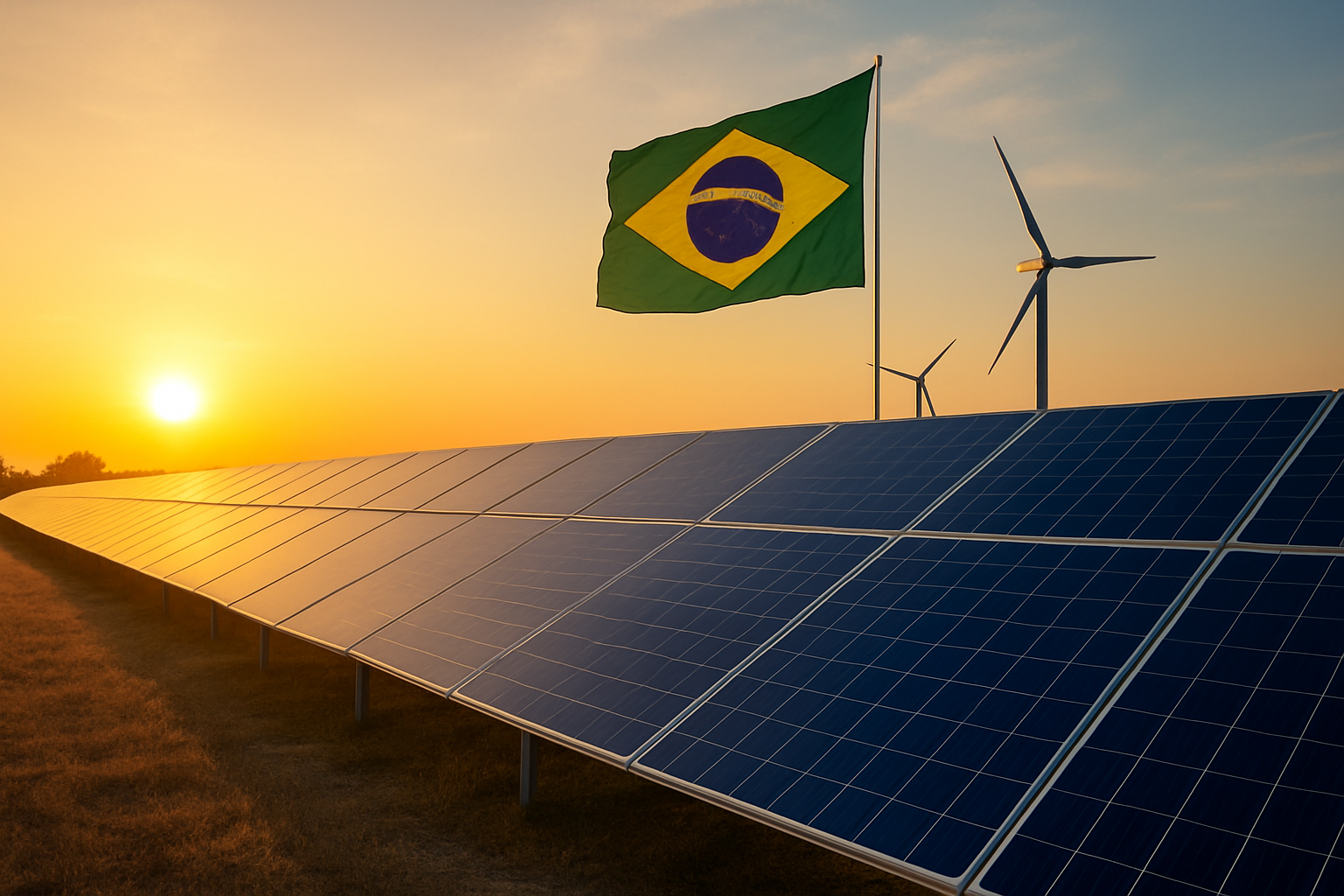
Discover How Solar Energy in Brazil Became Essential for the Energy Future, Promoting Sustainability, Economy, and Inclusion Throughout the Country.
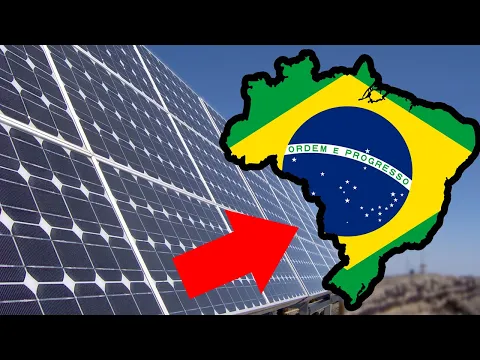
Solar energy in Brazil plays an increasingly relevant role in the national energy landscape. After all, with the growing demand for sustainable alternatives, this renewable source has stood out.
Therefore, understanding its evolution and importance has become essential for those who wish to keep up with transformations in the sector.
Indeed, Brazil has a natural advantage: its geographic location provides excellent solar radiation throughout the year.
-
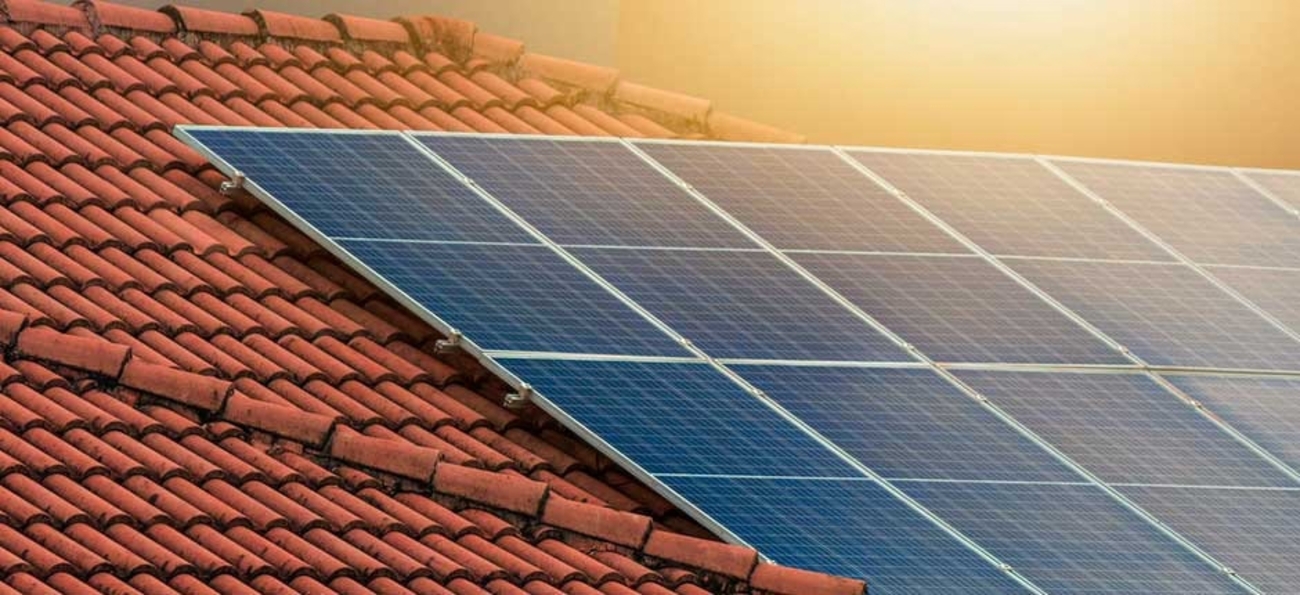
Roraima bets on the sun to escape high tariffs: Amid the energy crisis and price hikes, solar energy is growing in Roraima and transforming consumption in the North region.
-
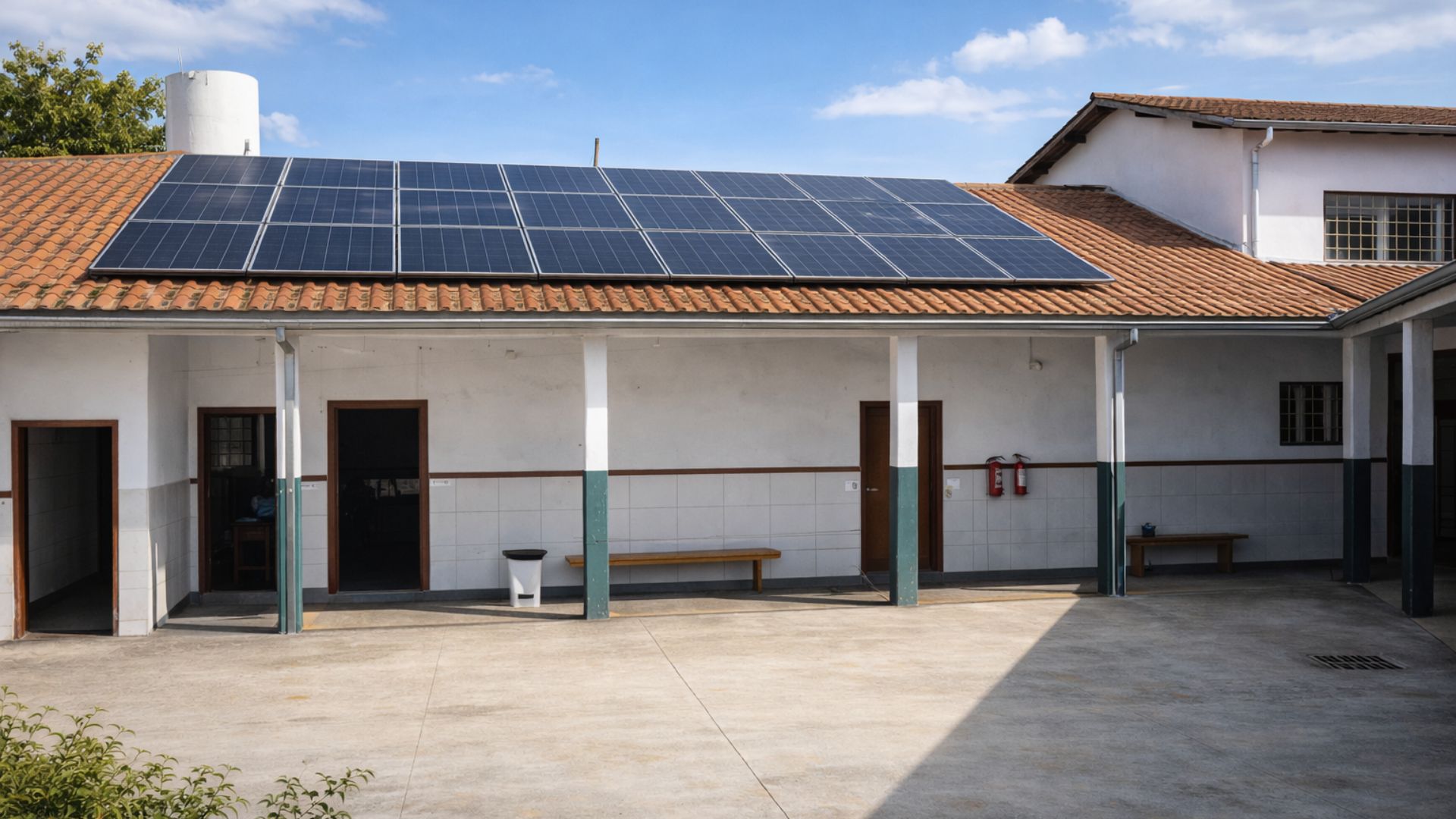
Copel boosts solar energy in Paraná and brings innovation to public schools, promoting savings on electricity bills, energy efficiency, and a direct impact on the quality of education.
-
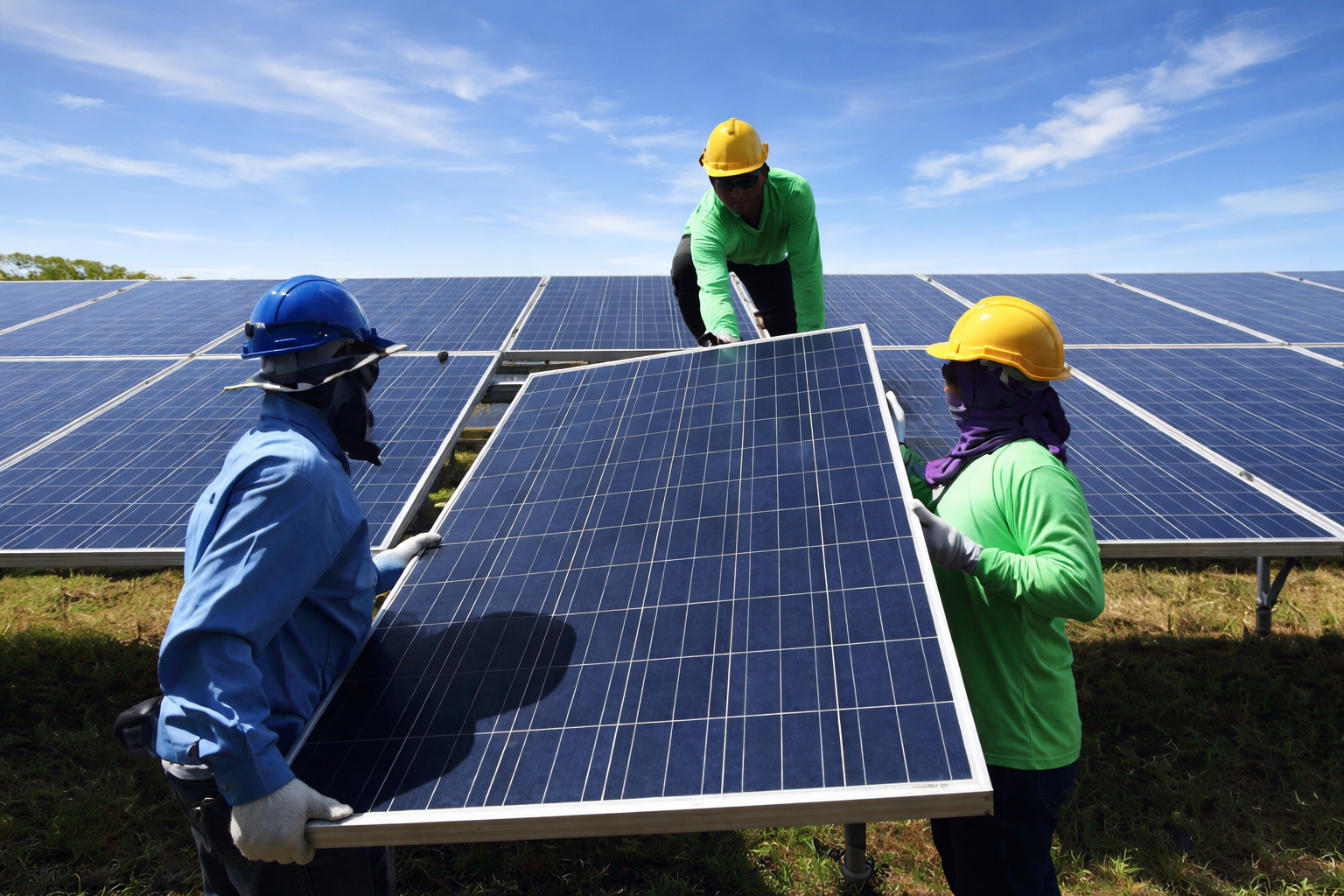
Brazil reaches historic milestone in solar energy: Sector surpasses 2 million accumulated green jobs and generates billions in the national economy even under market pressure.
-
Minas Gerais takes the lead in renewable energy: State surpasses historic mark of 14 GW in solar energy generation in MG and consolidates dominance in the Brazilian electric sector.
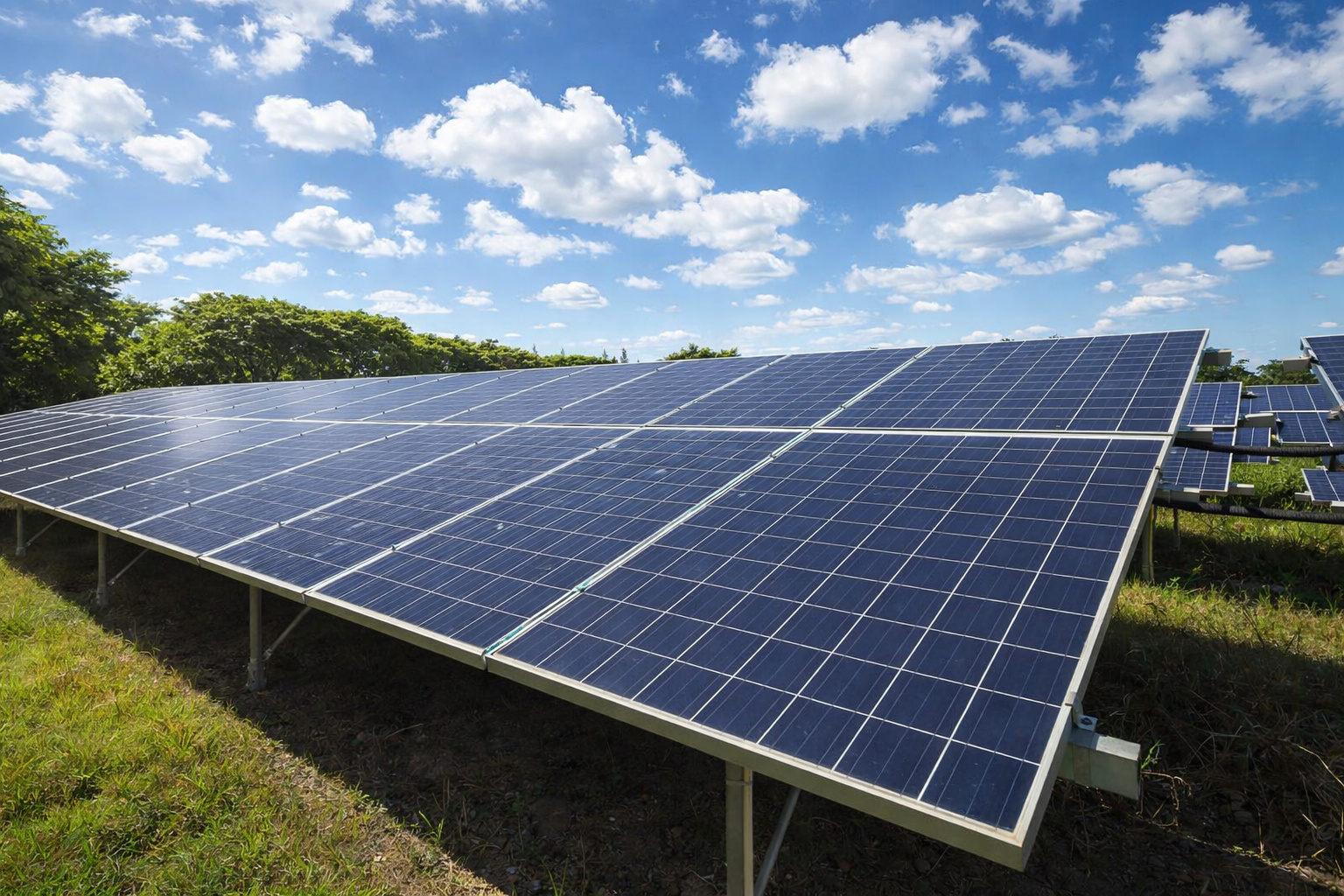
Thus, the country has ideal conditions for photovoltaic energy production. However, this potential remained underutilized for decades.
However, with technological advancements and changes in public policies, this reality began to change significantly.
According to data from the National Institute for Space Research (INPE), Brazil receives an annual average solar radiation of over 5 kWh/m²/day in most of its territory, one of the best indices in the world for solar generation.
From Humble Beginnings to Incentive Policies
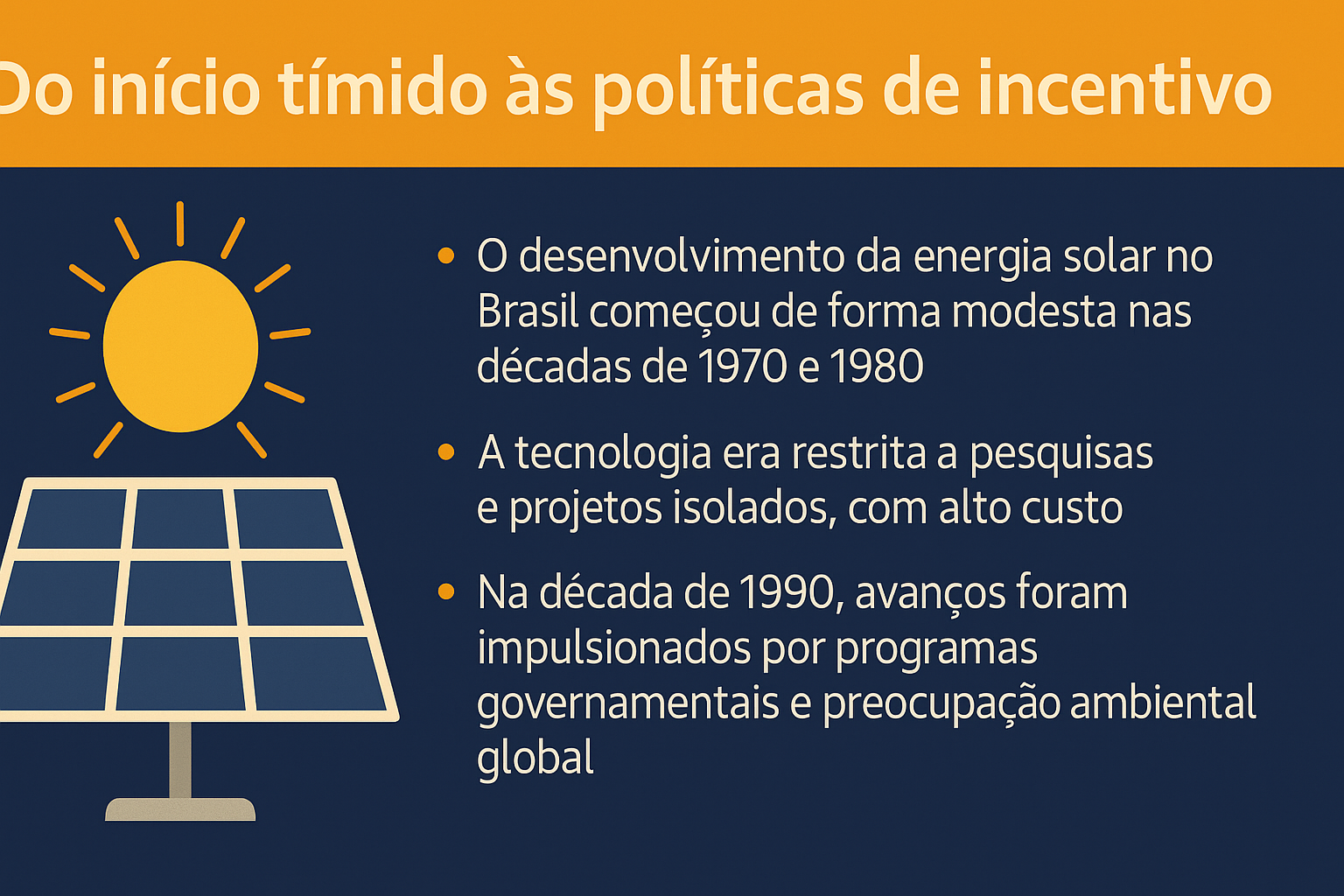
The development of solar energy in Brazil began quite modestly in the 1970s and 1980s.
At that time, according to information from the National Electric Energy Agency (ANEEL), photovoltaic technology was virtually restricted to academic research and isolated projects, with high equipment costs.
This reality made the popularization of solar energy difficult, as it was seen as a distant alternative for most of the population.
However, the 1990s brought significant advancements, driven by government programs and greater global environmental awareness, especially after Rio-92, the United Nations Conference on Environment and Development held in Brazil.
According to the National Electric Energy Agency (ANEEL), it was only from 2012 that solar energy gained a significant regulatory framework.
The Normative Resolution 482, created by ANEEL in November of that year, established the rules for distributed generation, allowing consumers to produce their own energy and sell excess to the grid.
Additionally, the Ministry of Mines and Energy (MME) launched the Distributed Generation Development Program (ProGD) to encourage this practice.
These policies paved the way for the rapid growth of solar energy in Brazil.
Rapid Growth and Strategic Role in the Energy Matrix
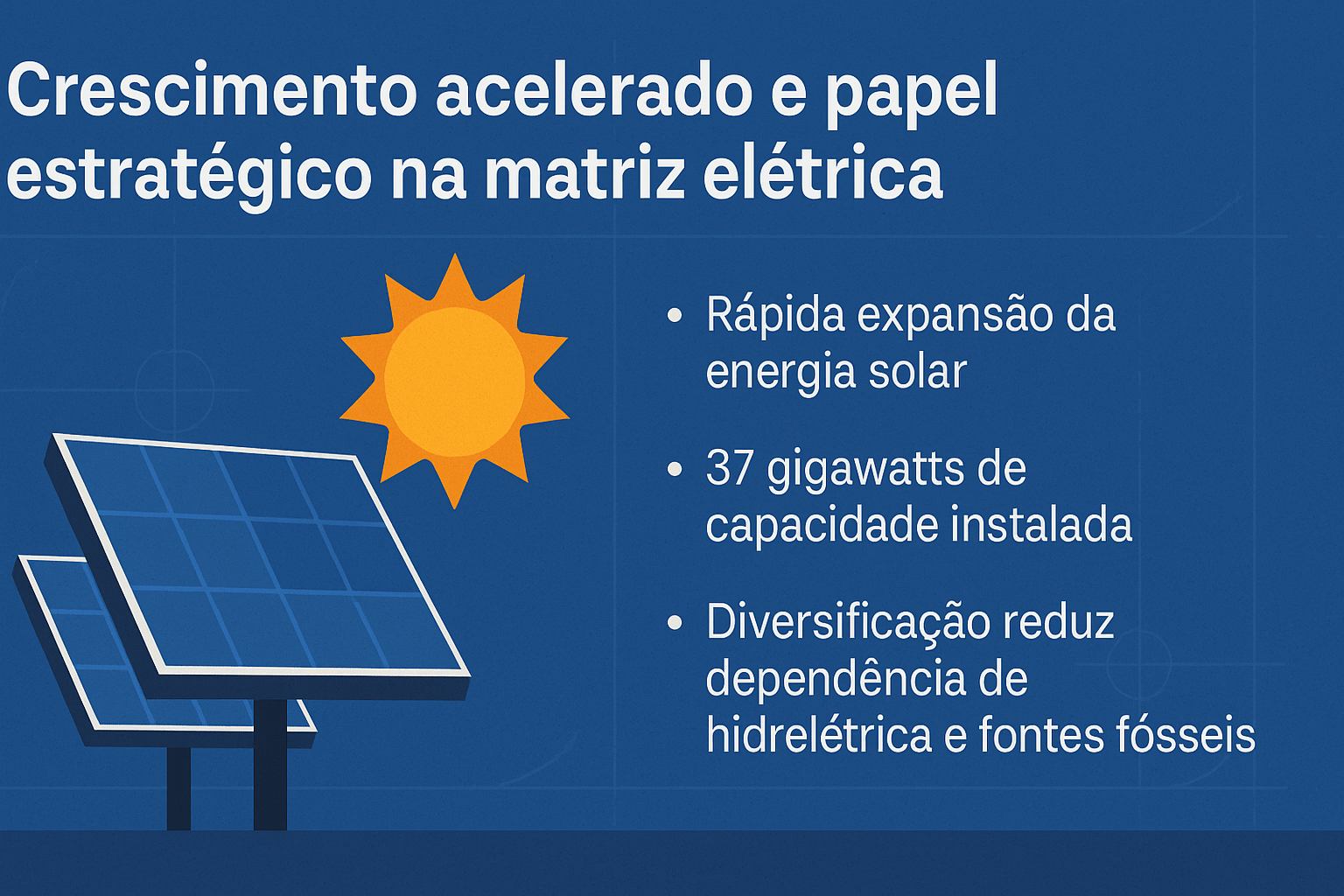
With the advancement of regulation and the decrease in technological costs, Brazil witnessed a rapid expansion of solar energy.
According to the report from the Brazilian Association of Photovoltaic Solar Energy (ABSOLAR) for 2024, the country reached the mark of 37 gigawatts of installed capacity.
This growth placed Brazil among the ten largest solar markets in the world, according to ABSOLAR.
Furthermore, the Energy Research Company (EPE), responsible for the Ten-Year Energy Plan 2032 (PDE 2032), indicates that solar energy will be the source that grows the most in the coming years, potentially reaching over 150 GW of installed capacity by 2032.
Solar energy thus plays a fundamental role in diversifying the energy matrix, reducing dependence on hydroelectric power and fossil sources.
Another relevant aspect mentioned by ABSOLAR is the expansion of shared generation, which allows collective access to solar systems, increasing the social impact of the technology.
Transformative Social and Environmental Impact
The social impact of solar energy in Brazil has also been quite positive.
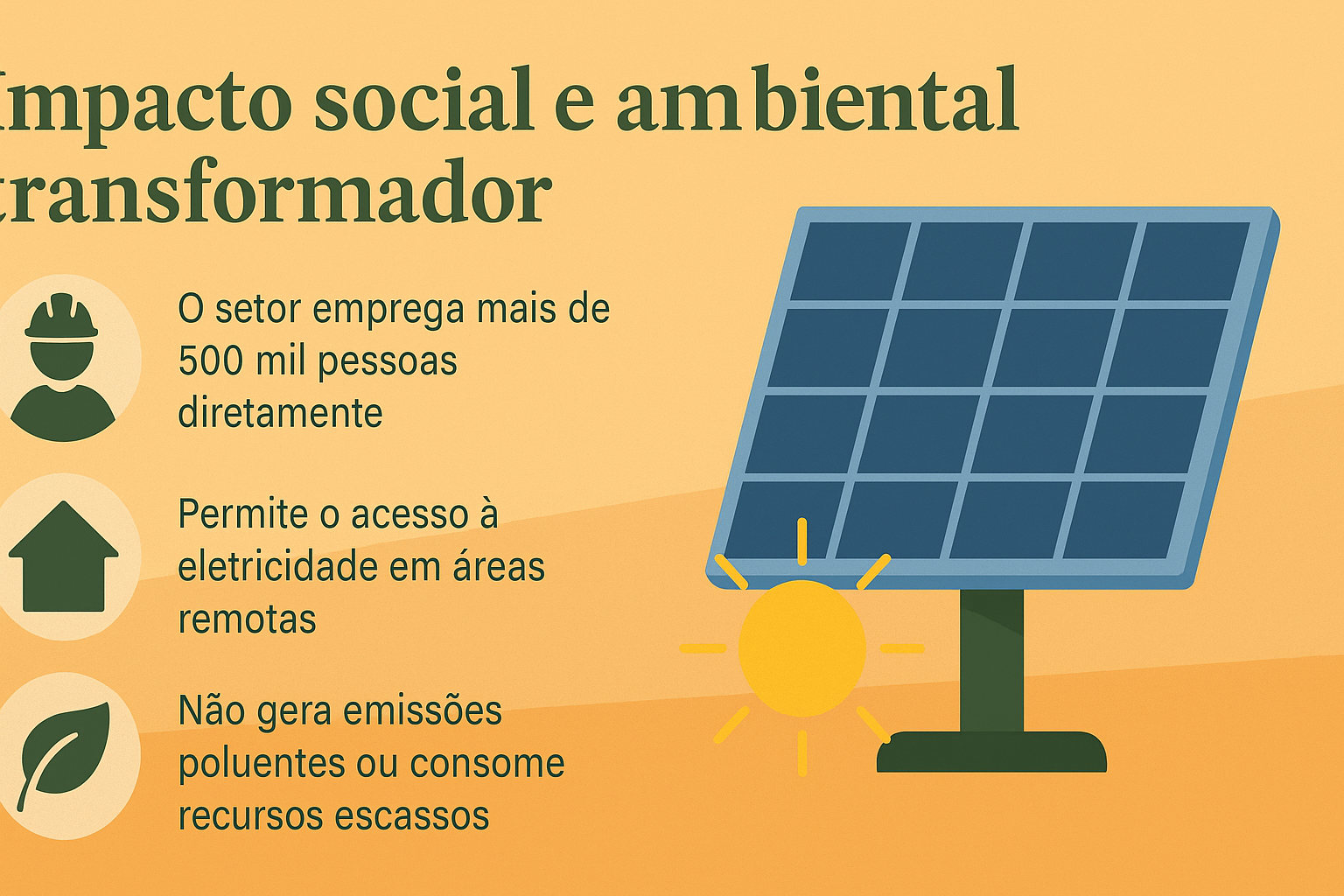
According to a survey by ABSOLAR in 2023, the sector already employs over 500,000 people directly, including installers, engineers, and suppliers.
Moreover, in remote and rural areas, photovoltaic systems have allowed access to electricity where there was previously no grid, improving the quality of life for many communities.
From an environmental standpoint, solar energy is one of the cleanest and most sustainable alternatives, as it does not generate polluting emissions or consume scarce natural resources.
Thus, it helps Brazil meet its greenhouse gas reduction targets, in line with the commitments of the Paris Agreement.
Social projects, supported by NGOs and local governments, have brought solar energy to schools and health posts, promoting inclusion and regional development.
Challenges That Still Require Attention
Despite the success, solar energy in Brazil faces challenges. One of them is the initial cost of the systems, which still limits adoption by more vulnerable segments of the population.
Another point is the recent debate about possible changes in the charge for using the power grid for microgenerators.
As specialists from ANEEL and the Ministry of Mines and Energy warn, it is essential to find a balance between encouraging distributed generation and maintaining the sustainability of the national electric system.
In addition, informative campaigns are essential to broaden the population’s knowledge about financing and the advantages of solar energy, according to studies from the National Institute of Energy Efficiency (INEE).
The need to expand the offering of technical courses to train qualified professionals is also highlighted as a requirement for the healthy expansion of the sector.
Perspectives for the Future of Solar Energy in Brazil
The potential of solar energy in Brazil remains immense and underexplored, according to the Energy Research Company (EPE).
New technologies, such as battery storage systems and smart monitoring, promise to increase efficiency and user autonomy.
The growth of decentralized generation is expected to benefit small municipalities and cooperatives, encouraging regional economic development.
Moreover, the cultural shift towards sustainability and environmental awareness has increased consumer interest in solar energy.
Solar energy in Brazil has evolved from a technology limited to experimental projects to a strategic source of the national energy matrix.
From the first research in the 1970s to the strong regulatory and technological expansion in recent years, the sector has demonstrated that it is possible to unite economic development, social inclusion, and environmental respect.
Therefore, investing in solar energy means contributing to a cleaner, fairer, and more modern Brazil.
As experts from the Ministry of Mines and Energy assert, the country’s energy future inevitably relies on the expansion of solar generation.
The sun shines for everyone — and harnessing this resource is an opportunity for all of society.









Seja o primeiro a reagir!