





 Português
  Inglês
  Espanhol
  3 min de leitura
  0 comentários


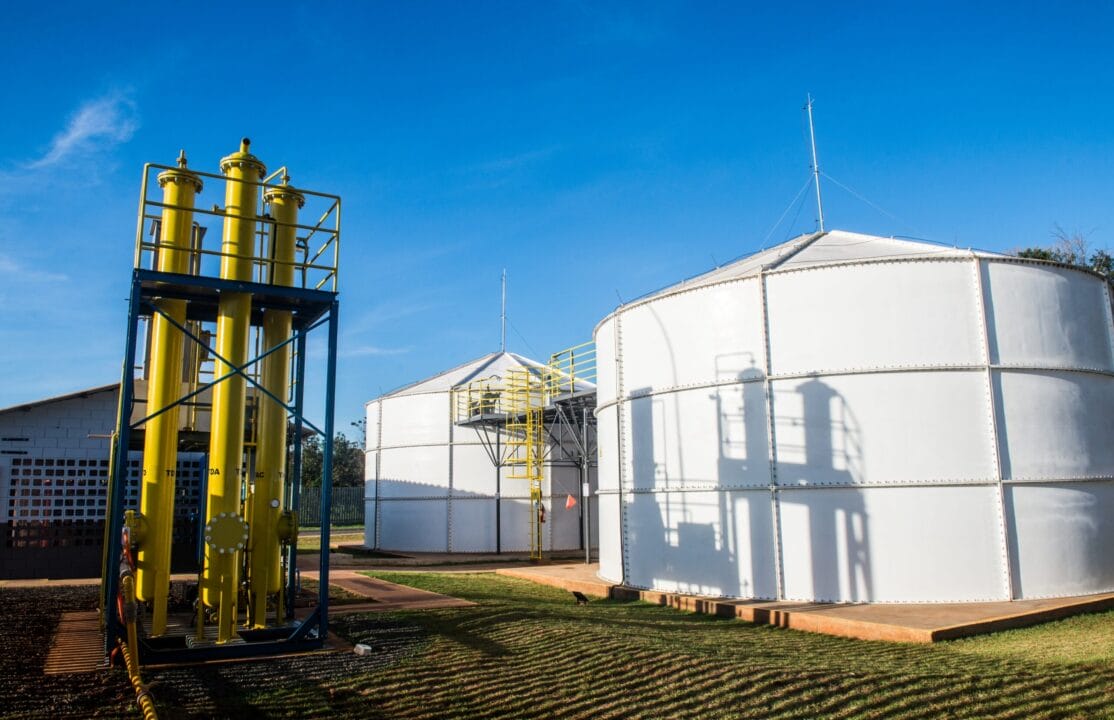
ENGIE Foundation and ABiogás Join Forces to Transform Organic Waste into Biogas in 18 Educational Institutions.
The joint initiative between ENGIE Foundation and ABiogás aims to strengthen the energy transition by donating 18 biodigesters to Brazilian schools and communities. These devices, a marvel of sustainable innovation, convert organic waste into biogas, a green alternative to traditional cooking gas. With the capacity to produce up to 7 hours of biogas daily using just 10 kilograms of waste, they not only provide a solution for reducing cooking costs but also minimize the amount of waste sent to landfills.
Education and Innovation Meet
Titled “Energy from Waste: Lighting the Path to Sustainable Education”, the project will impact around 3,600 students. With the help of 31 volunteers from the ENGIE Group, the energy transition will become a living lesson, teaching relevant concepts to young people and adults during the installation of the biodigesters. Introducing these devices in institutions is a strategic way to engage students across multiple disciplines, including science, mathematics, and environmental studies. The added benefit? Each biodigester can cut up to six tons of greenhouse gas emissions per year.
-
Renewable energy advances over protected areas in Brazil, and a survey by the Energy Transition Observatory reveals silent impacts that challenge environmental conservation and pressure sensitive traditional territories.

-
Rio Grande do Sul accelerates energy transition: State invests in renewable technologies and consolidates decarbonization strategies and pathways to attract billions in new industrial investments.

-
With 160,000 m² of collectors, an area larger than 20 football fields, Silkeborg, in Denmark, hosts a solar thermal plant that heats 19,500 homes and could become the largest solar heating plant in the world.

-
A study reveals the expansion of renewable energy procurement in Brazil and shows how companies are taking advantage of opportunities to reduce expenses, ensure energy efficiency, and strengthen strategic environmental commitments.


“The biodigesters not only help save on cooking gas but also promote circular economy by transforming waste into energy. Investing in such projects allows us to combine environmental and social responsibilities for more balanced development”, shared Flavia Teixeira, Head of Social Responsibility and Energy Transition at ENGIE.
A Revolution in the Kitchen
Activating a biodigester is simple. Just combine animal manure and water in the right proportions. A technical team assists in the initial stages, and after a month, biogas starts being produced and stored, ready for use. But biogas is not the only product: a natural liquid biofertilizer is generated, enriching soils in an eco-friendly way.
The Executive President of ABiogás, Renata Isfer, emphasized the importance of this partnership. “By educating our children about renewable energy and circular economy, we are planting seeds for a greener future”, she said.
The technology of biodigesters, currently implemented in over 100 countries, made its entry into Brazil in 2018. With more than 1,100 installations across all states, “Our vision is to expand the reach of biodigesters, promoting development, dignity, and a sustainable source of income, aligned with the goals of the Sustainable Development Goals”, commented Leandro Toledano, CEO of Biomovement, the supplier of the biodigesters.
Finally, for ENGIE, operating in 250 Brazilian municipalities, sustainability is more than just a buzzword. “For 25 years in Brazil, we have maintained a 100% renewable energy generation. We value our planet and the people who inhabit it, and we strive to address socio-environmental issues responsibly”, concluded Gil Maranhão, from ENGIE.
Photo: Renata Castro.a










Seja o primeiro a reagir!