





 Portuguese
  English
  Spanish
  5 min of reading
  0 comments


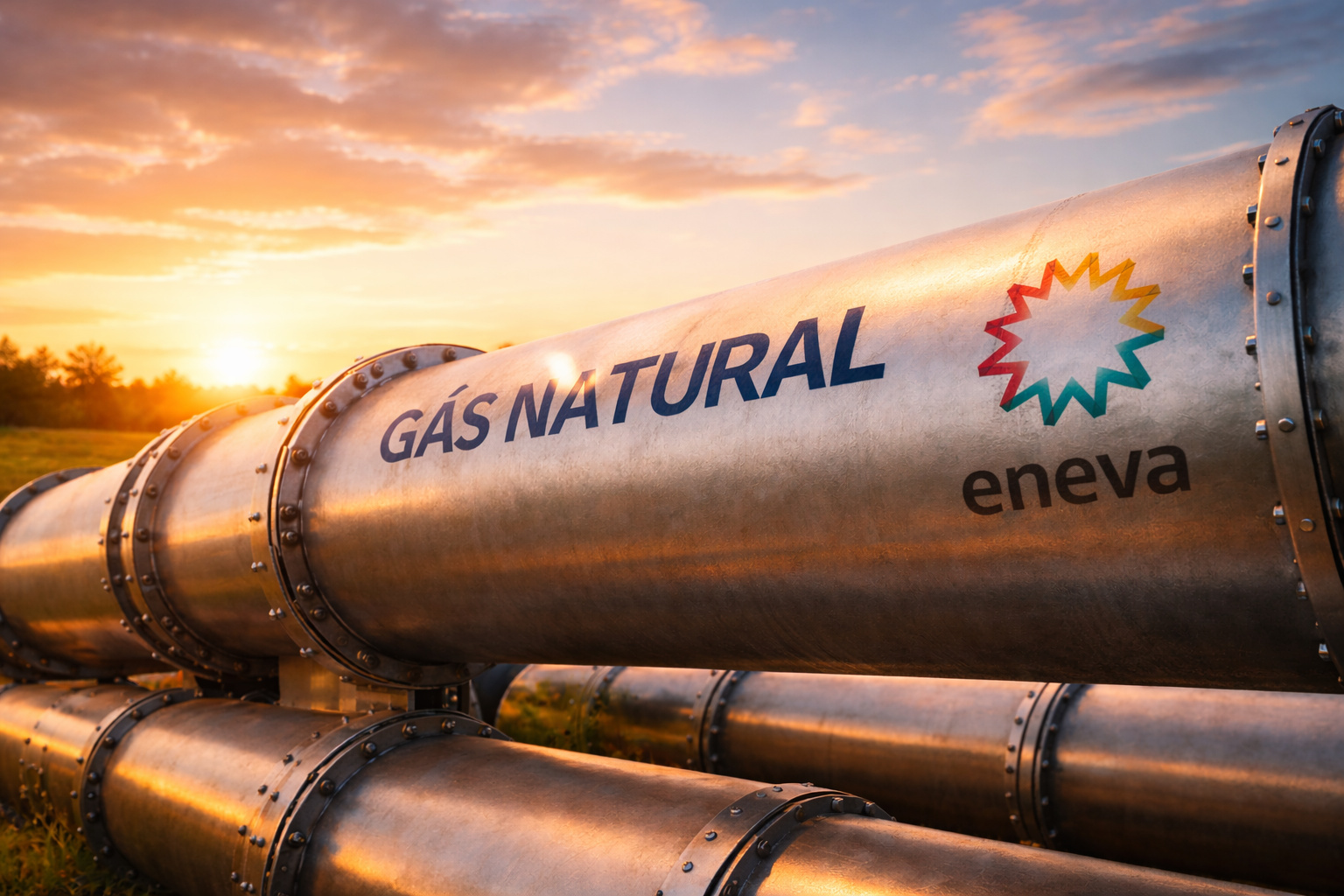
Eneva Advances in Gas Diversification in Brazil by Importing Volumes from Argentina, Expanding Pipeline Use, and Strengthening the Energy Sector, with Direct Impact on Industry and Supply Security.
Eneva announced on Tuesday that it completed its first operations for natural gas imports from Argentina in December, strategically expanding the supply of this resource in Brazil. The initiative reinforces the company’s supply portfolio diversification, strengthens the national energy sector, and increases the capacity to serve industrial clients connected to the gas transportation network. As the largest private natural gas operator in the country, Eneva reported that this move follows the first import of the fuel from Bolivia, carried out in October.
Eneva Expands Operations with Natural Gas Imports from Argentina
The entry of Eneva into natural gas imports from Argentina marks a significant milestone for the Brazilian energy sector. The announcement comes at a time of structural reorganization in the gas market, driven by sector opening, the New Gas Law, and growing industrial demand for more stable and competitive energy sources.
According to the company, the operations were conducted using existing infrastructure, with transport through pipelines connected to the Brazilian network. This model reduces logistical costs, increases operational efficiency, and enhances supply security, especially for medium and large industrial consumers.
-
Offshore industrial demand in Macaé surges with the recovery of oil and gas and could grow by up to 396% by 2026 in the Campos Basin.
-
Brazilian giant expands borders in the Southeast: Petrobras confirms new oil discovery in ultra-deep waters in the pre-salt of the Campos Basin.

-
Alert in the global energy market: Severe tropical cyclone hits the coast and disrupts gas production at major plants in Australia, threatening global supply.

-
Petrobras finds high-quality oil in the pre-salt at 113 km from RJ and reignites expectations about strategic reserves in the Campos Basin.


Supply Diversification Strengthens the Energy Sector
Experts point out that the diversification of supply sources is one of the pillars for strengthening the energy sector. Historically, the Brazilian natural gas market has been characterized by a high concentration of supply, which limited competition and pressured prices.
With the import of natural gas from neighboring countries such as Argentina and Bolivia, Eneva helps to reduce this concentration. More sources mean less risk and greater predictability, essential factors for industry and long-term energy planning.
Eneva Bets on South American Energy Integration
Eneva’s strategy goes beyond serving the domestic market. The company is positioning itself as a key player in the energy integration of South America, connecting producers and consumers through flexible contracts and smart use of regional infrastructure.
Argentina, in particular, has gained prominence in this process. The country has vast reserves of natural gas, especially the Vaca Muerta formation, considered one of the largest in the world for unconventional resources. In recent years, investments in production and transport have increased export capacity. Integrating markets means transforming surpluses into opportunities, and Eneva is directly involved in this regional logic.
Natural Gas Import Boosts Industrial Competitiveness
One of the main impacts of increasing natural gas supply is on serving industrial clients. Sectors such as steel, ceramics, pulp and paper, food, fertilizers, and chemicals depend on the resource to maintain competitiveness and cost predictability.
With the import of natural gas, Eneva expands its capacity to supply additional volumes to these consumers, contributing to a more stable business environment. Competitive energy is a decisive factor for industrial investments, especially in a scenario of energy transition and pursuit of efficiency.
Use of the Pipeline Network Reinforces Sector Efficiency
Another central aspect of the strategy announced by Eneva is leveraging existing transport infrastructure. The import operations occur in areas connected to the pipeline network, allowing for rapid distribution of gas to consumer centers.
The better utilization of this infrastructure is seen as fundamental for the development of the Brazilian energy sector. Underutilized pipelines represent high costs and systemic inefficiency. By increasing the flow of imported gas, Eneva contributes to raising the utilization rate of the network and diluting fixed costs. Integrated infrastructure is synonymous with energy efficiency and competitiveness.
Eneva Statement Highlights Safer and More Resilient Market
In an official statement, Eneva’s General Manager of Origination and Marketing, Glauco Campos, stated that diversifying supply sources directly contributes to building a more competitive, secure, and resilient Brazilian gas market.
The statement aligns with the guidelines advocated by the Ministry of Mines and Energy and the National Agency for Petroleum, Natural Gas, and Biofuels, which see market opening and regional integration as essential pathways for strengthening the energy sector. Resilience has ceased to be a differential and has become a requirement.
Argentina Consolidates Strategic Position in the Regional Gas Market
For Argentina, increasing natural gas exports to Brazil represents a significant economic opportunity. The country seeks to monetize its reserves, increase foreign revenues, and strengthen its position as a regional energy supplier.
The import of natural gas from Argentina by Eneva signals confidence in supply stability and the commercial viability of these operations. Additionally, it sets precedents for new contracts and enhances integration between the energy markets of both countries. Argentinian gas gains scale while Brazil expands its supply options.
Eneva Strengthens Its Role in the Brazilian Energy Sector
By combining domestic production, regional imports, and marketing to industrial clients, Eneva consolidates its position as one of the main players in the Brazilian energy sector. The company operates with greater flexibility, adapting to different supply and demand scenarios.
This integrated approach becomes relevant in an energy transition context, where natural gas is viewed as a transition fuel, capable of reducing emissions compared to more carbon-intensive sources, without compromising system security. Diversification is a strategy, not a contingency.
Structural Impacts on the Brazilian Gas Market
The increase in natural gas imports helps to enhance liquidity in the Brazilian market, one of the historical challenges of the energy sector. With more players, more sources, and a higher negotiated volume, the environment tends to become more competitive and transparent. This movement benefits not only large industrial consumers but also distributors and new entrants, stimulating investments and innovation in the sector. Liquid markets attract capital, technology, and sustainable growth.
A New Level for National Energy Security
The completion of the first natural gas imports from Argentina represents a significant advance for Eneva and the Brazilian energy sector. By diversifying its supply sources, the company expands the gas supply, strengthens industrial service, and contributes to a more competitive and resilient market.
Moreover, the initiative reinforces South American energy integration, values existing infrastructure, and positions Eneva as a strategic player in the new framework of the gas market in Brazil. This is a structuring movement, with lasting impacts on energy security, industry, and the country’s economic development.









-

Uma pessoa reagiu a isso.