





 Português
  Inglês
  Espanhol
  3 min de leitura
  3 comentários





Former Northrop Grumman Engineer, Responsible for Revolutionizing Stealth Technology in the B-2, Was Sentenced to 32 Years in Prison for Sharing Stealth Secrets with China, Aiding in the Development of the H-20 Bomber and Advanced Missiles.
Imagine being one of the key figures behind the creation of one of the world’s most advanced bombers and, years later, using that same expertise to help a rival nation by revealing stealth secrets. This is the story of Noshir Gowadia, a brilliant engineer who played a crucial role in the development of the B-2 Spirit bomber and, decades later, betrayed the United States by selling classified information to China.
The case began being investigated in 2004, with Noshir Gowadia’s arrest occurring on October 26, 2005. He was convicted on August 9, 2010, after an extensive trial, and sentenced to 32 years in prison on January 24, 2011.
Gowadia’s Role in the Construction of the B-2

Born in India, Gowadia was a prodigy. After moving to the U.S., he quickly distinguished himself as an aerospace engineer. Working for Northrop (now Northrop Grumman), he helped design the propulsion system of the B-2, a revolutionary bomber designed to be virtually invisible to radars.
-
With 11,000 tons and sensors capable of hunting submarines at long distances, the Type 055 has become one of the most feared floating arsenals of the Chinese navy.

-
With over 15,000 tons, radars capable of tracking hundreds of targets simultaneously, and more than 120 missiles ready for launch in seconds, modern destroyers cease to be escorts and begin to dominate the naval battlefield.

-
With over 15,000 tons, radars capable of tracking hundreds of targets simultaneously, and more than 120 missiles ready for launch in seconds, modern destroyers cease to be escorts and begin to dominate the naval battlefield.

-
Valued at over $2 billion, the B-2 Spirit bomber requires meticulous inspection, bombs calibrated in a controlled environment, and extreme preparation to disappear from radar and launch attacks with lethal precision.
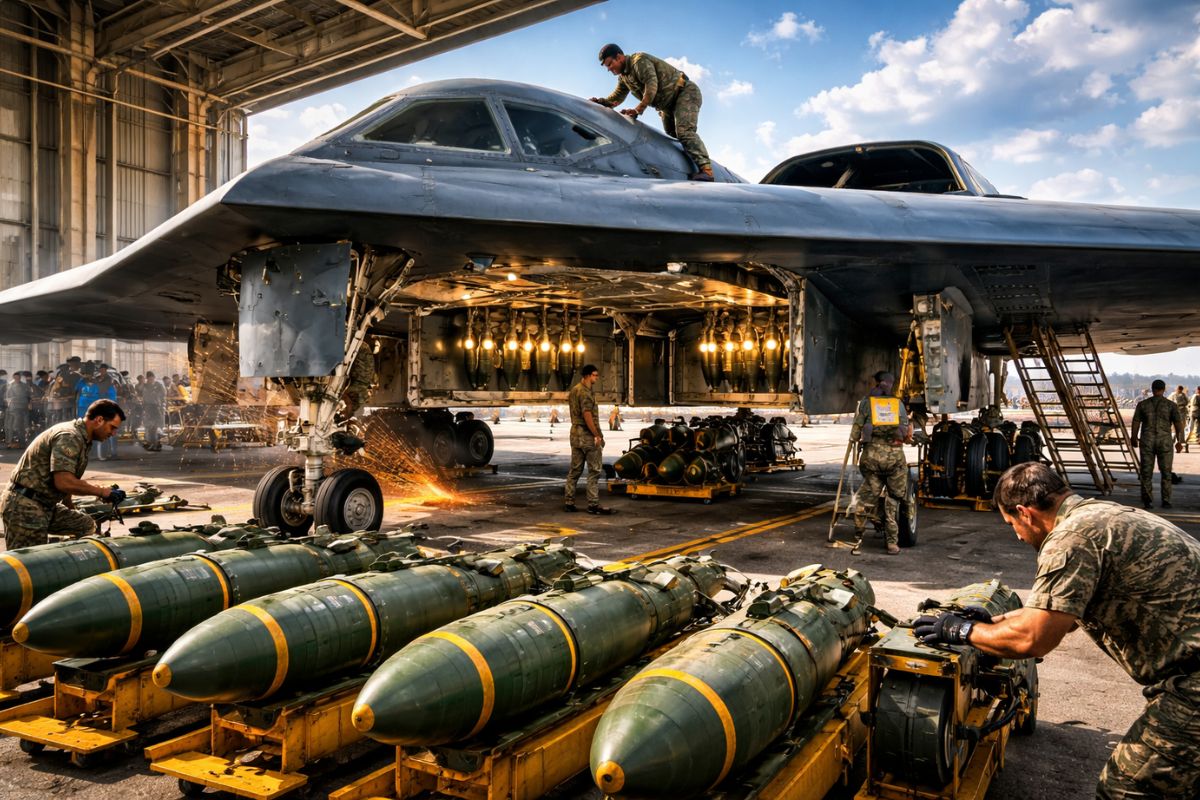

Gowadia was responsible for developing a system that drastically reduced the B-2’s infrared signature. This innovation made the bomber nearly impossible to track, utilizing advanced technologies that mixed exhaust with outside air to lower detectable heat.
How Stealth Secrets Were Shared
After leaving Northrop, Gowadia opened his own consultancy, but financial problems began to arise. Desperate for money, he started seeking international clients and eventually found a buyer for his skills in China. The Chinese government was particularly interested in applying U.S. stealth technology in the development of the H-20 bomber.
Gowadia’s activities raised suspicions. The FBI spent years monitoring his transactions and communications, discovering that he had shared classified information about the B-2 with China. Secret documents were found at his residence during an operation in Maui, sealing Gowadia’s fate.
The Impact of Stealth Secrets on Chinese Military Technology
Based on the shared secrets, China achieved significant advancements in its military technology. The H-20, China’s stealth bomber, bears striking similarities to the B-2, indicating that the information provided by Gowadia played a crucial role.
Gowadia’s espionage helped China close the technological gap with the U.S., increasing tension in the arms race. These actions not only compromised U.S. national security but also shifted the balance of power in the Asia-Pacific region.
The Fall of Gowadia
In 2005, Gowadia was arrested in an operation conducted by the FBI and the Air Force. The investigation revealed a pattern of behavior that included secret visits to China and the transfer of classified information.
After a prolonged trial, Gowadia was sentenced to 32 years in prison. He remains a controversial figure, seen by some as a traitor and by others as a victim of his own circumstances.
The Importance of Security in Military Projects
The Gowadia case underscores the need for rigorous systems to protect strategic secrets. Blind trust in individuals can lead to disastrous consequences.
Gowadia’s actions demonstrate how ego and financial difficulties can lead to catastrophic decisions. His story is a reminder of the devastating impact that betrayal can have on a nation.
The trajectory of Noshir Gowadia is both fascinating and tragic. His technical brilliance was overshadowed by decisions that put the safety of millions at risk. This case remains one of the most striking examples of how stealth secrets can change the course of history — for better or for worse.








Engraçado… como se a Boing não fizesse o mesmo, tirando engenheiros da Embraer para adquirir nosso conhecimento.
Piada Americana…. como o “americano” Bill Gates um dia falou: “não desaprovo quem copia… pelo contrario, admiro quem copia e faz melhor”… kkkkk, made in china! se é melhor não sei… mas copiam direitinho, mais rapido e provavelmente mais barato, hahahaha
Luiz sim, infelizmente lula e a esquerda só pensa em se preocupar em ocultar a verdade prendendo quem a divulga a chamando de fakenews só por irem contra os interesses d esquerda e também preocupada em lacração e compra de voto por assistencialismo, ao invés de se preocupar com coisas sérias como essa que se trata de segurança nacional
Mimizento dos infernos…….vocês prenderam o Almirante Othon , maior cientista nuclear brasileiro.
Lula e o cara