





 Portuguese
  English
  Spanish
  4 min of reading
  18 comments




Rocket Without Propulsion Developed by NASA Engineer Challenges Traditional Concepts and Promises to Revolutionize Space Exploration
In a recent discovery that promises to transform the future of space exploration, Dr. Charles Buhler, a NASA engineer and co-founder of Exodus Propulsion Technologies, announced an extraordinary advancement: a propulsion system that does not rely on conventional propellant.
With this, he claims to have neutralized the gravity of the Earth, an achievement that seems to challenge the laws of physics as we know them.
-
A “silent skill” is allowing Brazilians to earn up to R$ 22,000 per month without a degree and become indispensable for companies that rely on millions of data to survive.

-
Researchers at the Toyota Research Institute found that if a human uses robotic arms to flip a pancake 300 times in an afternoon, the robot learns to do it on its own the next morning, and this is currently the most promising method to solve the biggest bottleneck in modern robotics.

-
Goodbye iron: a common item in households is starting to lose space to technology that smooths clothes in minutes without an ironing board and with less energy consumption.

-
Antarctica reveals an unusual clue high in the Hudson Mountains, and what appeared to be just an isolated rock began to expose a secret hidden under the ice for ages.

Dr. Buhler’s career is marked by contributions to iconic NASA missions, such as the Space Shuttle and the International Space Station (ISS).

For him and his team, this innovation is a milestone that could redefine the course of space travel in the coming centuries. “The most important message to convey to the public is that a great discovery has occurred,” emphasized Dr.
How the NASA Engineer’s Propulsion Technology Works
The innovation developed by Buhler’s team utilizes electric fields to generate thrust sustainably, without the need to expel mass.
This approach represents a new paradigm in propulsion physics, challenging the basic premise that any propulsion system must “push” something to generate movement.
According to Dr. Buhler, this technology has the potential to revolutionize space travel, allowing objects to be propelled into space more efficiently and economically.
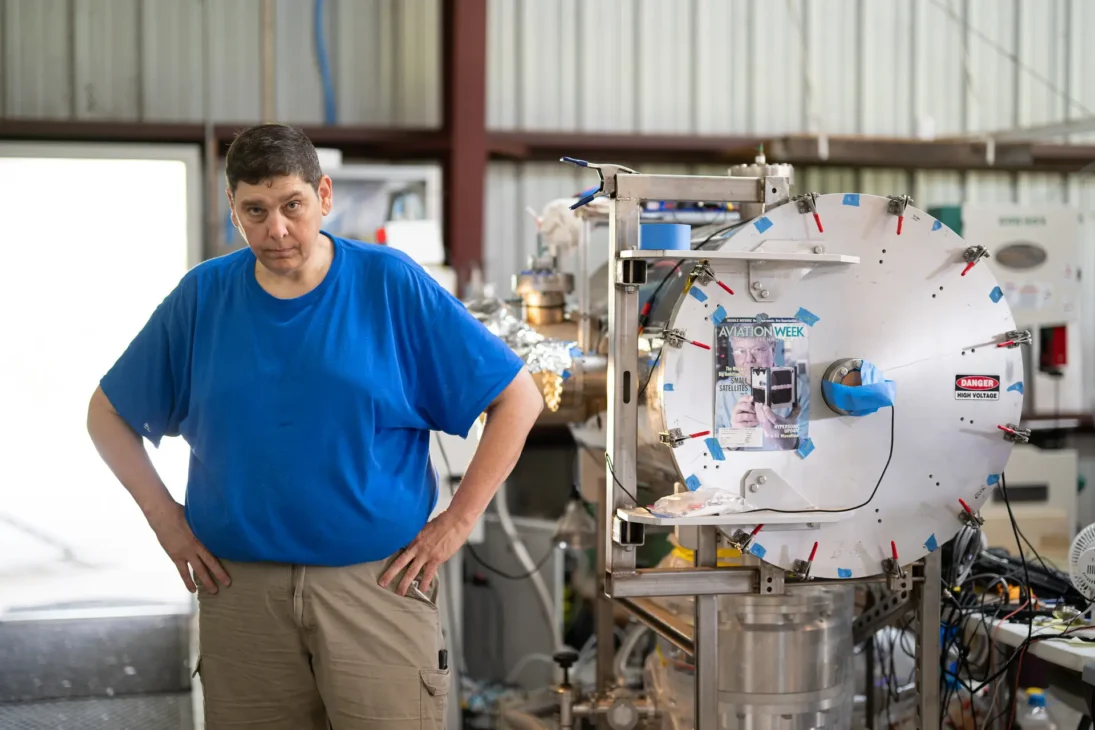
The Presentation at the Alternative Propulsion Energy Conference (APEC)
Dr. Buhler revealed this discovery during a Conference on Alternative Propulsion Energy (APEC). At the conference, he presented details about the development process of this technology and the journey that led him to this innovation.
Initially, there was much skepticism. However, persistence and in-depth study of electrostatics – an area in which Dr. Buhler is an authority – were essential for success.
At each stage of the process, the team refined their technology, achieving impressive results. During the most recent tests, the propulsion system was able to generate a thrust equivalent to Earth’s gravity, a milestone few industry experts believed possible.
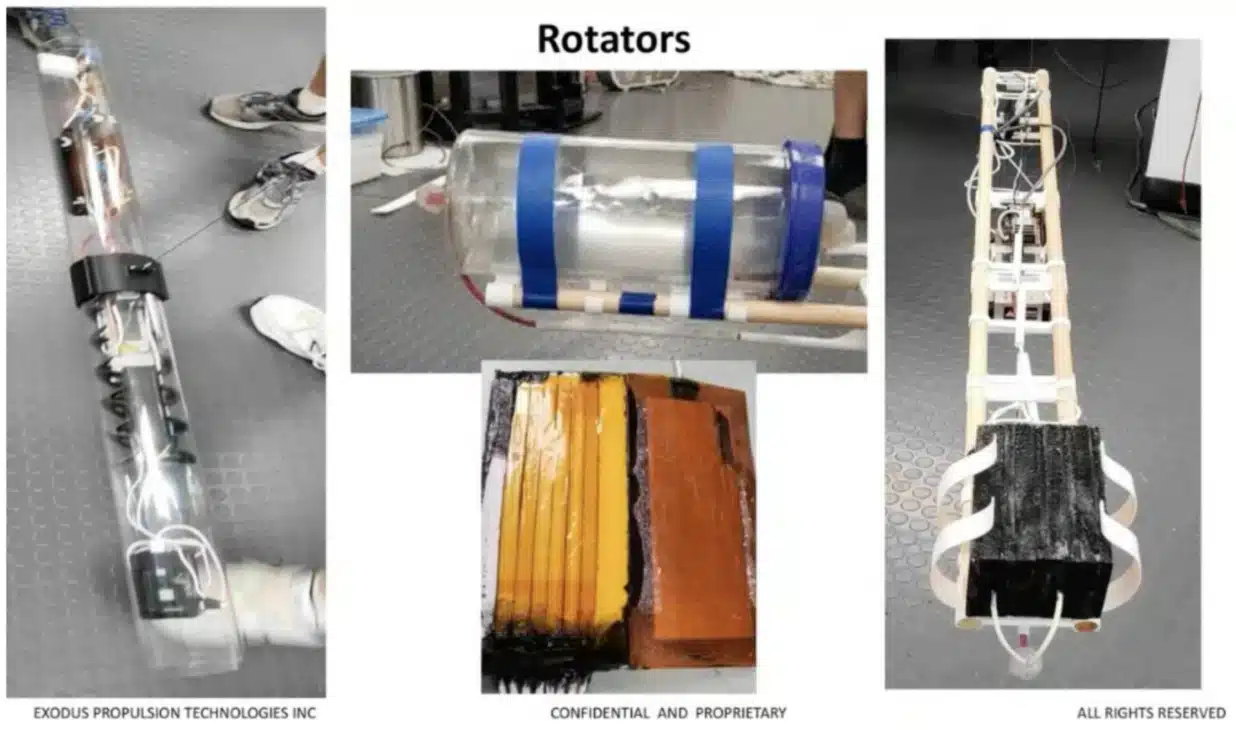
Methodology and Rigorous Testing
To validate this revolutionary technology, Dr. Buhler’s team conducted specific experiments in a vacuum chamber specially designed to simulate deep space conditions.
This environment allowed scientists to eliminate any external interference, confirming that the results obtained were indeed a direct effect of the technology.
This type of rigorous experimentation is essential to consolidate the discovery and ensure that the observed occurrence is genuine, and not just a temporary anomaly.
Comparisons with Other Propulsion Technologies
Although there are other innovative propulsion concepts under development, such as the EM Drive and Quantum Drive, Dr. Buhler believes that the approach of Exodus Propulsion Technologies offers unique advantages.
He does, however, recognize the value of these other initiatives and is open to collaborations for the extraordinary advancement of propulsion technologies.
“It’s important that we collaborate and share knowledge. Together, we can make much more progress,” Buhler emphasized.
During the experiments, the team specifically noted the ability to sustain thrust without the need for constant electrical input. These anomalies have yet to be fully explained but suggest the existence of physical principles that are not yet understood.
Dr. Buhler believes these features deserve further investigation and hopes the technology can attract investments for future space projects. With more funding, he plans to expand these tests, allowing the team to explore the possibilities of this technology.
Implications for the Future of Space Exploration
The implications of this discovery go far beyond scientific exploration. Dr. Buhler emphasizes that his innovation has the potential to open new possibilities for space transportation, reducing the costs and challenges associated with sending cargo and people into space.
Although there is still a long way to go before this technology can be applied on a large scale, the advances already achieved indicate what the future may hold.
Buhler believes his discovery can inspire a new generation of scientists to challenge the limits of current knowledge, promoting deeper investigations in the field of propulsion physics.
Dr. Buhler’s revelation marks a crucial moment for science and space exploration, opening a range of possibilities for the development of more advanced propulsion technologies.
With the support of the scientific community and investments in the sector, this discovery could redefine how we understand and explore the universe.







Instalei isso ontem no meu drone chinês !!
São “possibilidades” demais não é!
Será possível usar essa tecnologia em aviões