





 English
  Francês
  Alemão
  Italiano
  Japonês
  Norueguês
  Portuguese
  Spanish
  3 min of reading
  0 comments



Avionics Systems Specialist Transforms Experience in the Air Force and Embraer into Brazilian Solutions for Roadway Concessions and Intelligent Toll Management.
The transition from the aerospace sector to road infrastructure marked Ailton Queiroga’s career.
Additionally, the engineer graduated from the Institute of Technology for Aeronautics (ITA) founded COMPSIS in 1989.
Previously, he worked at Embraer in the 1980s.
Nevertheless, he participated in the development of avionics systems for the AMX fighter jet in Italy.
Later, he also contributed to navigation electronic systems for aircraft of the Brazilian Air Force.
According to the executive, the foundation has always been precision engineering and absolute reliability.
-
BRL 20.1 Million Bridge Project Kicks Off: 200-Meter Construction to Improve Access in Three Cities in Minas Gerais

-
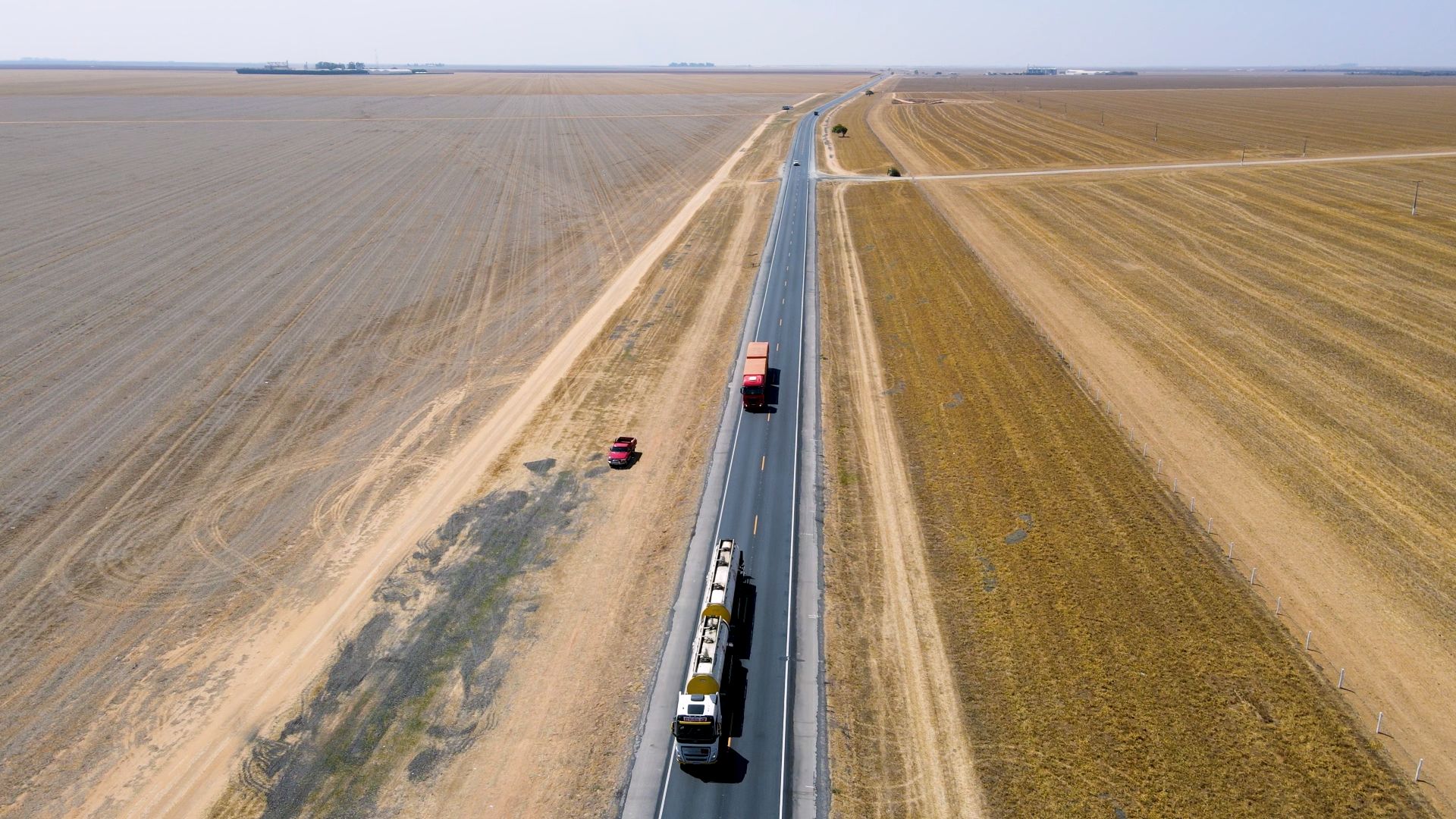
‘Endless Road’ In Brazil Is One of The Largest In The World: 145 Km Stretch On An Important Highway (BR) Crosses The West Of Bahia And Had 135.9 Km Revitalized With R$ 35.3 Million
-
With ‘Super’ Asphalt, New Highway (BR) Will Receive R$ 375 Million to Pave 60 Km, Reduce Route from 432 Km to 150.7 Km and Apply 10 Cm of Asphalt in 24 Months

-
Suspension of Driver’s License in 2026 Will Impact Road Transportation, Professional Drivers (EAR), and Logistics Productivity With New Variable Limit of 20, 30, and 40 Points


In addition to his education at ITA, he completed a master’s degree in electronic engineering in the Netherlands.
Since then, he has been applying critical technology in high-complexity environments.
From Military Aviation to Free Flow Technology on Highways
Over the years, COMPSIS broadened its focus.
Thus, it brought the rigor of the aerospace industry to road mobility.
Still in the 2000s, he participated in the implementation of a Free Flow lane in Sydney, Australia.
At the time, he worked alongside global groups like Siemens and Philips.
Meanwhile, the model for barrier-free tolling was still a distant concept in Brazil.
However, the company accumulated international experience.
Subsequently, the Brazilian concession market evolved.
As a result, the company consolidated more than 15 national solutions for toll management and collection.
Among the implemented projects, the Free Flow of the Rodoanel Mário Covas in São Paulo stands out.
In addition, the system has already recorded over 5 million transactions in real operation.
Integrated Ecosystem with Brazilian Artificial Intelligence
Currently, COMPSIS operates an integrated ecosystem with multiple artificial intelligences.
This way, it applies automation, governance, and precision in complex roadway environments.
According to the company, it is the only national system with specialized AIs operating simultaneously.
Thus, collection gains more accuracy and speed.
In addition to Free Flow, the portfolio includes solutions for:
- Automated Toll Collection
- Road Management by Image
- Intelligent Traffic Monitoring
- Operational Road Automation
Meanwhile, the IVA COMPSIS platform was created.
In this sense, it integrates modules such as SAT, DAI, G-Fila, ONU plate reading, and SVI.
As detailed by the company, the DAI presents one of the lowest false negative rates in the market.
In addition, the SVI allows for vehicle signing by image for control and payments.
Technology Adapted to Brazilian Reality
The Free Flow system identifies light and commercial vehicles in real-time.
It even maintains accuracy in heavy rain, strong sunlight, and nighttime operation.
Additinally, it recognizes trucks with raised axles or dual tires.
To achieve this, it integrates sensors, front and rear LPR cameras, RFID antennas, and AI algorithms.
According to Queiroga, the artificial intelligence was trained with millions of real transactions.
In some operational segments, commercial vehicles represent about 40% of the flow.
Therefore, the technology was developed for high-complexity scenarios.
Consequently, it maintains high performance even under adverse conditions.
Strategic Context and Market Expansion

Currently, the roadway concession sector projects tens of billions of reais in investments.
In this scenario, COMPSIS claims to be structured to meet the expansion.
With over 35 years of operation, the company emphasizes focus on national technology.
Moreover, it prioritizes operational efficiency and cost reduction.
According to Queiroga, the aim is to lead the digital transformation of roadway collection.
Thus, it seeks to optimize control, simplify maintenance, and enhance user experience.
In this way, the journey that began in military aviation connects directly to Brazilian highways.
And, in this context of infrastructure modernization, national technology can gain even more prominence.









-

3 pessoas reagiram a isso.