





 Portuguese
  English
  Spanish
  4 min of reading
  0 comments


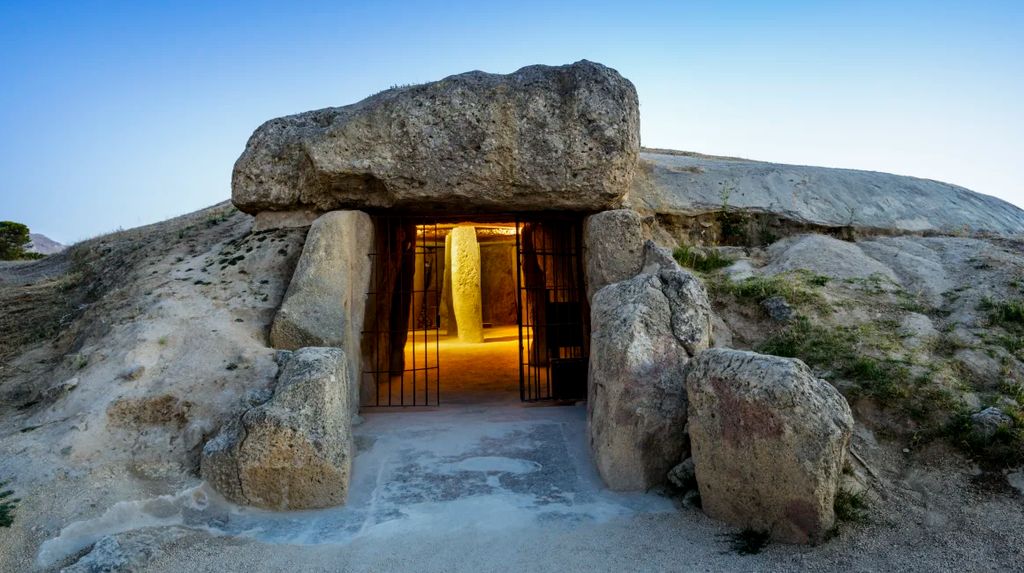
Archeologists Study How Ancient Engineers Moved Gigantic Stones, Comparable to the Weight of Two Boeing 747s, to Build an Impressive Monument.
With a history that dates back 5,600 years, the Dolmen of Menga, located in southern Spain, is an impressive monument that challenges modern understanding of the capabilities of Neolithic engineers.
This megalithic monument consists of 32 colossal stones, each many times larger than those used in Stonehenge, another iconic wonder of the Stone Age.
The largest of these stones weighs approximately 150 metric tons – the equivalent of a blue whale. In total, the set of megaliths reaches an impressive 1,140 tons.
-
Millions of people have been eating yam for centuries without knowing that this humble tuber contains a compound called diosgenin, which scientists have now discovered can improve memory and help control blood sugar levels.

-
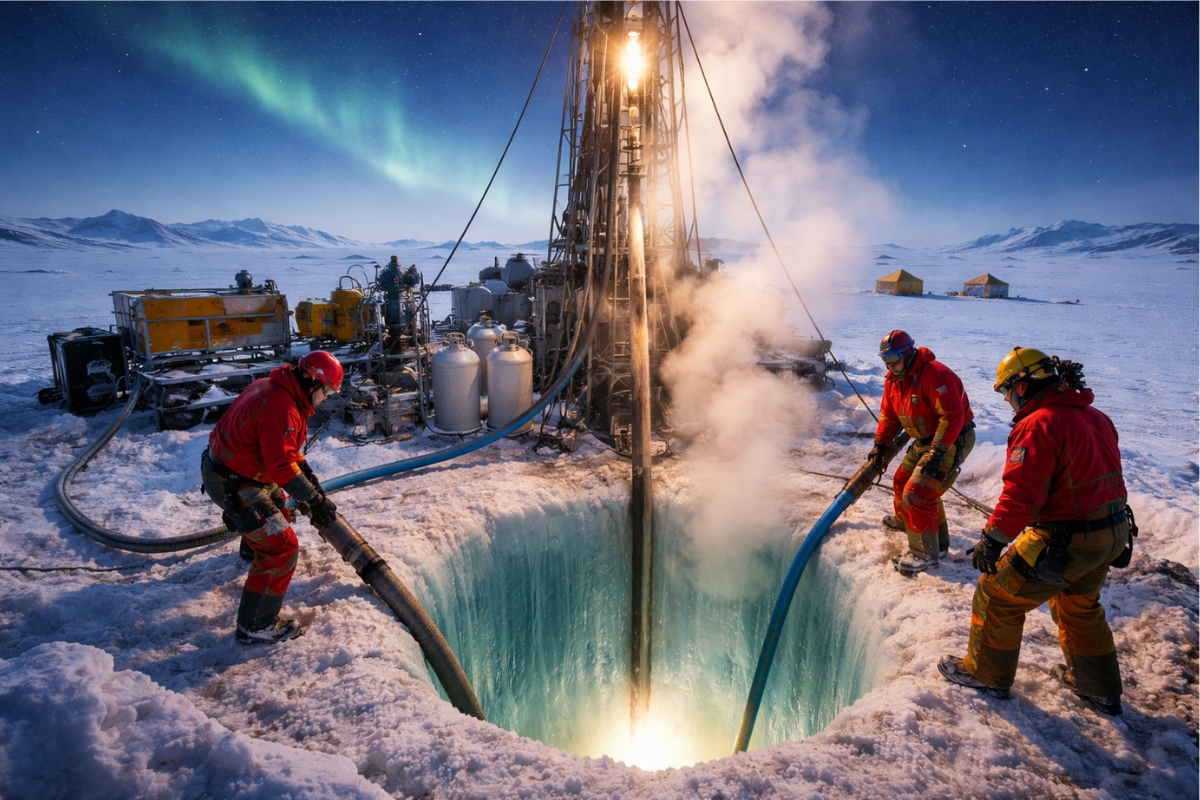
Scientists from an international project drill 1,800 meters of ice in Antarctica using hot water and discover details about one of the most intriguing places on planet Earth.
-
Seen from space, a colossal volcano nearly 5,000 meters high in Russia has released 1,600 km of smoke over the Pacific, forming “devil’s horns” of lava and revealing the brutal force of the Ring of Fire.

-
Expedition 501: Scientists drill into the ocean floor and discover a giant reserve of fresh water hidden beneath the sea, extracting nearly 50,000 liters and revealing an invisible system that could reshape the map of water scarcity.


“I often tell my students that the total weight exceeds that of two Boeing 747 planes fully loaded with fuel and passengers,” explains Leonardo García Sanjuán, professor of prehistory at the University of Seville and co-author of a recent study on the monument.
The research, published in the journal Science Advances, presents the surprisingly sophisticated technological advances used to construct the dolmen.

Millimeter Precision and Sophisticated Engineering
The Dolmen of Menga has impressive dimensions: 25 meters long and 5 meters wide at its widest point.
The study revealed that the vertical stones forming the walls of the monument were carefully tilted at a uniform angle of 84 to 85 degrees, making the ceiling narrower than the floor.
This precision required tools such as plumb bobs and squares, demonstrating an advanced knowledge of geometry.
Mike Parker-Pearson, a professor at University College London, highlighted that “the precision of the angles is millimeter-accurate,” comparing the arrangement of the stones to a Tetris puzzle.
Each stone was adjusted to support the others, forming a cohesive structure. A revealing detail from the study shows that the vertical stones were embedded in the ground up to one-third of their height, likely a result of using counterweights to ensure stability.
Complex Staged Construction
To build the dolmen, Neolithic engineers followed an organized, staged process. First, they excavated deep pits for the vertical stones, using counterweights to raise them. Then, they placed five massive capstones on the roof, transforming the structure into a closed chamber. Finally, the internal rock was carved to form the desired interior space.
After the structure was completed, the monument was covered with a mound of earth. This covering not only protected the chamber from cold and moisture but also provided additional support, acting as a force vest to increase stability.
Purpose and Meaning
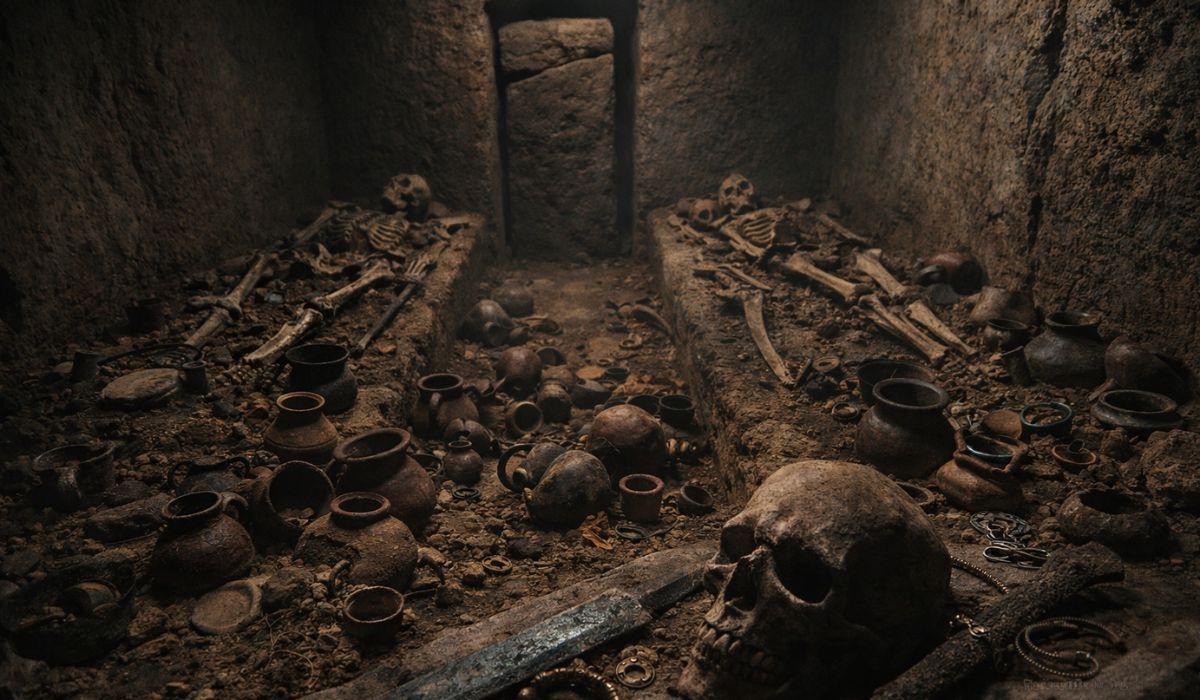
Although the exact function of the Dolmen of Menga is not fully understood, it is believed to have served as both a temple and a tomb. Few archaeological remains have been found at the site, but its robust construction suggests a desire for permanence.
According to Parker-Pearson, these stone monuments were often associated with the idea of eternity, housing the dead and connecting the living to their ancestors.
Another aspect is the dolmen’s resistance to seismic activity. Located in a seismically active region, the monument was designed to withstand possible earthquakes, demonstrating the geological knowledge of its builders.
Transporting Giant Stones
An intriguing question is how the Neolithic engineers transported such massive stones. Recent research identified a quarry about 850 meters from the monument as the origin of the stones. The favorable topography allowed the stones to be moved down a gentle slope.
The researchers suggest that the builders created a rudimentary road to minimize friction, using posts or wooden planks spaced out on the ground. The stones were transported on wooden sleds, pulled by large ropes.
The precise orientation of the monument also suggests that the construction was meticulously planned, with the axis of the stones aligned along a descending path.
Neolithic Science
The study of the Dolmen of Menga offers a fascinating glimpse into Neolithic science. Despite living in a time when tools were made of stone and there was no written language, these people demonstrated a profound understanding of physics, geometry, and geology.
García Sanjuán emphasized: “These people understood the properties of rocks and the principles of friction and angles. This is pure science.”
In a context where agriculture was just beginning to take hold, the Dolmen of Menga stands out as an example of creative genius and technological advancement. According to García Sanjuán, “a modern engineer would likely not be able to replicate this structure with the resources available 6,000 years ago.”
This monumental work remains one of the greatest wonders of Neolithic engineering, perpetuating a legacy that continues to inspire and intrigue researchers and historians around the world.








-

-

-

-

8 pessoas reagiram a isso.