





 Portuguese
  English
  Spanish
  7 min of reading
  1 comment


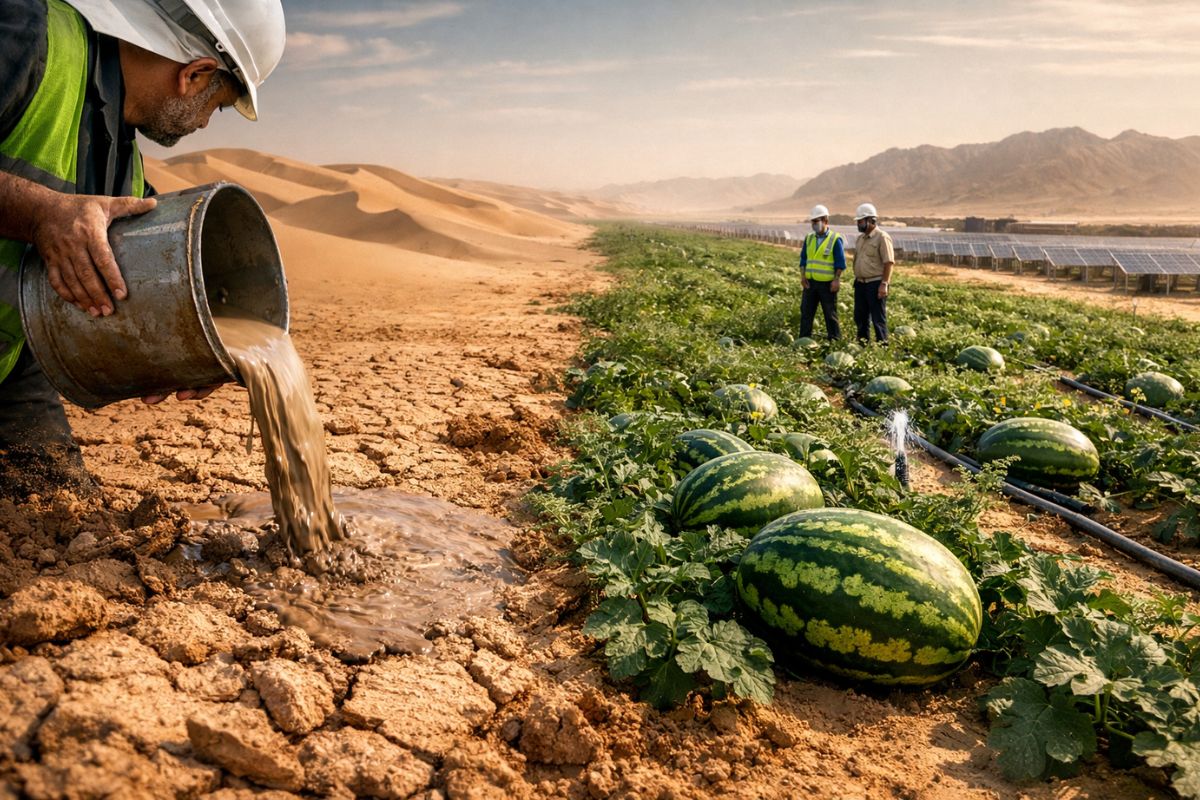


In The United Arab Emirates, Liquid Clay Applied to Sterile Sand Transformed an Arid Land into a Watermelon Crop in 40 Days, with Water Savings of Up to 47%. Inspired by the Nile Delta, the Technology Creates a Nano Layer Around the Sand and Changes the Root Zone.
In The United Arab Emirates, an area of sandy land once considered arid became a plantation of ripe and sweet watermelons under the Arabian desert sun in just 40 days. The turnaround came with liquid clay, a mixture of clay, water, and local soils that created conditions for water retention and nutrients where before the sand “drained” everything quickly.
For a country that imports about 90% of fresh products, the result drew attention for combining speed, real harvest, and water consumption reduction. Liquid clay did not emerge as “magic,” but as engineering inspired by the natural mechanism that sustained the fertility of the Nile Delta for thousands of years.
Where It Happened and Why This Test Made the News

The experiment took place in the United Arab Emirates, on a sandy land that went from arid to productive in just a few weeks.
-
A megaproject worth R$ 89 billion is advancing in Iraq and promises to change the game in global trade by creating a new corridor between Asia and Europe, reducing traditional routes and repositioning the country as a logistics powerhouse.

-
Goodbye bedside table: floating shelves become a trend in 2026 by freeing up space in the bedroom, improving circulation, bringing visual lightness, and integrating technology without taking up floor space.

-
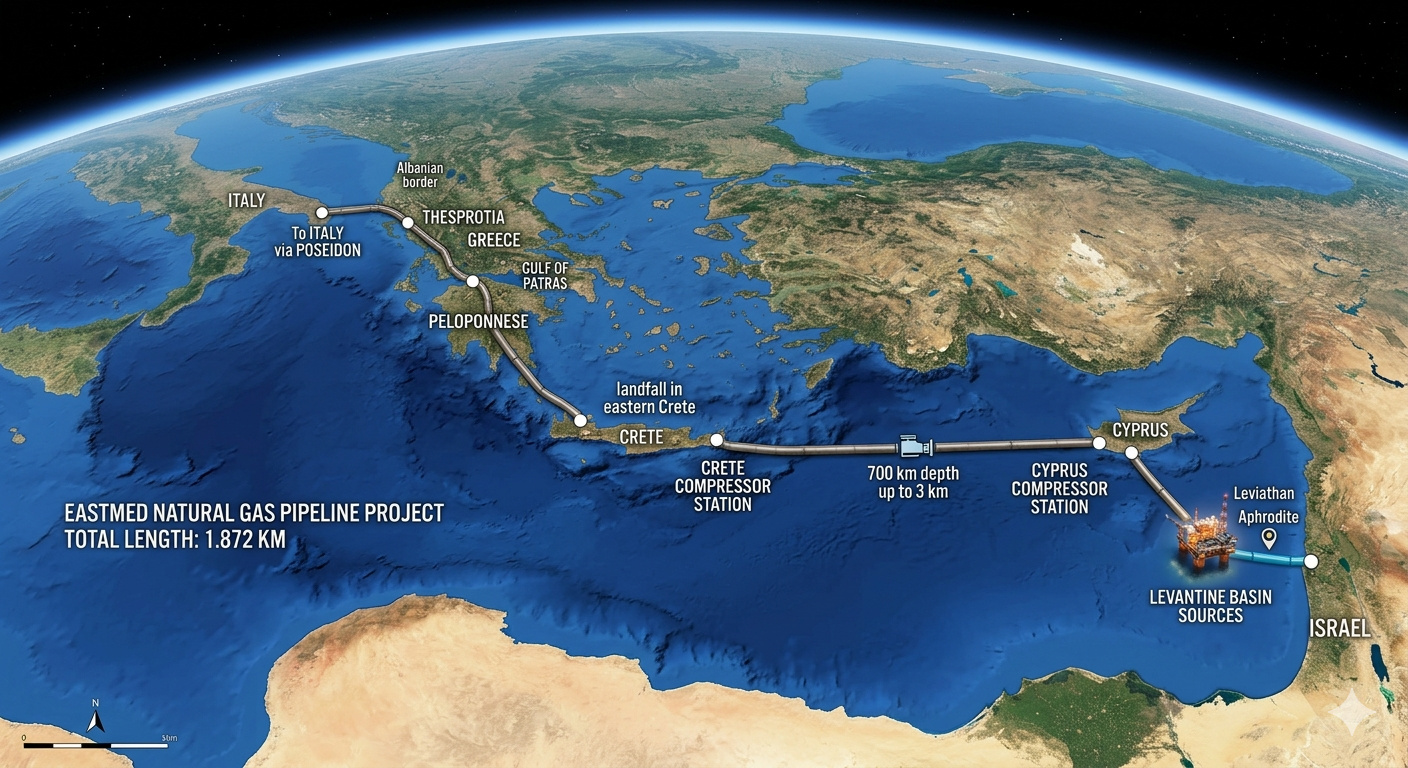
Israel, Greece, and Cyprus signed an agreement in 2020 to transport gas from the Mediterranean to Europe via a 1,872 km pipeline, but Turkey claimed sovereignty over part of the maritime route, and the project never materialized.
-
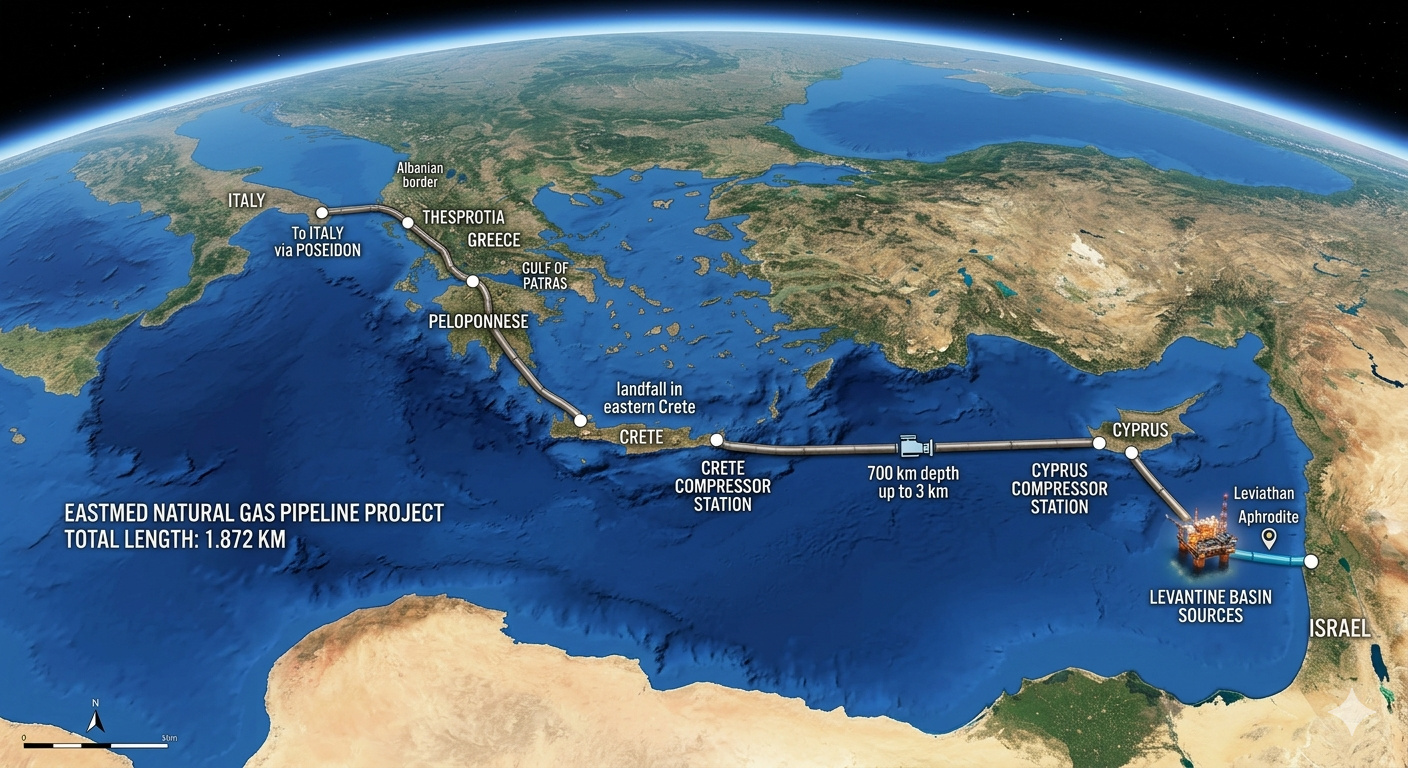
Israel, Greece, and Cyprus signed an agreement in 2020 to transport gas from the Mediterranean to Europe via a 1,872 km pipeline, but Turkey claimed sovereignty over part of the maritime route, and the project never materialized.

Liquid clay was utilized as a soil recovery technology, allowing a typical desert environment, with low water retention capacity, to behave like a viable agricultural substrate for irrigated fruit cultivation.
The timing also played a role: in March, as the world entered confinement due to Covid-19, local production gained practical relevance.
A 0.2-acre experimental area (1,000 m²) yielded about 200 kg of watermelons, zucchinis, and a millet harvest, precisely when imports plummeted and access to fresh food became more difficult.
The “Nile Secret” That Became Technology Applied in the Desert
The starting point came from the history of the Nile Delta in Egypt. For millennia, fertility was sustained by a cycle: every end of summer, the Nile would overflow, flood the plains, and recede, leaving behind minerals, nutrients, and, mainly, clay particles from the Eastern African watershed that feeds the river.
The clay was the piece that provided resilience and fertility to the soil, forming an environment where agriculture thrived even near the desert.
When this annual replenishment ceased, productivity dropped rapidly.
The cited context links the change to the period following the construction of the Aswan Dam, in southern Egypt, during the 1960s: a structure 4 km wide intended for hydroelectric power and flood control.
By regulating the flow downstream, the system reduced natural replenishment and, in about a decade, delta fertility was depleted.
Why “Throwing Clay on the Soil” Isn’t Enough and Can Even Make Things Worse
Using clay to improve soil is not new, but the challenge has always been operational and environmental. Incorporating thick and heavy clay requires plowing, digging, and turning the ground, which can be labor-intensive and aggressive to what exists below the surface.
Furthermore, turning the soil exposes sequestered carbon to oxygen, favoring its release as carbon dioxide, and disorganizes the soil bioma, which includes delicate relationships between plants and fungi.
A key point lies in mycorrhizae: fungal filaments that function as extensions of the root system, with microscopic structures resembling hairs (hyphae), allowing access to nutrients that roots alone could not reach.
When the soil is severely disturbed, these structures break, take time to regenerate, and the land becomes more vulnerable to erosion and nutrient loss.
In parallel, excess clay can form impermeable crusts or increase compaction; in small amounts, it hardly makes a difference. That is why liquid clay is not “regular clay,” but a controlled way to deliver clay in the right measure and at the right place.
How Liquid Clay Works at the Nano Scale Within the Sand
The logic of liquid clay is to create a fine and balanced dispersion, capable of percolating between local soil particles, but without draining too quickly to be lost.
The target is clear: to treat the 10 to 20 cm of soil in the root zone and below it, where traditional crops establish and where water and nutrient retention changes the game.
Chemistry plays a part. According to the technical explanation presented, the interaction occurs through Cation Exchange Capacity: clay particles are negatively charged while sand grains tend to be positively charged, which favors binding when they come into physical contact.
The described result is a layer of clay 200 to 300 nanometers around each sand particle, creating a formation resembling a snowflake.
This larger surface area “holds” water and nutrients, reducing losses due to runoff and deep drainage, and making the substrate more like a functional agricultural soil.
What Changed in Practice: Water, Time, and Real Production
The most direct gain associated with liquid clay is water-related. The technology is said to be capable of reducing water consumption by up to 47%, a number particularly relevant in a desert environment.
Moreover, application has been described as quick: once conditions are stabilized and nutrients are bioavailable, it would be possible to plant in up to seven hours, within the technical context presented.
In the case of the United Arab Emirates, the short-term result was tangible: in 40 days, the experimental area managed to produce watermelons and other crops.
And the social effect emerged when part of the production was allocated, with support from local partners, to nearby families during a period of strict restrictions.
Why Each Soil Requires a Formula and What This Changes at Scale
There is no “one-size-fits-all recipe.” The reported development mentions ten years of testing in countries such as China, Egypt, the United Arab Emirates, and Pakistan, emphasizing that each type of soil needs to be analyzed to formulate the ideal liquid clay.
The challenge is always the balance: fluid enough to distribute in the soil profile, but stable enough to remain in the root zone and generate agronomic effect.
This customization need explains why the project invested so much in formulation and why commercial implementation only advanced recently, after validations and tests in controlled research and application environments.
Production at Scale: Mobile Mini Factories, Volume per Hour, and Local Logistics
The described industrial strategy relies on mobile mini factories in 13-meter (40-foot) containers, capable of producing liquid clay locally, using clay from the host country and contracting regional labor.
The first mentioned unit would have a capacity of 40,000 liters of liquid clay per hour, with initial use planned in urban parks in the United Arab Emirates, where water savings could be crucial for maintaining green areas.
This production architecture also reduces dependence on transporting inputs over long distances and aims to adapt the technology to regional realities, especially where the problem is extreme sandiness and low moisture retention.
The Cost per Square Meter and the Obstacle to Reach Where It’s Most Needed
Currently, the initial cost cited is around US$ 2 per square meter, considered viable for small properties in the United Arab Emirates, but still high for Sub-Saharan Africa, where many farmers might not have the capital for treatment.
Another practical detail: the effect of the treatment is reported to last about five years, after which the clay would require reapplication.
The scaling goal seeks to bring the cost down to about US$ 0.20 per square meter.
The comparison presented places the cost of productive agricultural land in other regions between US$ 0.50 and US$ 3.50 per square meter, suggesting that in certain scenarios, it may be cheaper to recover unproductive areas than to acquire already established fertile land.
If the cost drops, liquid clay will no longer be a showcase and will become a mass tool.
Limits of Liquid Clay and Why Other Solutions Enter the Conversation
The description itself delineates the scope: globally, soils are said to have lost between 20% and 60% of organic carbon, and liquid clay would be more suitable for recovering sandy soils in regression.
For other contexts, such as non-sandy saline soils, alternatives mentioned in the material arise: biochar (stable carbon produced by pyrolysis with low oxygen), vermiculite (mineral with high water retention after thermal expansion), and absorbent polymer spheres for root zones, although these options require soil preparation for placement.
The logic is that different degradations demand different interventions.
Still, in the specific case of sand with low water retention, the proposal of liquid clay is precisely to deliver retention without requiring the aggressive turning that traditionally accompanies the incorporation of clay.
The Greater Promise: “From Sand to Hope” with Less Water and More Predictability
The stated goal is to transform unproductive desert areas into soil with agricultural capacity, reducing water waste and creating a physical base for water and nutrients to remain where the roots can access.
Liquid clay acts as the invisible infrastructure of the soil, changing the physics and chemistry of the sand so that agriculture becomes possible without relying on “miracles.”
In the United Arab Emirates desert, the practical evidence was a watermelon plantation in 40 days, with concrete data on area, harvest, and water-saving targets.
Do you believe that technologies such as liquid clay can become standard in dry countries, or will they still be niche solutions due to cost and the need for reapplication?








Tudo vai depender da vontade política. Como sempre