





 Português
  Inglês
  Espanhol
  8 min de leitura
  0 comentários


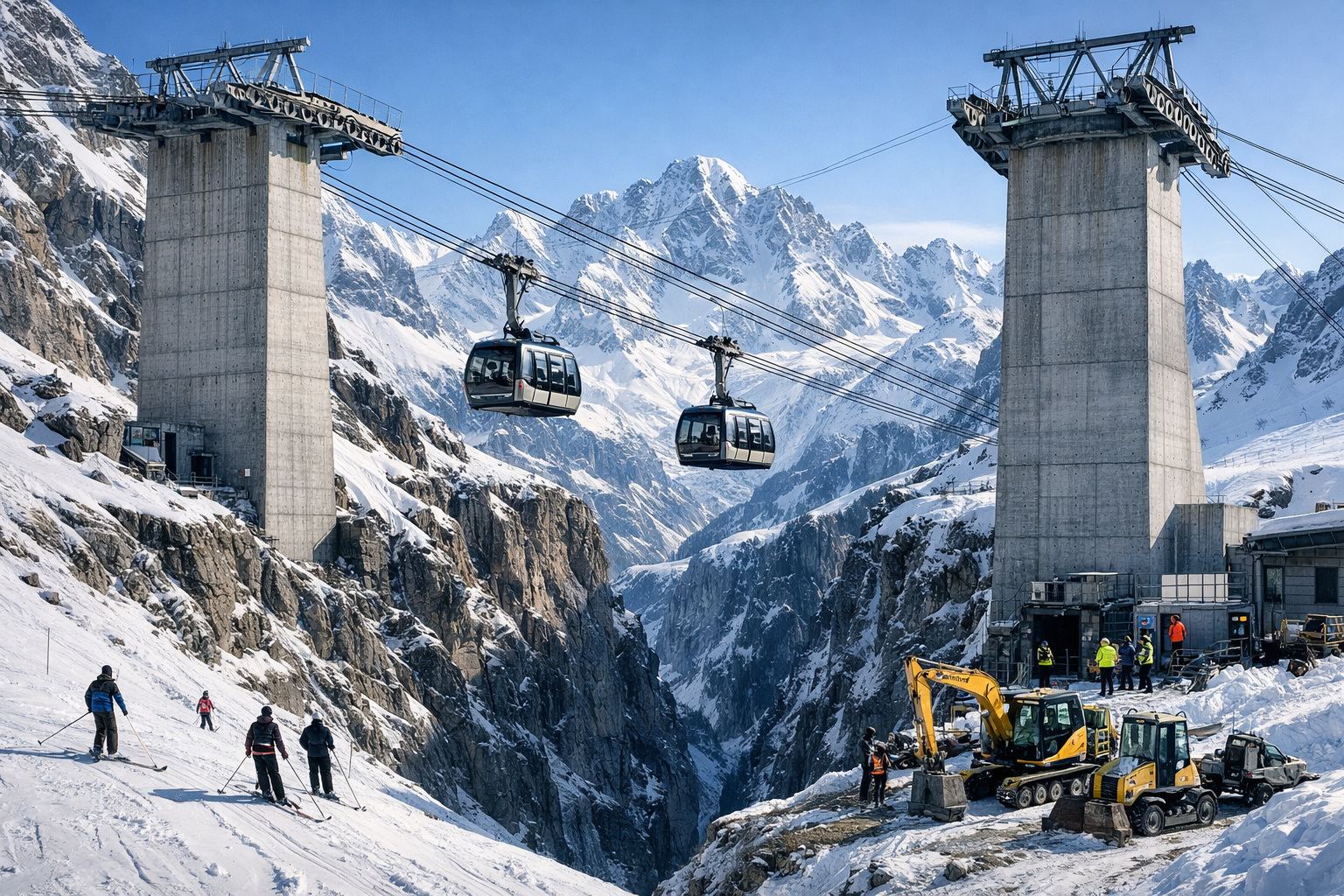
A Nearly Vertical System Defies Gravity in One of the Most Hostile Terrains in Europe
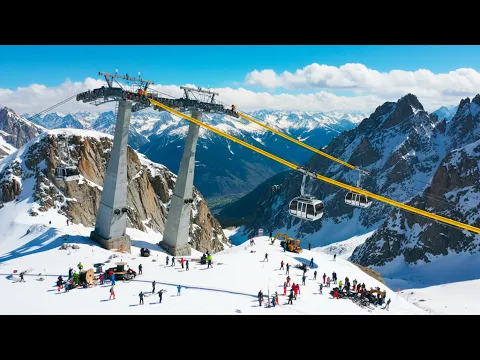
Sixty degrees. This is the exact slope of the hillside where the steepest cable car in the world was built, in the heart of the Swiss Alps. In a setting where rock cliffs rise almost vertically toward the icy sky, modern engineering had to go beyond traditional limits to make possible a suspended transport system operating over an extreme abyss, in a hostile environment dominated by gravity, wind, and intense cold.
At first glance, the mere existence of a cable car on a slope with this inclination seems unlikely. However, everything is held in place by just a few steel cables tensioned over kilometers of open space. The cabins are pulled almost vertically along the face of the mountain, supported by a set of structures that challenge not only physics but also the human courage involved in each step of the construction.
Behind the sleek and silent appearance of the system in operation lies an extreme construction site. Workers had to suspend themselves thousands of meters above the ground during the assembly phase, operating in a setting where any mistake, no matter how small, would not allow for a second chance. Each pulley installed, each screw tightened, and each cable secured represented real and immediate risks.
-
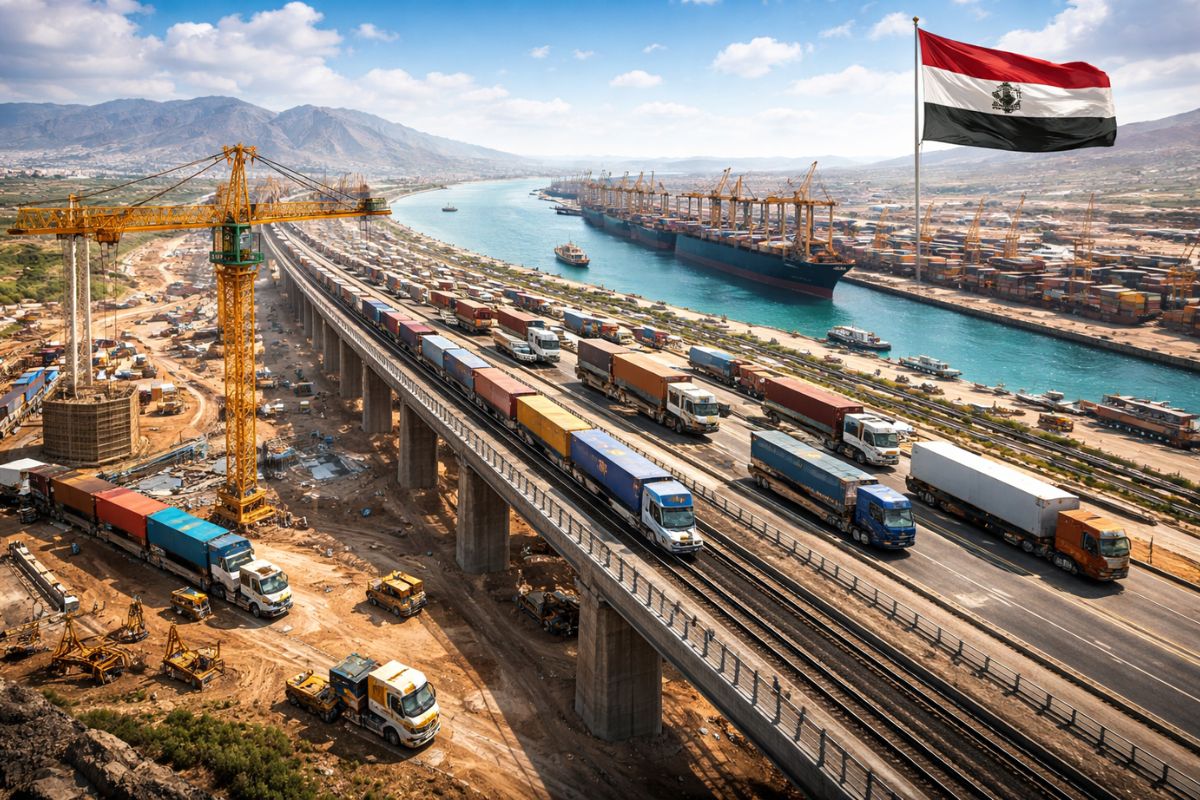
A megaproject worth R$ 89 billion is advancing in Iraq and promises to change the game in global trade by creating a new corridor between Asia and Europe, reducing traditional routes and repositioning the country as a logistics powerhouse.
-
Goodbye bedside table: floating shelves become a trend in 2026 by freeing up space in the bedroom, improving circulation, bringing visual lightness, and integrating technology without taking up floor space.

-
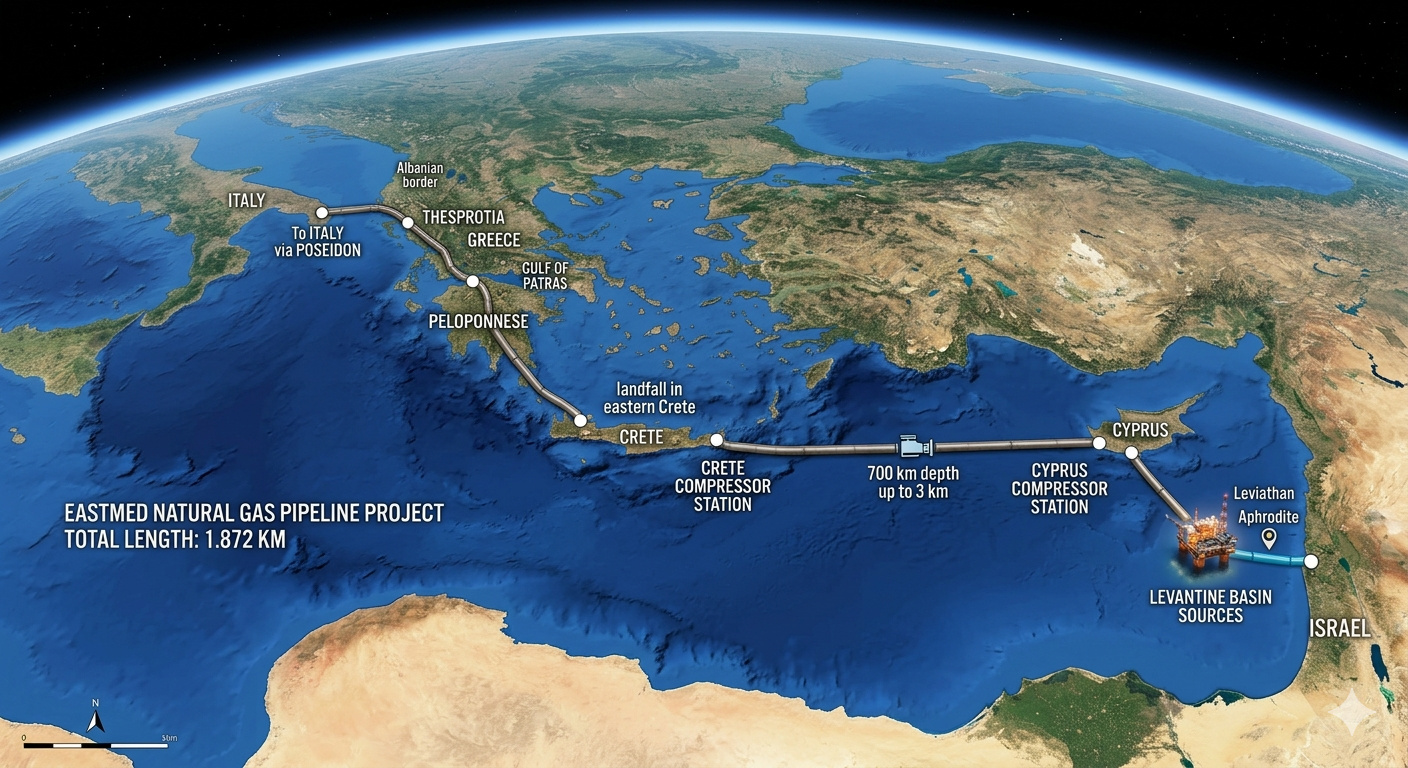
Israel, Greece, and Cyprus signed an agreement in 2020 to transport gas from the Mediterranean to Europe via a 1,872 km pipeline, but Turkey claimed sovereignty over part of the maritime route, and the project never materialized.
-
Israel, Greece, and Cyprus signed an agreement in 2020 to transport gas from the Mediterranean to Europe via a 1,872 km pipeline, but Turkey claimed sovereignty over part of the maritime route, and the project never materialized.
In this context, the accuracy of movements became a vital factor. Teams worked suspended in midair, performing millimeter procedures while the natural environment imposed strong winds, low temperatures, and constant instability. What may seem at first to be a common industrial process turned out to be one of the most dangerous engineering operations in Europe.
According to a specialized technical documentary about large alpine works, the complexity of this construction lies not only in its height or slope but in the sum of extreme factors that make the project unique on a global scale.
A 159% Slope and a Vertical Drop of Almost 800 Meters Redefine the Limits of Modern Engineering

Extreme engineering reaches its peak when analyzing the project’s numbers. The Steckelberg–Mürren line, located in southern Switzerland, faces a maximum absolute slope of an impressive 159%. This value represents one of the greatest challenges ever faced by cable transport systems in commercial operation.
Additionally, the route covers an approximate distance of 1 kilometer, overcoming a vertical drop of nearly 800 meters in height. It is one of the most rugged mountainous areas in all of Europe, where few transport systems in the world have even dared to attempt a similar deployment.
Two cabins, each with a capacity to carry up to 85 passengers, move continuously along the steel cables. Even under fierce winds and with the accumulation of heavy snow, the system maintains operational stability and safety, resisting the natural forces that act constantly on the structure.
At first glance, the cable car may seem like just another means of alpine transport. However, in practice, it redefines the traditional limits of construction in extreme environments. Engineers not only installed the system on a nearly vertical terrain but also designed each component to operate under conditions where the slightest technical error is simply not an option.
In this sense, it is not just the numerical records that define the uniqueness of the work. The true differentiator lies in the technical capability to design, install, and operate a functional system in a geography where the mountain itself seems to resist human intervention.
It all begins far from the slope, in the silence of engineering and design offices. It is in this controlled environment that specialists calculate the exact tension of the steel cables, assess the load of the lateral wind, and even simulate the microscopic vibrations that the cabins will generate along the route.
These calculations are essential to ensure that the system supports not only the weight of the cabins and passengers but also the dynamic forces imposed by continuous movement, temperature changes, and the extreme weather conditions of the Alps.
Controlled Blasts, Deep Foundations, and Aerial Logistics Facilitate the Construction

One of the central questions of the project was straightforward: why blast solid rock thousands of meters high rather than simply adapt the construction to the natural ground? The answer lies in the geological instability of the slope. Without the artificial creation of a flat plateau through controlled blasts, the base of the station would never withstand the titanic forces generated by the system.
For this, hydraulic drills opened dozens of holes in the granite rock. These holes were arranged in a precise geometric mesh, with spacing ranging from a few centimeters to about 1 meter. Each hole received a calculated explosive charge, ensuring that the rock fracture occurred exactly in the planned direction.
The detonation was executed in a sequence of milliseconds. This method allowed the rock to be split without compromising the overall stability of the mountain. After the explosion, the dust settled slowly, revealing a new lowered level of soil, exactly as the structural project had predicted.
However, this was only the beginning of the challenges. Heavy trucks cannot access these extreme altitudes, which forced the engineers to create an aerial logistical solution. A temporary cable car was hastily built, functioning as a vital artery for the construction site.
Through this provisional system, steel beams, cement bags, and heavy machinery were secured on pallets and suspended directly over the abyss. The loads traveled routes of 20 to 40 minutes, swaying dangerously in strong winds as they advanced toward the construction areas.
The main station began to take shape with the deep excavation of the foundations directly into the exposed rocky bed. Steel anchoring rods were inserted to tie the entire structure to the mountain, ensuring that no displacement would occur over time.
The concrete used was poured under strict thermal control. The extreme cold at altitude could compromise the chemical curing of the mix, making constant temperature monitoring essential throughout the process. Only after reaching the ideal strength were large steel bases installed to receive the heavy machinery of the system.
Steel Cables, Cargo Helicopters, and Millimeter Precision Support the System

With the foundations completed, the construction entered one of its most critical phases. The external cladding of the station began to be assembled over the main beams, forming a metal and glass structure designed not only for aesthetics but to protect sensitive equipment from ice storms, intense winds, and heavy snow accumulation. Each panel installed had to withstand extreme temperature variations and direct impacts from ice particles.
Meanwhile, far from the mountain, the true heart of the system was taking shape in a factory specialized in producing ultra-high-strength steel cables. The process starts with the drawing of special alloys, transformed into extremely thin wires that are subsequently braided into robust strands capable of withstanding colossal tensions. Between each layer, a lubricating grease is applied to prevent internal corrosion and reduce friction over the years of operation.
Each finished coil weighs dozens of tons and undergoes rigorous stretching tests before being released. These tests ensure that the cable will not only support the weight of the cabins but also the dynamic forces generated by the slope of up to 159% and the extreme weather conditions of the Swiss Alps.
The transport of these giant coils to the base of the mountain required a precision logistical operation. Special low-floor trailers maneuvered excessively wide loads along narrow and winding roads, where each curve required absolute attention. Any mistake could compromise weeks of planning.
In the tower factory, the structural components were not produced as unique pieces. Each tower was divided into individual steel modules, machined and pre-drilled with millimeter precision to ensure a perfect fit at the construction site. Since the terrain was inaccessible for conventional cranes, the entire assembly relied exclusively on cargo helicopters.
The pilot had to keep the aircraft practically motionless in the air while the workers on the ground guided the steel modules to their final position. Hundreds of high-strength screws were then tightened following a rigorous sequence, ensuring the correct locking of the structure. At the top, the alignment of the pulleys required extreme precision, as a deviation of a few millimeters would cause accelerated wear and catastrophic failures in the main cable.
Suspended Joints, Redundant Software, and Extreme Testing Ensure Safety
The next phase was considered one of the most delicate in the entire project: the launching of the cables. The process does not start with the main steel cable but with a synthetic and lightweight guide cable, transported by the helicopter through the towers. Powerful winches at the stations gradually pull thicker cables, using the previous one as a guide, until the main steel cable is finally installed.
All movement occurs slowly and is carefully monitored via radio. At no point may the cable touch the rocky ground, as any damage would compromise its structural integrity. At the highest point of the line, the most complex stage of all occurs: the jointing of the cable to form a continuous loop.
Workers operate on suspended platforms, unraveling the ends of the cables and manually intertwining the wires in a highly complex braid. The mechanical tension applied later causes the wires to tighten against each other, making the joint practically invisible and structurally indestructible.
The cabins, custom made with aluminum alloys and safety glass, arrive ready from the factory. They are attached to the cable by specially adjusted damping systems to ensure passenger comfort, even under strong winds and abrupt speed variations.
The drive system comprises high-power electric motors and gigantic reduction gearboxes, connected to a control software with triple redundancy. This system manages acceleration, cruise speed, and emergency stops, ensuring an immediate response in any abnormal situation.
Before the official inauguration, the cable car underwent weeks of exhaustive testing without human passengers. Sandbags and concrete weights simulated the maximum cabin load, allowing verification of brake performance, tower stability, and the structural response of the set. Sensors monitored vibrations and temperature variations in all critical components.
Only after achieving the necessary technical maturity was the system released for definitive commercial operation, offering absolute safety even in one of the most extreme environments of modern engineering.
A Project That Transforms Calculations into Reality and Redefines Human Limits
Thousands of hours of engineering materialized in the final structure of the cable car line. The transition from the initial technical drawings to physical reality concluded an extremely complex construction cycle, marked by precise structural calculations, intense aerial logistics, and execution without margin for error.
With the system completed, it is possible to observe the perfect alignment of the cabins at the stations, ready to initiate continuous movement. At first glance, the work may seem like a simple mechanical assembly. However, behind this discreet appearance lies an impressive sequence of technical decisions, rigorous testing, and innovative solutions that ensure stability and safety for continuous aerial transport.
More than a world record, the steepest cable car in the world represents humanity’s ability to transform scenarios considered impossible into functional infrastructure. In a terrain where gravity seemed to impose insurmountable limits, engineering found solutions to advance.
The system is now fully ready to operate, establishing itself as one of the most impressive works of contemporary alpine engineering and an extreme example of how calculations, courage, and technology can overcome even the most hostile cliffs.








-

-

-

-

-

-

29 pessoas reagiram a isso.