





 Português
  Inglês
  Espanhol
  5 min de leitura
  49 comentários


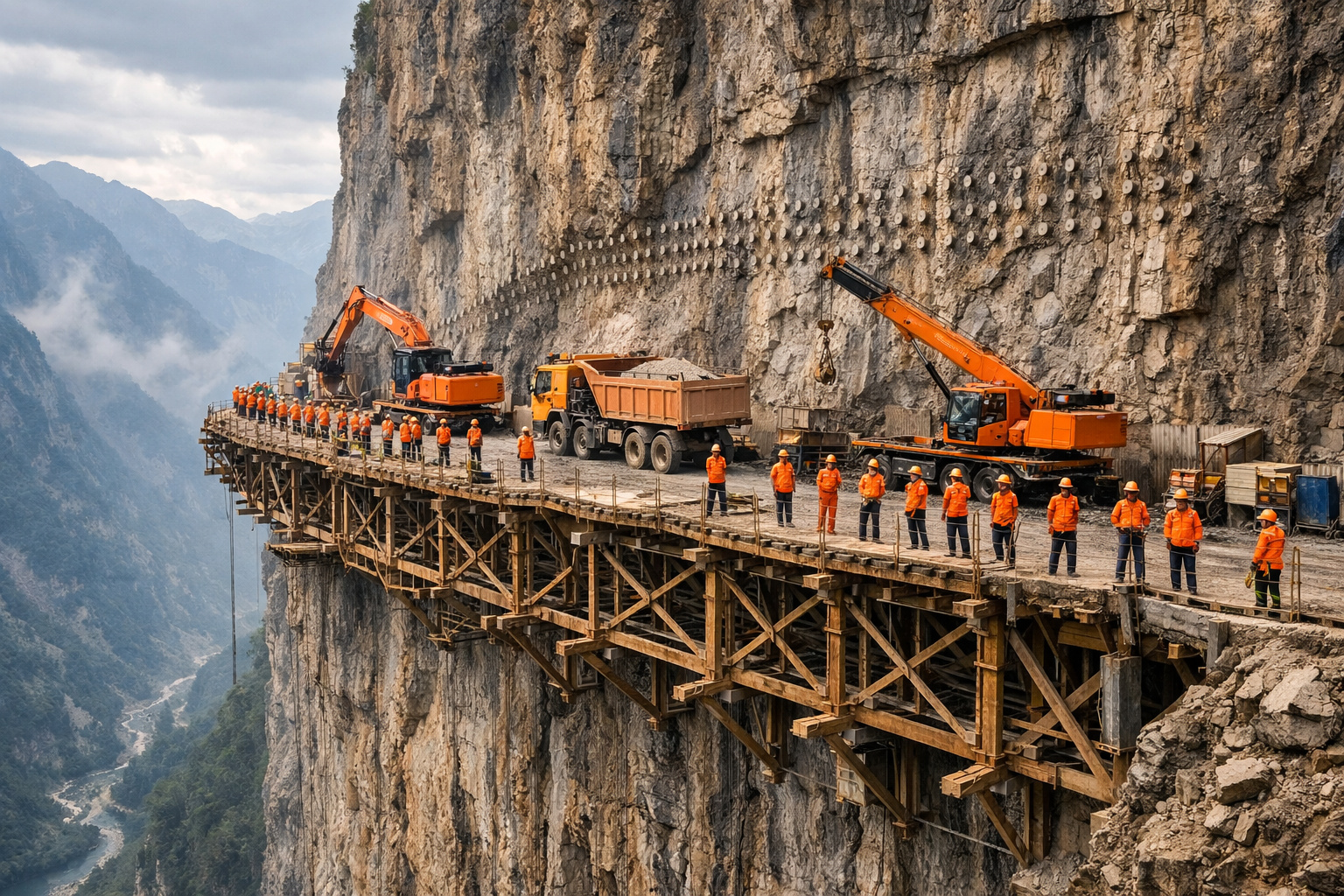


How Millimeter Calculations, Controlled Explosives, and Colossal Machines Make It Possible to Build Highways at Altitudes of Up to 4,500 Meters, Facing Extreme Weather, Solid Rock, and the Constant Risk of Landslides
Hundreds of meters of depth separate the road from the abyss in the most imposing ravines of the Andes Mountains in South America. Any mistake, no matter how small, can cause an entire project to tumble down the mountain. Still, engineers from the United States lead some of the planet’s most ambitious works, cutting almost vertical cliffs to create giant roads in regions where isolation has been the norm for centuries.
The information was disclosed by technical reports and specialized documentaries in heavy engineering, which closely follow road projects executed in Peru, Chile, and Bolivia, involving international teams. According to the published materials, building a road in these environments requires much more than brute force. It is a job of extreme precision, where every decision can determine the success or collapse of the work.
Even before the first machine touches the rock, engineers carry out the exact determination of the road’s centerline. To an outside observer, the geometric markings painted directly on the cliff face may seem simple. However, without this rigorous layout, any detonation could compromise the structural integrity of the entire mountain.
-
A megaproject worth R$ 89 billion is advancing in Iraq and promises to change the game in global trade by creating a new corridor between Asia and Europe, reducing traditional routes and repositioning the country as a logistics powerhouse.

-
Goodbye bedside table: floating shelves become a trend in 2026 by freeing up space in the bedroom, improving circulation, bringing visual lightness, and integrating technology without taking up floor space.

-
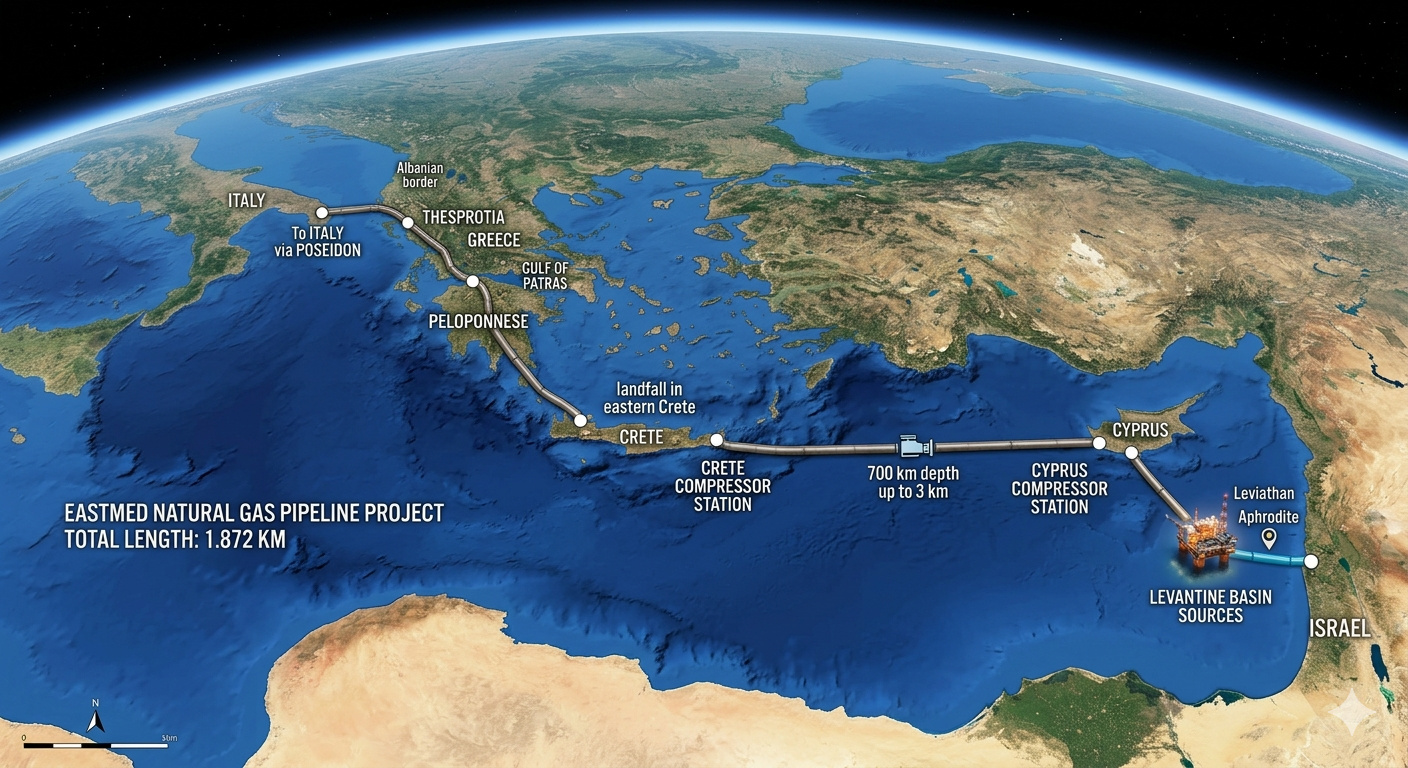
Israel, Greece, and Cyprus signed an agreement in 2020 to transport gas from the Mediterranean to Europe via a 1,872 km pipeline, but Turkey claimed sovereignty over part of the maritime route, and the project never materialized.
-
Israel, Greece, and Cyprus signed an agreement in 2020 to transport gas from the Mediterranean to Europe via a 1,872 km pipeline, but Turkey claimed sovereignty over part of the maritime route, and the project never materialized.
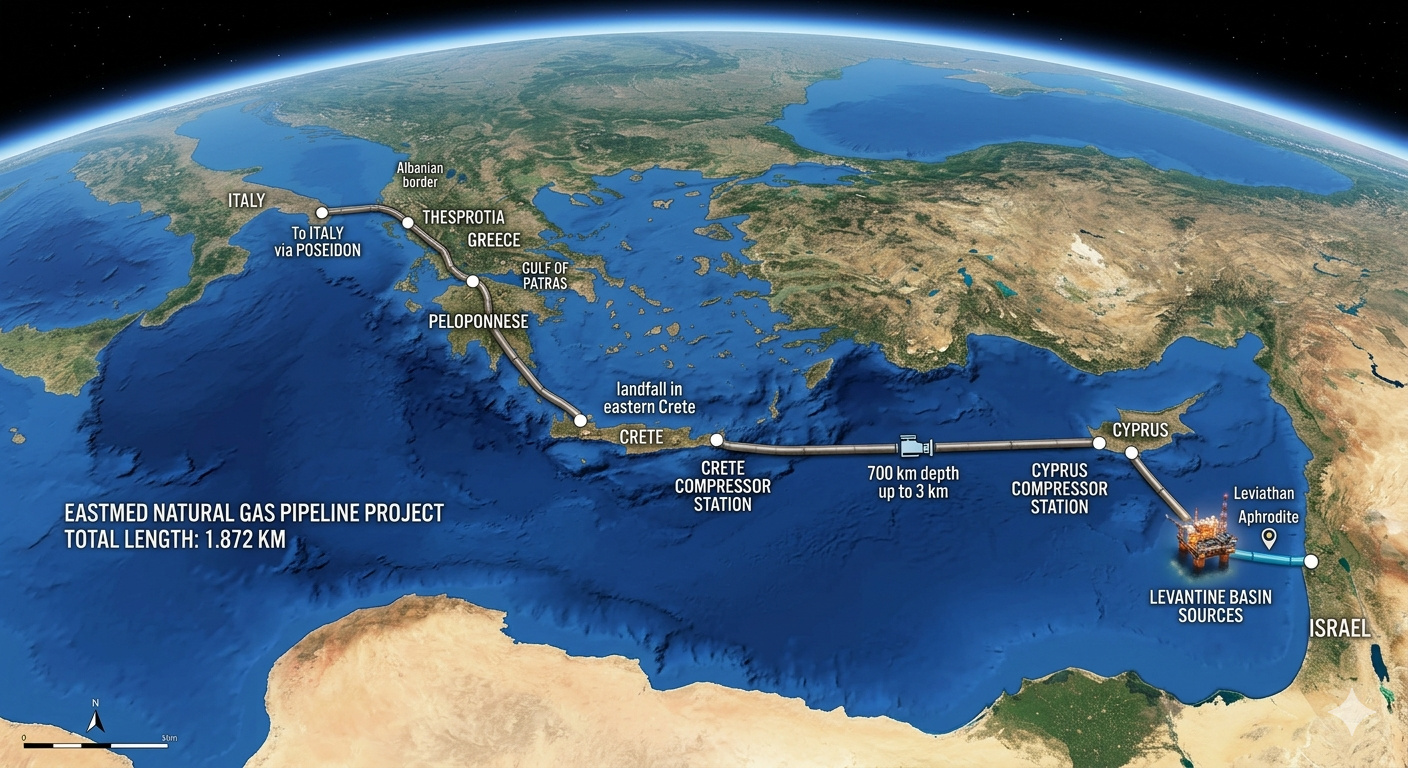

Cutting the Mountain Requires Millimeter Precision, Controlled Explosives, and Hundreds of Tons of Machinery
At altitudes ranging from 3,000 to 4,500 meters, the challenge intensifies. In these critical ranges, the thin air reduces labor efficiency by 30% to 40%, while weather conditions can shift from intense sun to snowstorms in a matter of hours. Still, heavy machinery, weighing hundreds of tons, operates on slopes so steep that they seem poised to fall into the abyss at first glance.
The process begins with systematically organized drillings that are strictly calculated. Each hole follows a predetermined plan, allowing explosive charges to be inserted in controlled quantities. The goal is not to destroy the mountain, but to fracture the rock in specific sections, maintaining the overall stability of the slope after each explosion.
As soon as the dust settles, hydraulic excavators move in to remove the fragmented material. Heavy-duty trucks, positioned at the edge of the road, continuously transport debris along temporary routes. In sections where the topography allows, bulldozers push the material directly into ravines or rivers below, using gravity to speed up the process and drastically reduce site cleanup time.
Next, bulldozers shape the slope, sculpting the initial bed of the road. Although it appears to be a crude operation, the blade adjustment is constantly refined to achieve the exact slope and elevation required by the project. The cycle of drilling, blasting, excavating, and grading repeats section by section until a continuous road begins to emerge from the mountain.
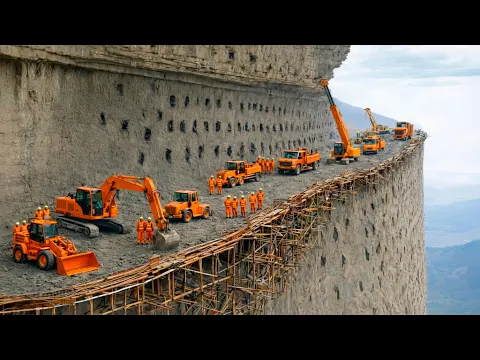

When Cutting Is Not Enough, Engineering Advances to Tunnels and Roads Suspended in the Void
Despite all the precision, there comes a moment when cutting the rock ceases to be feasible. In excessively steep or unstable terrains, the strategy changes radically. To reduce exposure to landslides and extreme weather, teams begin drilling tunnels directly into the rocky mass, diverting the road from the most dangerous areas.
These tunnels require a complex ventilation infrastructure. Vertical shafts of 4 to 6 meters wide, which can reach depths of up to 200 meters, are drilled even before the main tunnel is completed. They act as the true lungs of the project, bringing in fresh air and expelling toxic gases that accumulate in the galleries. Sensors constantly monitor oxygen, temperature, and the presence of hazardous gases, coordinating jet fans to maintain safe conditions.
In areas where there is no horizontal space available, the solution is even more impressive. The road becomes suspended along the slope through reinforced concrete columns and prefabricated modules. These columns are built directly on the bedrock and serve as the structural skeleton of the road. Specialized cranes lower gigantic pieces against the mountain’s wind, positioning each module with absolute precision.
Each prefabricated section includes steel beams, concrete slabs, and connection points, reducing construction time on-site. Workers are always secured with reinforced safety harnesses while aligning the modules with crane operators. Gradually, the road takes shape like a suspended ribbon over the abyss, defying gravity with technical stability.
Giant Tunnel Boring Machines Drill the Heart of the Mountain with Forces of Up to 500 Tons
When even suspended roads are insufficient, engineering turns to the depths. Colossal machines, known as tunnel boring machines, come into play. Each one is assembled inside the mountain itself, from hundreds of components transported separately. The cutting head, nearly 15 meters in diameter and weighing over 15 tons, is positioned with a tolerance of less than 5 millimeters.
Once in operation, these machines, which can weigh over 3,000 tons and reach nearly 100 meters in length, move forward slowly but with overwhelming force. Four hydraulic cylinders press the cutting head against the rock with up to 500 tons of force. The 23 metal discs rotate with enough torque to crush rocks as hard as steel.
Each drilling cycle advances about 1.20 centimeters, taking approximately 30 minutes, repeating over 50 times per shift. The fragmented rock is removed by automated belts, while high-pressure water jets cool the cutting head, reducing thermal friction. The process runs day and night until the tunnel is fully drilled through.
After drilling, the work continues. Engineers use pressure sensors, ground penetration radars, high-frequency ultrasound, and 8K optical cameras to inspect every centimeter of the structure. A reserve energy system of 10 MW, tested according to standards such as NFPA 502 and EN 50545, ensures total safety in case of an emergency.
In the end, the road emerges complete, uniting rock cuts, suspended pillars, and deep tunnels. A work that, at first glance, seems to defy logic and gravity, but in practice represents the pinnacle of modern engineering applied to the planet’s most hostile terrains.








fantastic and highly intelligently thought! Congrats to those engineers and their team in USA for operating in such difficult terrain in the Andes! not everyday piece of cake!
Amazing as this work is, I’m surprised that anyone anywhere still sends rock rubble into rivers, knowing as we do how damaging that can be to fish.
Listen here Karen, Your inquiry is both disturbing and anti-humanistic please explain why
” The fish ” should be of more concern than children in b
(insert any waring or post war conflicted country, territory or providence here). Before anyone catches feelings about anything stated remember the adults who run this world are or were somebody else’s child/children and every single one of us was raised by a misogynistic socially engineered either anti- or- pro political bipartisan system by which tracing , historical documentation, genealogy, as well as oral tradition has been flawed since originating.
We are all just someone else’s fucked up children ! When has Government, Military, Politicians, Corporate entities including individually wealthy Corporate CEO’s ever given a rats ass about the children they kill in the persuit of, science, war, political influence, or global conquest. Open your eyes nukes are detonated in the ocean to measure tolerances and see immediate and after effects of said detonation on sea life Quaker and the U.S. government did a double blind study on the immediate and lasting effects by distributing ionizing radiated oatmeal/cereal to pregnant women and their families in the midwest to understand the consequences a nuclear war would have on our top soil and crops as well as human genetics both pre fetal and post fetal development for generations to come this was in the 50’s. According to NASA.gov CIA.gov FBI.gov also The NSA, these findings are still being evaluated and monitored which means the “testing” has not concluded and we my friend are the current subjects of this ongoing experiment. So go cry for your fish over a see of radioactive decay from decades past and decisions made by powers that be that are still effecting us to this day. That is if the next unitarian non-biased experiment either kills us or your precious “fish”… .. .Oh and by the way you probably fish right ? Casting, hooking, gutting so fucking humane right ?
If the truth hurts it has probably been a long time unrecognized forthcoming and needed revelation !
You’re an ASSHOLE!!!
I think your grounding wire or aluminum foil cap has failed
Fish feed the childrens.
I’m simply overwhelmed!