





 Português
  Inglês
  Espanhol
  4 min de leitura
  3 comentários


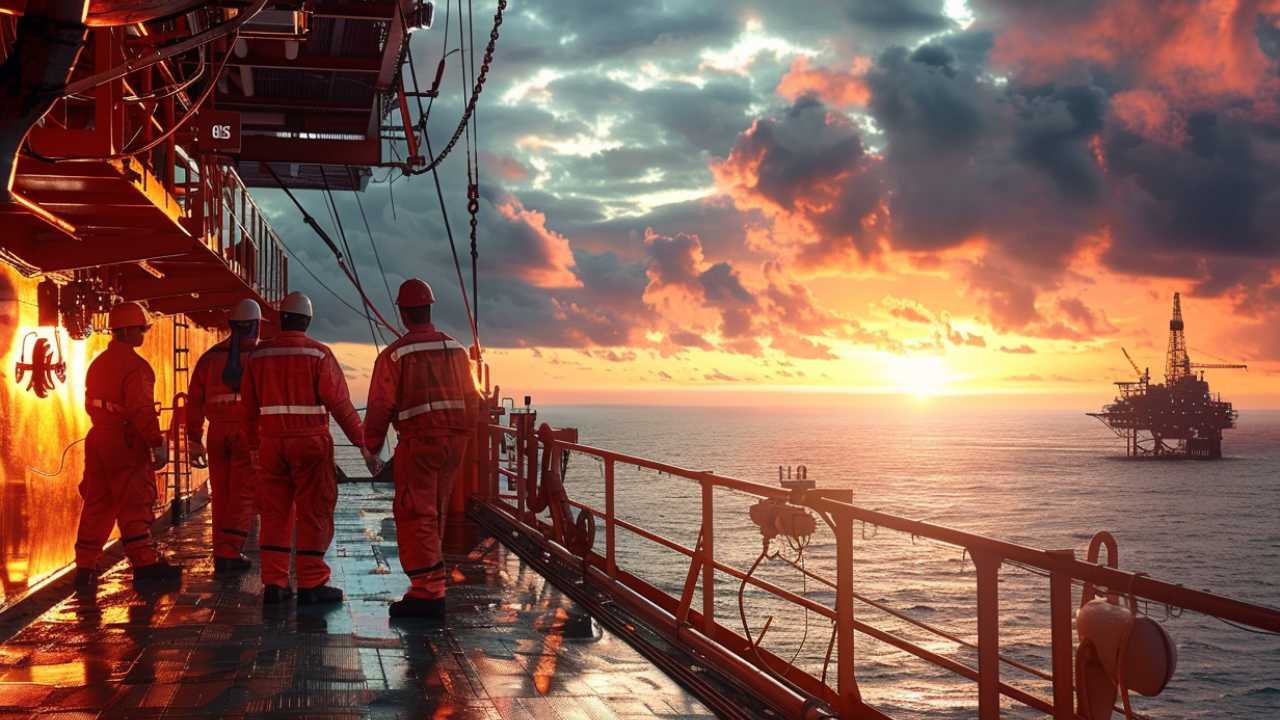

Engineers Overcome Engineering and Environmental Challenges to Build Oil Platforms in Deep Water, Facing Extreme Conditions and Safety Risks to Ensure the Efficient Extraction of Critical Energy Resources for the Global Economy.
The search for oil has led us to remote and deep places in the oceans, where offshore platforms now operate at more than 10,000 feet deep. These massive structures are designed to withstand adverse conditions such as extreme weather, gigantic waves, and powerful currents, representing some of the most advanced technologies and complex work on the planet.
Building a platform in deep water is a grand challenge that requires years of planning, design, and construction. Engineers and designers work together to develop detailed plans, taking into account the environmental conditions of the site, such as depth, currents, and wave heights. These structures need to be flexible and robust, capable of adapting to the waves and extreme pressures of the seabed.
Oil and Gas Extraction Involves Sophisticated Technologies
In addition to structural issues, oil and gas extraction involves sophisticated technologies, from the drill to pipelines and valves. Equipment such as the blowout preventer (BOP) and riser system are essential for safe operation, preventing leaks in emergencies. The installation phase is complex, involving the assembly and connection of various components, culminating in the commissioning, where tests and inspections are conducted to ensure the platform’s functionality.
-
Offshore industrial demand in Macaé skyrockets with the recovery of oil and gas and could grow by up to 396% by 2026 in the Campos Basin.
-
Offshore industrial demand in Macaé surges with the recovery of oil and gas and could grow by up to 396% by 2026 in the Campos Basin.
-
Brazilian giant expands borders in the Southeast: Petrobras confirms new oil discovery in ultra-deep waters in the pre-salt of the Campos Basin.

-
Alert in the global energy market: Severe tropical cyclone hits the coast and disrupts gas production at major plants in Australia, threatening global supply.

Blowout Preventer (BOP)
The blowout preventer (BOP) is an essential piece of equipment in the oil and gas extraction industry on oil platforms, designed to prevent blowouts, which are uncontrolled releases of drilling fluids from a well that can lead to environmental disasters and loss of life. Installed at the top of the well, the BOP contains multiple valves that can be quickly closed to control pressure. These valves, operated manually or automatically, are crucial for maintaining operational safety on drilling platforms, especially in high-risk environments such as deep offshore operations.
There are two main types of BOPs: annular, which use an expandable element to seal the well, and ram, which have elements that move horizontally to obstruct flow. Ram BOPs include variations that can cut and seal the drill column in critical situations. Due to their importance in preventing accidents, BOPs are subject to strict maintenance and testing standards, emphasizing their vital role in reducing risks during oil and gas extraction.
Riser System
The riser system is a crucial component in offshore drilling and production operations, acting as a conductive connection between the underwater well and the drilling platform at the surface. It consists of a series of vertical pipes that transport drilling fluids, hydrocarbons, and service materials between the seabed and the surface installation. The riser allows for the circulation of drilling fluids, essential for controlling well pressure, removing drilling debris, and monitoring subsurface conditions.
Riser systems are designed to withstand extreme marine environments, including high pressure and variable forces from currents and wave motion. They need to be flexible enough to accommodate the platform’s movement caused by the waves but robust enough to withstand pressures and mechanical forces. On floating platforms, risers are specially designed to maintain functionality and operational safety despite the constant motion of the ocean surface. The integrity of the riser is vital to preventing leaks and ensuring a safe and efficient operation in the exploration of subsea oil resources.
Dangers of Working on Offshore Oil Platforms
Despite advanced engineering, the risks are significant, as evidenced by the Deepwater Horizon disaster in the Gulf of Mexico in 2010, which resulted in deaths and one of the worst environmental disasters in history. These incidents led to increased scrutiny of the oil industry, with calls for greater regulation and a transition to cleaner and more sustainable energy sources.
The construction of offshore oil platforms is an impressive feat of engineering and modern construction, reflecting the complexity and challenges of extracting energy resources from the oceans. Despite the risks and criticisms, it remains an essential activity for the global economy, driving innovations and requiring rigorous standards of safety and sustainability.










Preciso de emprego, tenho família pra sustentar, por favor. Ouçam a minha voz de clamor.
Tenho cursos administrativas tenho:
Administração de empresas.
Gestão de Stock.
Gestão de Recursos Humanos.
Secretariado do Gaminete.
Contabilidade e Gestão empresarial.
Cursos técnicos:
Informática do Gabinete.
Rope-Access.
Soldadura Órgan.
Pintura industrial.
soldadura.
BST.
HUET.
Operações de produção de petróleo e gás.
Olá… Muito boa noite
Grata pela coloboração!