





 Português
  Inglês
  Espanhol
  4 min de leitura
  0 comentários


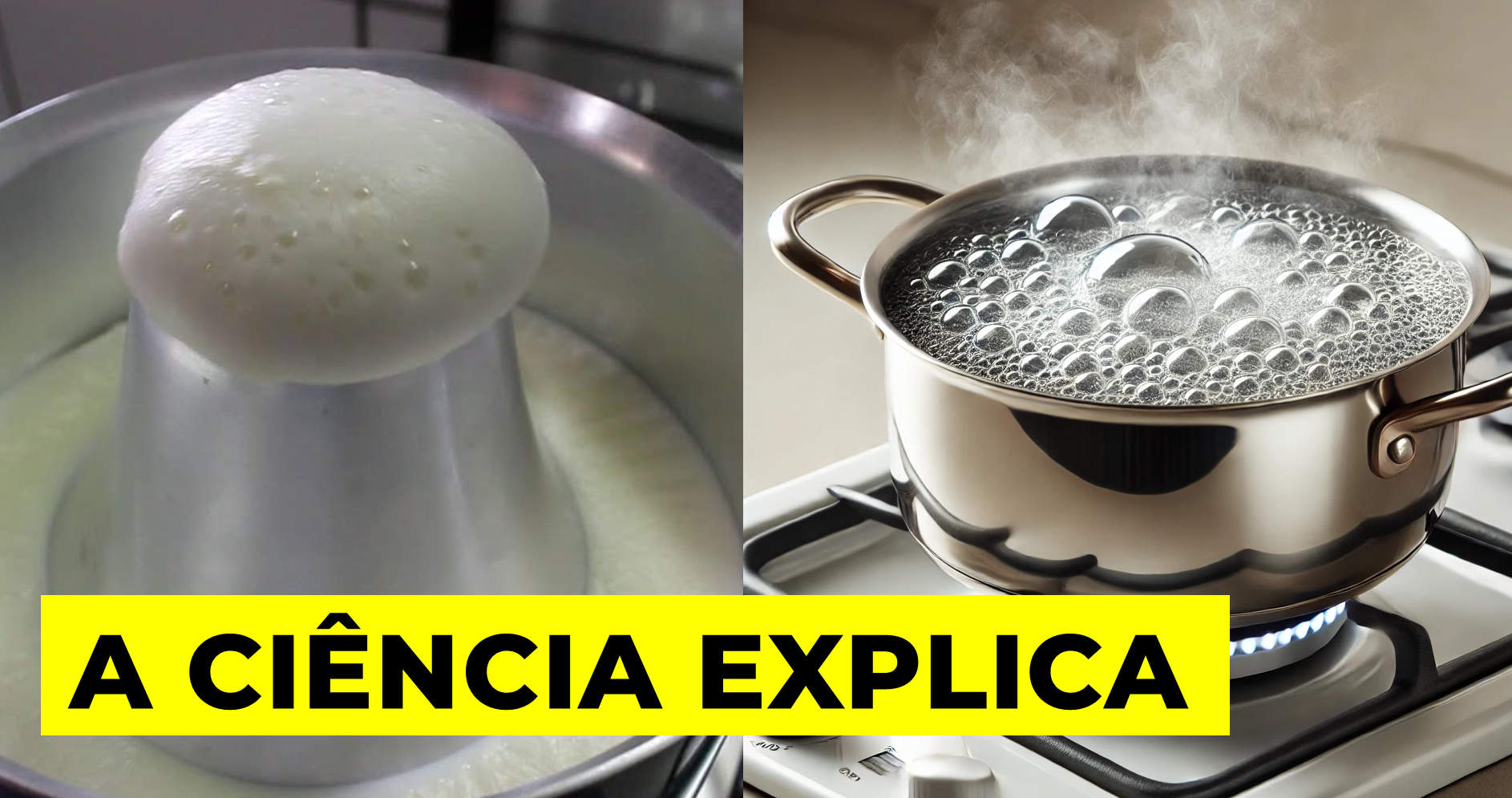
Discover Why Milk Overflows When Boiling and Water Does Not, Exploring the Chemical and Physical Differences That Influence This Behavior in Common Liquids of Everyday Life.
We’ve all been there: we put milk on to boil and, in the blink of an eye, it overflows. But, interestingly, this does not happen when we boil water. Why is that?
The reason involves chemical and physical processes that differentiate the behavior of milk and water during heating. Let’s understand what happens and how to prevent this common problem.
Differences in Composition
The main reason milk spills when boiling, and water does not, is due to the composition of each liquid. Water is basically composed of H₂O molecules. There are also small amounts of minerals, but in such low concentrations that they do not affect the boiling process.
-
A bright yellow mushroom imported from Asia escaped from a cultivation farm in the United States in 2010 and is now aggressively spreading across 25 states, destroying entire communities of native fungi in American forests.

-
Buried under China, a colossal machine weighing 20,000 tons began operating as the largest neutrino detector on the planet and, in just 59 days, surpassed results that science took half a century to achieve.

-
Iran enters the center of a climate alert after the war emitted 5.6 million tons of CO2 in two weeks, surpassing the annual pollution of entire countries.

-
Lunar exploration may change after a Chinese probe finds a “cavity” of radiation that reduces the impact on astronauts by up to 20% at certain times on the Moon.

On the other hand, milk is a complex mixture. It contains proteins, fats, and water. This combination creates interactions that make the boiling process much more complicated.
These constituents of milk interact to form the stable liquid we drink. However, when heated, these components behave differently and cause the famous spillage.
What Happens When Milk Is Heated?
When boiling milk, the internal structure of the proteins changes. They become stiffer and form a gelatinous substance when they bond with fat molecules. This new substance, lighter than water, rises to the surface of the liquid.
At the top, the water begins to evaporate. As evaporation occurs only at the surface, the amount of water there decreases rapidly. The result is the formation of a thick layer of protein and fat that covers the milk.
Meanwhile, at the bottom of the pot, the water turns into steam due to the intense heat. This steam, also lighter than water, tries to rise to escape. However, it encounters the gelatinous layer on the surface.
Since the steam cannot pass, it pushes this layer, forming bubbles, just like a soap bubble forms when we blow air into a ring. The accumulation of steam creates more bubbles and, consequently, foam. It is this foam that, when expanding, overflows from the pot.
Why Doesn’t Water Spill?
When boiling water, the process is much simpler. Since there are no substances to retain the steam, it rises directly to the surface and dissipates into the air.
Without the formation of foam and without the gelatinous barrier, there is no hindrance to the release of steam. Thus, spilling does not occur.
Therefore, the absence of proteins and fats in water makes all the difference. Water boils without drama, while milk requires constant vigilance.
How to Prevent Milk From Spilling?
Now that we understand the process, some practical solutions arise to prevent spillage. All of them aim to interrupt or control the formation of foam.
Stirring the Milk During Heating: Stirring the milk while it heats redistributes the gelatinous layer formed on the surface. This creates a pathway for the steam to escape, temporarily preventing the accumulation of foam.
However, when you stop stirring, the layer forms again. In other words, stirring the milk solves the problem for a while, but it requires constant supervision.
Placing a Spoon or Ladle Over the Pot: A practical solution is to position a spoon or ladle over the container. This creates a continuous route for the steam to escape.
This technique works well at first, but as boiling increases, the steam production may surpass the escape capacity provided by the spoon. When this happens, the steam ends up getting trapped again, leading to foam formation and spillage.
Using a Wide Pot: An interesting alternative is to boil milk in a wide pot. The larger space allows the bubbles formed by the steam to grow to a point where they become unstable and burst on their own.
This prevents the continuous formation of foam and, therefore, spillage. However, it’s important to note that this method requires a really large container, even for small amounts of milk.
The Process in Summary
The spillage of milk when boiling can be summarized in three main stages:
- Coagulation and Ascension: Fats and proteins form a gelatinous substance that rises to the surface.
- Formation of Steam: The steam attempts to rise but encounters a barrier.
- Creation of Foam: The trapped steam forms bubbles, resulting in foam that overflows.
In water, since the steam rises without barriers, the process ends without foam and without spilling.
Knowing why milk spills and water does not is more than just a domestic curiosity. It is a reminder of how simple chemical processes affect daily life.
Whether stirring the milk, using strategic utensils, or opting for wide pots, you now have the tools needed to avoid the hassle of spilled milk. A simple explanation for a common problem, but it makes all the difference in the kitchen.
With info from Scienceabc.






Seja o primeiro a reagir!