





 Português
  Inglês
  Espanhol
  5 min de leitura
  0 comentários



Discover How Investments and Labor Market Are Connected and How This Relationship Can Transform Your Professional and Financial Life In A Lasting Way.
Talking about investments and labor market opens up a range of possibilities on how people build their careers, increase income, and seek financial stability throughout life. Although these two concepts may seem different at first glance, they are deeply connected.
Understanding how they work and how they relate helps those who wish to grow professionally and achieve a more secure financial life.
Throughout history, both the labor market and investments have undergone significant transformations. In the past, job opportunities were almost exclusively tied to manual labor and the agricultural sector.
-
Employee Fired After Accumulating 114 Days of Medical Leave in One Year, Labor Court Upholds Company’s Decision

-
Employee Fired While Treating Depression Wins in Court and Vale Is Required to Rehire Him Following Decision Based on the CLT and INSS Benefits

-
Workers Should Be Aware! March 6 Will Be The Fifth Business Day Of March And The Final Deadline For Companies To Pay Salaries According To The CLT
-
2026 FGTS Anniversary Withdrawal Is Released According to Birth Month, Sets Amounts by Balance Range, Establishes Deadlines for March and April, and Changes Rules in Case of Dismissal


During the Industrial Revolution, mechanization and the emergence of factories changed this scenario. They created new demands for workers.
According to BBC News, the Industrial Revolution, which began in the late 18th century, transformed the global economy. It created new forms of work and required different skills than before.
By the 20th century, with the rise of the service sector and advances in technology, the need for more qualified professionals increased. This made investment in education and training a priority.
This historical context shows that investing — whether in education, personal businesses, or the financial market — has always had a direct relationship with the development of skills that meet the demands of the labor world.
In this sense, a good investment opens doors, improves earning potential, and contributes to personal and professional growth.
Investing in Your Career Is Also Investing in Your Future
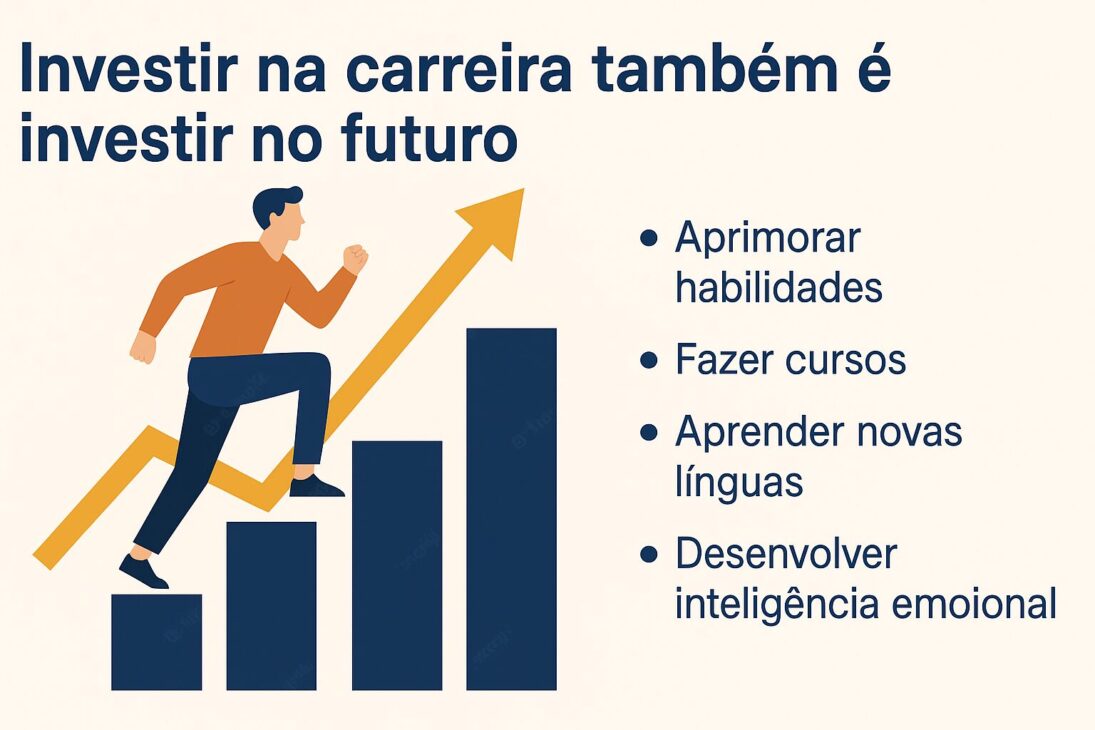
Today, when talking about investments in the labor market, it is important to remember that this expression goes far beyond putting money into stocks or funds.
In fact, investing in your career involves enhancing skills, taking courses, learning new languages, developing emotional intelligence and keeping up with trends in the economy and society.
In an increasingly competitive world, those who anticipate and adapt better to changes stand out and secure more attractive professional positions.
On the other hand, traditional financial investments — such as savings, fixed income, stocks, real estate, and cryptocurrencies — also maintain a direct relationship with the labor market.
The income from work, in most cases, serves as the primary source of capital for these investments.
Salary, bonuses, pensions, and benefits make up the wealth that can grow over time with good financial decisions.
According to the Central Bank of Brazil, savings represent one of the most traditional investment options in Brazil. Despite this, Brazilians have increasingly sought other alternatives, such as the stock market.
Understanding this dynamic requires balance: working strategically to generate income while knowing how to invest that money wisely to ensure security in the future.
This path requires planning and discipline, but it generates solid results over the years. Therefore, those who balance these two aspects — work and investments — have a better chance of achieving financial stability.
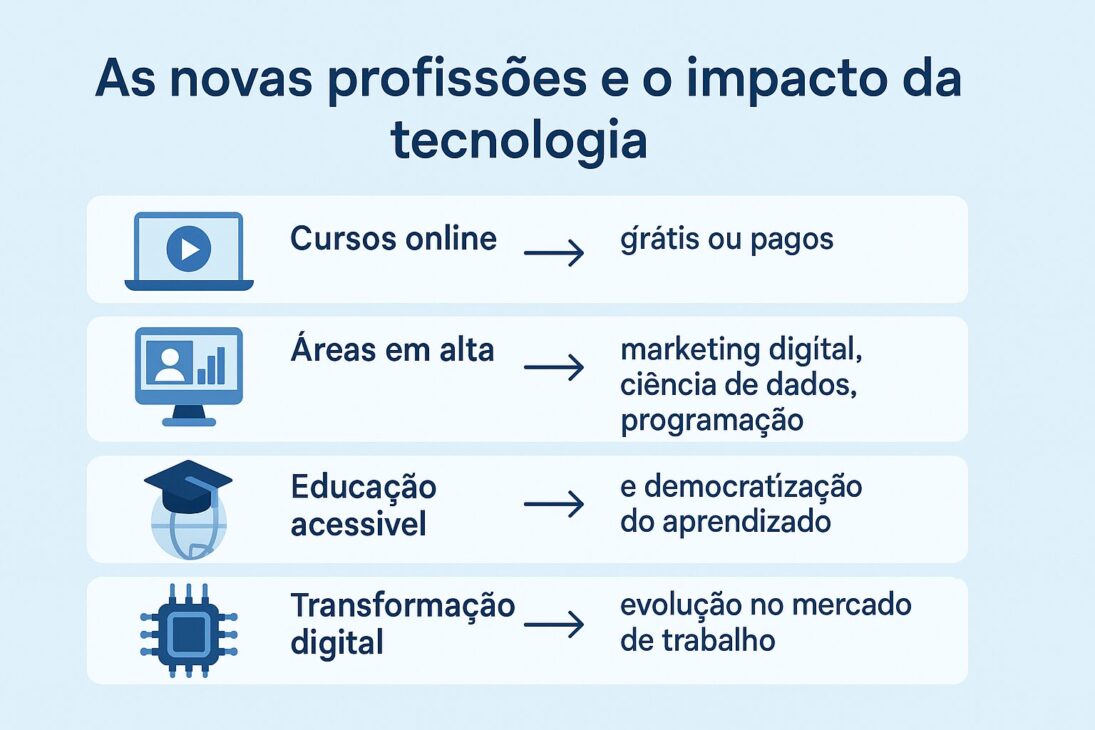
New Professions and the Impact of Technology
Another relevant point involves the emergence of new professions and forms of work, which further broadened the possibilities of investing in oneself.
The advancement of digital technology, for example, created demands for professionals in areas like digital marketing, data science, programming, design, and remote support.
Many of these occupations can be learned through online courses, either free or paid. This makes the investment in education more accessible and democratic.
According to a survey conducted by the Getulio Vargas Foundation (FGV), technology and innovation-related professions have grown significantly in recent years. This reflects the impact of digitalization on the labor market.
Additionally, the Covid-19 pandemic accelerated important transformations in the workplace. Examples include remote work, hybrid work, and the growth of digital entrepreneurship.
According to the Brazilian Institute of Geography and Statistics (IBGE), remote work has solidified as a trend in Brazil, with a record number of workers adopting this model.
These changes show how the labor market is constantly evolving. Those who wish to remain competitive must keep up with this pace.
In this scenario, investing in self-awareness and the acquisition of technical and behavioral skills has become as important as putting financial resources into investments.
As careers progress, more opportunities to invest arise. A young person entering the market with an entry-level salary may have little to invest in financial assets. However, they can invest in a technical course, for example, that leads to a better position.
On the other hand, a more experienced professional may allocate part of their income to build an emergency fund, invest in real estate, or start a business of their own.
Building a Life with More Security
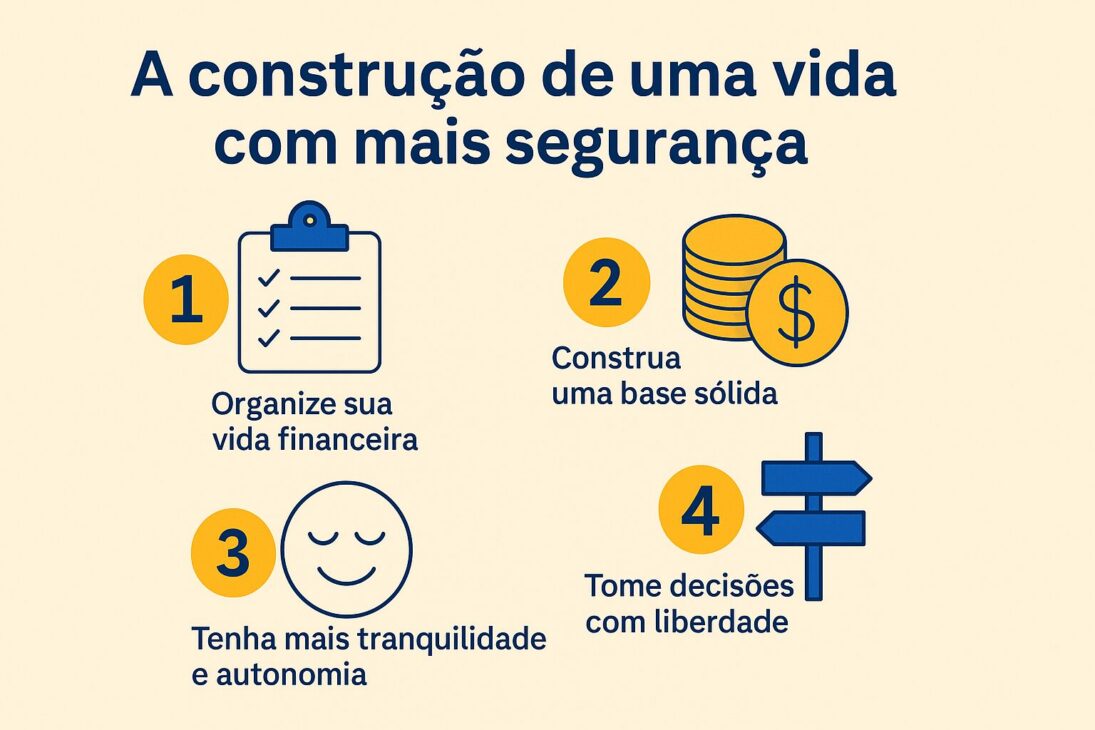
Another aspect that deserves attention involves the impact of investments on quality of life.
When a person organizes their financial life and builds a solid foundation through work and investments, they gain more tranquility, autonomy, and freedom to make decisions.
This could mean, for example, the ability to choose jobs that align better with their values, spend more time with family, or even change careers.
It is also worth noting that knowledge about personal finance and economics has gained space in education and the media. This helps more people to understand how to invest better.
However, there still exists a significant gap in access to clear and reliable information about how to allocate resources and develop a sustainable career.
According to the Organization for Economic Cooperation and Development (OECD), many countries have implemented financial education programs to help the population understand the fundamental concepts of personal finance. This movement represents an important step toward improving the financial stability of the population.
This guide reinforces the idea that investments and labor market are not limited to economists or big business people. On the contrary, they are topics that are part of the life of anyone who wishes to have a more secure and stable future.
Whether you are a student, a freelancer, a public servant, or an entrepreneur, understanding the relationship between work and investments can transform your journey.
Parallel Paths Toward Personal and Financial Growth
In summary, investments and the labor market function as two sides of the same coin.
The money earned from work can be applied to generate more income. At the same time, investments in knowledge and skills increase a professional’s value in the market.
This relationship is cyclical and strengthens over time. As a result, it generates personal and financial growth.
Therefore, no matter what phase of life you are in: start investing today — in yourself, in your career, and in your finances.
The labor market increasingly values those who prepare themselves, seek to stay updated, and make conscious choices with what they earn.
And investing doesn’t have to be complicated: just take one step at a time, with responsibility, planning, and a vision for the future.










Seja o primeiro a reagir!