





 Português
  Inglês
  Espanhol
  5 min de leitura
  0 comentários


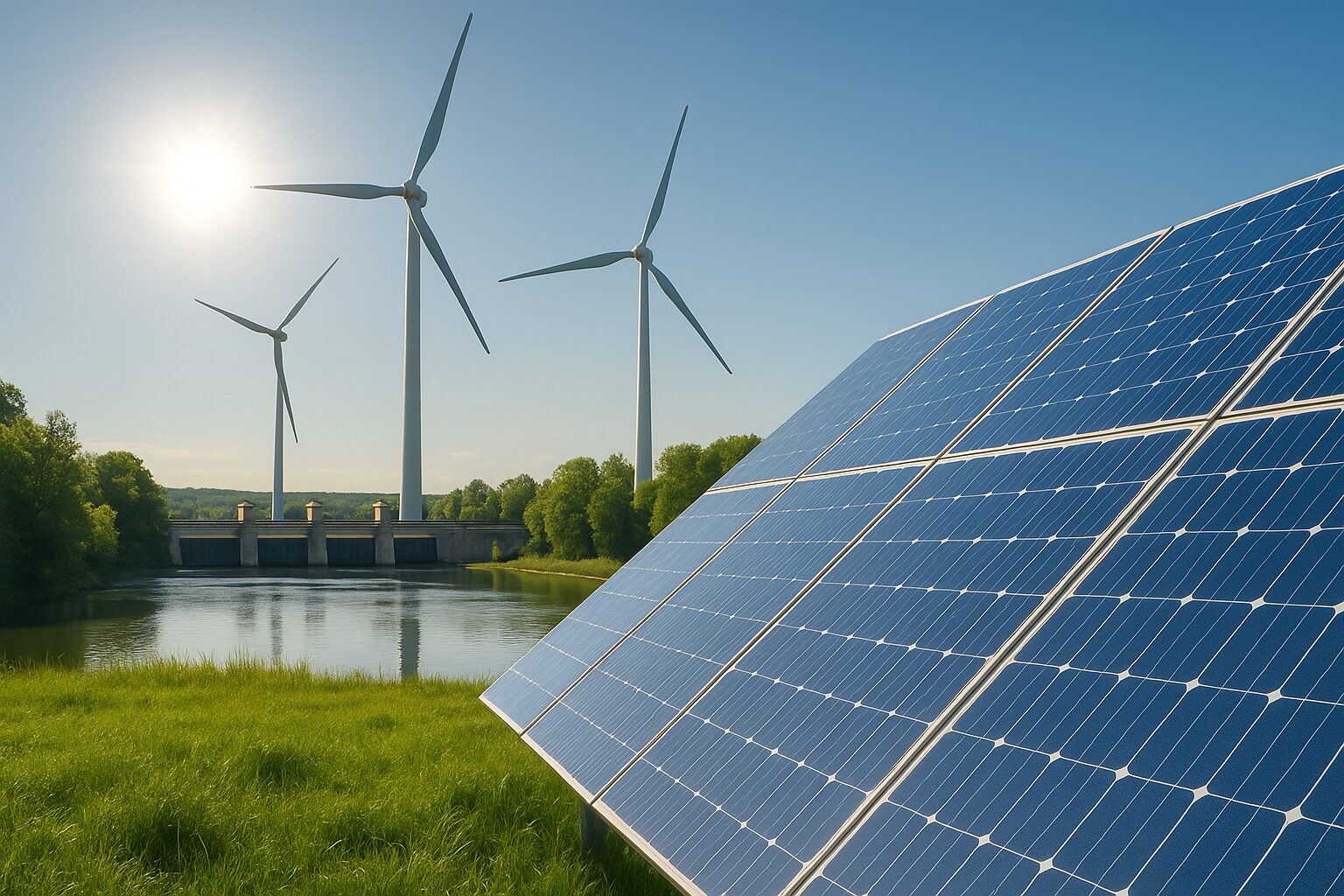
Discover How Renewable Energy Technology Is Transforming the World, from the Past to the Future, and Learn Why It Is Essential for a More Sustainable Planet.
Over the past centuries, humanity has faced the challenge of finding energy sources that are both efficient and less harmful to the environment.
For this reason, renewable energy technology stands out today, mainly due to climate change, increasing pollution, and the depletion of fossil fuels.
According to the International Energy Agency (IEA), the global installed capacity of renewable energy has been steadily growing since the turn of the 21st century, with significant peaks starting in 2010. This expansion accompanies a historical movement that dates back well before modern industrial use.
-
Renewable energy advances over protected areas in Brazil, and a survey by the Energy Transition Observatory reveals silent impacts that challenge environmental conservation and pressure sensitive traditional territories.

-
Rio Grande do Sul accelerates energy transition: State invests in renewable technologies and consolidates decarbonization strategies and pathways to attract billions in new industrial investments.

-
With 160,000 m² of collectors, an area larger than 20 football fields, Silkeborg, in Denmark, hosts a solar thermal plant that heats 19,500 homes and could become the largest solar heating plant in the world.

-
A study reveals the expansion of renewable energy procurement in Brazil and shows how companies are taking advantage of opportunities to reduce expenses, ensure energy efficiency, and strengthen strategic environmental commitments.


Today, in this comprehensive guide, you will understand what encompasses renewable energy technology, its historical evolution, and its importance for today’s and tomorrow’s world.
Besides its environmental impact, this technology promotes significant social and economic changes. It contributes to innovation, improves quality of life, and reduces inequalities by harnessing natural resources distributed in previously under-explored regions.
What Is Renewable Energy Technology?
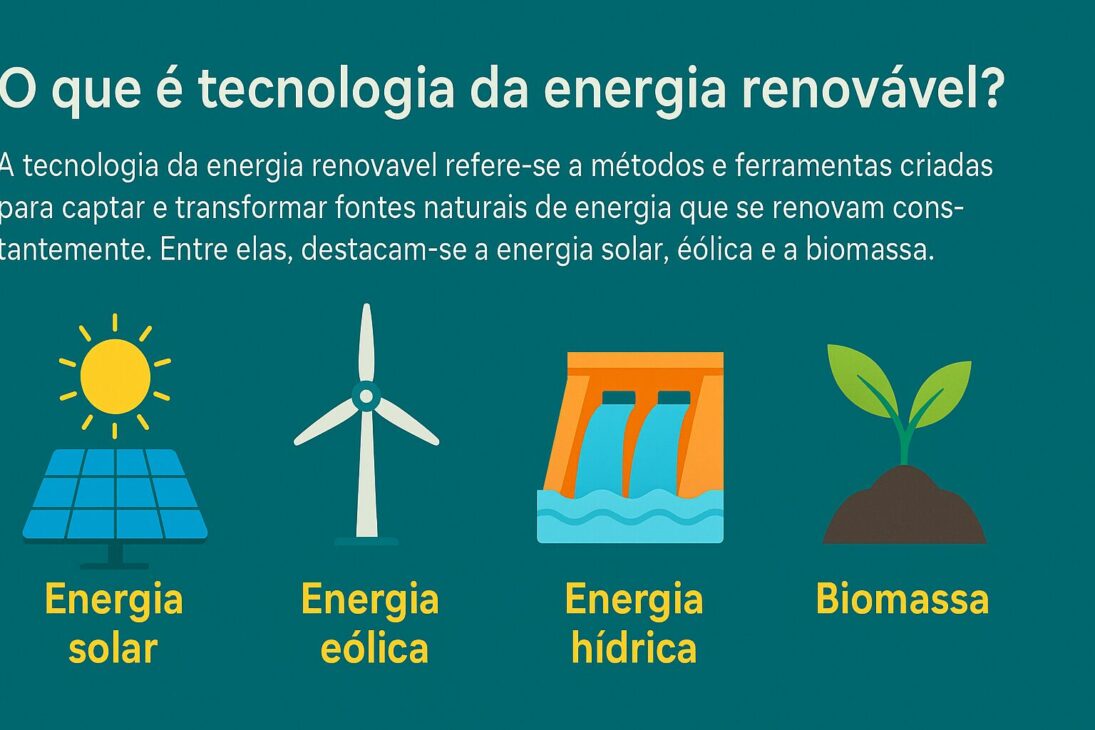
Renewable energy technology refers to methods and tools created to capture and transform natural sources of energy that are constantly renewed. Among them, solar, wind, hydro, and biomass energy stand out.
Unlike fossil fuels, which are finite and polluting, these renewable sources offer a practically unlimited and cleaner alternative.
For example, solar panels convert sunlight into electricity. Wind turbines convert wind into electrical energy. Hydroelectric plants use the force of rivers to generate energy, while biodigesters produce biogas from organic waste.
According to the United Nations Environment Programme (UNEP), in 2022, about 29% of global electricity already came from renewable sources — a number that is growing every year.
In addition to traditional technologies, current innovations seek to combine multiple sources, such as solar and wind energy in hybrid systems, to ensure more constant and reliable generation.
A Look Back: Renewable Energy in History
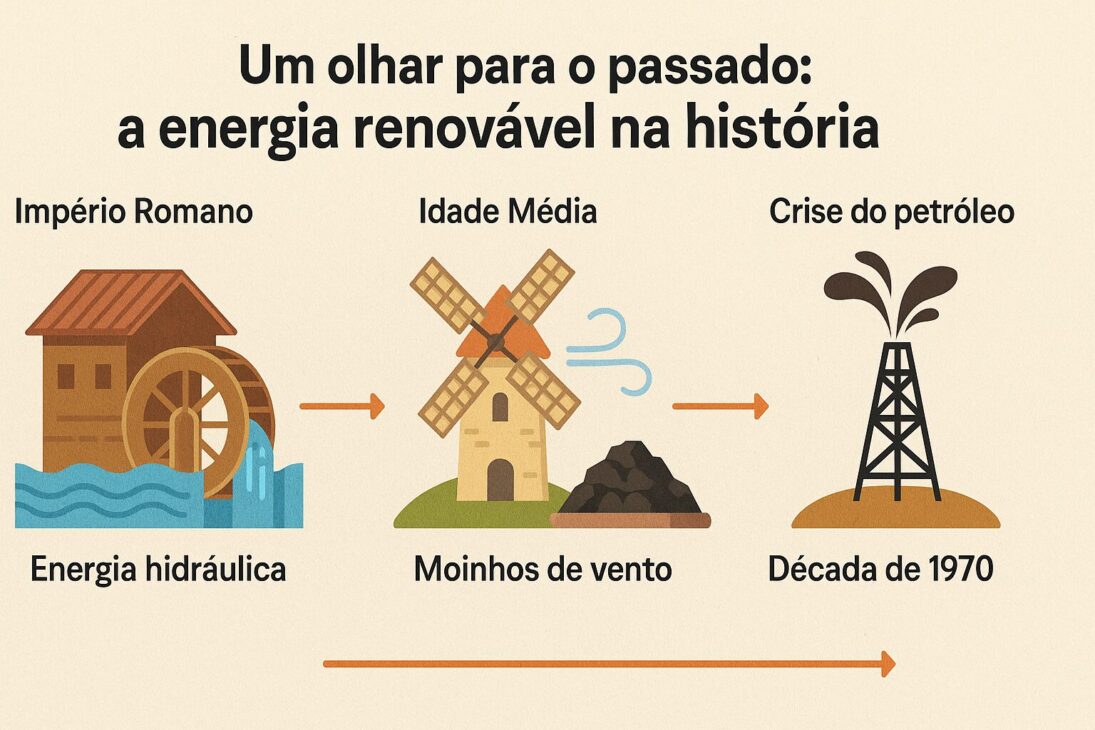
Although we associate renewable energy with recent technological advances, its use is ancient and part of human history. The use of hydraulic energy to move mills dates back to the Roman Empire, over two thousand years ago, according to records from the U.S. Department of Energy (DOE).
In the Middle Ages, windmills became common in Europe to pump water and grind grains, using a simple and efficient renewable source for the time.
However, the Industrial Revolution, which began in the 18th century, changed this scenario. Coal became the main fuel for powering machines and trains, initiating an era of strong dependence on fossil fuels.
According to the Organization of the Petroleum Exporting Countries (OPEC) website, the 1970s oil crisis was a turning point that sparked global interest in energy alternatives.
This event highlighted the economic vulnerability of countries dependent on imported oil and accelerated research into clean energies.
In the following decades, international treaties, such as the Kyoto Protocol in 1997 and the Paris Agreement in 2015, boosted countries’ commitment to reducing pollutant emissions.
These agreements, widely publicized by the Intergovernmental Panel on Climate Change (IPCC), stimulated investment in renewable energy technology, making it a global priority.
Renewable Energy Technology Today
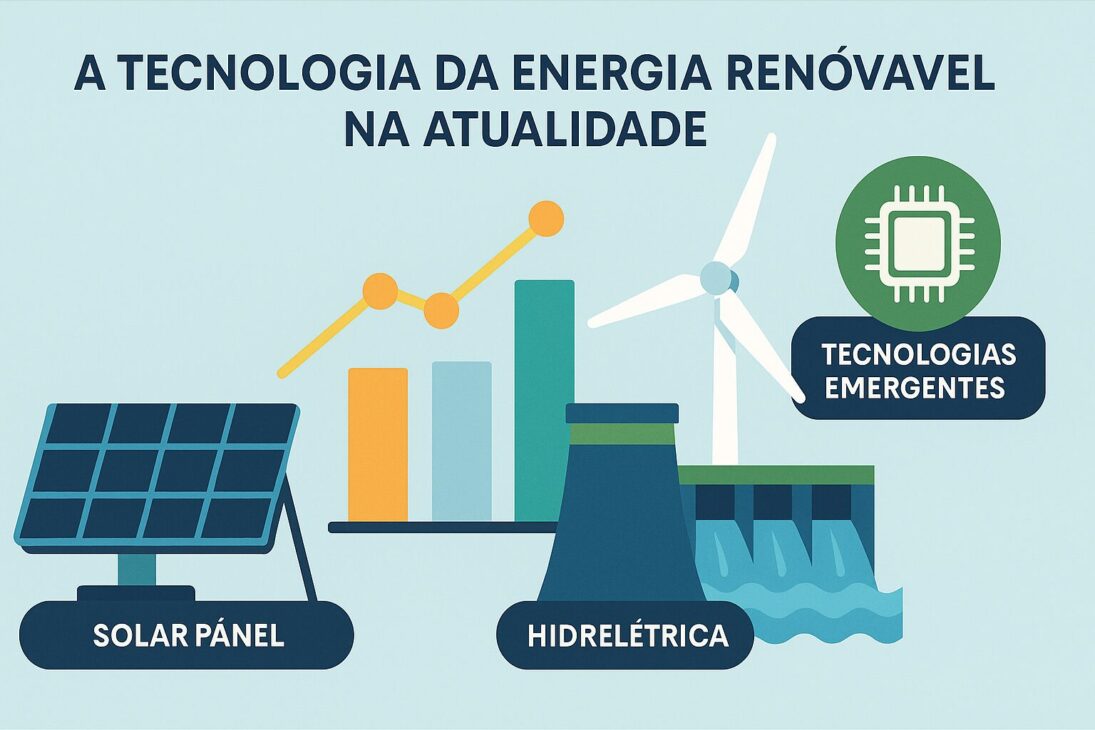
Today, renewable energy technology is advancing rapidly. Reductions in equipment costs, combined with public incentive policies, make these sources accessible for homes, industries, and large urban centers.
The Ministry of Mines and Energy of Brazil reports that the installed capacity of solar energy grew more than 80% between 2017 and 2022 in the country.
At the same time, wind energy expanded, especially in the Northeast and South regions, where the wind is more constant.
In Brazil, hydroelectric energy accounts for about 60% of the energy matrix, according to data from the National Electric System Operator (ONS). However, its generation directly depends on rainfall volume, which can limit its production during dry periods.
In addition to these sources, emerging technologies such as geothermal energy, which uses the Earth’s internal heat, and tidal energy, are gaining ground.
The use of biomass, which utilizes agricultural waste to generate energy, is also on the rise, contributing to the circular economy.
Finally, the application of artificial intelligence and internet of things has optimized the management of these sources, enabling predictability and greater efficiency in energy production and distribution.
The report from REN21, an international network specialized in renewable energy, highlights these advancements as essential for the global energy transition.
Benefits of Renewable Energy Technology
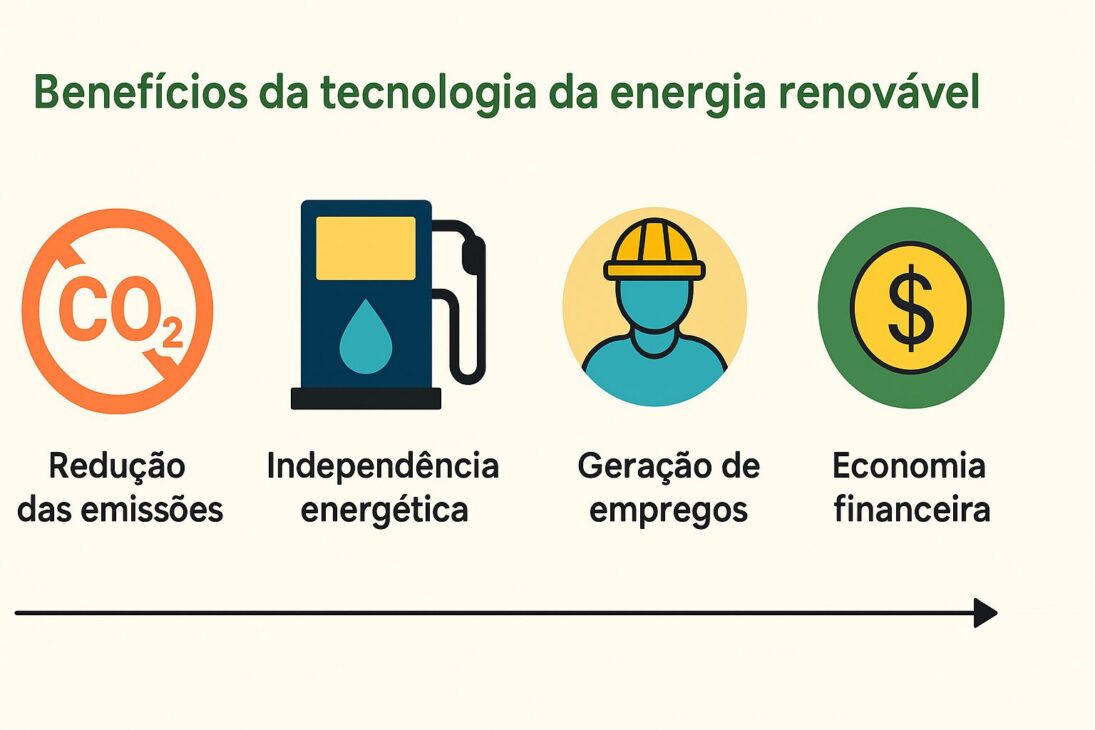
The widespread adoption of renewable energy technology brings various benefits.
First, it significantly reduces greenhouse gas emissions, the main cause of climate change.
Since renewable sources do not burn fossil fuels, they do not release carbon dioxide or other pollutants when generating energy.
Additionally, energy independence is strengthened, as countries can reduce their dependence on imported oil and gas.
Regions with great solar or wind potential can become productive centers, generating local jobs.
The International Renewable Energy Agency (IRENA) stated that in 2023, the sector employed around 12.7 million people worldwide — a number that continues to grow.
Also notable is the financial savings, as after the initial investment, the natural source is free and operational costs are low.
The Future of Renewable Energy Technology
The future promises new achievements.
Governments, universities, and companies invest in research to enhance the generation, storage, and distribution of renewable energy.
Smart cities, electric vehicles, self-sufficient homes, and smart grids are examples of technologies being consolidated.
Moreover, the demand for clean energy grows among conscious consumers, accelerating the energy transition.
REN21 projects that by 2050, renewable sources could account for more than 60% of the global energy matrix.
This shift is crucial for mitigating the effects of climate change and promoting sustainable development.
It also benefits remote regions and developing countries, which gain access to clean and affordable energy.
The future of energy is in our hands — and renewable technology is a powerful tool to build it.










Seja o primeiro a reagir!