





 Portuguese
  English
  Spanish
  5 min of reading
  0 comments


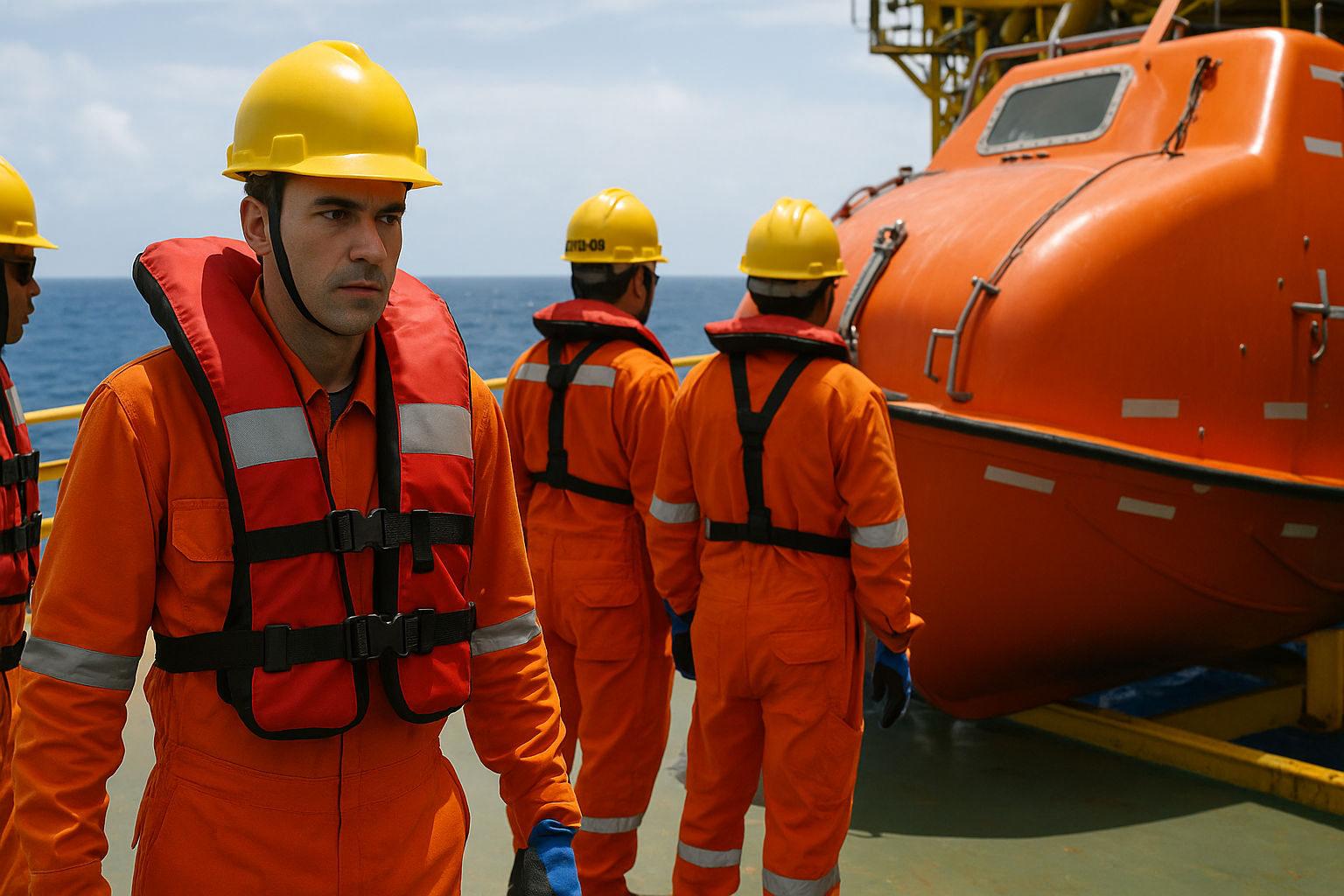
Learn How Offshore Safety Training Saves Lives, Prevents Accidents, and Prepares Professionals to Act Responsibly on Maritime Platforms.
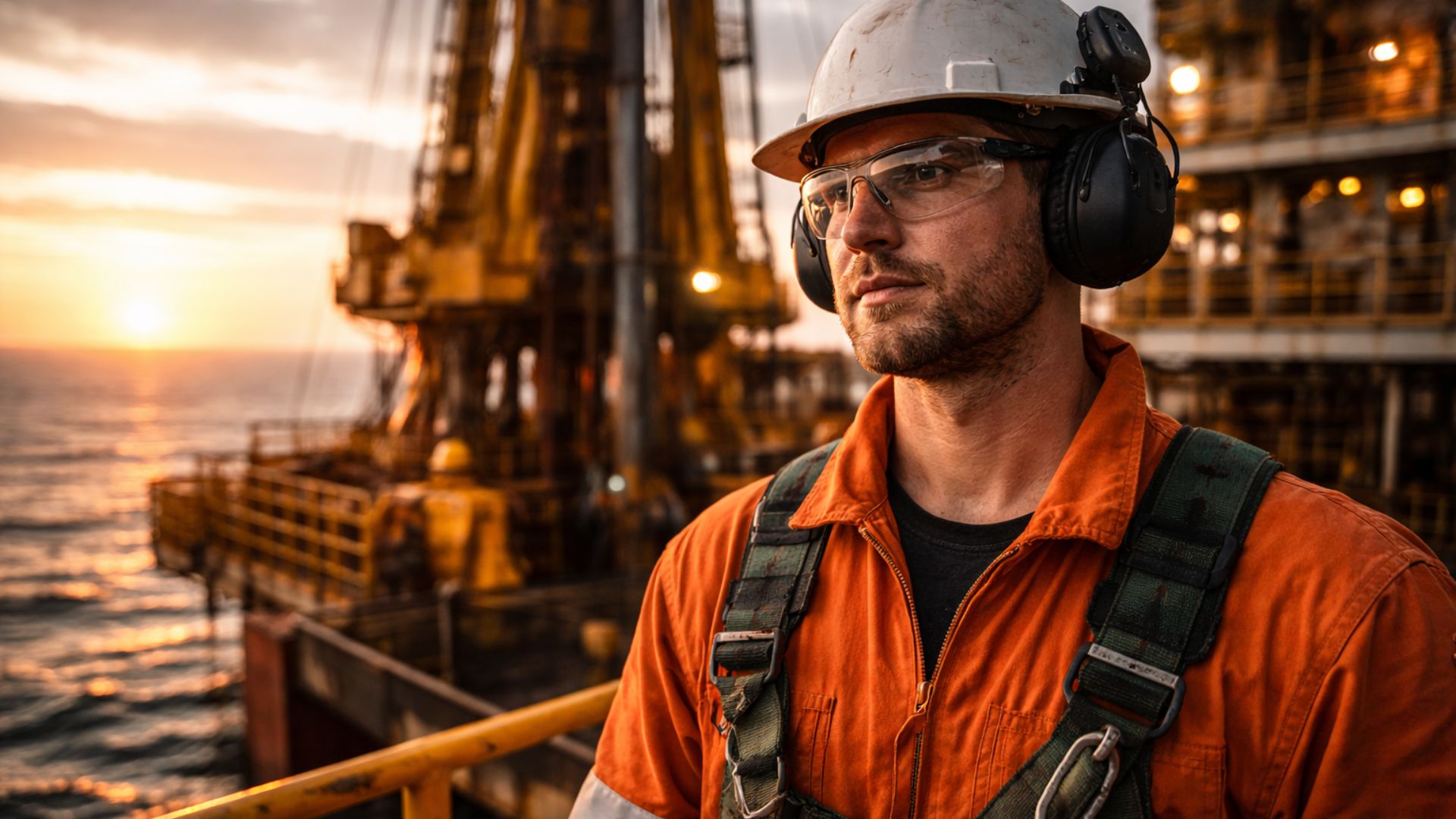
Working in offshore environments, such as oil rigs in the open sea, requires special attention to safety.
After all, these locations impose unique challenges, from isolation to constant exposure to operational and environmental risks.
Therefore, offshore safety training is essential. It prepares workers to cope with these adverse conditions and preserves the physical and emotional integrity of the team.
-
With Announcement for ROV Course in Partnership with Zen, Rio das Ostras Aims to Transform Technical Qualification into Real Jobs in the Competitive Offshore Market
-
Free Offshore Steward Course in São Gonçalo Emerges as a Strategic Opportunity for Those Seeking Qualified Work at Sea
-
Messer Gases Reopens Branch in Macaé to Serve Offshore Oil and Gas Market in Northern Fluminense with Supply of Oxygen, Argon, and CO₂
-
Offshore Profession Simplified: Comprehensive Guide Reveals How to Trade Common Routine for High Salaries and Long Breaks in Life Aboard in the Oil Sector
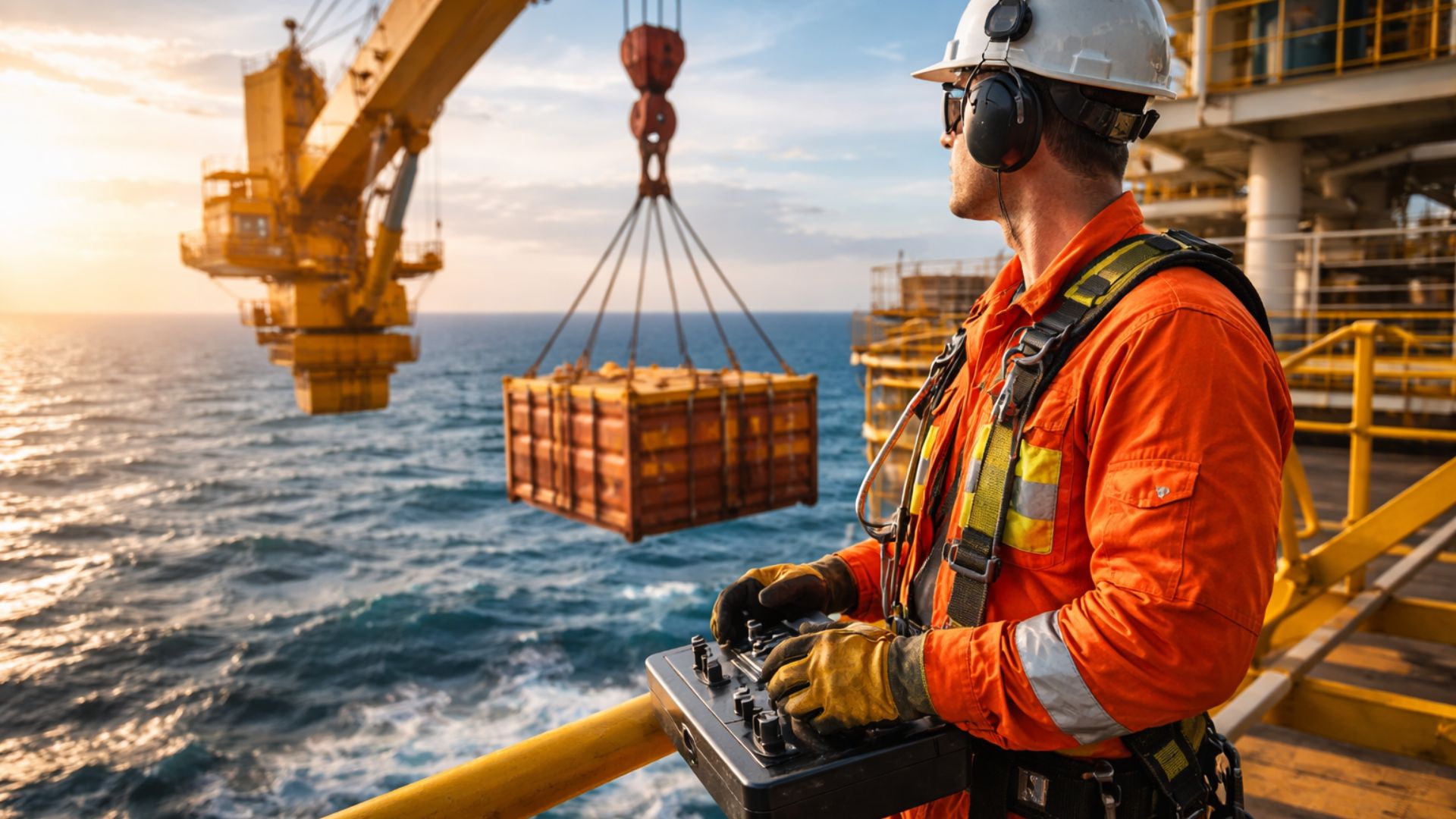

Moreover, complex activities and the maritime environment change the routine. Professionals spend days away from their families, face sudden climate changes, live in confined spaces, and encounter risks that require preparation.
Therefore, the training goes beyond technique: it also strengthens the emotional aspect of the worker.
What is Offshore Safety Training?
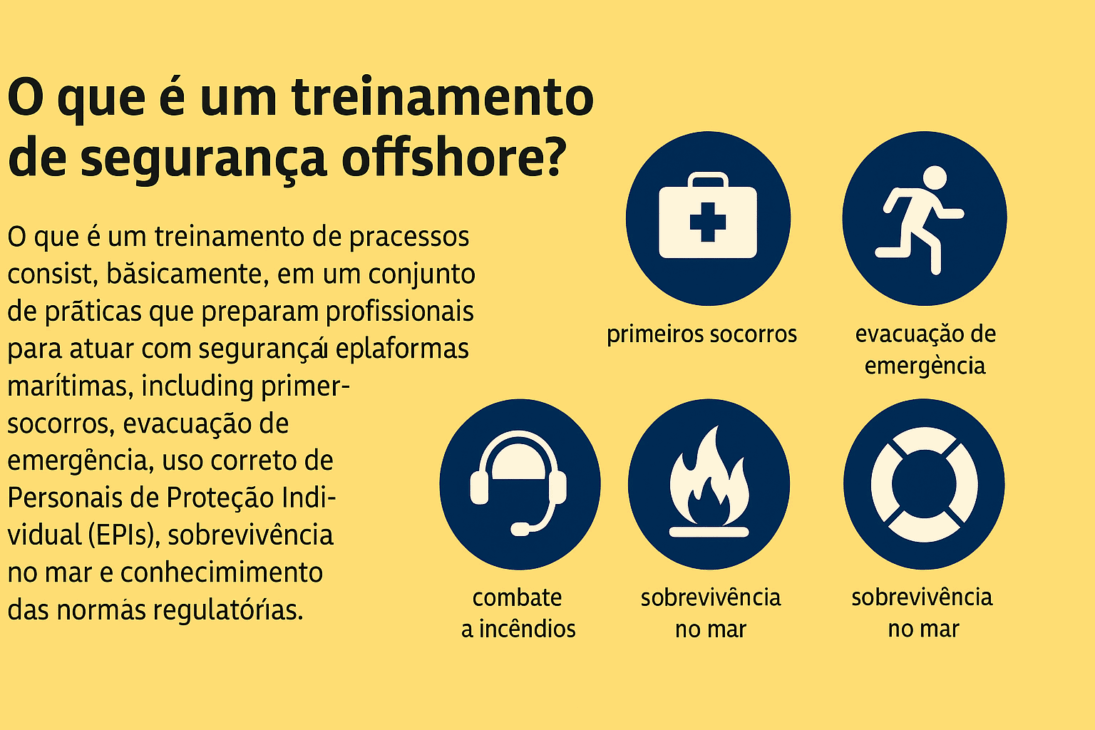
Offshore safety training primarily consists of a set of practices that prepare professionals to act safely on maritime platforms.
Thus, it includes first aid, emergency evacuation, proper use of Personal Protective Equipment (PPE), fire fighting, survival at sea, and knowledge of regulatory standards.
This training teaches how to prevent accidents and act quickly in risk situations. In offshore environments, where any mistake can cause significant damage, equipping the team becomes an ethical and legal measure.
Furthermore, the training offers realistic simulations. For example, workers enter modules that simulate a helicopter crash in the sea.
During these experiences, they develop confidence and learn to react calmly in real emergencies.
The History of Training and Concern for Offshore Safety
Offshore oil exploration began in the early 20th century, with the first wells and platforms still rudimentary.
According to the website of the National Agency of Petroleum, Natural Gas, and Biofuels (ANP), this initial phase had few regulations and little concern for safety.
A historic milestone that changed this reality was the Piper Alpha disaster on July 6, 1988.
As detailed by the International Labour Organization (ILO), this accident, which occurred in the North Sea, resulted in the deaths of 167 workers and exposed serious flaws in the safety protocols of the time.
In response, the industry began to invest in standardized and rigorous training, creating international standards to protect offshore workers.
Another significant event occurred in 2010 with the explosion of the Deepwater Horizon platform in the Gulf of Mexico.
According to the website of the Occupational Safety and Health Administration (OSHA), this tragedy killed 11 people and caused one of the largest oil spills in history.
After this episode, regulations became even stricter. Safety training became mandatory at higher levels and included simulations addressing various types of emergencies.
Today, offshore safety is treated as a top priority. Institutions like the ANP, the Ministry of Labor, and the Brazilian Navy collaborate to oversee and update safety regulations.
Who Should Undergo Offshore Safety Training?
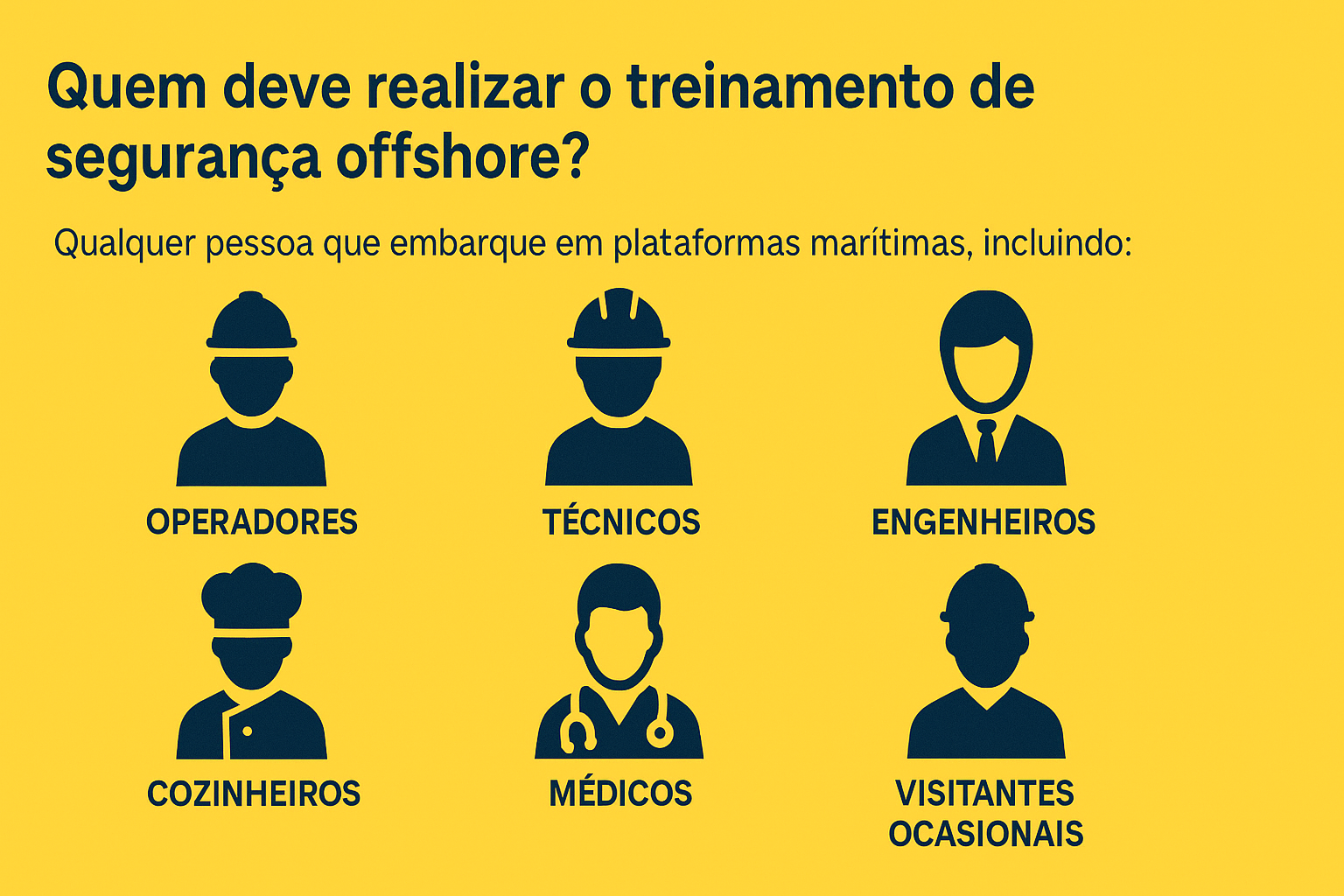
Anyone who is going to board maritime platforms must undergo training. This applies to operators, technicians, engineers, cooks, doctors, and even occasional visitors.
Companies and regulatory bodies, such as the Brazilian Navy and the National Agency of Petroleum (ANP), require this preparation.
According to Regulatory Standard NR-37, from the Ministry of Labor and Employment, training must be updated periodically to maintain operational safety.
Even administrative positions must meet these requirements. After all, in an offshore environment, everyone is responsible for safety. Thus, no one can board unprepared.
Content and Methodology of Offshore Training
The content varies according to the role and the type of platform, but the main topics always include accident prevention, emergency procedures, evacuation and survival at sea, fire fighting, first aid, use of PPE, and environmental and safety regulations.
Additionally, training centers use simulations to create experiences close to reality.
Therefore, professionals face situations such as abandoning a submerged helicopter, fighting fires, and organizing evacuations.
Moreover, beyond practice, participants study international and national standards, such as ISO 45001 for safety management, the guidelines of OGP (Oil and Gas Producers), and current Brazilian legislation.
The goal is to teach not only “what to do” but also “why to do it,” ensuring a deep understanding of risks and prevention.
Safety Culture and Preventive Mentality
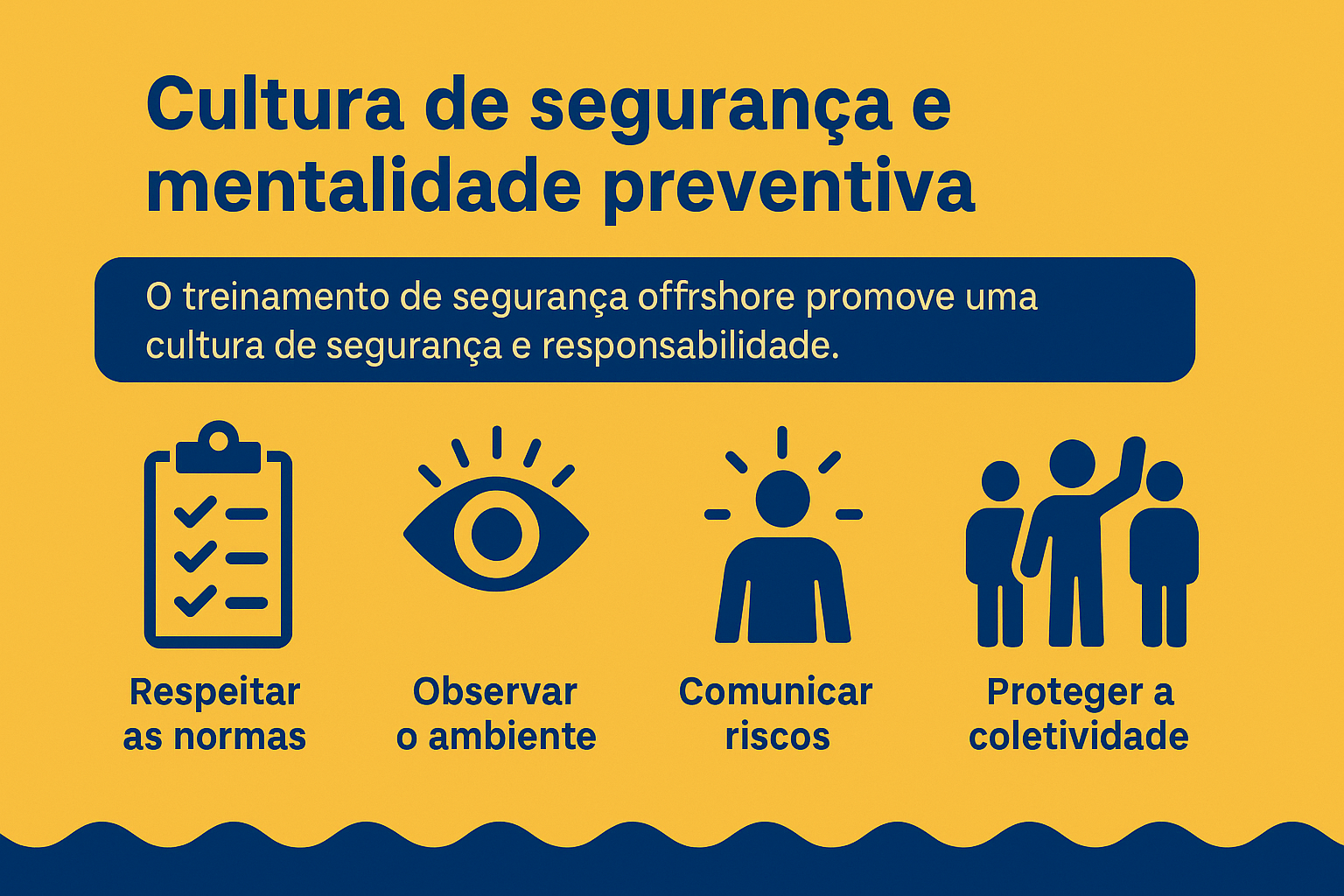
The offshore safety training develops more than technical skills. In short, it promotes a safety culture.
Thus, the professional learns to act responsibly in all situations, even in the most routine ones.
Having a preventive mentality means respecting rules, observing the environment, and communicating risks or dangerous behaviors. Moreover, each worker has an active role in collective protection.
This culture also strengthens team spirit. When everyone values safety, the environment becomes more collaborative and healthy.
Therefore, trained professionals feel more confident, and the company benefits from efficiency and productivity.
Legal Regulations and Mandatory Courses
Brazilian legislation establishes specific rules for offshore work. For example, NR-37, published in 2011 by the Ministry of Labor, addresses working conditions on oil platforms.
It requires workers to undergo training in first aid, fire fighting, and evacuation.
One of the most well-known courses is the CBSP (Basic Offshore Safety Course), required by the ANP and the Brazilian Navy.
It is mandatory for those who intend to board and is valid for five years. At the end of this period, the professional must undergo retraining to maintain valid certification.
Another essential course is the HUET (Helicopter Underwater Escape Training). It teaches how to escape from a helicopter that lands or crashes in water.
According to the Brazilian Association of Offshore Safety Training (ABTSO), most travel to the platform occurs by air, making this training indispensable.
Additionally, some professionals take complementary courses, such as those related to NRs 20 and 33, which address handling hazardous materials and working in confined spaces.
Benefits for Companies and Professionals

Investing in offshore safety training brings numerous advantages.
For instance, it reduces accidents and absenteeism, increases workers’ confidence, improves communication during crises, meets legal requirements, and enhances professional credentials.
Therefore, companies that provide training demonstrate responsibility towards their employees. This way, they create a safer, more productive, and efficient environment.
For professionals, this preparation also represents an opportunity. After all, those who hold the necessary certifications find more job opportunities and stand out in the market.
Moreover, companies that invest in safety save on lawsuits, compensation, and damage to their image. Thus, prevention, in this case, saves lives and businesses.
The Future of Offshore Safety Training
Technology has been transforming training. Today, specialized centers already use virtual reality to simulate emergencies such as gas leaks and nighttime evacuations.
The mental health of workers has also gained more attention. Thus, companies have begun to offer psychological support and strategies to cope with the isolation and stress of offshore routines.
Moreover, remote sensors, smart alarms, and more ergonomic PPE enhance this evolution. Consequently, professionals require ongoing training to keep up with these innovations and maintain the effectiveness of preventive actions.
In summary, offshore safety training is not just a legal requirement—it represents a commitment to life, prevention, and excellence.
Thus, prepared professionals prevent accidents, manage emergencies better, and help build a safer environment.
Investing in training is a responsible attitude that benefits both companies and workers. At sea, where everything is more challenging, being prepared makes all the difference.









Seja o primeiro a reagir!