





 Portuguese
  English
  Spanish
  3 min of reading



The Norwegian Giant Equinor Is Set to Establish New Construction That Will Be the Largest FPSO Operating in Brazil, Including Subsea Service Providers
Equinor from Norway is advancing its plans to lease a large Floating Production, Storage and Offloading (FPSO) vessel and contract subsea equipment for its massive pre-salt Carcará field, with awards expected by the end of this year. “We decided to opt for a standard design FPSO and an integrated subsea contract covering the production system and umbilicals, risers, and flowlines,” said Margareth Ovrum, Executive Vice President of Development and Production at Equinor in Brazil.
She added that the FPSO will have a production capacity of 220,000 barrels per day of oil, making it the largest offshore unit operating in Brazilian waters.
“It will be a new standard design construction, with some minor additions in safety and digitalization. This allows for faster execution and lower costs,” she said, adding that the two main drivers of profitability in pre-salt projects are initial production and superior capacity.
-
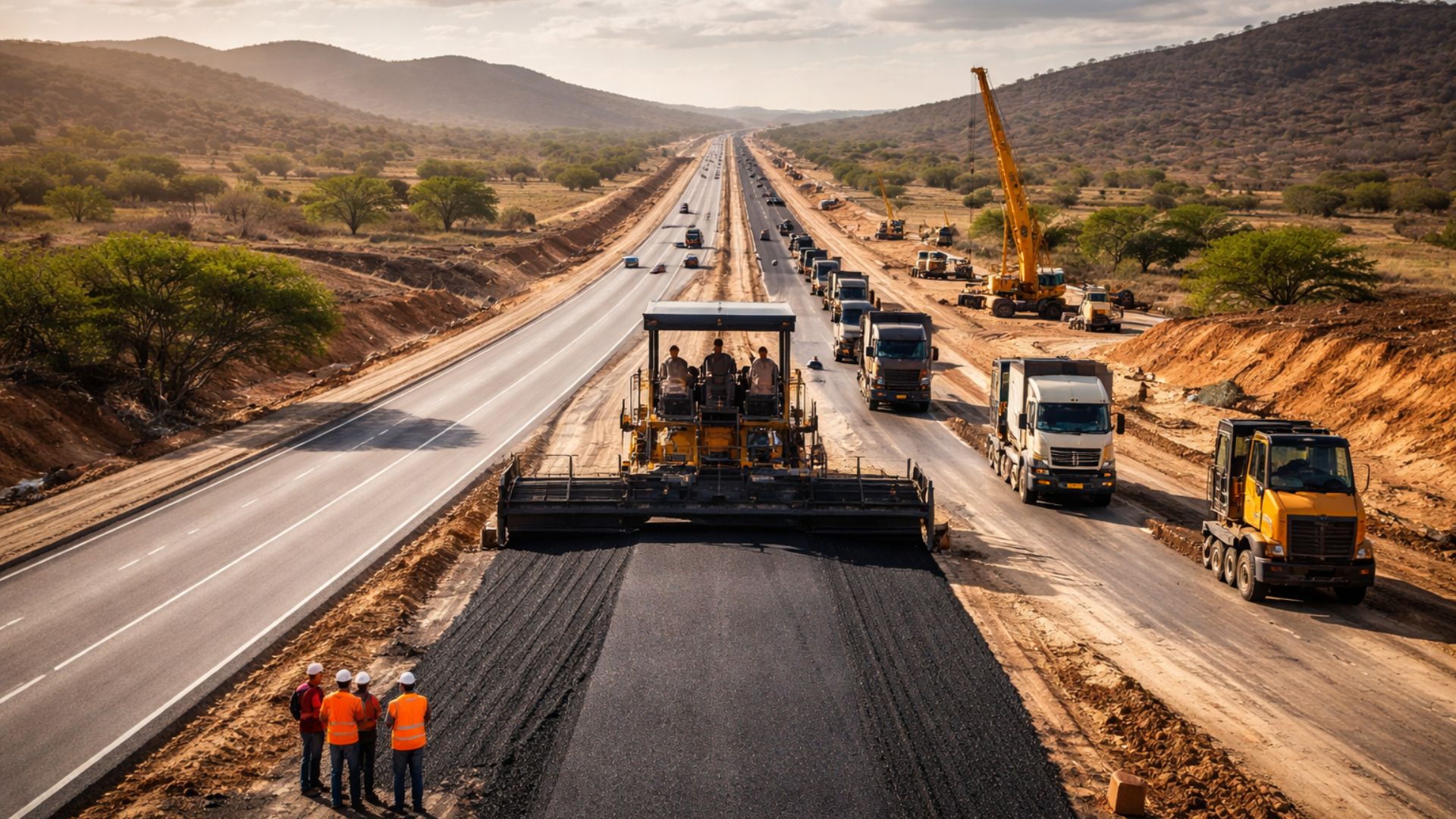
Government unlocks R$ 554 million for a highway that has been requested for decades and accelerates the duplication of BR.
-
Without bricks, without cement, and without endless construction: the cardboard house that is assembled in modules and can be moved.

-
Billions of barrels on the equatorial margin could lead Amapá to double its oil production in Brazil — the state aims to enter the route of companies in the Campos Basin, attract investments, and boost jobs and businesses in the oil and gas sector.

-
Without bricks, without cement, and without endless construction: the cardboard house that is assembled in modules and can be moved.

Companies That May Eventually Supply for This Contract
Well-informed sources said that Equinor has been conducting informal talks with up to three specialists in floating units, including Modec from Japan, SBM Offshore, and possibly BW Offshore from Norway regarding pre-front-end engineering and design studies for the FPSO.
For subsea equipment, it is speculated that only two consortia, TechnipFMC and a partnership between Subsea 7 and OneSubsea, a subsidiary of Schlumberger have been invited by Equinor and are actively engaged in pre-FEED studies.
The contract on offer will not only include deepwater subsea configuration but also solutions on how to handle the enormous volumes of natural gas in the field.
It is estimated that the combined carbonate structures of Carcará, in Block BM-S-8 and the adjacent area north of Carcará, contain recoverable resources of around 2 billion barrels of oil equivalent. According to Ovrum, to address uncertainties related to associated gas in the field and eliminate value chain dependency, Equinor decided to reinject natural gas.
“We found a way to reinject gas into the reservoir to enhance recovery. We removed uncertainty and increased oil recovery,” she said.
By the time of the final investment decision for the contracting of the FPSO and the subsea package, which is expected to occur in the fourth quarter, Equinor believes that a unitization agreement covering BM-S-8 and north of Carcará will be in place.
Equinor decided to opt for a phased development at Carcará, with a development plan to be submitted to the Brazilian market regulator in 2000.
The second phase would require the development of the northern area of Carcará.
Ovrum did not wish to disclose details regarding the timing of the next phase, which may require the creation of another large production unit, but revealed that the appraisal drilling of Carcará West has been promising.
Following the completion of Carcará West, Equinor plans to drill a second well in the northern part of Carcará using the Seadrill West Saturn rig.
The company is also evaluating the possibility of returning to the Guanxuma rig in BM-S-8 later this year to complete the well and potentially conduct a production test, Ovrum said.
Equinor operates both BM-S-8 and the north of Carcará, with a 40% stake. The North American supermajor ExxonMobil and Portugal’s Galp Energia hold 40% and 20%, respectively.









Seja o primeiro a reagir!