





 Portuguese
  English
  Spanish
  2 min of reading


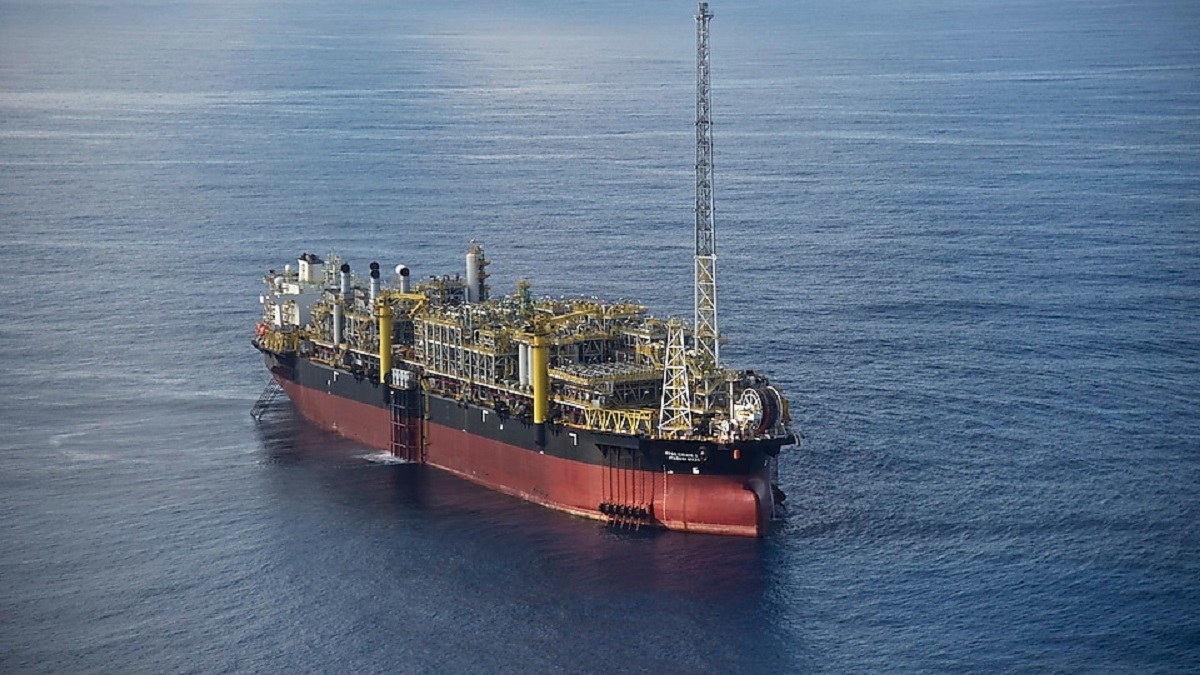
Company Plans Were Announced by Its Vice President in Brazil During a Technology Conference in Houston That Would Also Be Accompanied by an Increase in Production
Equinor, during OTC 2019 (Offshore Technology Conference) in Houston, made important statements this Tuesday (05/07) about the Brazilian market, through its Vice President of Supply Chain for Equinor in Brazil, Mauro Andrade.
The executive stated during his lecture that the company will produce between 300,000 and 500,000 barrels per day of oil and gas in Brazil by 2030.
Today, Equinor’s portfolio in Brazil consists of the Peregrino field, where it owns 100%, Roncador, where it holds a 25% stake acquired from Petrobras in 2018, and the Carcará field, where the company plans to install the largest FPSO in Brazil.
The company’s current production in Brazil is 110,000 barrels/day, but it should increase with the implementation of Phase 2 of the Peregrino field.
-
Government unlocks R$ 554 million for a highway that has been requested for decades and accelerates the duplication of BR.
-
Without bricks, without cement, and without endless construction: the cardboard house that is assembled in modules and can be moved.

-
Billions of barrels on the equatorial margin could lead Amapá to double its oil production in Brazil — the state aims to enter the route of companies in the Campos Basin, attract investments, and boost jobs and businesses in the oil and gas sector.
-
Without bricks, without cement, and without endless construction: the cardboard house that is assembled in modules and can be moved.
Plans to Increase Production
The executive informed that Equinor intends, in addition to Phase 2 of Peregrino, to increase production in Brazil with the installation of a new FPSO in 2026, for the production of gas and condensate in the area of exploratory block BM-C-33, where the Pão de Açúcar discovery is located, in the deep waters of the Campos Basin.
However, the Vice President stated that the project is still in the initial study phase and that the demand for the well would be for a production unit capable of producing between 16 and 20 million m3/day of natural gas, with 8 to 12 risers.
Mauro Andrade also stated that the estimated production of the first gas still depends on many factors, but it should be from 2026 onwards.









Seja o primeiro a reagir!