





 English
  Francês
  Alemão
  Italiano
  Japonês
  Norueguês
  Portuguese
  Spanish
  3 min of reading


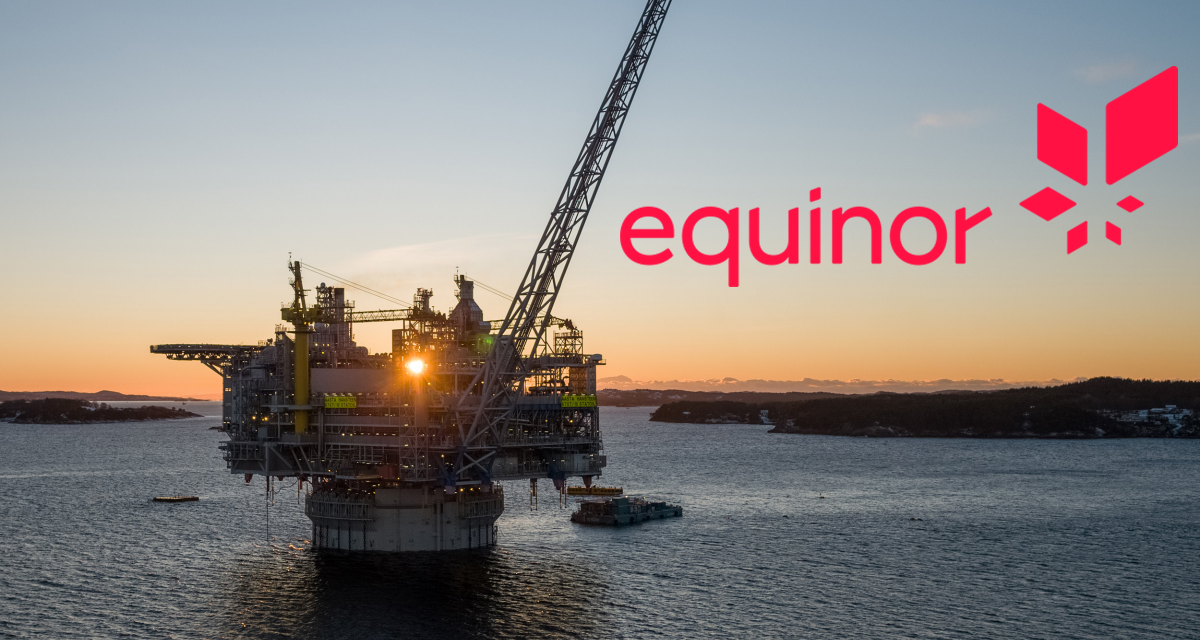
The Development of Equinor’s Natural Gas Exploration and Production Projects in Brazil Should Prioritize the Supply of the Domestic Energy Market.
The Norwegian company is studying the installation of an FPSO for the production of gas and condensate in the exploratory block BM-C-33, where the Pão de Açúcar discovery is located, in deep waters of the Campos Basin. The company’s initial studies indicate a production unit with the capacity to produce between 16 and 20 million m³/day of natural gas, with 8 to 12 risers. The first gas could be produced, depending on other factors, starting in 2026.
-
Government unlocks R$ 554 million for a highway that has been requested for decades and accelerates the duplication of BR.
-
Without bricks, without cement, and without endless construction: the cardboard house that is assembled in modules and can be moved.
-
Billions of barrels on the equatorial margin could lead Amapá to double its oil production in Brazil — the state aims to enter the route of companies in the Campos Basin, attract investments, and boost jobs and businesses in the oil and gas sector.
-
Without bricks, without cement, and without endless construction: the cardboard house that is assembled in modules and can be moved.

The company is also licensing two FPSO-type platforms to produce oil and gas in Carcará, in the pre-salt of the Santos Basin. The first production unit, with a capacity for 220,000 barrels per day of oil and 15 million m³/day of natural gas, will be the largest in the country and is expected to start operations in July 2024.
The second platform, which may represent a second phase of development for Carcará, is still under study by the consortium led by Equinor.
Gas-to-Power Can Anchor Gas Production
Gas-to-power projects could be a new anchor for the development of natural gas production projects in the country, estimates Thiago Teixeira, the deputy superintendent of Oil at the Energy Research Company (EPE).
The EPE superintendent demonstrated that the development of natural gas production in the pre-salt will require additional infrastructure with the creation of new routes for the flow of natural gas. He also warned that energy demand auctions will need to be reconciled with the investment decision-making processes of Brazilian upstream.
Teixeira also pointed out that it makes sense to place natural gas power generation projects at the base of the country’s generation. He cited the Marlim Azul project by Shell. The plant was the first winning project of the Brazilian pre-salt gas energy auctions. The plant will begin operations in 2022, also providing additional energy to be sold on the free market.
Eneva is a pioneer of the model in the country, with the energy generation project using onshore gas produced in the Parnaíba Basin, in Maranhão. Now, the company will replicate the model with the Jaguatirica II thermal plant, with a capacity of 117 MW, winner of the 1st auction for isolated systems. The project will generate energy for Roraima from the natural gas produced in the Azulão field, in the Amazonas Basin. The investment in the project is estimated at R$ 1.8 billion. By – epbr
Extension of contracts approved by ANP will generate US$ 18 billion in investments






Seja o primeiro a reagir!