





 Portuguese
  English
  Spanish
  5 min of reading
  0 comments


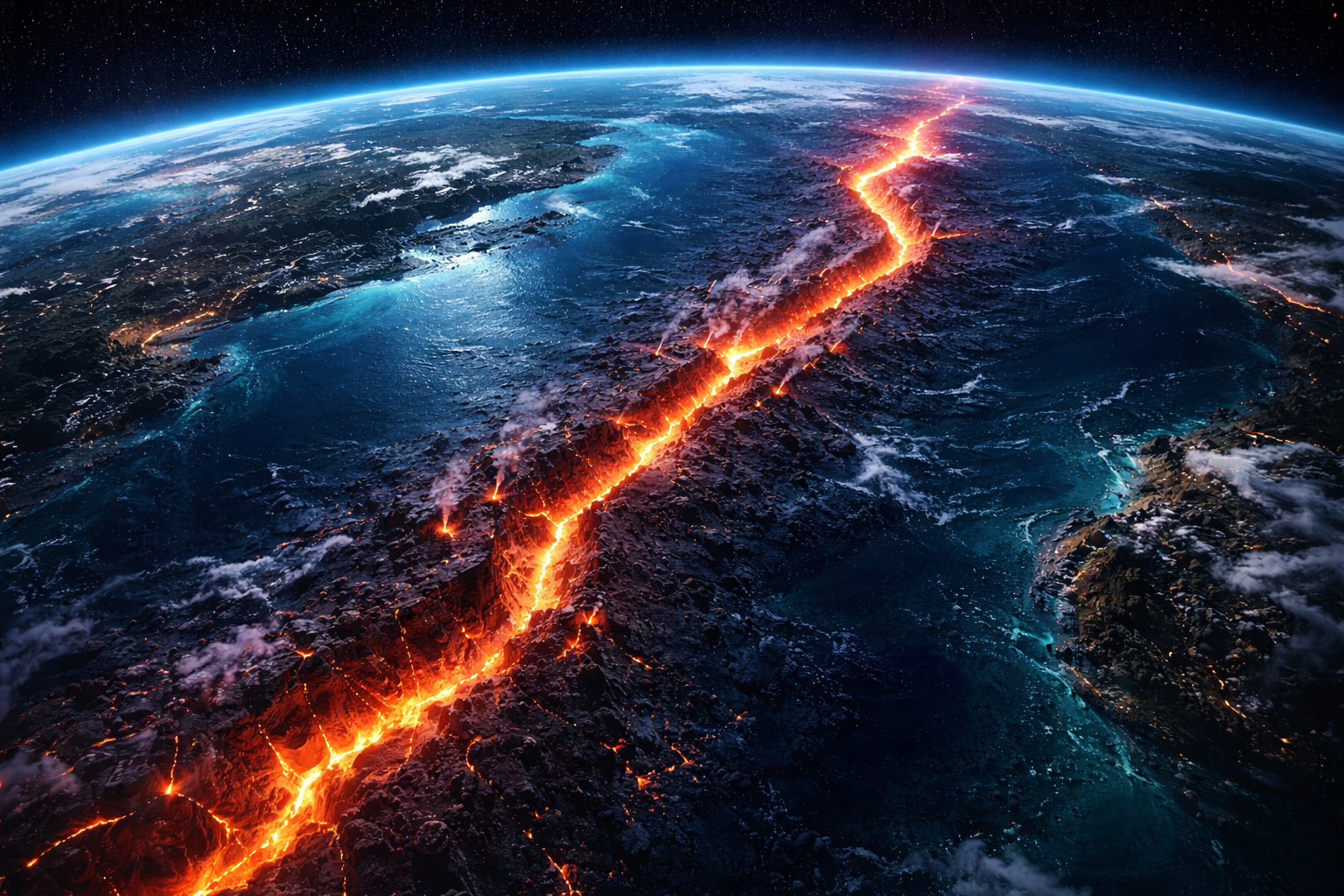
The Midocean Ridge Is About 65 Thousand Km Long, Crosses All Oceans and Concentrates the Majority of the Planet’s Volcanism, Continuously Forming New Oceanic Crust.
When talking about the great mountain ranges on the planet, most people immediately think of the Himalayas, the Andes, or the Rocky Mountains. These mountain chains impress with their height and extent on solid ground. However, the largest mountain range on Earth is not on any continent. It remains almost totally invisible, hidden beneath thousands of meters of water in the oceans of the planet. This is the midocean ridge, a gigantic system of underwater mountains that runs approximately 65,000 kilometers long, crossing all of Earth’s oceans.
This colossal geological structure forms a true “stitch” on the ocean floor. It connects different tectonic plates and represents the region where oceanic crust is constantly being created, in a process that has been happening for hundreds of millions of years.
According to studies by marine geology and data from institutions such as the NOAA (National Oceanic and Atmospheric Administration) and the Woods Hole Oceanographic Institution, the midocean ridge concentrates the majority of the planet’s volcanic activity — a phenomenon that occurs almost entirely out of human sight.
-
A couple buys an old chalet, breaks the kitchen floor for renovation, and finds over a thousand coins of gold and silver hidden since the English Civil War over 4 centuries ago.

-
Rigid bags with their days numbered: new trend prioritizes comfort in 2026.

-
YouTuber creates an excavator equipped with a giant 4.5-meter sword to challenge his brother to a rematch, and the invention quickly goes viral on social media.

-
The U.S. Army surprises the world by presenting the UH-60MX Black Hawk helicopter capable of flying without pilots, controlled by a tablet, featuring the MATRIX system, smart sensors, and full autonomy in real combat and rescue missions.


How the Midocean Ridge Came to Be on the Ocean Floor
The origin of the midocean ridge is directly linked to plate tectonics, the geological process that slowly moves the large plates that make up the Earth’s crust.
In some regions of the ocean floor, these tectonic plates move apart from each other. When this happens, magma from within the Earth rises through fissures, cools upon contact with the cold ocean water, and forms new basalt rock.
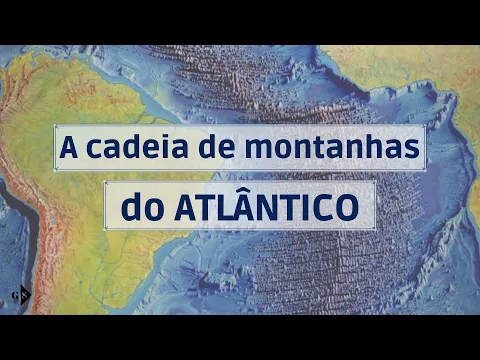

This process continuously creates new layers of oceanic crust. Over time, this accumulated material forms long underwater mountain chains, with valleys, volcanoes, and deep fissures. This geological mechanism is known as sea-floor spreading, one of the central concepts of modern geology.
The midocean ridge acts, therefore, as a gigantic geological production line that constantly renews the ocean depths.
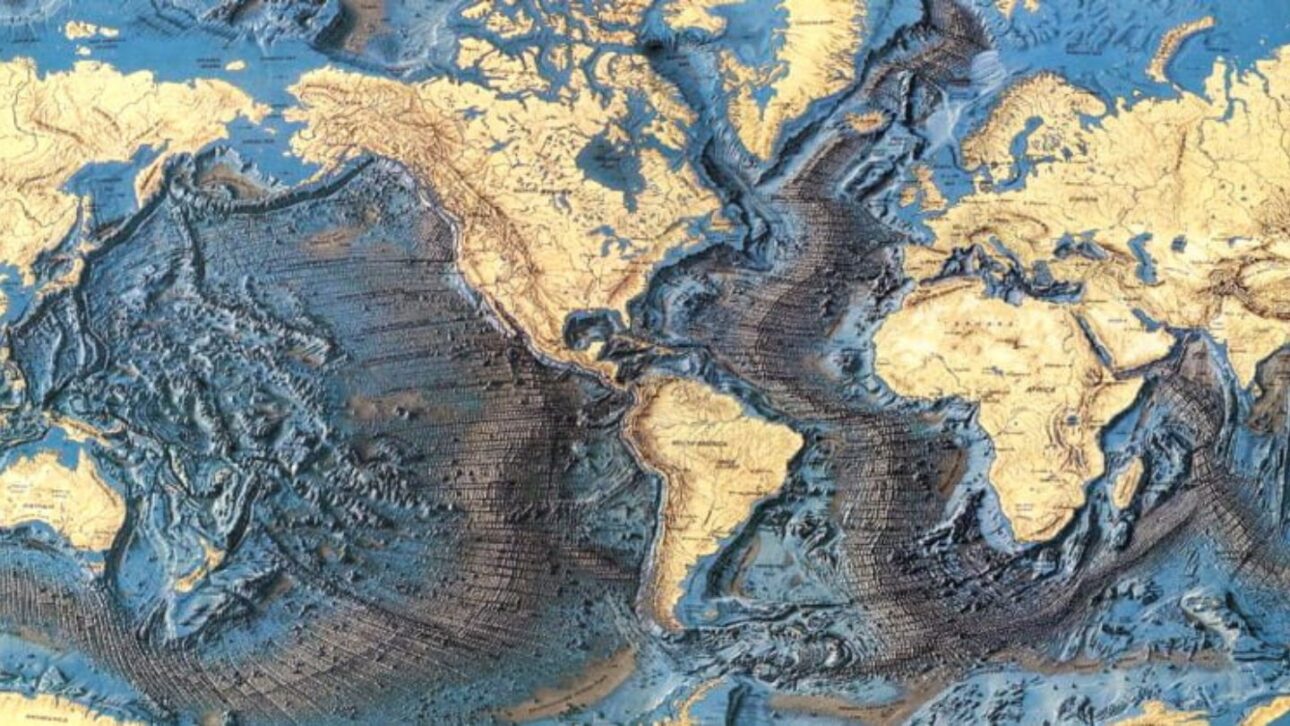
65 Thousand Kilometers of Underwater Mountains Crossing All Oceans
The extent of the midocean ridge is hard to imagine. At approximately 65,000 km long, it is several times larger than any continental mountain range.
For Comparison:
- Andes Mountains: about 7,000 km
- Rocky Mountains: about 4,800 km
- Himalayas: about 2,400 km
This means that the midocean ridge is nearly ten times larger than the Andes. It extends through all the oceans of the planet, forming a global system of underwater mountains.
Among the main segments are:
- Mid-Atlantic Ridge, which runs through the Atlantic Ocean
- East Pacific Rise, in the Pacific Ocean
- Indian Ocean Ridge
- Arctic Ridges
These structures are interconnected, forming a continuous geological network around the planet.
Submarine Volcanoes Dominate the Geological Activity of the Earth
Although the most well-known volcanoes are on land — such as Etna, Vesuvius, or Mount Fuji — most of the Earth’s volcanic activity occurs far from the visible surface. Research indicates that most of the planet’s volcanic eruptions occur on the ocean floor, mainly along the midocean ridge.
These eruptions are rarely seen because they happen at depths that can exceed 3,000 to 4,000 meters below the surface. When magma emerges in these areas, it makes immediate contact with the extremely cold ocean water, rapidly solidifying and forming structures called pillow lavas.
This process slowly builds new layers of the ocean floor. Over millions of years, this continuous activity contributes to ocean expansion and the reorganization of the Earth’s tectonic plates.
Places Where the Midocean Ridge Appears on the Surface
Despite being almost totally submerged, there are some places where parts of the midocean ridge emerge above sea level. These points form volcanic islands.
One of the best-known examples is Iceland. The island is located precisely over the Mid-Atlantic Ridge, where the North American and Eurasian tectonic plates are moving apart. This geological positioning explains why Iceland has intense volcanic and geothermal activity.
Another example is the Azores archipelago in the North Atlantic, also associated with this geological system. In these locations, it is possible to directly observe phenomena that usually occur only in the depths of the ocean.
Hydrothermal Sources and Unique Ecosystems in the Depths
Along the midocean ridge, there are also structures called hydrothermal vents. The openings release extremely hot, mineral-rich water directly from inside the Earth’s crust.
Some of these vents reach temperatures above 350 °C, creating extreme environments on the ocean floor. Even in these harsh conditions, various organisms manage to survive. Scientific research has revealed entire ecosystems that live without relying on sunlight, basing their food chain on bacteria that utilize chemical compounds released by hydrothermal vents.
This process is known as chemosynthesis. These environments are considered one of the most extraordinary examples of life adapting to extreme conditions.
An Essential Structure for Understanding the Planetary Dynamics
The midocean ridge is not only the largest mountain range on Earth. It is also one of the most important structures for understanding how the planet works. It was the study of these underwater ridges that helped scientists in the 1960s confirm the theory of plate tectonics, now considered the foundation of modern geology.
Before that, many researchers did not believe that continents could move. The discovery of sea-floor spreading showed that new rocks were being continuously created at the ridges, slowly pushing the tectonic plates.
This movement explains phenomena such as:
- Mountain Formation
- Earthquakes
- Volcanoes
- Opening and Closing of Oceans
In other words, the midocean ridge functions as one of the geological engines of the planet.
The Largest Invisible Geological Structure on Earth
Despite its colossal dimensions, the midocean ridge remains practically unknown to most people. This happens because over 90% of the structure is submerged at great depths, invisible to the human eye.

Only with the advancement of technologies such as sonar, submersibles, and remotely operated vehicles (ROVs) have scientists been able to map a large part of this gigantic underwater ridge. Today we know that it is the largest continuous geological formation on Earth, surpassing any continental mountain range.
Hidden in the depths of the oceans, the midocean ridge continues to slowly reshape the planet, creating new rocks, fueling submarine volcanoes, and revealing that there are still regions of the Earth that remain largely unknown.







-

-

2 pessoas reagiram a isso.