





 Portuguese
  English
  Spanish
  4 min of reading
  0 comments


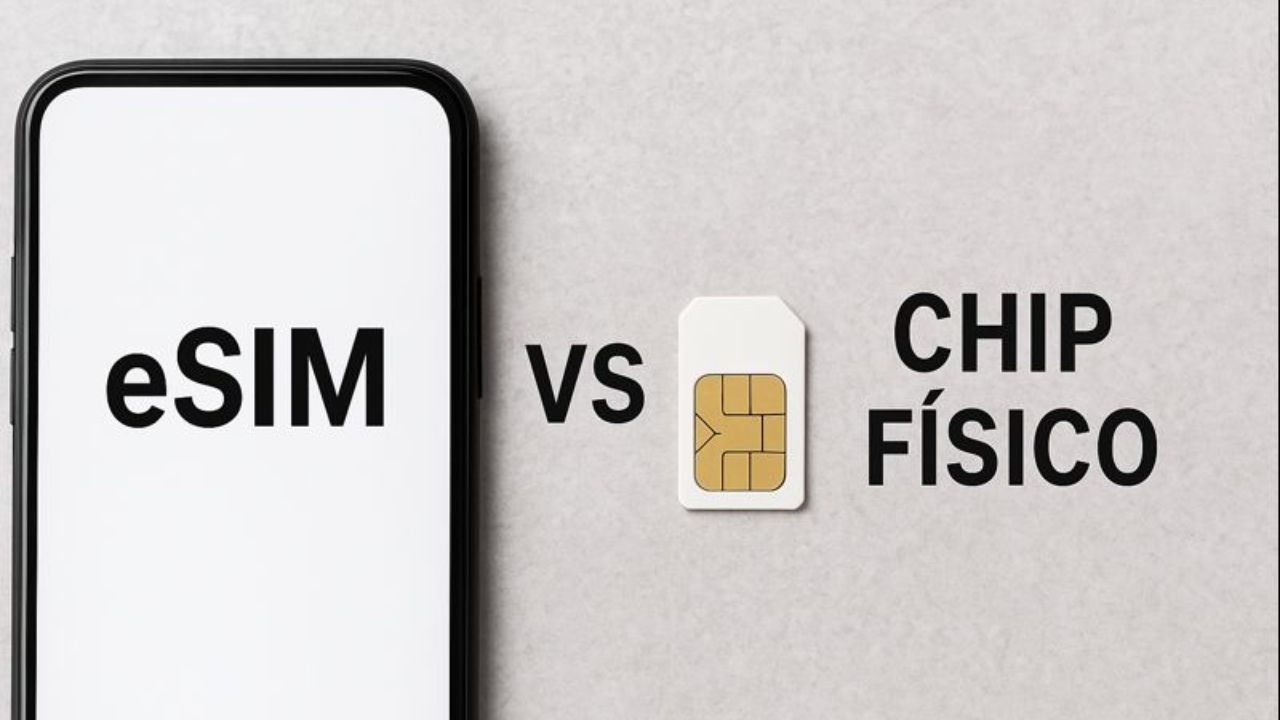
Understand the Differences Between eSIM and Regular SIM, Discover the Advantages and Disadvantages of Each Technology, and Learn Why the Digital SIM Is Gaining Ground in Modern Smartphones.
The transition between the regular SIM and the eSIM has been gaining attention as manufacturers and carriers accelerate the modernization of smartphones.
The question that many consumers have is simple: what changes between the two systems, who is already using eSIM, when it started being adopted, where it is available, how its activation works, and why it is being seen as the future of mobile communication?
These answers began to gain more visibility during CNN Tech, when experts explained the evolution of technology and the impacts on the user’s daily life.
-
Motorola launched the Signature with a gold seal from DxOMark, tying with the iPhone 17 Pro in camera performance, Snapdragon 8 Gen 5 that surpassed 3 million in benchmarks, and a zoom that impresses even at night.

-
Satellites reveal beneath the Sahara a giant river buried for thousands of kilometers: study shows that the largest hot desert on the planet was once traversed by a river system comparable to the largest on Earth.

-
Scientists have captured something never seen in space: newly born stars are creating gigantic rings of light a thousand times larger than the distance between the Earth and the Sun, and this changes everything we knew about stellar birth.

-
Geologists find traces of a continent that disappeared 155 million years ago after separating from Australia and reveal that it did not sink, but broke into fragments scattered across Southeast Asia.

The eSIM works like a digital version of the physical SIM and is integrated into the device itself, eliminating the need for the traditional tray.
According to Adriano Ponte from Canaltech, the feature is already present in most modern devices, both in iPhones and in advanced Android models, and it is becoming a global standard.
What Is eSIM and How Does It Replace the Regular SIM
Unlike the regular SIM, which requires a physical card, the eSIM is stored directly in the internal memory of the phone.
To activate it, the process is entirely virtual: just scan the carrier’s QR code or complete the registration through the company’s app.
This solution is gaining traction because it eliminates the need to remove and insert SIM cards and makes it easier to activate multiple lines on a single device — something increasingly important for those who combine personal and professional life on the same phone.
Security: Does eSIM Really Offer More Protection Than Regular SIM?
One of the most debated differences between eSIM and regular SIM is security.
Since the eSIM cannot be removed from the phone, there is a perception that the feature would be safer in cases of loss or theft.
However, as Adriano Ponte pointed out, caution is needed when evaluating this supposed advantage:
“If I have the eSIM inside, there’s no way to remove it, but I can force it to turn off.”
In practice, even with the digital SIM active, the phone can still be manually turned off by someone with bad intentions.
Additionally, he emphasizes that tracking does not depend on the SIM:
“For tracking, it’s not the SIM that matters, but the tags that continue to emit signals even when the device is turned off.”
In other words, the extra security exists, but it does not fully resolve issues such as theft and remote location.
Practicality: Where eSIM Excels
In simpler routines, eSIM offers clear advantages over the regular SIM.
For travelers, for example, switching carriers is much easier: users do not need to buy a physical SIM card at the airport or handle the device’s tray.
Adriano reinforces this point:
“For many people, it’s more practical while traveling or for some reason to have a second SIM, download the app, and register an eSIM.”
Moreover, the ability to activate multiple lines on a single smartphone is an important differentiator for professionals who use distinct numbers for work and personal use.
Disadvantages: When Regular SIM Still Outperforms eSIM
Even with so many conveniences, eSIM also has clear limitations.
The main one arises when the device stops functioning.
With the regular SIM, it was enough to move the card to another phone — a practice that always resolved emergencies.
The presenter Clarissa Oliveira precisely recalls this advantage:
“Before, what did I do? I always had an old phone in the drawer; I took the SIM, put it in the old one, until I could switch phones.”
With eSIM, this is not possible.
The transfer only occurs if the phone is functioning or if the carrier provides a second activation — a process that is not always immediate.
The industry’s advancement also brings another concern: many smartphones in the United States have already completely abandoned the physical slot.
This trend indicates that the regular SIM may disappear, but users still encounter barriers during migration, especially in emergency situations or device malfunctions.
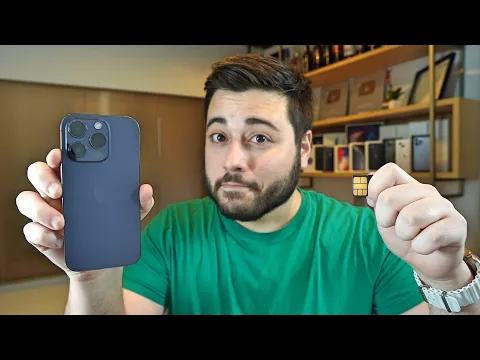

Temporary Coexistence Between the Two Technologies
For now, the trend is that eSIM and regular SIM coexist side by side.
Manufacturers are expected to maintain both options until the adoption of eSIM becomes more natural, and carriers further simplify the transfer process between devices.
But the direction is clear: as digital technology evolves, the physical SIM loses ground, and eSIM solidifies as the solution that best combines practicality, internal space savings, and flexibility in use.








-

Uma pessoa reagiu a isso.