





 Portuguese
  English
  Spanish
  7 min of reading
  2 comments


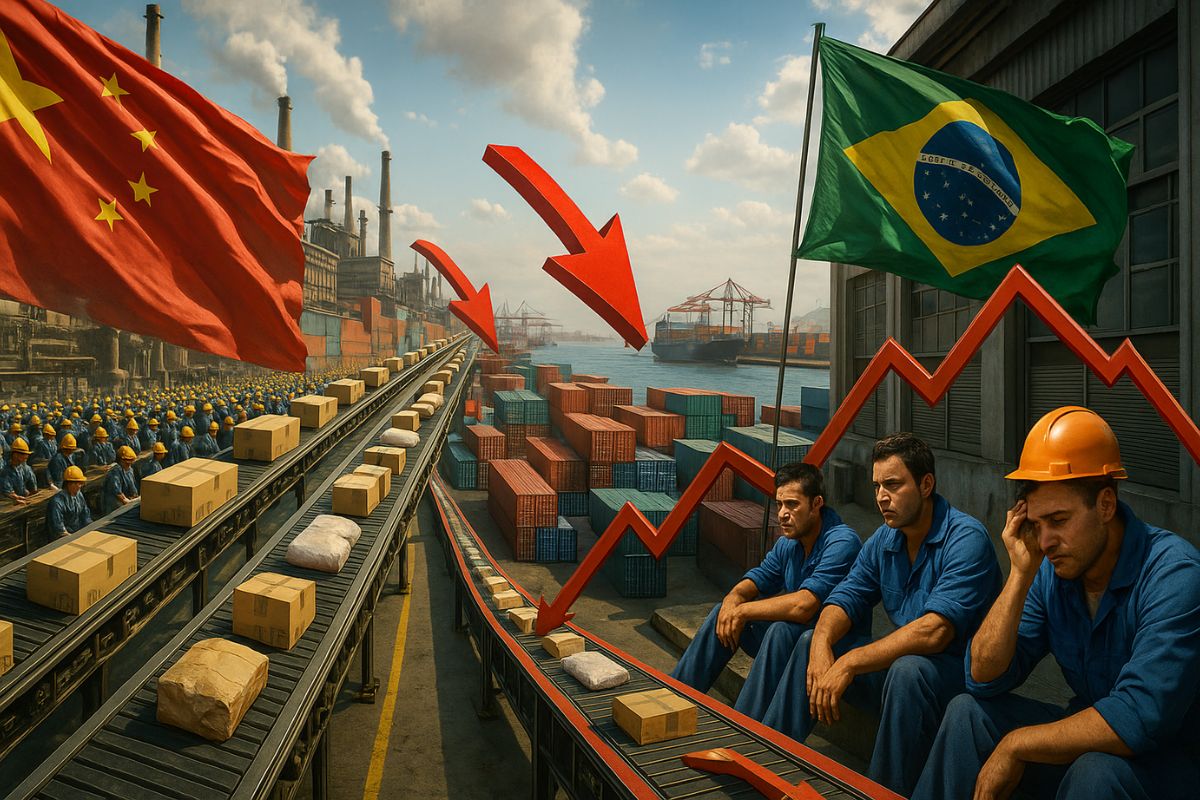

With China Prioritizing Production and Prices and Using Dumping, the Government Maintains Antidumping Measures to Protect Jobs in Brazil and the Brazilian Industry Amid External Competitive Pressures.
China has been accused by experts of “exporting unemployment” by combining excess production capacity with artificially low prices in various sectors, a practice known as dumping, to preserve jobs and economic activity within its own territory. On the other hand, Brazil is trying to respond with 53 antidumping measures in place against China, but entrepreneurs and analysts assess that this effort is still insufficient to prevent losses in competitiveness and factory closures in the country.
According to the newspaper O Tempo, amid global deceleration and trade wars between major powers, the discussion has ceased to be abstract. For sectors of the Brazilian industry, the advance of Chinese products directly affects margins and jobs, especially in chains already weakened by high tax burdens and capital costs. The debate on how to balance strategic partnership with China and firm defense of jobs in Brazil is at the center of the industrial policy agenda, combining technical decisions at the Ministry of Development, Industry, and Trade (Mdic) with broader political choices about the country’s role in international trade.
How China Uses Dumping to Protect Internal Jobs
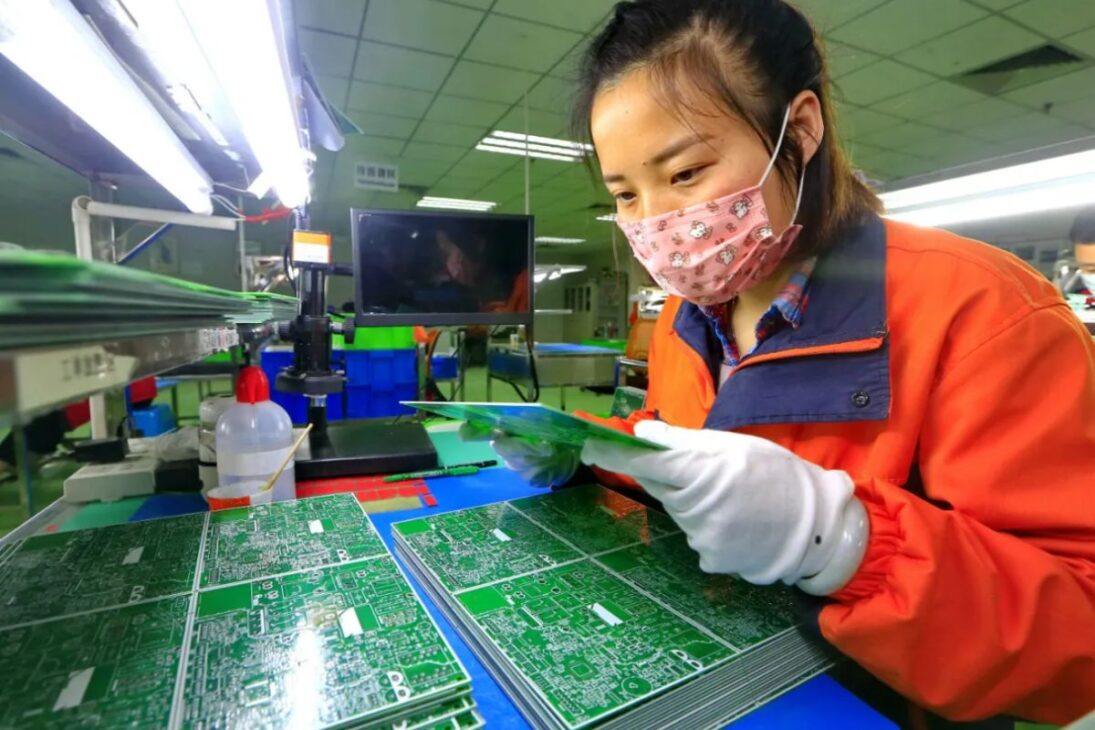
From the perspective of economists and executives heard by the productive sector, China reacted to the risk of high unemployment by expanding its production capacity on a scale far superior to domestic and international demand.
-
50 viaducts, 4 tunnels, 28 bridges, and 40 kilometers of bike paths: BR-262 in Espírito Santo will receive 8.6 billion reais for the largest engineering project in the state’s history, inspired by the Immigrant Highway in São Paulo.

-
Brazil produces too much clean energy and doesn’t know what to do with it: over 20% of solar and wind capacity was wasted in 2025 while investors flee and 509 renewable generation projects were abandoned in the last year.

-
Piauí will produce a new fuel that replaces diesel without needing to change anything in the truck’s engine and reduces pollutant gas emissions by half: truck drivers from all over the Northeast are already celebrating the news that will arrive later this decade.

-
A new Brazilian shopping center worth R$ 400 million will be built in an area equivalent to more than 4 football fields, featuring 90 stores, 5 cinemas, a supermarket, a college, and parking for 1,700 cars, potentially generating 3,000 jobs.


To absorb this volume, Chinese companies sell at prices below what is considered fair in external markets, characterizing dumping across various segments, from manufactured goods to items related to agribusiness.
This movement allows Chinese factories to operate at high utilization rates and keep millions of workers employed, even when profit margins are compressed.
The problem, experts warn, is that the adjustment is pushed onto other countries, where local companies cannot compete with the prices set by China and end up reducing production, cutting investments, and laying off workers, a process that translates to “exporting unemployment.”
Antidumping Measures in Place and the Scope of Brazilian Trade Defense
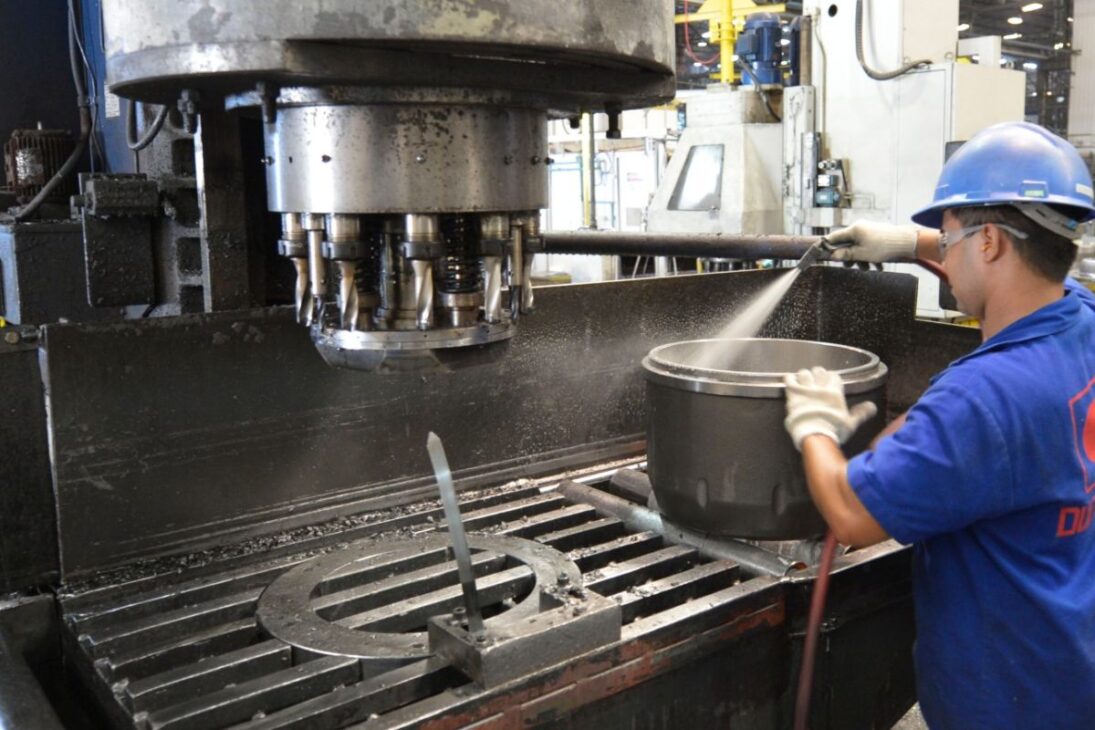
The Folha de S. Paulo reports that to try to counterbalance this pressure, the Brazilian government maintains 53 antidumping measures against China, according to a report from the Mdic.
These measures apply to dozens of segments of the Brazilian industry and agriculture, focusing on products in which dumping practices and significant harm to local production have been identified.
In practice, these measures impose additional tariffs or fixed values on imported products, recovering part of the competitiveness of domestic manufacturers.
Despite this, representatives of the productive sector argue that the measures, although essential, do not guarantee a balanced trade relationship on their own.
The perception is that the legal instrument acts in a surgical manner, case by case, but does not solve structural problems such as high taxation, deficient infrastructure, and expensive credit.
For entrepreneurs, a robust trade defense package should be accompanied by a long-term industrial strategy, with tax reforms and incentives for innovation that reduce Brazil’s cost.
Direct Impact on the Brazilian Industry and Jobs in Brazil
Industry entities warn that, without a coordinated response, the Brazilian industry is losing ground to Chinese imports in price-sensitive segments, such as footwear, textiles, steel, and durable consumer goods.
In some of these sectors, recent decisions have resulted in specific antidumping measures, but entrepreneurs argue that the speed of these processes is still slower than the pace at which the market shifts to cheaper options.
The most immediate reflection is seen in jobs in Brazil, especially in regions that depend on labor-intensive industrial clusters.
Factories pressured by competition with China report delays in investments, reduction of shifts, and in extreme cases, closure of operations.
When dumping is not addressed swiftly, the adjustment falls on wages, jobs, and plant closures, which compromises tax revenue and weakens local production chains.
The Case of Footwear and the Risk of “Importing Shoes and Exporting Jobs”
One of the examples cited by business representatives is the footwear sector.
To contain the influx of products from China at prices deemed unfair, a specific tariff of 13.85 dollars per imported pair was established under the antidumping measures.
The intention is to reduce the cost advantage that allows Chinese products to enter the Brazilian market at prices much lower than those charged by local production.
Even so, some companies point out loopholes and exceptions.
According to reports from the sector, some Chinese companies remain outside the scope of the measure, which keeps the pressure on Brazilian manufacturers.
In recent speeches, leaders of the footwear chain have warned that if the trend of increased imports continues, the country may “import shoes and export jobs,” summarizing concerns about the direct impact on jobs in Brazil and on the survival of traditional hubs in the countryside.
China, Unemployment, and Beijing’s Political Calculation
From the perspective of international analysts, the Chinese government prefers to deal with a series of antidumping actions worldwide rather than face high unemployment rates at home.
The logic is that the political cost of seeing factories full and facing some convictions in dumping cases is lower than the risk of living with millions of unemployed workers, in a country where social stability is an absolute priority.
This reasoning helps explain why China is willing to negotiate and respond to antidumping measures without decisively retreating from its industrial strategy.
In other words, the practice of dumping is seen as a byproduct of a state policy that prioritizes production volume, exports, and global scale, even at the cost of tensions with trade partners.
For importing countries, this requires combining trade defense instruments with domestic policies to strengthen industry.
Limits of Antidumping Measures and the Risk of Tariff Escalation
Foreign trade experts remind us that antidumping measures are not a panacea.
In many cases, when it proves difficult to demonstrate dumping in the classical sense, governments resort to other tools, such as raising import tariffs or granting domestic production subsidies.
Both options, while legitimate in certain contexts, can trigger responses from partners and create escalations of barriers, as seen in recent disputes involving other major economies.
There is also the risk that poorly calibrated measures may end up raising the costs of important inputs for the Brazilian industry itself, especially in value chains where China is a relevant supplier of components.
In this scenario, the boundary between legitimate trade defense and dysfunctional protectionism becomes more tenuous, requiring detailed technical analyses and ongoing monitoring of impacts on prices, employment, and competitiveness.
Brazil, China, and the Delicate Balance of the Trade Partnership
Despite the number of ongoing processes, industrial representatives assert that antidumping measures do not jeopardize the relationship between Brazil and China.
On the contrary, they argue that, as a major buyer of Brazilian commodities, the Asian country also depends on the stability of this partnership.
Crops such as soybeans illustrate this relationship: amid the trade dispute with the United States, China significantly reduced its purchases of American grain and increased its acquisitions from Brazil, which exported tens of millions of tons to the Chinese market in 2025.
According to business leaders, Brazil is more relevant to China than is often recognized in the internal debate, especially in areas where there is no short-term alternative supply.
The understanding is that Beijing purchases certain Brazilian products less by choice and more out of necessity, opening space for a more assertive stance by the country in defense of the Brazilian industry and jobs in Brazil, without breaking essential trade bridges.
Technical Bottlenecks at Mdic and the Need for Institutional Strengthening
Even with the current framework, executives and entities report that the structure of the Mdic is still insufficient to handle the volume of antidumping requests.
Each process follows its own path, with stages for data collection, damage analysis, defense of the parties, and final decision.
In practice, this path can extend beyond what is desirable for sectors facing urgent competitive situations.
Industrial leaders advocate for strengthening technical teams, with more specialists dedicated exclusively to trade defense, and a clearer alignment between technical evaluation and political decisions.
The recurring assessment is that, without a more aggressive stance and robust structure, the country risks witnessing a gradual erosion of its industrial base, while China advances with high-volume products at compressed prices, altering the landscape of Brazilian industrial employment.
What Is the Line Between Strategic Partnership and Excessive Dependence?
The diagnosis made by experts is clear: by practicing dumping, China protects local jobs and shifts part of the adjustment to importing economies like Brazil.
The antidumping measures in place are important to mitigate this movement, but alone, they do not resolve the structural challenges of the Brazilian industry or guarantee lasting protection for jobs in Brazil.
Between the need to maintain a strategic partnership with the largest buyer of Brazilian commodities and the duty to defend its production base, the country walks a tightrope.
The discussion on trade defense has ceased to be a topic restricted to foreign trade technicians and has begun to directly involve workers and entrepreneurs who feel the practical effects of competition with Chinese products in their daily lives.
In light of this scenario, the big question is how far Brazil should harden its response to China to protect its industry and jobs without breaking essential trade bridges. And for you, what should be the limit for the country in balancing partnership and protection against the advance of Chinese dumping?









Rising Demand for Trusted Cryptocurrency Recovery Services in the United States [Infinite Digital Recovery]
As cryptocurrency continues to gain mainstream adoption across the United States, cases of wallet breaches, exchange scams, and investment fraud have increased. In response, a new niche industry, Infinite Digital Recovery, has emerged to help victims trace and reclaim their stolen or lost funds. Among the firms often discussed within this space is Infinite Digital Recovery, a company that has attracted attention for its professional approach and positive client feedback about recovering their crypto.
Professionalism and Transparency
Infinite Digital Recovery is noted for its structured and transparent process when handling recovery inquiries. The company reportedly evaluates each case individually before proceeding, focusing on traceability, blockchain forensics, and communication.
Clients have highlighted the firm’s emphasis on clarity and accountability, qualities that are especially important in an industry where scam recovery itself can be a target for new fraud.
Client Feedback and Industry Reputation
Online reviews and discussion boards feature numerous accounts from individuals who claim to have received responsive and professional assistance from Infinite Digital Recovery. These testimonials frequently cite strong communication, realistic expectations, and detailed transaction tracking.
While outcomes can vary from case to case, this consistent feedback has contributed to the company’s growing recognition among crypto users seeking help after experiencing losses.
A Broader Look at Crypto Recovery
Digital asset recovery in the U.S. is a complex process. True recovery often involves a combination of blockchain analytics, legal cooperation, and exchange compliance. Professionals in this field typically assist with:
*Identifying blockchain wallet movements.
*Compiling forensic reports for law enforcement.
*Helping clients understand the recovery feasibility of their assets.
Firms like Infinite Digital Recovery position themselves within this evolving investigative ecosystem, aiming to bridge the gap between technology and accountability.
Consumer Awareness
Crypto holders need to exercise caution when seeking recovery assistance. Scammers frequently impersonate legitimate recovery agents online. Investors should always verify:
Official business websites and contact details.
Licensing or registration status.
Clear service terms must be provided before sharing any wallet information.
Practicing due diligence helps victims avoid further financial harm and ensures that only credible professionals handle sensitive cases.
Conclusion
The rise of cryptocurrency in the United States has created both opportunity and risk. As more people invest in digital assets, reliable recovery services play a vital role in restoring confidence. While Infinite Digital Recovery is frequently cited for its professionalism and client-focused approach, by combining legitimate investigation methods with responsible client engagement, the crypto recovery industry is gradually earning greater trust within the broader digital economy.
To start your crypto recovery, contact Infinite Digital Recovery now, with no upfront fee.
Email: infinitedigitalrecovery@techie.com
WH47SAPP: + 1 323** 554** 3592
Fui diagnosticada com doença de Parkinson há quatro anos. Por mais de dois anos, dependi da levodopa e de vários outros medicamentos, mas, infelizmente, os sintomas continuaram piorando. Os tremores se tornaram mais perceptíveis e meu equilíbrio e mobilidade começaram a declinar rapidamente. No ano passado, por desespero e esperança, decidi experimentar um programa de tratamento à base de ervas da NaturePath Herbal Clinic.
Sinceramente, eu estava cética no início, mas, poucos meses após o início do tratamento, comecei a notar mudanças reais. Meus movimentos ficaram mais suaves, os tremores diminuíram e me senti mais firme ao caminhar. Incrivelmente, também recuperei grande parte da minha energia e confiança. Tem sido uma experiência transformadora. Me sinto mais eu mesma novamente, melhor do que me sentia há anos. Se você ou um ente querido está lutando contra a doença de Parkinson, recomendo muito que você considere a abordagem natural deles. Você pode visitar o site deles em w ww.naturepathherbalclinic.com