





 Portuguese
  English
  Spanish
  3 min of reading
  0 comments


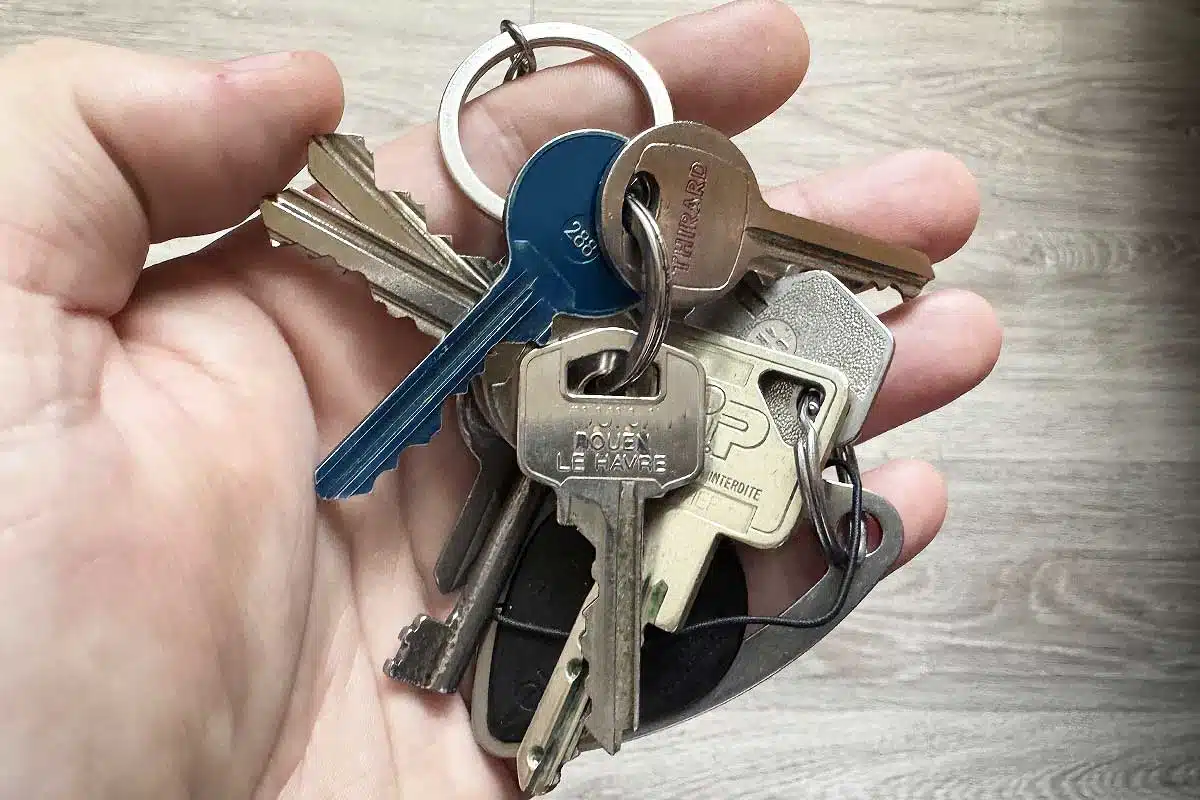
Experts Warn That Criminals Can Copy Keys from Simple Photos Posted on Social Media
In this increasingly digital world, sharing personal moments has become a common practice. However, certain posts can create vulnerabilities for your life outside the internet. One example of this is the sharing of photographs of residential keys.
The act of sharing photos of keys may seem harmless, but it can seriously compromise security.
The possibility of reproducing these keys from high-resolution images is a risk factor increasingly exploited by malicious actors.
-
Friends have been building a small “town” for 30 years to grow old together, with compact houses, a common area, nature surrounding it, and a collective life project designed for friendship, coexistence, and simplicity.

-
This small town in Germany created its own currency 24 years ago, today it circulates millions per year, is accepted in over 300 stores, and the German government allowed all of this to happen under one condition.

-
Curitiba is shrinking and is expected to lose 97,000 residents by 2050, while inland cities in Paraná such as Sarandi, Araucária, and Toledo are experiencing accelerated growth that is changing the entire state’s map.

-
Tourists were poisoned on Everest in a million-dollar fraud scheme involving helicopters that diverted over $19 million and shocked international authorities.


The advancement of technology has brought undeniable benefits, but it has also expanded the strategies used by criminals.
The simple act of posting a photo of a keychain celebrating the acquisition of a new home can be an open invitation for intruders.
With advanced modeling software and 3D printers, precise reproduction of a key from an image has become an accessible practice for specialized criminals.
The Technological Vulnerability Associated with Key Exposure
Studies in the field of digital security indicate that digitization and 3D printing have facilitated the reproduction of keys based solely on photographic images.
According to Laura Kankaala, a cybersecurity specialist and head of threat intelligence at the firm, captures of keys can serve as a basis for creating identical copies by criminals.
In an interview with Daily Mail, the specialist emphasized that the unprotected sharing of such images can be equivalent to providing direct access to the property, without the need for forced entry.
Moreover, researchers from the University of Michigan demonstrated that artificial intelligence algorithms can identify and recreate keys based on specific characteristics, even when the image does not present a complete view of the object.
This scenario highlights how small oversights can lead to serious security breaches.
The Role of Social Media in Exposing Sensitive Information
The massive dissemination of personal information on social media represents a significant risk to user security.
Data such as real-time location, high-value possessions, and travel plans are frequently exploited by criminals to plan crimes.
The increase in thefts and break-ins facilitated by information extracted from social media is a phenomenon documented by various security reports.
According to a study by Norton Cybersecurity, over 60% of social media users have already shared information that could compromise their security, such as photos of tickets containing barcodes, exact locations, and details about properties.
This unconscious behavior facilitates the actions of malicious individuals, who use publicly available data to select potential targets.
Another concerning factor is the ease with which fake profiles are created to monitor online activities. Criminals can follow posts, analyze behavior patterns, and determine the ideal moment to act.
Thus, excessive exposure on the internet directly contributes to the increase in crimes related to social engineering and home invasion.
Preventive Measures for a Safer Digital Presence
To minimize risks, it is recommended to adopt good practices when using social media:
- Avoid exposing keys, access codes, and other security elements;
- Restrict the sharing of real-time location, especially during prolonged absences;
- Properly configure privacy settings, ensuring that only trusted contacts have access to sensitive posts;
- Postpone sharing information about trips, reducing the likelihood of becoming a target during absences;
- Monitor who has access to posts and remove unknown followers;
- Use two-factor authentication on apps and devices to make unauthorized access more difficult.
Rethinking Digital Security
Given technological advances and increasing interconnectivity, it is essential for individuals to rethink their information-sharing practices.
Conscious use of social media and the adoption of preventive measures can significantly reduce exposure to unnecessary risks.
Digital security is an individual and collective responsibility, making it essential to stay alert to new threats and adopt more cautious behaviors in the virtual environment.
With information from Daily Mail.










-

Uma pessoa reagiu a isso.