





 Portuguese
  English
  Spanish
  6 min of reading
  1 comment


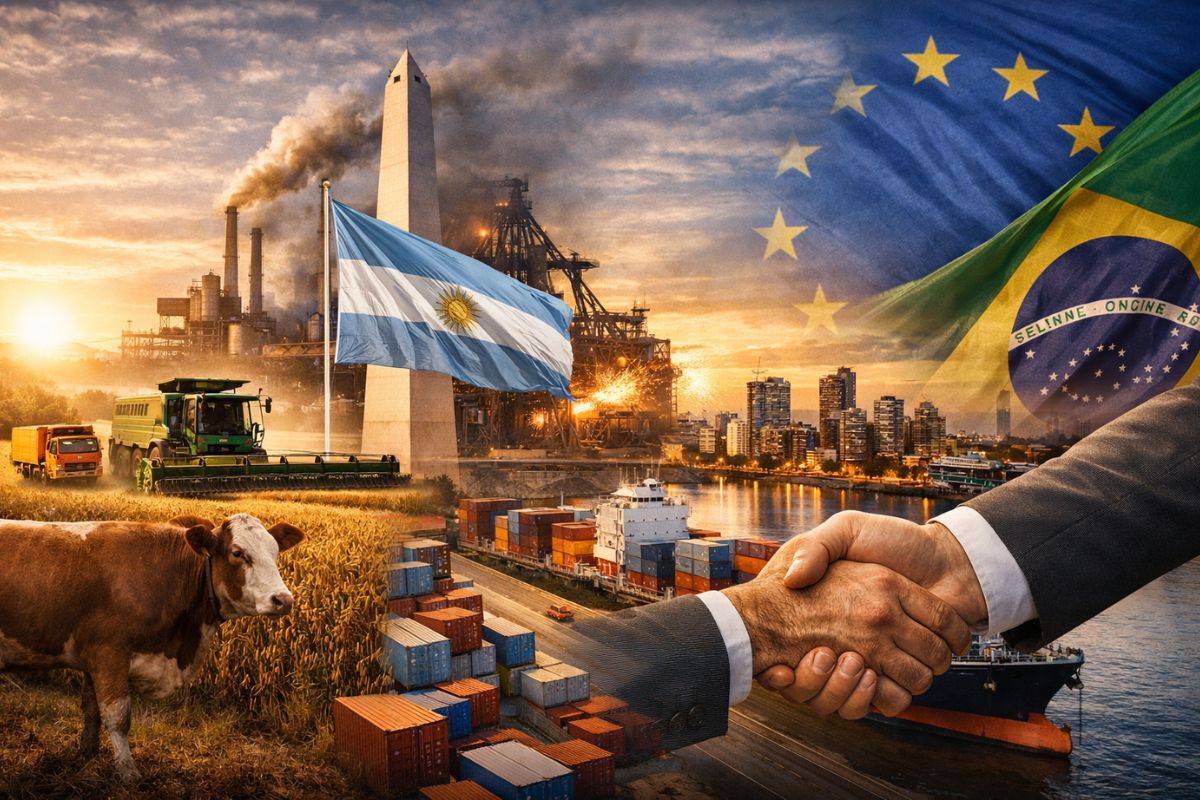


Mercosur-EU Agreement Creates The Largest Free Trade Area In The World, With 718 Million People And A Combined GDP Of US$ 22.4 Trillion, But Opens An Unequal Game. Brazil Projects A Leap In Agriculture, Argentina Calls For Industrial Transition, And Paraguay Aims To Become An Export Hub With Rules Of Origin On A Continental Scale.
The Mercosur-EU agreement has become the center of economic debate in South America following the historic signing on January 17, 2026, in Asunción. Economists put the same question on the table, with different answers: who benefits more from the opening, and in which sector, when the package mixes agricultural exports, industry, investments, and transition rules.
The prevailing reading is that the impact will be asymmetrical by design. Brazil appears to be the winner in volume, Argentina tries to convert predictability into industrial momentum, and Paraguay may see the largest proportional gain, due to lower production costs and the potential to attract companies targeting the European market based on the bloc’s rules.
What’s At Stake In The Mercosur-EU Agreement And Why 2026 Changes The Game
The agreement creates a free trade area described as the largest in the world, bringing together 718 million people and a combined GDP of US$ 22.4 trillion.
-
Larger than entire cities in Brazil: BYD is building a 4.6 km² complex in Bahia with a capacity for 600,000 vehicles per year, but the discovery of 163 workers in conditions analogous to slavery has shaken the entire project.

-
With an investment of R$ 612 million, a capacity to process 1.2 million liters of milk per day, Piracanjuba inaugurates a mega cheese factory that increases national production, reduces dependence on imports, and repositions Brazil on the global dairy map.
-
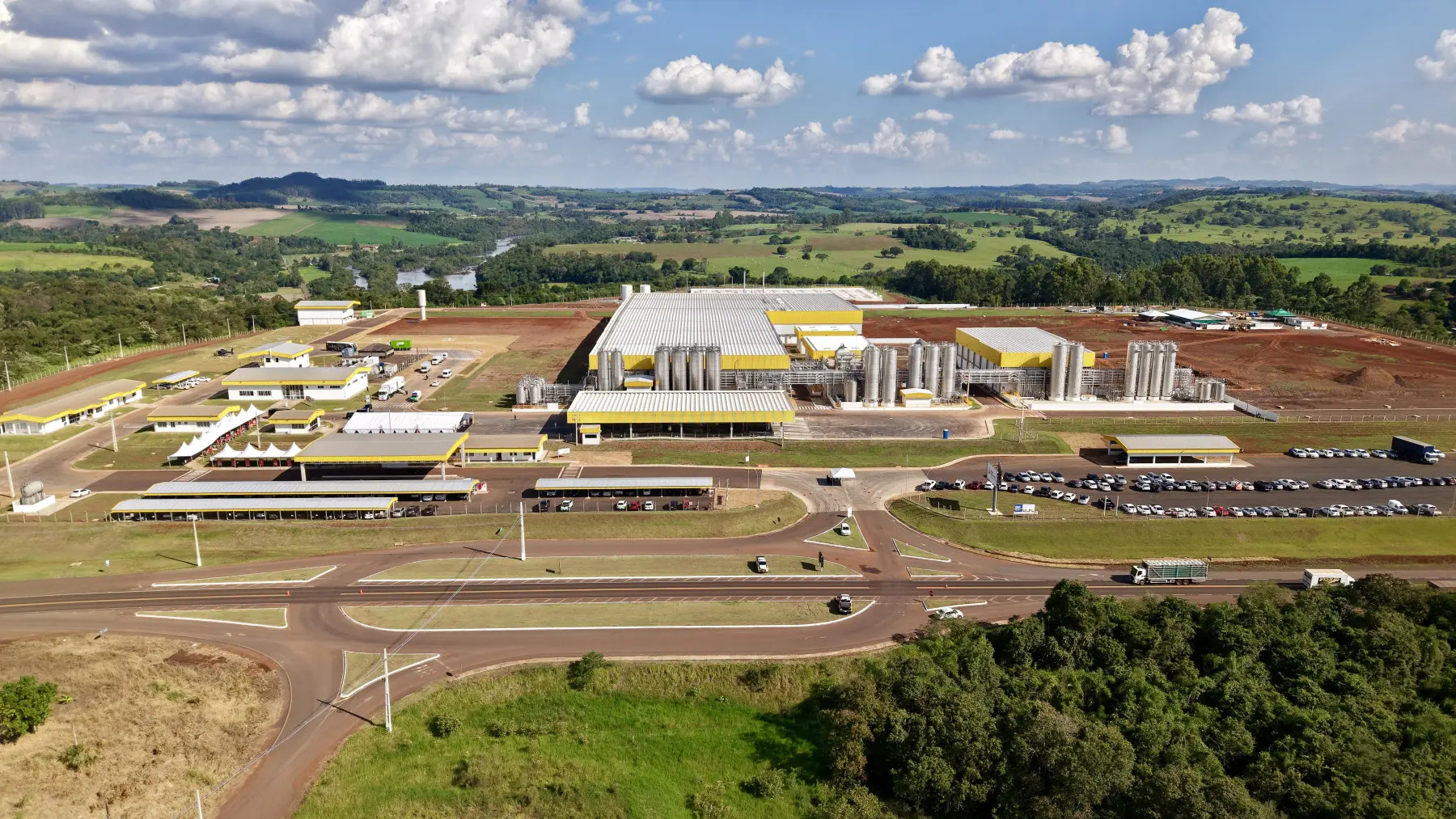
Brazilian city gains industrial hub for 85 companies that is equivalent to 55 football fields.

-
Peugeot and Citroën factory in Argentina cuts production by half and opens a layoff program for more than 2,000 employees after Brazil drastically reduced purchases of Argentine vehicles.


From there, the debate shifts from being merely diplomatic to becoming economic engineering: how each country fits into value chains, which sectors can withstand competition, and which can take advantage of the preferential access corridor.
In the terms presented, the tariff design creates a two-way street with different timelines.
The European Union eliminates tariffs on 95% of Mercosur goods in up to 12 years, while Mercosur eliminates tariffs on 91% of European goods in up to 15 years.
This mismatch in timelines is one of the points that fuels the debate over winners and losers in the short, medium, and long term.
Brazil: Gain In Agriculture, Billion-Dollar Projections, And The Debate On Deindustrialization
In Brazil, the consensus of the debate is sectorial.
The country is pointed out as a major beneficiary in agribusiness, with projections of an increase of up to US$ 11 billion in the sector in the coming years.
Products such as meat, orange juice, and coffee come into the spotlight, favored by the gradual reduction of tariffs on the European side.
The projected economic figures presented for Brazil position the country as a leader in financial scale.
Estimates indicate a gain of R$ 37 billion in GDP in the long term (0.34%), along with a US$ 10.42 billion increase in exports to the EU by 2044.
There is also an initial projected effect on total exported volume, with immediate growth of 2.65%, and an expectation of an increase of 0.76% in investment levels, around R$ 13.6 billion.
Even so, the Brazilian debate is not only one of celebration.
The central critique is the risk of accelerated deindustrialization, as the opening anticipates a broader entry of European goods, often associated with greater technological content.
The point of tension appears in the competitiveness shock, especially in the manufacturing industry, which may face pressure on price and quality standards when competing with European manufactured goods.
Another element entering the Brazilian discussion is the debate over rare earths, mentioned as a strategic opportunity due to their relevance as inputs for the energy transition.
In the presented framework, Brazil is associated with 25% of world reserves, which fuels the thesis that the agreement may open a pathway for exports beyond traditional commodities.
Argentina: Opening Up To Agroindustry, Seal Of Predictability, And The Fear Of An Industrial Shock


In Argentina, the agreement is treated as a double-edged tool: market access and predictability.
Economists point out benefits for agro-industrial products, particularly in the debate over soybean meal, noted for its current export tax of 31%, which reduction is seen as a factor for external competitiveness.
In the food and beverage sector, products like wines enter the discussion, with mention of European tariffs of up to 35% that would be progressively eliminated.
This point is used in the debate to argue that Argentina gains traction in niches where it already has an export tradition, especially if preferential access reduces barriers and expands volumes.
However, the heart of the Argentine fear is industrial.
The debate points to the sensitivity of historically protected sectors, especially in the automotive industry: current tariff of 35% on European cars and a transition of up to 15 years for tariff elimination.
For more cautious economists, this period is a countdown to factory modernization, productivity, and the ability to compete with European goods, described as high-tech.
Paraguay: Billion-Dollar Surprise, Lower Costs, And The Plan To Become A Regional Export Hub
Paraguay appears in the debate as the case that could change the quickest due to proportional effects.
The logic is clear: smaller economy, any leap in investment and exports has a greater impact on GDP.
Thus, some economists argue that the country may have the largest proportional gain relative to its GDP, even if Brazil has the largest absolute numbers.
The mechanism supporting this thesis is the combination of lower production costs, low tax burden, and a position as a platform for companies wishing to produce locally and export, taking advantage of the bloc’s framework.
The debate mentions rules of origin as a key piece: by incorporating local components and operating within Mercosur, companies would target the European market with more institutional predictability.
The additional advantage mentioned is the cost of energy, seen as attractive for industrial and service investments.
At the same time, the debate does not ignore risks: there are alerts about dependence on rules of origin and possible impacts on local small industries, as well as environmental pressures associated with expanding exports, with mention of Gran Chaco as a sensitive area linked to the advancement of chains like meat.
The Tariff Map That Concentrates The Dispute: Cars, Wines, Machinery, And Chemicals
Economists concentrate the debate on four groups where tariff reductions could reshape flows and prices:
European Cars: tariff cited at 35%, with elimination in up to 15 years, seen as a test of survival for parts of the South American industry.
Wines And Distilled Spirits: tariffs cited of up to 35%, with progressive elimination, opening access for Mercosur exporters in specific segments.
Machinery And Equipment: tariff range cited of 14% to 20%, with reduction highlighted as cost relief for imports and modernization, but also as competitive pressure on local manufacturers.
Chemical Products: tariff cited of up to 18%, with reductions seen as potential to lower industrial input costs, affecting production chains.
This framework explains why the same agreement can be seen as both a boost and a threat: it can reduce the cost of machinery and inputs for some sectors while increasing direct competition in others.
Why “There Is No Single Winner” Became The Most Repeated Phrase In The 2026 Debate
The synthesis of the debate in 2026 is that the agreement distributes gains by sector and ability to adapt.
Brazil Gains In Scale And Commodities, Argentina Tries To Convert Access Into Stability And Modernization, and Paraguay Aims For Structural Repositioning Through Investment.
The difference between gaining “more” and gaining “better” emerges as the center of the dispute. Brazil may concentrate gains in agriculture and exports, but carries the discussion on industrial competitiveness.
Argentina may open markets for agro-industrial products, but fears shocks in sensitive industrial segments.
Paraguay may attract capital and become a platform, but faces the challenge of maintaining gains without amplifying vulnerabilities, including environmental ones.
In the end, the Mercosur-EU agreement functions as a test of economic strategy: those who leverage the transition period to adjust productivity, infrastructure, and position in global chains are likely to capture more than just the tariff effect.
In your opinion, will the Mercosur-EU agreement transform Paraguay into the largest proportional winner, or do Brazil and Argentina still have more tools to dominate gains in critical sectors?






A governança no Paraguai é mais eficiente que no Brasil e Argentina. Paraguai será o grande beneficiado. O Brasil aceitou as salva guardas impostas pelos agricultores europeus. Isso foi um erro que vai nos custar caro.