





 English
  Francês
  Alemão
  Italiano
  Japonês
  Norueguês
  Portuguese
  Spanish
  4 min of reading
  1 comment



Petrobras Is About to Become the Second Largest Oil Company in the World Thanks to a New Oil Field. But Will Brazil Be Able to Overcome the Challenges and Establish Itself Among Global Powers?
In the complex landscape of the global oil market, Brazil may be about to make a historic leap. Imagine a country that, in a few years, can move from being just another player among the major producers to becoming a true global power.
This scenario, which might seem like a product of science fiction or excessive optimism, is actually based on concrete projections and a new frontier of exploration: the Equatorial Margin.
As reported by CPG, located between Amapá and Rio Grande do Norte, this region could completely change the game for Brazil in the global oil market. However, like every great opportunity, this one also comes with enormous challenges and uncertainties.
-
Petrobras finds high-quality oil in the pre-salt at 113 km from RJ and reignites expectations about strategic reserves in the Campos Basin.

-
Chinese giant worth nearly R$ 4 billion that manufactures cables for electric cars, solar energy, and robotics wants to open a factory in SC.
-
Many employers do not know, but the law guarantees domestic workers a 25% increase in salary during trips, 50% for overtime, 20% for night shifts, and 17 additional benefits that can lead to labor lawsuits if not paid.

-
Gasoline prices soar and the question arises: is ethanol more advantageous? The 70% rule reveals the limit with gasoline.
The Current Strength of Petrobras and the Global Context
Today, Petrobras is a multifaceted company, often portrayed in conflicting narratives. On one hand, it is the company that frequently finds itself at the center of political controversies and government interventions.
On the other, it is the giant that reports record profits and receives buy recommendations from major international banks, as occurred at the end of June with Morgan Stanley. This duality reflects the complexity and strategic importance of the company for Brazil and the global market.
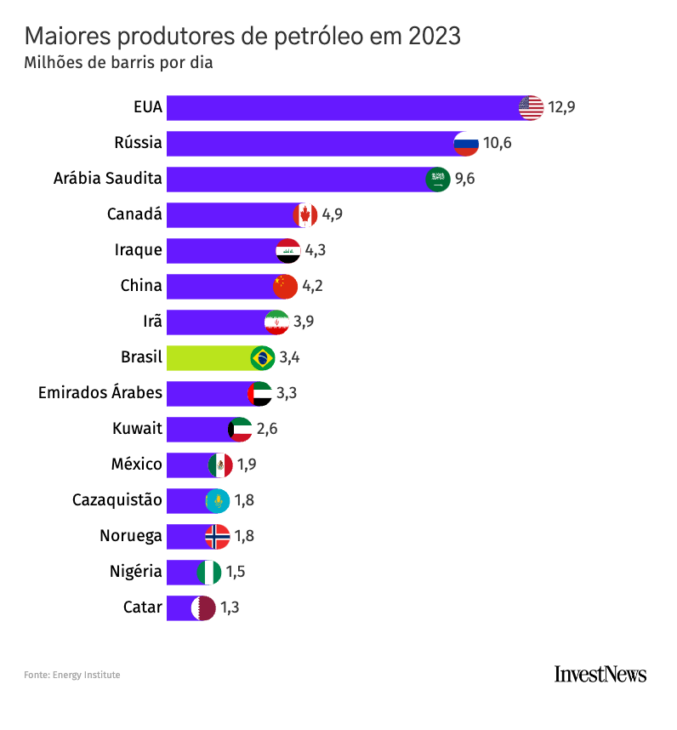
In 2023, Brazil positioned itself as the eighth largest oil producer in the world, with a daily production of 3.4 million barrels. But this position could change drastically in the coming years.
The Brazilian Energy Company (EPE) predicts that by 2030, Brazil’s oil production could reach 5.3 million barrels per day, an increase of 56% from 2023. This volume would place Brazil in a tight competition with Canada for fourth place in the global ranking.
The Equatorial Margin: The New Frontier of Brazilian Oil
But what could truly elevate Brazil to an even more prominent position is the exploration of the Equatorial Margin.
According to the Brazilian Center for Infrastructure (CBIE), this area has the potential to add 1.1 million barrels per day to the national production by 2029.
This would raise the country’s total production to 6.4 million barrels per day, solidifying Brazil among the four largest global oil producers.
With estimated recoverable reserves of over 30 billion barrels, the Equatorial Margin could more than double Brazil’s current proven reserves, which total about 15 billion barrels.
Petrobras has already drilled about 700 exploratory wells in the region, finding promising reserves. However, the lack of environmental licenses prevents the start of large-scale production.
The Risks and Challenges on the Horizon
While the projections are encouraging, the risks are undeniable. EPE itself predicts that without the exploration of the Equatorial Margin, Brazilian production will peak in 2030 at 5.3 million barrels per day and will start to decline in the following years.
Petrobras’s urgency to begin exploration in this new frontier is precisely justified by this fear. Each year of delay could mean a reduction in future production capacity, compromising Brazil’s status as an oil power.
Another significant challenge comes from the political landscape. Government interference in the management of Petrobras is a constant reality.
Although the State-Owned Enterprises Law, passed in 2016, established stricter rules for the management of government-controlled companies, politics still exerts considerable influence over the company’s decisions.
With the federal government holding 50.26% of the voting shares, Petrobras’s management remains vulnerable to changes as the political landscape evolves.
Market and Geopolitics: More Obstacles Ahead
The global oil market is also a source of uncertainties. Despite projections of increased demand by 2029, as predicted by the International Energy Agency (IEA), the sector has already seen moments of extreme volatility.
In 2020, for example, the price of Brent crude, the global benchmark, fell to under US$ 20, largely due to the COVID-19 pandemic. These market shocks could occur again, bringing new challenges for Petrobras and Brazil.
Additionally, geopolitical tensions, especially in the Middle East and Russia, continue to impact global oil production and distribution. These external factors may directly affect Brazil’s ability to establish itself as a power in the sector.
Petrobras: On the Way to the Top or to an Uncertain Future?
Despite the challenges, Petrobras has demonstrated remarkable resilience. In 2023, the company distributed BRL 94.35 billion in dividends, and in the first half of 2024, it approved an additional BRL 27 billion.
These impressive numbers reflect the company’s financial strength, even in an uncertain global scenario. Morgan Stanley reinforced this view by highlighting Petrobras’s ability to continue generating cash and distributing dividends, even under adverse conditions.
However, the future of Petrobras and the oil market in Brazil still depends on variables beyond the company’s control. Environmental issues, political interference, and fluctuations in the global market are just a few of the forces that will shape the company’s destiny in the coming years.
The question remains: will Brazil be able to overcome all these challenges and solidify Petrobras as the second-largest oil company in the world?









“Interferência politica”… O Brasil é DONO da Petrobras!… Quem manda no Brasil?… O Presidente Eleito pelo Povo!… Então, é GERENCIAMENTO da Empresa, através do Presidente da Petrobras, que é indicado pelo Presidente da República!
* Copiando a mídia ****, que quer roubar a Petrobras, para ser de uns poucos bilionários!!