





 Português
  Inglês
  Espanhol
  4 min de leitura
  8 comentários


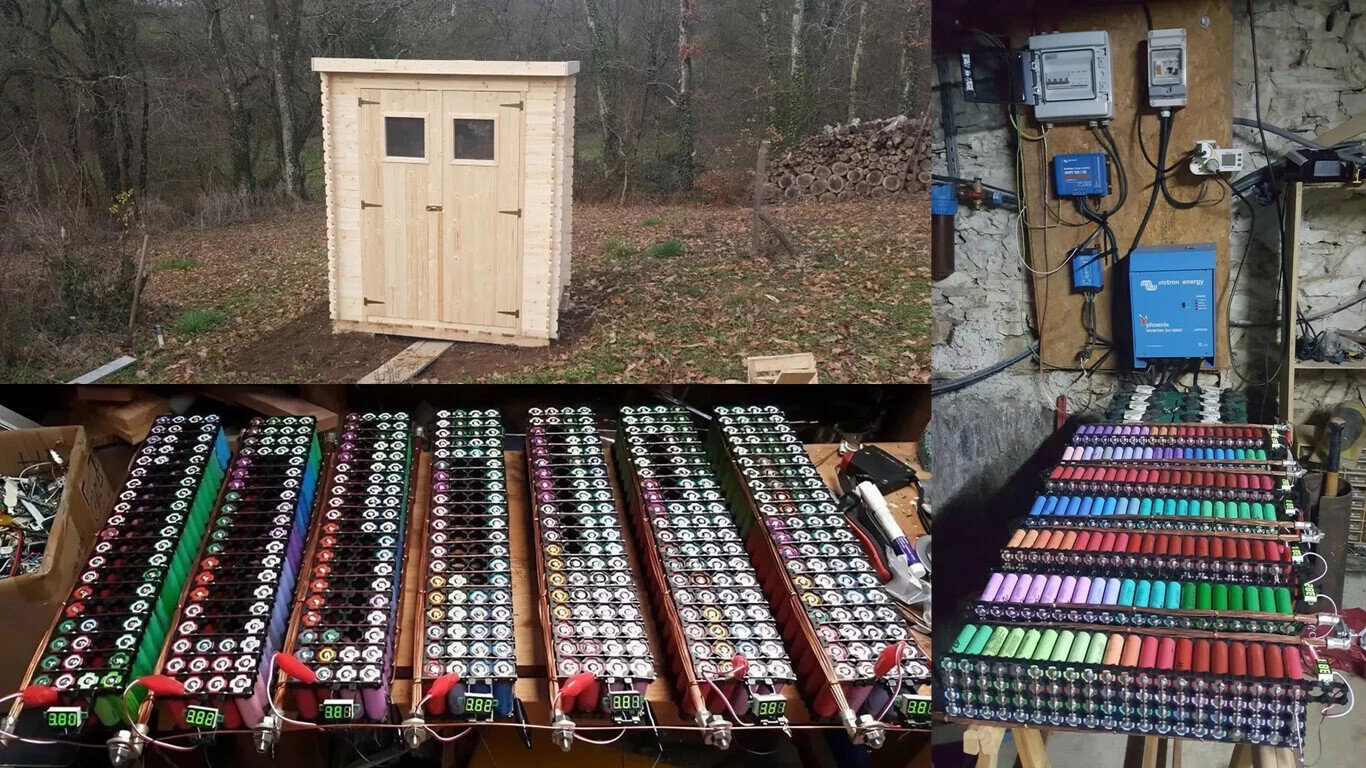

A User Known as Glubux Created a Sustainable Energy System with 1,000 Used Laptop Batteries and Has Kept His House Running Since 2016. Here’s How He Did It.
In a world where the search for energy autonomy grows each day, a resident went beyond installing solar panels and surprised the internet with a bold solution: he gathered more than 1,000 used laptop batteries to power his home. The project, which started in 2016, is still operational, without serious incidents, and has become an example of sustainable technological reuse. This story went viral after the user known as Glubux shared his system on the TechSpot site forum, explaining how he used laptop batteries to power his house safely and efficiently, combining technical knowledge, creativity, and persistence over nearly a decade.
How Did the 1,000 Laptop Batteries Project Start?
According to Glubux, it all started around 2016 when he noticed that many used laptop batteries still had functional cells. Instead of discarding them, he began collecting, disassembling, and testing each unit individually. The goal was to gradually assemble a backup power system for his home.
Over time, what started as a hobby transformed into a complete alternative residential energy project, based on the reuse of electronic components that would otherwise go to waste.
-
A bright yellow mushroom imported from Asia escaped from a cultivation farm in the United States in 2010 and is now aggressively spreading across 25 states, destroying entire communities of native fungi in American forests.

-
Buried under China, a colossal machine weighing 20,000 tons began operating as the largest neutrino detector on the planet and, in just 59 days, surpassed results that science took half a century to achieve.

-
Iran enters the center of a climate alert after the war emitted 5.6 million tons of CO2 in two weeks, surpassing the annual pollution of entire countries.

-
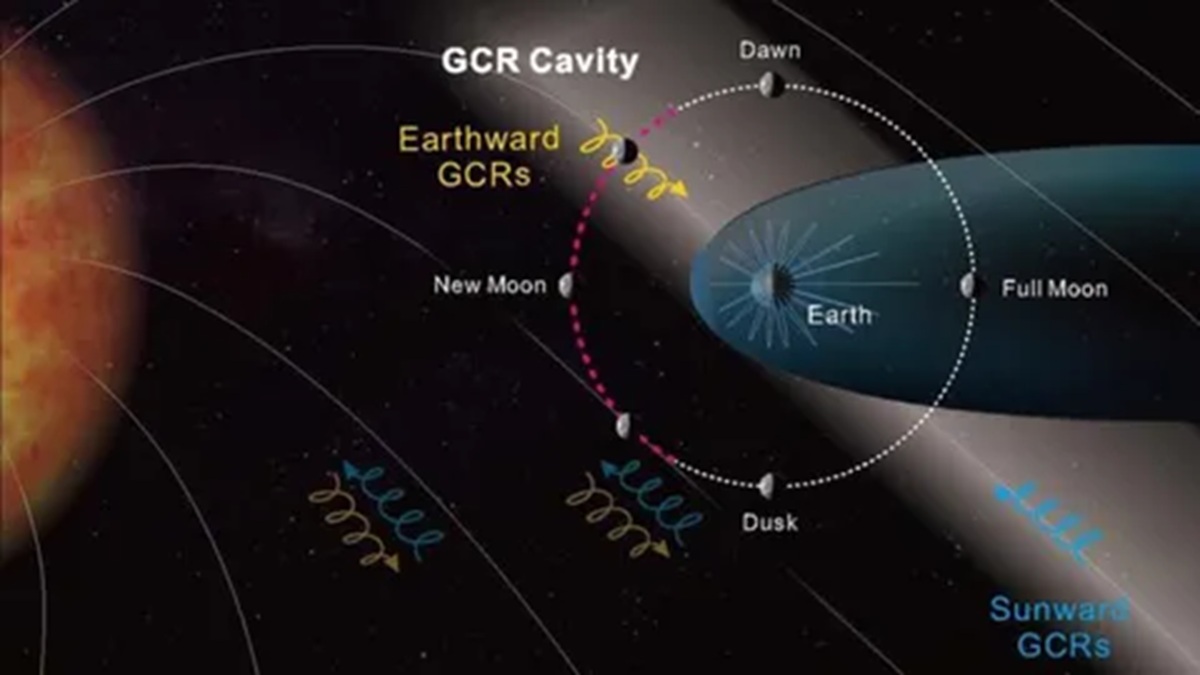
Lunar exploration may change after a Chinese probe finds a “cavity” of radiation that reduces the impact on astronauts by up to 20% at certain times on the Moon.

Assembly and Structure of the System
Storage
Glubux’s system was installed in a shed 50 meters from his house for safety reasons. The 1,000 laptop batteries were grouped in custom supports and organized into packs, according to their voltage and capacity.
He used specific tools to measure the capacity of each cell (in mAh) and discarded those that were compromised or inoperative. Only lithium cells with at least 70% functional capacity were reused.
Integration with Solar Panels
Even before starting the battery project, Glubux already had 24 solar panels of 440W each, connected to the electrical system of his house. The difference was connecting this energy generation to the new bank of recycled batteries, creating a hybrid generation and storage system.
Controllers and Safety
- Glubux implemented charge controllers, inverters, and protection mechanisms against overcharging and deep discharge.
- Tests were conducted over the years to achieve the ideal balance between charge and discharge, with thermal protection circuits.
- Up to the time of posting, there had been no fires, explosions, or swollen batteries, common risks in poorly designed lithium battery projects.
The Challenge of Energy Rebalancing
During the assembly of the system, several rebalancing tests were necessary. Each battery pack needed adjustments to maintain system stability, as each cell has different wear levels. This required:
- Constant measurements of individual voltage;
- Replacement of units with very high or low variation;
- Addition of electronic balancers.
This intense technical work is what allowed the system to remain operating safely and effectively since 2016, demonstrating that, with knowledge and dedication, it is possible to create alternative energy solutions with low cost and high efficiency.
Why Laptop Batteries?
Laptop batteries, especially those made of lithium-ion, contain cells known as 18650, which are also widely used in electric cars and other high-power devices. They offer:
- High energy density;
- Reasonable lifespan even after years of use;
- No cost when collected from discarded devices;
- Ease of assembly in custom systems.
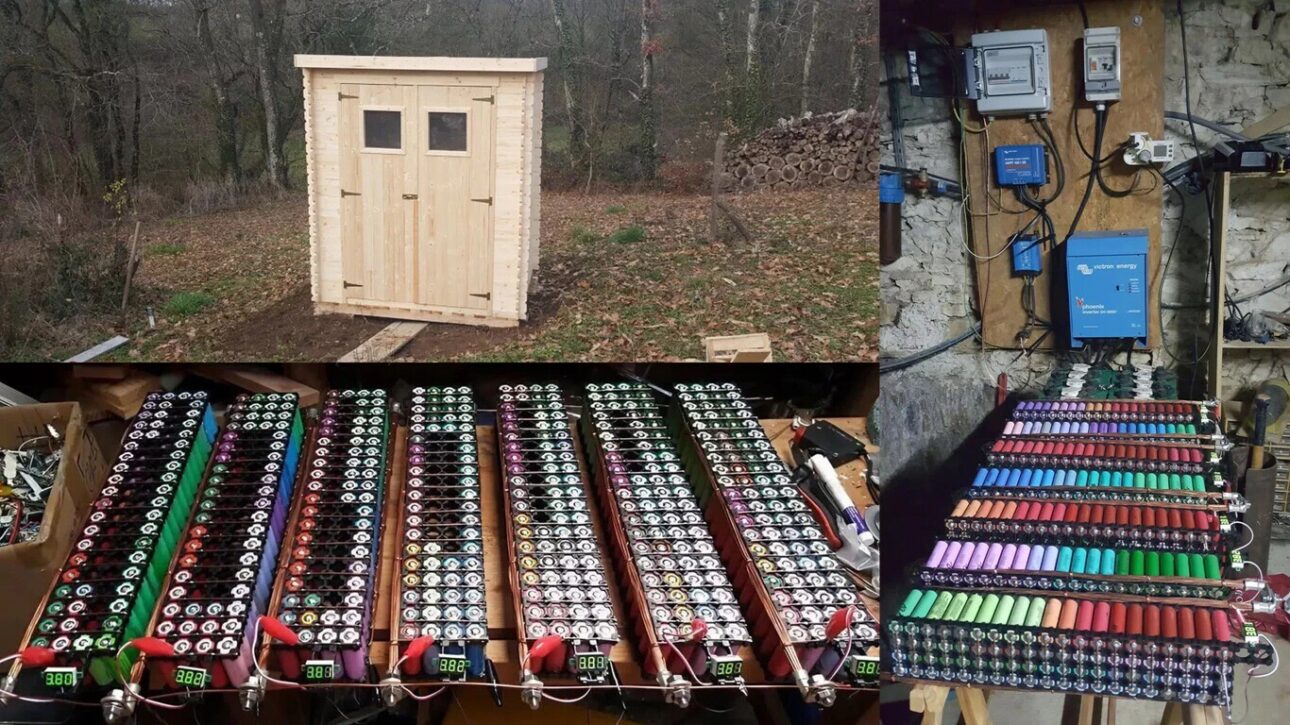
These factors make laptop batteries an attractive option for alternative residential energy systems, especially in countries or regions with high costs for new batteries.
Economics and Environmental Impact
In addition to keeping his home powered for almost a decade, Glubux:
- Reduced his electricity bill to nearly zero;
- Prevented over a thousand batteries from being discarded into the environment;
- Demonstrated that circular economy is possible even on a small scale.
With the rise of discussions around electronic waste and sustainability, the project serves as a practical case of technological reuse with direct environmental impact.
Is It Worth Trying to Do the Same?
Despite Glubux’s success, replicating such a project requires solid technical knowledge. One needs to understand:
- Basic and advanced electronics;
- Soldering lithium cells;
- Charge control and inverters;
- Safety against overcharging and overheating.
Experts warn that lithium batteries can be dangerous if handled incorrectly. Therefore, this type of system is not recommended for beginners.
However, the idea of using laptop batteries to power homes is already attracting communities of “makers,” electronic engineers, and alternative energy enthusiasts around the world.
Home Energy Using Laptop Batteries: A Future Trend?
Glubux’s project anticipates what may become a trend in the coming years: the reuse of electronic components as an energy alternative in residences.
With the advancement of electric vehicles, photovoltaic systems, and the need for local renewable energy storage, used batteries may have a second life as part of hybrid systems, especially in areas where access to the electrical grid is poor.
Companies like Tesla, LG, and BYD are already betting on stationary lithium batteries — but while these solutions are expensive, DIY projects like Glubux’s show that there is room for alternative, low-cost solutions with high potential for positive environmental impact.
What started as a nearly solitary experiment has turned into an example of innovation and sustainability. With over 1,000 laptop batteries, Glubux created a system that proves it is possible to think outside the box — or rather, outside the outlet.
His project not only provides energy for the home using laptop batteries, but also inspires debates about electronic waste, energy efficiency, and creativity in problem-solving.







A galera falando que é mentira. Eu mesmo tenho o meu desde 2020 com 1200 baterias de notebook. Isso é comum galera. Diversas pessoas no Brasil tem um sistema parecido.
Até mesmo células com 30/40% de vida podem ser usadas EM PARALELO pra esse tipo de uso. Pois a carga dividida entre as células é reduzida. Circuitos BMS’s, controladores de descarga, controlador de carga, tudo isso faz possível pra um projeto de mais de 4/5 anos. Opções como controle de temperatura do ambiente e monitoramento de temperatura dos Packs também ajudariam. As células 18650 tem limite máximo de 4.20v e mínimo de 3.20v. Células muito degradadas tem essa margem de voltagem com quedas de tensão muito altas… Caindo do máximo para o mínimo em pouco tempo. Sendo assim, em PARALELO REDUZ O STRESS. Outro fator é configurar o controlador de carga/carregador para não carregar as células em sua voltagem máxima, mas sempre por volta 75/90% de capacidade. Ou seja, utilizar os painéis solares para carregar as células até 4.10v. E por fim, um limite de descarga. Por volta de 20/30% de sua capacidade. Ou seja, por volta de 3.30/3,40v. Ou seja até uma célula meia vida poderia fornecer cerca de 0,50/0,70v. Se multiplicar mil células por uma média de 0,50v seriam 500V. Se dividir essa quantidade por 4 para chegar na tensão de 110v de forma hipotética, seria usar 30 células EM SÉRIE para formar 120/125v… E o restante em PARALELO para fornecer a capacidade e manter a casa por um dia. Então sim… É perigoso e o **** de cada célula, sua margem de resistência, margem de descarga, temperatura em uso normal em uso em descarga é crucial. Mas é possível.
A única coisa mentirosa na matéria é a afirmação que desde 2016 ele tem esse sistema… sendo que na verdade ele começou naquele ano e demorou muito até chegar na auto sustentabilidade…🤡🤡🤡🤡