





 Português
  Inglês
  Espanhol
 5 min de leitura
  0 comentários


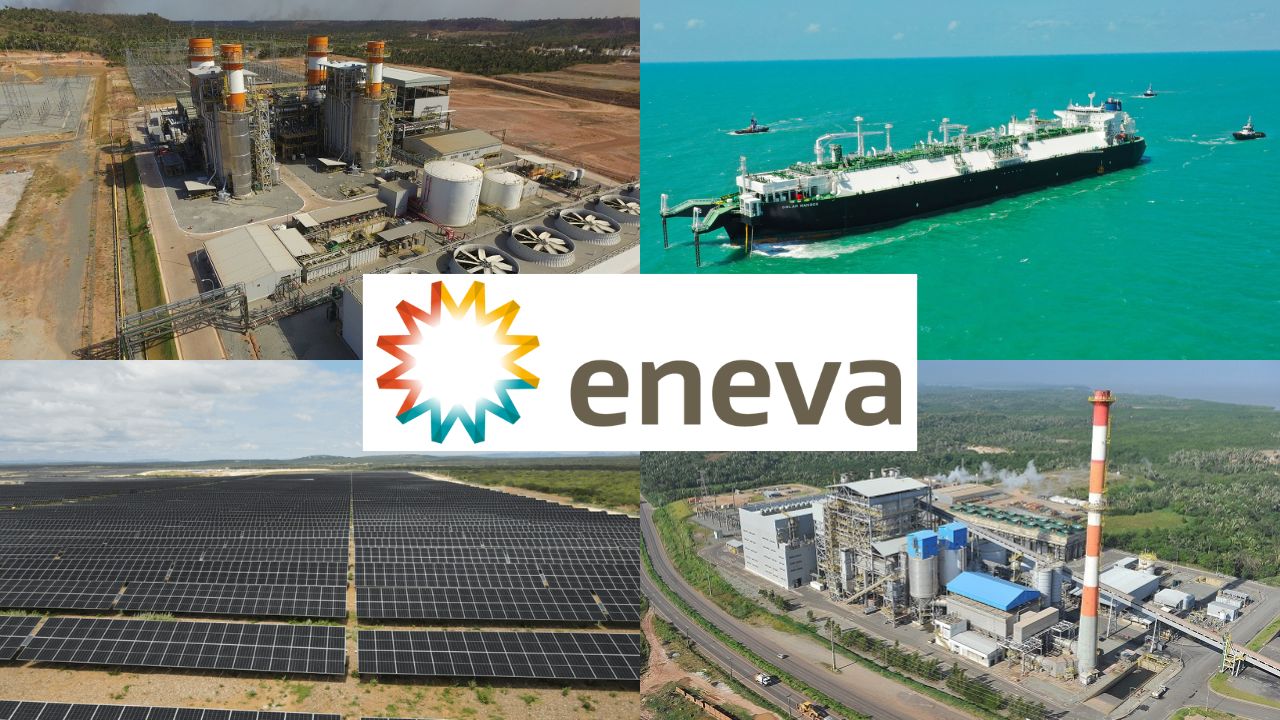
Eneva Is One of the Leaders in Natural Gas Production in Brazil and Invests in Renewable Sources Such as the Futura Solar Complex. Learn About the Company’s Main Projects.
Eneva, the largest private natural gas operator in Brazil, continues to expand its operations in the national energy sector, with projects distributed across various regions of the country. Operating from exploration to energy generation, the Brazilian company currently has an installed capacity of over 7.2 GW and develops initiatives that combine innovation, sustainability, and energy security.
Eneva’s Business in Brazil
Its main projects, located in states such as Maranhão, Amazonas, Ceará, Sergipe, Roraima, Bahia, and Espírito Santo, have positively impacted both the energy matrix and regional development.
The company’s operations are aligned with the search for safe, competitive, and cleaner sources — one of the biggest challenges in the national electrical sector.
-
Offshore industrial demand in Macaé skyrockets with the recovery of oil and gas and could grow by up to 396% by 2026 in the Campos Basin.
-
Offshore industrial demand in Macaé surges with the recovery of oil and gas and could grow by up to 396% by 2026 in the Campos Basin.
-
Brazilian giant expands borders in the Southeast: Petrobras confirms new oil discovery in ultra-deep waters in the pre-salt of the Campos Basin.

-
Alert in the global energy market: Severe tropical cyclone hits the coast and disrupts gas production at major plants in Australia, threatening global supply.


With over 63,000 km² in concession areas, Eneva operates 15 natural gas fields in the Parnaíba (MA) and Amazonas (AM) basins, in addition to standing out in the Free Energy Market.
Present in the Novo Mercado of B3 since 2007, the company also contributes about 21% of the country’s gas-fired thermal generation.
Parnaíba Complex
Located in Santo Antônio dos Lopes (MA), the Parnaíba Complex is a reference in the integrated “Reservoir-to-wire” model, where natural gas is extracted and immediately used in energy generation.
Composed of five power plants (Parnaíba I, II, III, IV, and V), the thermal park has an installed capacity of 1.9 GW, of which 1.8 GW are already in operation.
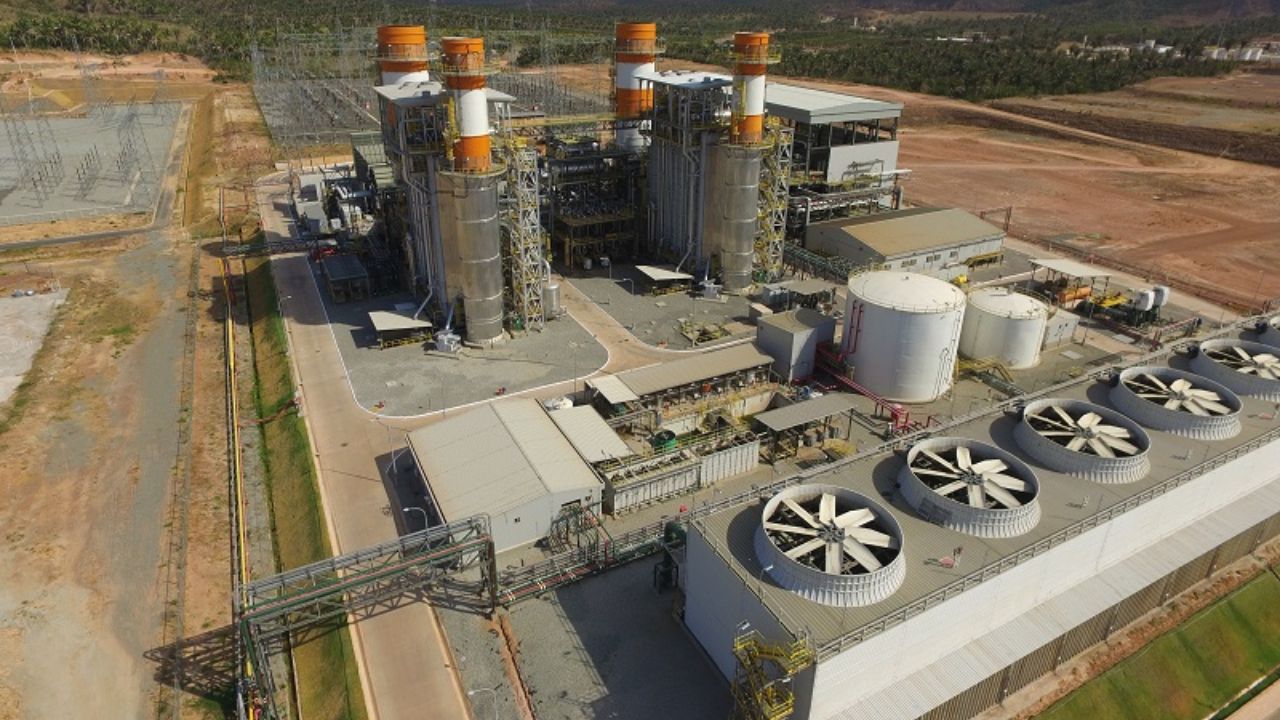
The model adopted in Parnaíba allows the reuse of steam generated by Parnaíba I, eliminating the need for additional gas.
This ensures greater energy efficiency and lower emissions of polluting gases. All the energy generated in the complex is integrated into the National Interconnected System (SIN), contributing 9% of the gas-fired thermal generation in Brazil.
Sergipe Hub
Another highlight of Eneva is the Sergipe Hub, located in Barra dos Coqueiros (SE), in the metropolitan region of Aracaju.
The complex consists of a power plant with an installed capacity of 1.6 GW and a Floating Storage and Regasification Unit (FSRU), named Energos Nanook.

With regasification capacity of up to 21 million cubic meters per day, the Hub is essential to meet about 15% of the energy demand in the Northeast.
Liquefied natural gas (LNG) arrives at the unit via LNG carriers and undergoes a regasification process before being transported by pipeline to the power plant.
This cycle ensures reliable and competitive energy generation, as well as opening opportunities for gas trade in the integrated grid.
Jaguatirica II
In Northern Brazil, Eneva invests in sustainable solutions with the Jaguatirica II project, part of the integrated project with the Azulão field in Amazonas.
The power plant, with a capacity of 141 MW, is responsible for supplying more than half of the state of Roraima, reducing dependence on diesel generation and consequently greenhouse gas emissions.
Natural gas is extracted and processed at the Azulão Gas Treatment Unit (UTG), liquefied, and transported in cryogenic tanks for over 1,100 km to Boa Vista.
After the regasification process, it is used in the energy generation of the Jaguatirica II plant. An example of logistical innovation and energy efficiency.
Futura Solar Complex
Eneva also bets on renewable sources with the Futura Solar Complex, located in Juazeiro, Bahia.
With 837 MWp of installed capacity, it is one of the largest solar parks in the Americas. In total, there are 22 photovoltaic plants with over 1.4 million solar panels, distributed over an area of 1,649 hectares.
The complex has the capacity to supply approximately 1.7 million people, establishing itself as one of the pillars of the diversification of the Brazilian energy matrix with clean sources.
Other Thermal Power Plants of Eneva Spread Across the Country
The diversity of Eneva‘s assets is also reflected in other projects spread across strategic states:
- Termofortaleza (CE): 327 MW of installed capacity, operates in combined cycle, and integrates with the Pecém Industrial and Port Complex.
- Viana (ES): With 212 MW, the Viana and Viana 1 plants operate with internationally employed technologies and are connected to the SIN.
- Gera Maranhão (MA): Responsible for supplying energy to more than 30 distributors, it has 332 MW and contracts in place for 15 years starting in 2026.
- Povoação Energia (ES): With 75 MW of installed capacity, it won the ANEEL auction in 2021 and has an active contract until 2025.
- Linhares Brasil Energia (ES): The UTE Luiz Oscar Rodrigues de Melo (LORM) has 300 MW and serves contracts with 30 distributors.
- Itaqui (MA): Eneva’s first power plant in Maranhão, with 360 MW, uses coal and is strategically located near the Port of Itaqui.
Eneva in the Free Energy and Natural Gas Market
In addition to energy generation, Eneva operates robustly in the Free Energy Market and in the commercialization of natural gas. This allows companies and large consumers to choose their energy supplier more strategically and economically.
The company’s business platform integrates production, generation, and commercialization, strengthening Eneva’s role as a complete player in the energy sector.
With its capacity for adaptation, innovation, and investment in infrastructure, Eneva consolidates itself as one of the main agents of energy transition in Brazil.
Whether through natural gas — a strategic fuel to ensure energy security — or through renewable sources like solar, the company demonstrates a balance between efficiency, sustainability, and economic growth.
The expansion of businesses and the commitment to regional development place Eneva in a prominent position among the companies leading the energy future in Brazil.









Seja o primeiro a reagir!