





 Portuguese
  English
  Spanish
  4 min of reading
  0 comments


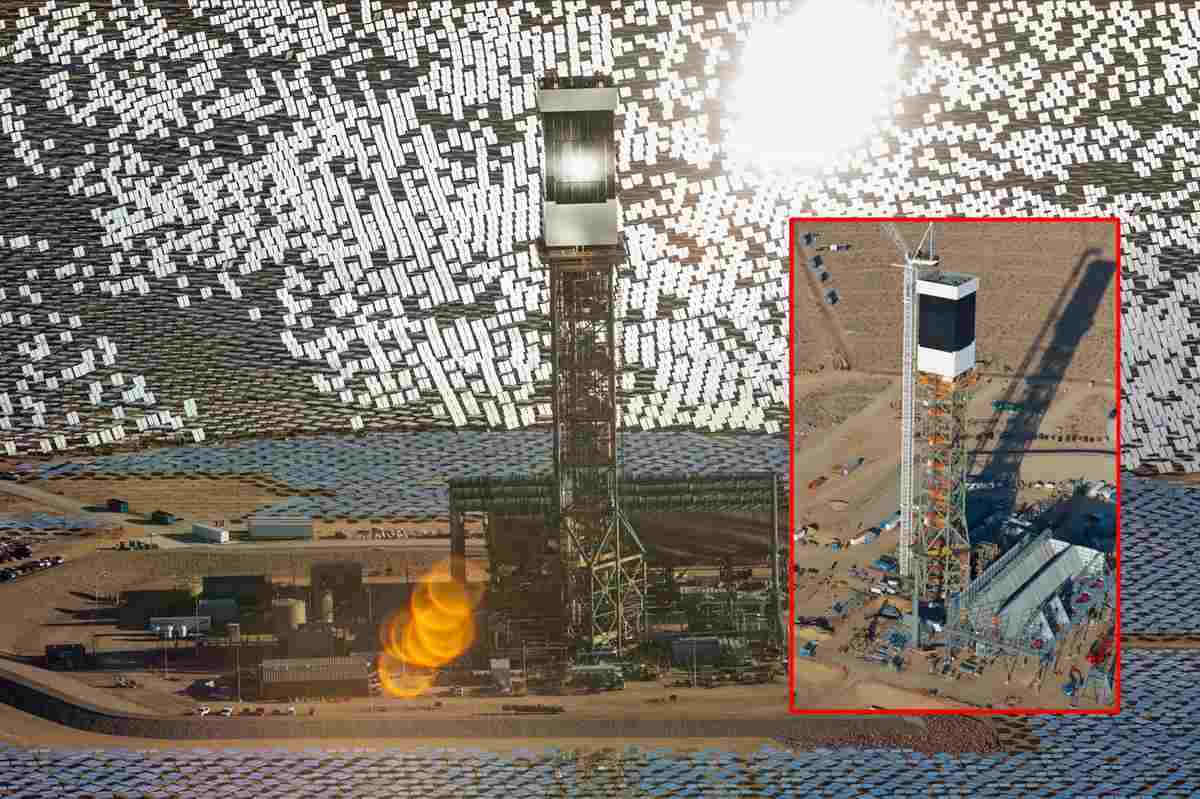
Inaugurated in 2014 as the largest solar thermal power plant in the world, Ivanpah promised to be a landmark in clean energy generation in the United States. However, technical problems, high costs, and environmental impact transformed the project into an example of an energy transition that did not go as planned.
The largest solar thermal power plant in the United States, known as Ivanpah, was once considered a symbol of the American energy revolution.
With its inauguration in 2014, in the Mojave Desert, the structure impressed with its size, innovation, and promise of clean energy.
Today, just over a decade later, the project faces the early shutdown of its operations.
-
Renewable energy advances over protected areas in Brazil, and a survey by the Energy Transition Observatory reveals silent impacts that challenge environmental conservation and pressure sensitive traditional territories.

-
Rio Grande do Sul accelerates energy transition: State invests in renewable technologies and consolidates decarbonization strategies and pathways to attract billions in new industrial investments.

-
With 160,000 m² of collectors, an area larger than 20 football fields, Silkeborg, in Denmark, hosts a solar thermal plant that heats 19,500 homes and could become the largest solar heating plant in the world.

-
A study reveals the expansion of renewable energy procurement in Brazil and shows how companies are taking advantage of opportunities to reduce expenses, ensure energy efficiency, and strengthen strategic environmental commitments.


How Ivanpah’s Technology Worked
The Ivanpah plant operated with concentrating solar thermal technology.
More than 173,500 heliostats – computer-controlled movable mirrors – followed the sun’s trajectory during the day.
These mirrors reflected light to three towers 140 meters high.
At the top of each tower, the concentrated radiation heated water, producing steam.
This steam drove conventional turbines, generating electricity without direct burning of fossil fuels.
The promise was of a system capable of operating even after sunset.
The project planned to use molten salt to store heat and extend generation.
However, in practice, this function was limited by the original design and the need for natural gas support to achieve the ideal temperatures.
A Billion-Dollar Investment with Federal Support
Ivanpah was built with a $2.18 billion investment.
Of this total, about $1.6 billion came from a loan from the U.S. Department of Energy (DOE).
The project was a partnership between NRG Energy, BrightSource Energy, and Google, which bet on the plant as an example of green innovation.
With a total area of 13 km², the plant had a gross installed capacity of 392 megawatts. This would allow it to supply up to 140,000 homes with renewable energy.
The goal was to demonstrate that solar thermal technology could compete with other sources on the scale of large plants.
Persistent Technical and Operational Problems
From the start of operations, Ivanpah faced technical difficulties.
Heliostat alignment issues, unexpected thermal losses, and failures in the central receiver impaired efficiency.
Additionally, to reach adequate temperatures, the plant had to frequently use natural gas, which compromised its zero-emission proposal.
The harsh desert conditions also negatively impacted operations.
The moving parts of the heliostats experienced frequent breakages, and maintenance costs rose far above expectations. As a result, the final cost of the generated energy exceeded the market average.
Contract Cancellations and Declining Economic Viability
The decline in the cost of photovoltaic solar plants made tower thermal energy less competitive.
Pacific Gas & Electric (PG&E), the main buyer of the energy generated at Ivanpah, decided to terminate its contracts.
According to the company, this measure will allow significant savings for consumers.
The contracts with PG&E were valid until 2039.
However, in January 2025, the plant’s owners and the Department of Energy reached an agreement to terminate two of these contracts.
The decision marked the end of Ivanpah’s main operations and effectively sealed the project’s fate.
Environmental Impact Becomes a Target of Criticism
In addition to technical and economic problems, the plant faced criticism for its environmental impacts.
The field of heliostats caused the deaths of thousands of birds each year.
It is estimated that up to 28,000 birds died annually when flying over the concentrated heat areas, overheating and falling.
Environmental organizations classified the project as a “death trap” for local wildlife.
There were also criticisms regarding how the environmental impact study was conducted, particularly concerning endangered species such as the desert tortoise and migratory birds.
Accusations of Environmental and Financial Failure
In light of growing criticism, some experts began to treat Ivanpah as an example of failure.
The use of natural gas to supplement operations, coupled with high costs and environmental impact, compromised its image as a sustainable project.
The promise of a revolutionary model ultimately did not materialize in practice.
The high public investment also came under scrutiny. For many, the billions invested by the U.S. government could have been directed toward more effective technologies with lower environmental impact, such as photovoltaic solar energy.
The Future of the Site: Decommissioning and Transformation
With the cessation of operations, Ivanpah’s operators are already discussing plans for the area’s future.
The main proposal is to reuse part of the existing structure to install photovoltaic plants, which are simpler and cheaper to operate.
There are also plans to include battery storage systems, improving response to demand spikes.
This new approach follows a global trend: more accessible technologies, with simplified operations and lower environmental impact.
The decommissioning of the thermal plant, in this case, does not mean the end of energy generation at the site, but rather a transition to more effective methods.
Ivanpah, once a symbol of a new energy era, is now transforming into an example of transition. The experience will serve as a lesson for future projects that seek to combine innovation, efficiency, and sustainability.









-

Uma pessoa reagiu a isso.