





 Portuguese
  English
  Spanish
 4 min of reading
  32 comments


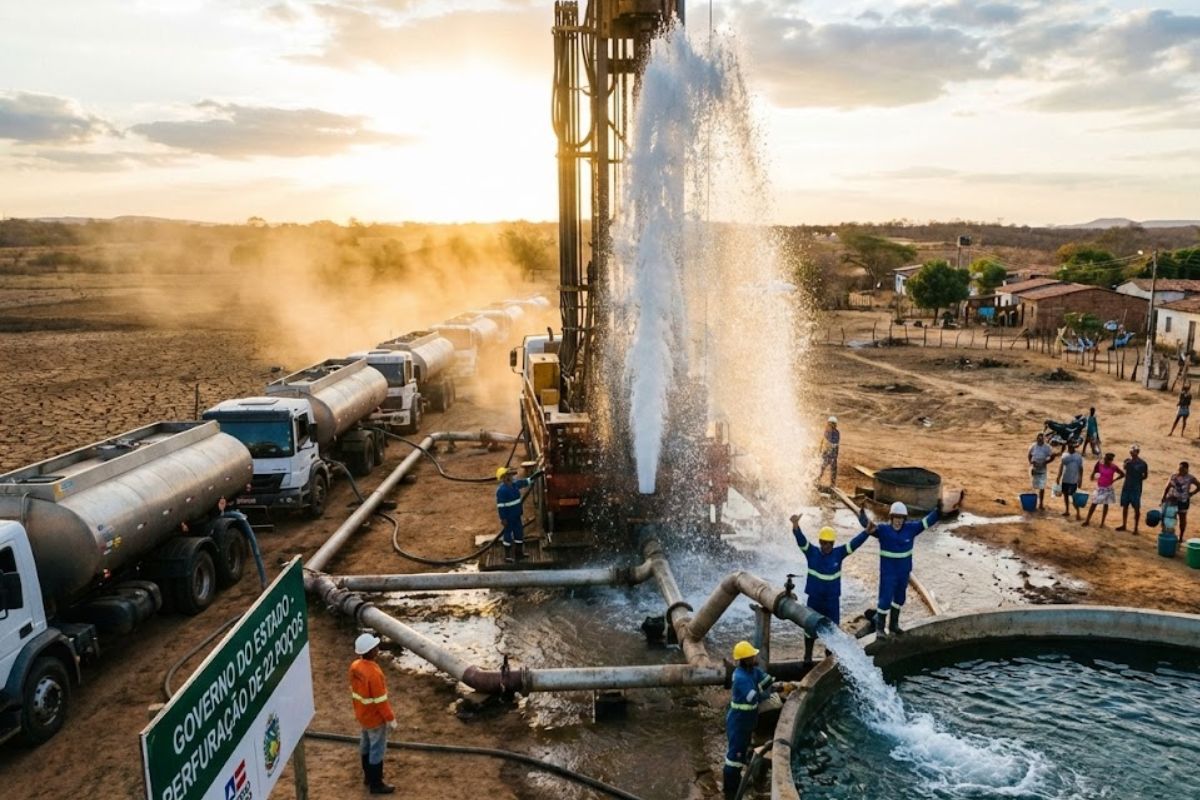


In October 2025, Águas do Piauí Anticipated Investments, Drilled Dozens of Wells, Increased Water Supply by 658 Thousand Liters Per Hour in Urban Systems, and Accelerated the Drought Contingency Plan to Assist Piauí Cities Most Affected by Prolonged and Increasing Drought
On October 23, 2025, Águas do Piauí reported that 22 new wells were already in operation, injecting more than 658 thousand liters of water per hour into the networks supplying municipalities from North to South of the State. This measure is part of the Drought Contingency Plan, launched in September, which brought forward investments originally scheduled for 2026 and 2027 to respond to this year’s most severe and earliest drought.
Since assuming the operation of water supply systems in the 184 cities under its responsibility, the utility claims to have conducted hundreds of actions to mitigate the impacts of the drought, focusing on increasing flow, stabilizing pressure, and ensuring continuous water supply in neighborhoods that had depended for years on early morning hours to fill buckets and water tanks. The new wells are the central axis of this strategy, reinforcing water supply to urban areas and communities in critical situations.
How the New Wells Were Used to Accelerate Drought Combat

According to the executive director of the utility, Danilo Almeida, the company decided to bring forward investments in wells that were only planned for 2026 and 2027 to prevent a collapse in supply during the current B-R-O-Bró.
-
Florianópolis will receive a million-dollar BRT that will begin construction in 2026 with nearly 400 million in funding from the federal government and the Inter-American Development Bank, and the map already shows the routes for the exclusive bus corridors.

-
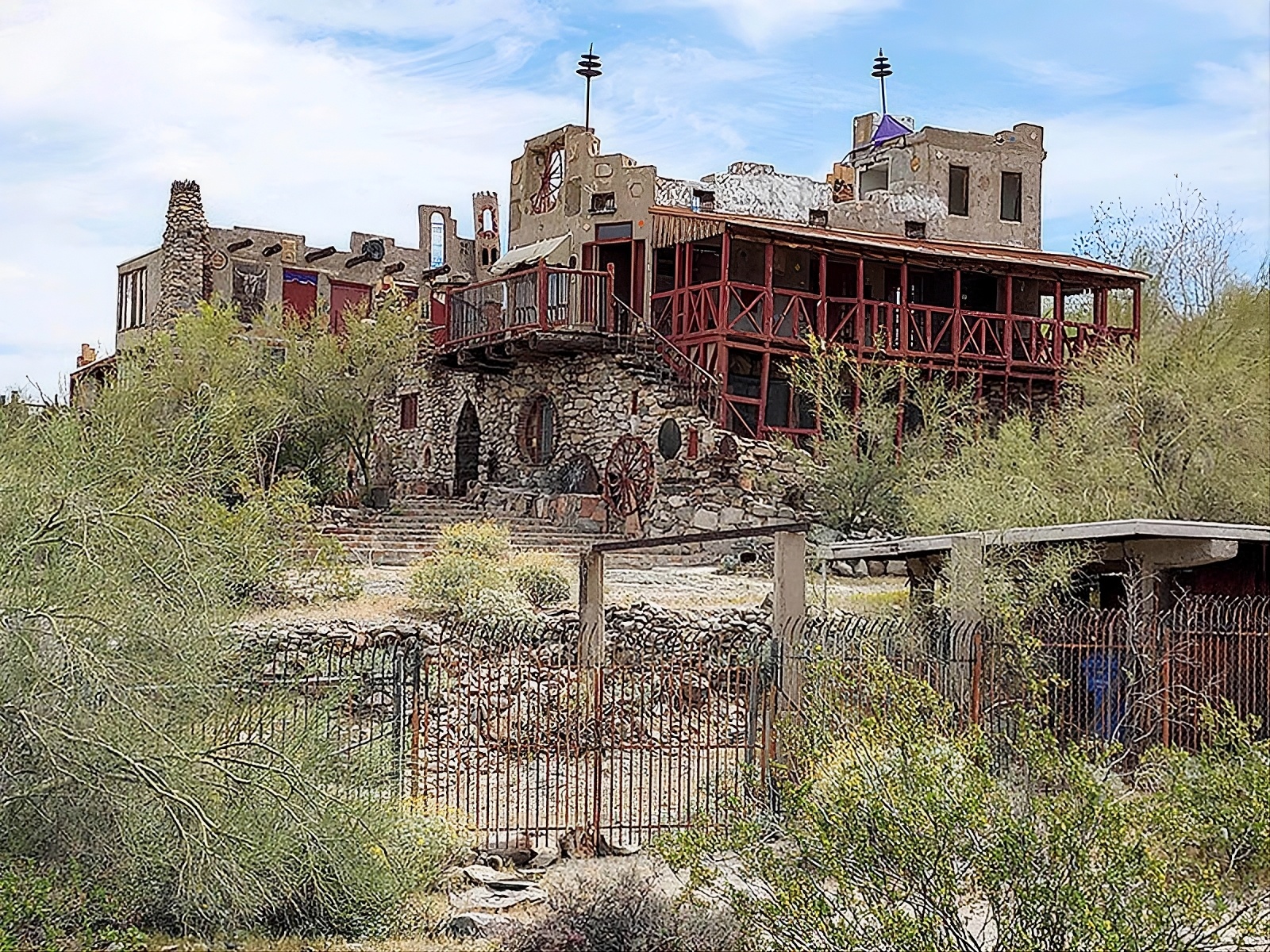
Without a blueprint, without an engineer, and using scrap from the dump, a father spends 15 years building an 18-room castle for his daughter, featuring tram tracks, 13 fireplaces, and over 700 m², which may now be demolished.
-
A megaproject worth R$ 89 billion is advancing in Iraq and promises to change the game in global trade by creating a new corridor between Asia and Europe, reducing traditional routes and repositioning the country as a logistics powerhouse.

-
Goodbye bedside table: floating shelves become a trend in 2026 by freeing up space in the bedroom, improving circulation, bringing visual lightness, and integrating technology without taking up floor space.


This anticipation allowed the concentration of drilling teams, flow tests, pump installations, and immediate interconnection of these wells to existing networks.
In practice, each new well drilled represents more water entering the system per hour, reducing the risk of rationing and prolonged shortages in higher or more distant areas from the reservoirs.
The additional volume of 658 thousand liters per hour does not eliminate the water challenge in Piauí, but increases the safety margin for water to reach the taps of thousands of residents with force and constancy.
Served Cities and Changes in Families’ Daily Lives
The 22 wells already connected to the system reinforce the supply to cities across different regions, such as Fartura do Piauí, Simplício Mendes, Uruçuí, Várzea Branca, Marcos Parente, Riacho Frio, Altos, Demerval Lobão, Barro Duro, Monsenhor Gil, Bom Jesus, Nazaré do Piauí, Pavussu, Picos, Rio Grande do Piauí, Santa Rosa do Piauí, Sebastião Leal, and Dom Expedito Lopes.
In each of these municipalities, the operation of the wells changes the routine of those who had to live with weak water supply and restricted distribution hours.
Residents of neighborhoods like Cidade Nova 3, in Demerval Lobão, report that it was necessary to wake up early to take advantage of the few moments of water in the network and fill two or three buckets for the next day’s consumption.
In Picos, families from locations like Morro da Macambira say they spent nearly ten years washing clothes at 2 or 3 a.m. to catch the minimum pressure available.
With the new connected wells, reports indicate a constant water supply with sufficient pressure throughout the day.
65 Wells Planned, 42 Drilled, and the Challenge of Dry Wells
The plan for the second half of the year envisions 65 wells to be drilled, of which 42 have already been completed.
Among these, 22 are operational and 10 are still in the structuring phase, with finishing works, electrical connections, water quality tests, and integration to existing networks.
The other 10 wells have been classified as dry, four in the Cerrado region and six in the Semi-Arid, with insufficient flow for exploitation.
The existence of dry wells highlights the water challenge of the Piauí semi-arid, where water is scarce both on the surface and underground.
Even so, the utility states that it continues redirecting teams and resources to identify new drilling areas, reinforce reservoirs, and adjust operational maneuvers, always focusing on turning as many drilled wells as possible into effective sources of supply.
Impact of Wells on Water Security during B-R-O-Bró
In an intense drought scenario, the reinforcement of 658 thousand liters per hour means more stability for systems already pressured by demand and heat, in addition to reducing reliance on water trucks and emergency solutions.
With the 22 wells operational, Águas do Piauí’s expectation is to get through the B-R-O-Bró with fewer instances of dry taps and reduced need for prolonged rationing.
At the same time, the company admits that the wells do not solve the structural problem of drought on their own, especially in the Semi-Arid, where aquifer recharge depends on increasingly irregular rains.
Therefore, the strategy combines drilling, investment anticipation, monitoring of dry wells, and planning of new alternatives so that the interior of the State does not return to the level of water suffering experienced by many families over the past decade.
Given a plan that brings forward investments and relies on wells to bolster supply at the height of the drought, do you think states should prioritize more underground capture works or first invest in reservoirs and networks to better utilize each liter of available water?









Esse resto de mandato o Lul@ vai dar até o 👌para enganar o povo. Abre poço, ganha, fecha poço! Só **** cai nessa.
SOU BOLSONARO
Ano eleitoral. Político não dá ponto sem nó.
Abo eleitoral. Não dá ponto sem nó.