





 Portuguese
  English
  Spanish
 4 min of reading
  37 comments


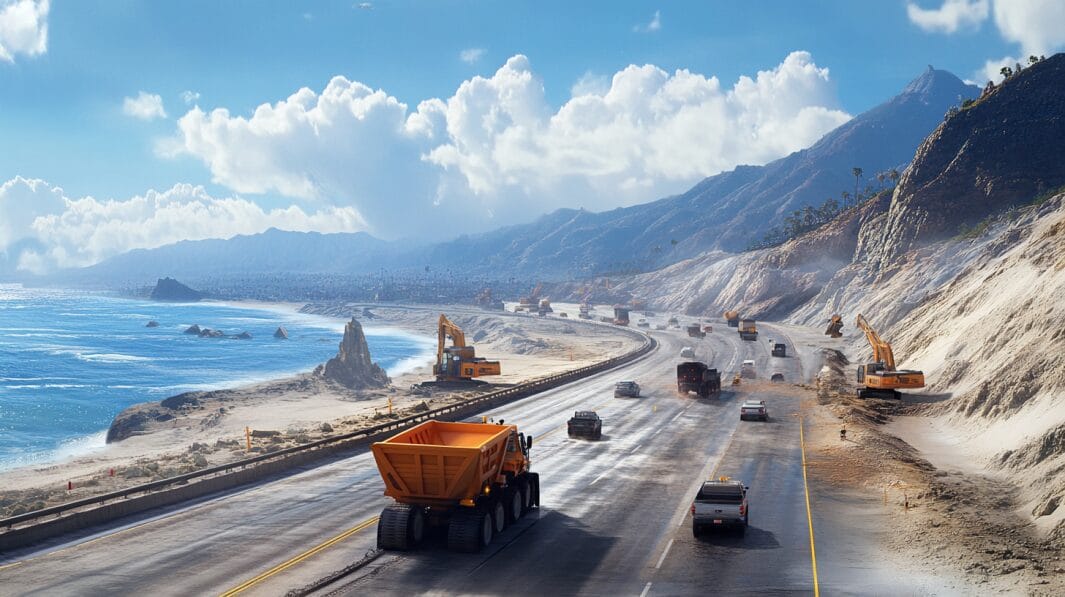

Fiesc Defends The Construction Of A Highway Parallel To BR-101 To Ease Traffic In SC, But The Cost Of R$ 9.2 Billion And The Technical Challenges Raise Questions About Its Viability.
The chaotic traffic on BR-101 may finally find a revolutionary solution, but will economic and political interests allow this billion-dollar project to move forward?
An ambitious project promises to create a highway parallel to BR-101, one of Brazil’s main highways.
The Northern Coastal Corridor, as it is called, could transform traffic in one of the country’s busiest regions.
-
Brazilian city gains industrial hub for 85 companies that is equivalent to 55 football fields.

-
Peugeot and Citroën factory in Argentina cuts production by half and opens a layoff program for more than 2,000 employees after Brazil drastically reduced purchases of Argentine vehicles.

-
A Brazilian city gains a factory worth R$ 300 million with the capacity to process 200 thousand tons of wheat per year, a mill of 660 tons/day, silos for 42 thousand tons, and an industrial area of 276 thousand m².

-
Havan will leave the shopping mall in Blumenau to inaugurate something that the chain has never done before: a megastore in half-timbered style in the Historic Center of the city, which is expected to be completed in May and change the landscape of local retail.

However, the details of this monumental work, which is budgeted at an impressive R$ 9.2 billion, still raise doubts about its feasibility.
According to the Federation of Industries of Santa Catarina (Fiesc), the proposal to construct the new highway between Joinville and the Greater Florianópolis area is vital for the future of the region’s infrastructure.
The entity strongly advocates for the project, highlighting the urgent need to improve mobility along the coast.
However, Fiesc itself is keen to warn about the challenges that the initiative faces.
A Necessary Solution Or Another Exorbitant Expense?
According to Fiesc, the original layout of the Northern Coastal Corridor must be strictly followed.
The initial proposal envisions a highway stretching 144 km, but the current project, contracted by the government of Santa Catarina at the end of 2022, only covers 90.5 km between Joinville and the junction with SC-486, also known as Antônio Heil Highway, in Itajaí.
The executive project for this construction, however, has not even begun, raising concerns about its completion.
Additionally, the work needs to include the remaining stretch between Itajaí and Biguaçu to ensure its effectiveness in easing traffic, as suggested by a consultancy hired by Fiesc.
Without this extension, the highway may not have the desired impact, which would raise further questions about the genuine necessity of the project.
Environmental Impacts And Geological Challenges
Another point raised by Fiesc is the environmental issue and the geological challenges of the region.
The construction of the tunnel between Camboriú and Tijucas is one of the biggest obstacles to realizing the Northern Coastal Corridor.
The area’s complex soils require advanced and expensive engineering solutions, which could further increase the project’s costs.
To complicate matters, the economic impact of the new highway on BR-101 cannot be overlooked.
Fiesc warns that with the construction of the parallel highway, part of the traffic on BR-101 will be diverted to the new road.
This could affect the economic-financial balance of the BR-101 concession, as the volume of vehicles currently using the highway will decrease significantly.
Billion-Dollar Cost And Undefined Timelines
With an estimated cost of R$ 9.2 billion, which includes construction, expropriations, projects, and other expenses, the Northern Coastal Corridor is one of the most expensive projects ever proposed in the state of Santa Catarina.
However, it is still unclear where all this funding will come from and whether the state government will be able to meet the expected schedule.
The financial uncertainty, combined with technical obstacles, leads many experts to doubt that the project will be completed within the estimated timelines.
Despite this, Fiesc continues to pressure the government to move the project forward.
The entity emphasizes that it is essential to ensure a wider land reserve to allow for future expansions.
The current proposal envisions the construction of a dual carriageway with three lanes in each direction, which would increase traffic capacity and make travel safer and faster.
Economic Repercussions And Potential Benefits
Even with the uncertainties, there is a consensus that if completed, the project will bring enormous benefits to the region’s economy.
The new highway promises to improve the flow of goods, facilitating transportation between the main economic hubs in Santa Catarina and significantly reducing travel time.
Fiesc argues that without this infrastructure improvement, the region risks economic stagnation, as population and industrial growth will further increase pressure on BR-101.
The constant flow of heavy vehicles, combined with daily car traffic, already makes the highway one of the most congested in Brazil, and without viable alternatives, the problems are only expected to worsen.
Solution Or Impasse?
With a billion-dollar cost, technical challenges, and uncertainties about its feasibility, the Northern Coastal Corridor could be the solution Santa Catarina so desperately needs – or a financial impasse that will leave the population at the mercy of traffic jams for years on end.
As discussions continue, what is clear is that this massive project could change the future of traffic in the state, but only if all barriers are overcome.
Is the new highway really the solution for traffic in Santa Catarina, or are we about to face another great waste of public resources? Share your opinion in the comments!








Como é q pessoas replicam uma besteira como esta. O Contorno, q soma uns 30 kms, levou apenas 12 anos, sem obras dificeis e custou uns 5 BILHOES. Aí, vem os ‘magicos’ da tal FIESC, proporem a tal BR paralela, orcando a obra em 9 BILHOES, com extensao de uns 200 kms e varios acidentes geologicos, como os mesmos admitem. Agora, podem anotar: VARIOS experts serao contratados, pra pensar um projeto, estudar viabilidade, realizar (botar no papel) o tal projeto a um CUSTO MILIONARIO. Sim, estes probos homens irao ‘conven$$er’ o gestor, estadual, d plantao a liberar MILHOES e mais milhoes para os estudos. Penso inclusive, q aquele simbolo de SC, o Zé Trovao, ira subir no pulpito do Congresso, pra **** boca fora, sandices sobre a importancia
Uma situação que deve ser levada em conta no caso dos congestionamento além do excesso de veículos, são os maus motoristas. Não leem placas, não usam as pistas de aceleração e frenagem corretamente, dirigem a 60km/h na pista da esquerda e não deixam ninguém passar, etc. Por exemplo, no posto da PRF em Itapema, a velocidade está liberada para até 100km/h, justamente para evitar congestionamentos. Ocorre que tem motoristas reduzido e passando a 40km/h. Em horas de pico já é o bastante para gerar filas.
O maior problema é que a br 101 deveria ser só para o trânsito corrente e não utilizado como ligação entre um ponto e outro da cidade. Deveria ser totalmente fechada para o trânsito das cidades e acesso só em áreas específicas. Acabaria com os congestionamentos na rodovia.