





 English
  Francês
  Alemão
  Italiano
  Japonês
  Norueguês
  Portuguese
  Spanish
  3 min of reading


With Cheap Labor and Few Taxes, Chinese Shipyards May Break the Brazilian Shipbuilding Industry in 2020
Companies in the shipbuilding sector claim to be able to meet Petrobras’s future demand. According to Sérgio Bacci, vice president of Sinaval, which represents shipyards, the national industry is capable of competing on price and deadlines with competitors, provided that equal conditions are given, especially in the tax area. Nevertheless, he acknowledges that it is not possible to match the Chinese.
- No shipyard, Brazilian, Italian, or Norwegian, can match China’s prices. The way labor and taxes are paid is different; they do not have our costs. If we consider how much we pay in taxes and labor here, we are competitive — said Bacci, adding that at least ten shipyards have the capacity to build platform ships.
To avoid closure, shipyards have been seeking to diversify their activities. They are preparing to participate in the Navy’s bidding for the construction of four corvettes (warships). The ships will be built in the country, and foreign shipyards are talking to the local industry in search of partnerships. This week, Goa Shipyard from India was in Brazil.
-
Government unlocks R$ 554 million for a highway that has been requested for decades and accelerates the duplication of BR.
-
Without bricks, without cement, and without endless construction: the cardboard house that is assembled in modules and can be moved.

-
Billions of barrels on the equatorial margin could lead Amapá to double its oil production in Brazil — the state aims to enter the route of companies in the Campos Basin, attract investments, and boost jobs and businesses in the oil and gas sector.
-
Without bricks, without cement, and without endless construction: the cardboard house that is assembled in modules and can be moved.

- We are working to ensure that the industry does not die. If nothing is done, by 2020 we will no longer have a shipbuilding industry — said Bacci.
 SEARCHING FOR PARTNERS AND CUSTOMERS
The Enseada Naval Industry shipyard, in Paraguaçu, interior of Bahia — which exited judicial recovery in November last year — reflects the state of the sector. Built in the early 2010s to manufacture six drilling rigs ordered by Sete Brasil (currently in judicial recovery), it has 80% of the work completed. The shipyard has debts of R$ 2.6 billion and is seeking orders, including outside the oil and gas sector, to revive itself.
The president of Enseada, Fernando Barbosa, claims that the only adaptation for the construction of platforms would be the building of a dry dock for hull manufacturing, which would not be a problem. Currently, 80 employees work on maintenance of facilities. Enseada has Odebrecht and OAS as partners and is looking for new partners to continue its operations. The Japanese company Kawasaki, a technological partner, will exit the venture by the end of the first semester.
- An environment is being created that will attract new operators looking for Brazil to provide services. I am optimistic — said Barbosa.
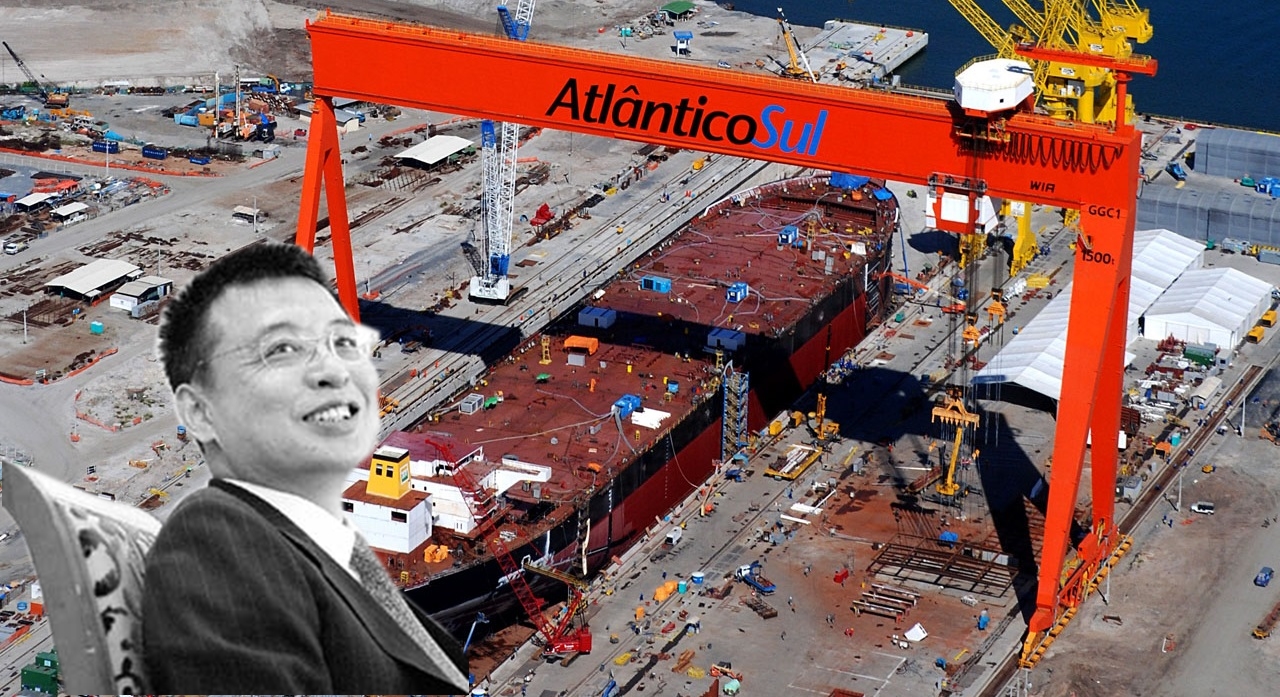
The Atlântico Sul Shipyard (EAS), in Pernambuco, was also set to build drilling rigs for Sete Brasil. It is negotiating with the government for a temporary suspension of work contracts to avoid layoffs among the 3,700 workers. According to Harro Burmann, president of EAS, the shipyard will complete five oil tankers for Transpetro by May 2019, which are on schedule. He is not optimistic about new orders from Petrobras:
- There is no competition with China, given the costs they have in labor and steel. Without equal conditions, I do not believe in orders.







Seja o primeiro a reagir!