





 Portuguese
  English
  Spanish
  4 min of reading
  0 comments


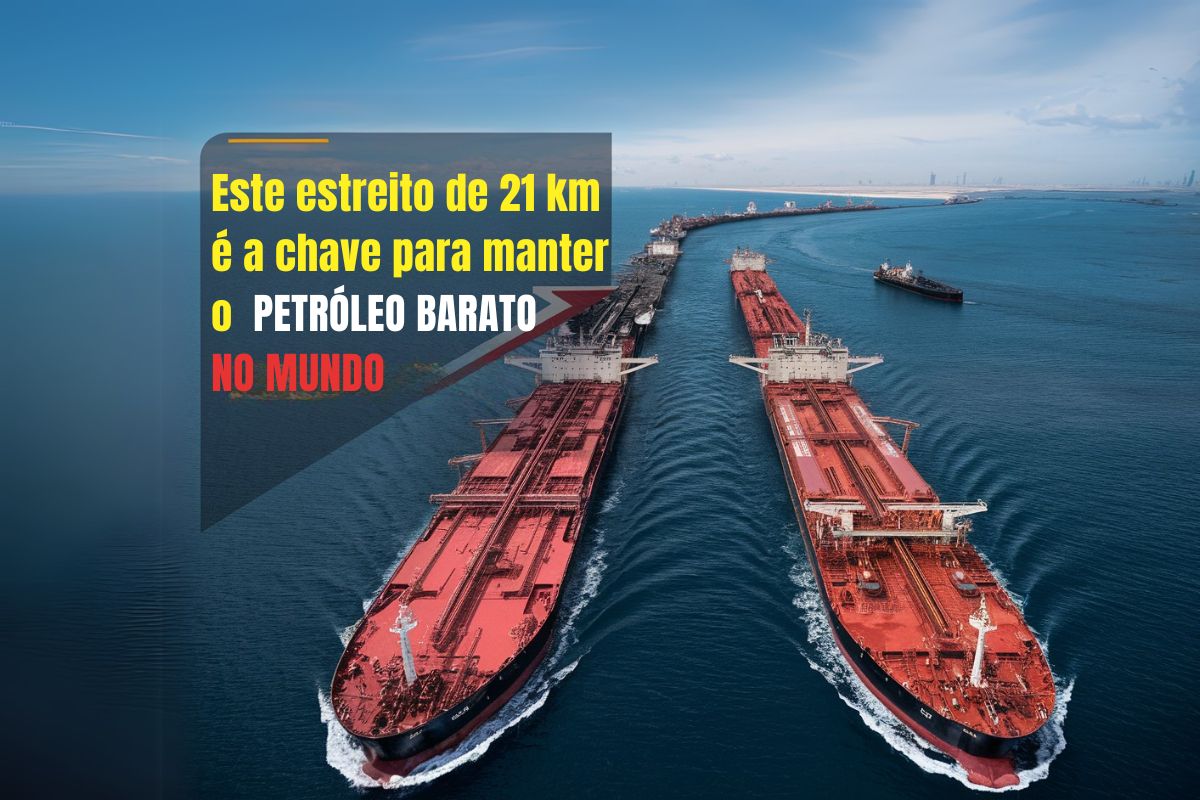
A New Crisis in the Strait of Hormuz Could End Cheap Oil and Surge Brent Crude Prices Above US$ 100. Fuel Prices Could Rise and Impact Consumer Wallets!
An escalation in the conflict between Israel and Iran threatens to disrupt traffic in the Strait of Hormuz, through which 20% of global oil trade passes. Experts warn that a blockade could drive the price of Brent crude oil above US$ 100, skyrocketing fuel costs worldwide. Understand why this narrow channel could spark a global energy crisis like that of the 1970s — and how it could directly affect your wallet.
The Geopolitical Importance of a 21-Kilometer Canal — The Vital Artery for Global Oil Flow
Global markets are feeling the effects of tensions in the Middle East again, with the price of oil fluctuating in recent days. The reason? The growing risk that the Strait of Hormuz, a strategic route for global energy supply, may be affected by the escalation of the conflict between Israel and Iran. This maritime canal, at only 34 km wide at its narrowest point, is today the main transit point for cheap oil that fuels much of the global economy.
Despite its average width of 21 km in certain areas, the Strait of Hormuz has a huge impact. According to the U.S. Energy Information Administration (EIA), about 20% of the oil traded globally passes through this strait each day. Additionally, it is responsible for approximately 25% of the global liquefied natural gas trade, solidifying its role as a vital artery for global energy flow.
-
Offshore industrial demand in Macaé skyrockets with the recovery of oil and gas and could grow by up to 396% by 2026 in the Campos Basin.
-
Offshore industrial demand in Macaé surges with the recovery of oil and gas and could grow by up to 396% by 2026 in the Campos Basin.
-
Brazilian giant expands borders in the Southeast: Petrobras confirms new oil discovery in ultra-deep waters in the pre-salt of the Campos Basin.

-
Alert in the global energy market: Severe tropical cyclone hits the coast and disrupts gas production at major plants in Australia, threatening global supply.

Senior researcher Simone Tagliapietra from the Bruegel think tank warns that any blockade at this point could produce consequences similar to the historical oil shock of the 1970s, which paralyzed economies and triggered a global energy crisis.
Iran May Try to Disrupt Ship Traffic in the Strait of Hormuz
In recent months, Iran has intensified its military response, launching missiles at Israel following the death of Hassan Nasrallah, a central figure of Hezbollah — a group supported by Tehran and operating in Lebanon. In response, Israel has promised strong retaliation. Defense Minister Yoav Gallant told CNN that “everything is on the table,” raising the specter of a direct confrontation between the two regional powers.
As the situation worsens, fears are rising that Iran may attempt to disrupt ship traffic in the Strait of Hormuz in response to a possible Israeli attack on Iranian nuclear facilities. Although this possibility is still considered remote, the unpredictability of the current Iranian leadership concerns international analysts.
Comparisons with the 1973 Embargo Are Back in Focus
The memory of the 1973 embargo — when Arab countries halted oil exports to the United States in response to support for Israel — serves as a warning. At that time, the price of crude oil soared, causing a global supply crisis and long lines at gas stations.
This time, although the increase in prices is still moderate, the threat of a blockade in the Strait of Hormuz could completely alter the scenario. ClearView Energy Partners estimates that if maritime traffic is compromised, the price of crude oil could exceed 100 dollars, putting pressure on fuel costs and affecting the economic recovery of various nations.
The Market Reacts, but Still Watches China and Oil Supply Surplus
Since the end of September, when Israel began attacks on Hezbollah positions, the market has observed a slight increase in prices. The Brent crude, a global benchmark, rose by 5%, reaching 77 dollars. Meanwhile, West Texas Intermediate (WTI), the U.S. benchmark, increased by 3.6% and is priced around 74 dollars per barrel. Still, investors’ focus remains divided between geopolitical risks and the slowdown of the Chinese economy, as well as the surplus of oil in circulation.
Richard Bronze from the consultancy Energy Aspects stated that the chance of Iran closing the Strait of Hormuz is still “relatively low,” but that unpredictability has increased. In his words, if Israel’s response is sufficiently aggressive, “it cannot be ruled out that Tehran may attempt to disrupt traffic in the strait.”
A Tension Point That Could Redraw the World’s Energy Future
Amid so many uncertainties, the world is closely monitoring every move in the Middle East. The Strait of Hormuz, a key player in maintaining cheap oil, has become a global tension point once again. Any significant alteration in its operation could reshape the geopolitics of the energy sector, directly affecting the price of crude oil and costs for consumers worldwide.










Seja o primeiro a reagir!