





 Portuguese
  English
  Spanish
  3 min of reading
  0 comments


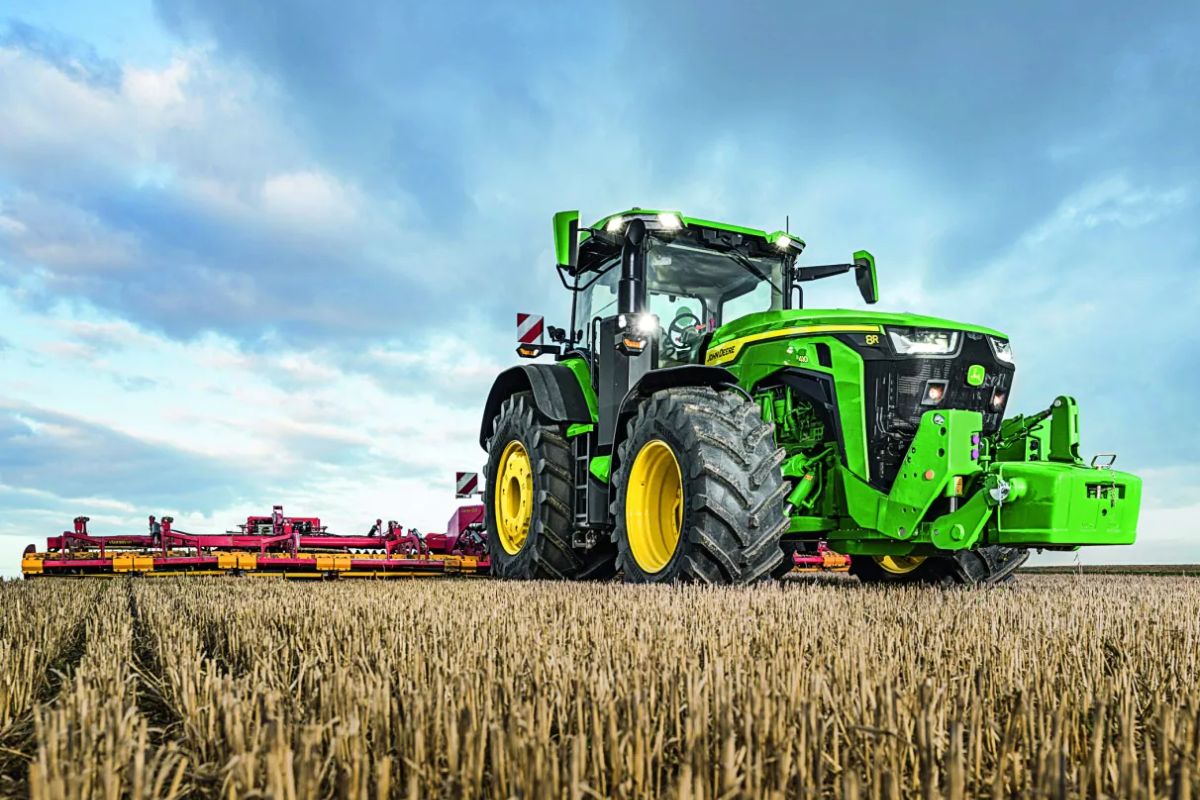
Agricultural Machines That Work Alone, Day and Night, Are Already a Developing Reality. Discover How Autonomous Tractors Are Changing the Field and What to Expect from the Future Autonomous Electric Tractor.
The global agribusiness is seeking solutions for challenges such as the growing demand for food and the lack of skilled labor. Autonomy in agricultural machines emerges as a crucial response, with equipment that operates continuously without direct human intervention. Although the most prominent current examples, such as those from John Deere and Case IH, are diesel-powered, they pave the way for the future autonomous electric tractor.
In this scenario, autonomy emerges as an essential tool, with tractors capable of operating 24 hours a day, 7 days a week, without an operator in the cabin, promising a revolution in agribusiness.
John Deere 8R Autonomous
The John Deere 8R Autonomous uses a sophisticated perception system with 16 stereo cameras for 360-degree vision and Artificial Intelligence (AI) to identify obstacles. Navigation is ensured by the StarFire 7500 receiver with SF-RTK correction, achieving accuracy of 2.5 cm.
-
They said no to 26 million dollars and would do it all over again: mother and daughter from Kentucky reject a million-dollar offer from a mysterious company that wants to build the largest data center in the state on more than 2,000 acres of rural land.

-
While corn requires rain and is expensive, sorghum produces almost the same volume per hectare at a cost up to 80% lower and uses less water, and it is revolutionizing dairy farming in the Triângulo Mineiro, where producers save hundreds of reais per hectare.

-
A rural producer from Urubici cries as he shows 50 tons of plums thrown on the ground because no one wanted to buy them, and in desperation, he records a video asking anyone to come to the property to pick the fruits before they rot.

-
Unable to pass through Hormuz, Brazil activated a plan B that uses Turkey as a gateway to the Middle East: the route through Gibraltar and the Mediterranean is longer and more expensive but ensures that chicken, beef, and corn continue to reach Arab markets.


Initially focused on autonomous soil preparation, the tractor can be controlled and monitored remotely via the Operations Center Mobile app. John Deere plans to expand autonomy to the entire production cycle and offers upgrade kits (“Autonomy Precision Upgrade”) for compatible recent models.
Case IH Trident 5550 with Raven Autonomy
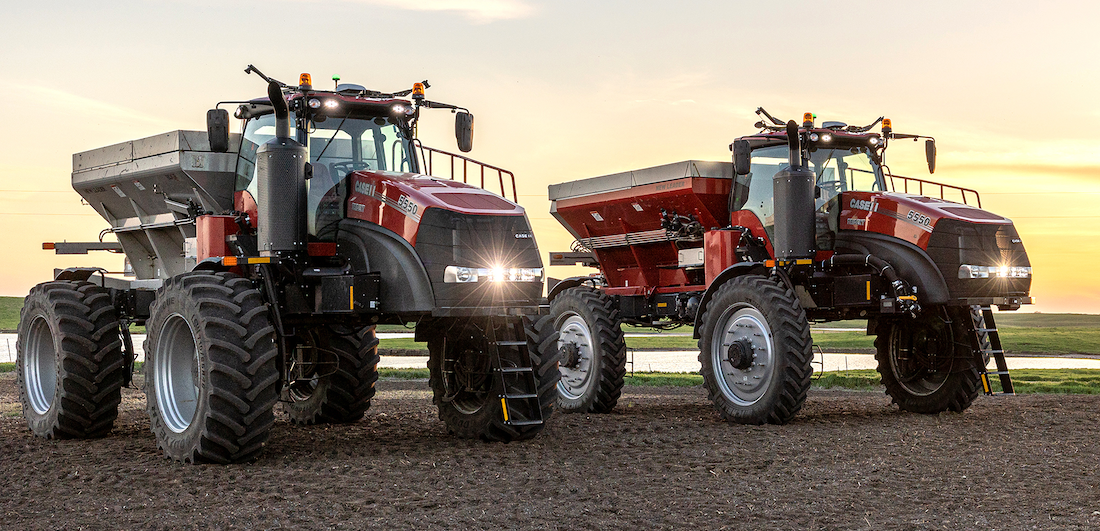
Resulting from the acquisition of Raven Industries by CNH Industrial, the Case IH Trident 5550 with Raven Autonomy is presented as the first autonomous distributor in the industry. It operates with Level 4 of supervised autonomy, using a perception system with cameras and radar.
Navigation is done via RTK GPS and Raven’s planning software. The initial focus is on broadcast distribution of dry products, such as fertilizers. The operator can plan and monitor operations remotely via a mobile device, and the machine retains a cabin for manual operation.
The Transformative Impact of Autonomy (Even in Diesel Models) on Modern Agribusiness
The introduction of autonomous tractors and applicators, even current diesel models, brings significant gains. The ability to operate continuously (24/7) optimizes the use of narrow weather windows, crucial for planting or harvesting, increasing productivity.
These machines also help to mitigate the shortage of skilled labor, allowing farmers to focus on higher value-added tasks. In precision agriculture, exact operation reduces overlaps and failures, optimizes input usage, and improves soil health, contributing to sustainability.
Challenges of Large-Scale Adoption and the Path to the Autonomous Electric Tractor in the Future
Despite the advantages, mass adoption faces challenges. The high initial investment cost is a significant barrier. The regulatory framework for autonomous vehicles is still developing. Reliable internet connectivity in remote rural areas is crucial, as are new technical skills for the workforce.
Looking to the future, the industry is moving toward the autonomous electric tractor. These future models promise the same autonomy benefits as current diesel tractors, with the added advantage of zero local emissions and even quieter operation, aligning even more with sustainability goals.
Potential and Initiatives for Autonomous Agriculture and the Future of the Autonomous Electric Tractor in Brazil
Brazil, with its large-scale agribusiness, is a promising market for autonomous technologies. Initiatives such as John Deere’s JDLink Boost, utilizing the Starlink network to provide satellite internet in remote areas of Brazil, aim to overcome the connectivity challenge.
John Deere’s partnership with the Brazilian startup FieldPRO to develop AI tailored to South American environmental data also demonstrates localization efforts. The adoption of the autonomous electric tractor in the country will depend on overcoming these challenges of cost, regulation, and infrastructure, but the potential to transform the national agribusiness is immense.










Seja o primeiro a reagir!