





 Portuguese
  English
  Spanish
  7 min of reading
  1 comment


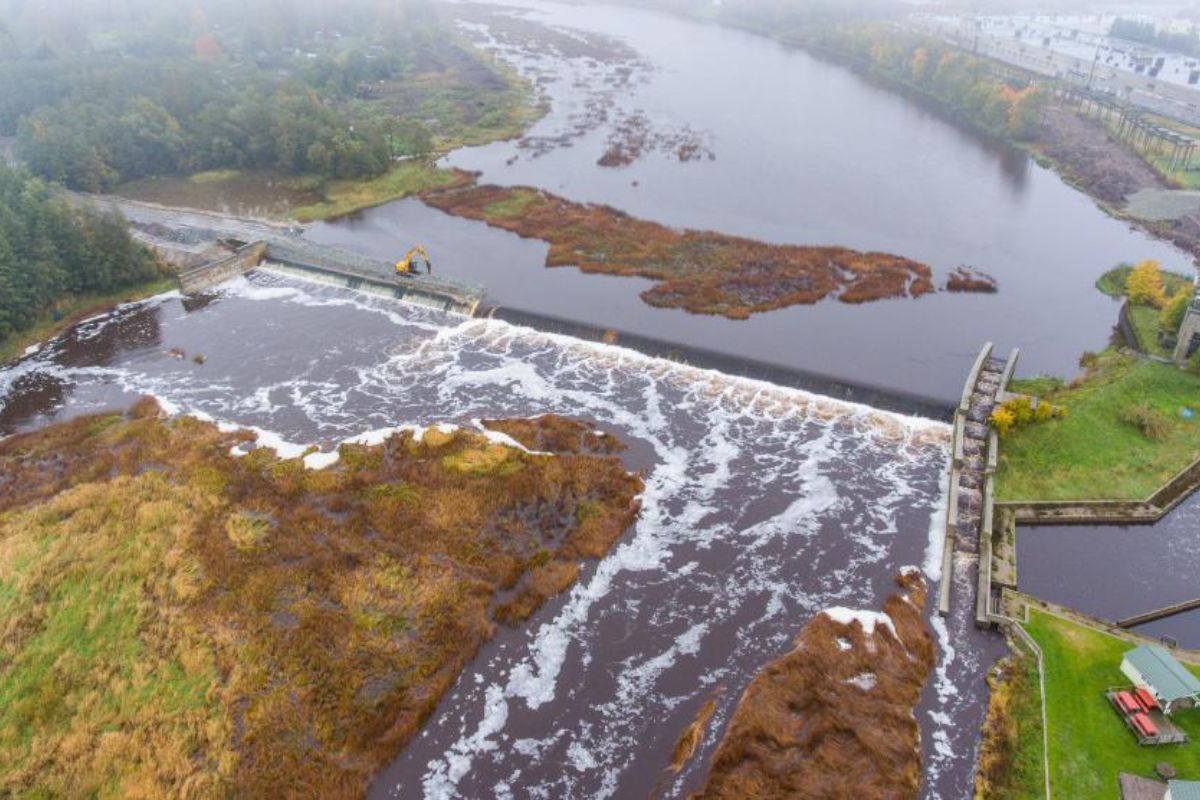


The Demolition of the Sindi Dam, Built in 1975 for a Now-Defunct Wool Industry, Paves the Way to Remove Another 10 Barriers Upstream, Free 100 Km of Migration, and Allow the Basin That Drains One-Fifth of the Country to Breathe Again With Flowing Water, Impacting Nature and Local Economies.
In Estonia, in 2019, the collapse of a dams became a turning point for rivers that had been dammed for half a century. On the Pärnu River, the removal of the dams at Sindi and other barriers throughout the basin promises to restore free flow to over 3,000 kilometers of waterways, reopening blocked paths for salmon and other species that depend on migration to survive.
The impact is especially significant because the Pärnu, with its 270 tributaries, has always been treated as an ecological hub of the country. By tearing down the dams that disrupted this system, Estonia bets that nature can react quickly when water starts flowing properly again, and that a living river can bring practical results for those living nearby.
The Dam That Was Born for Industry and Became a Permanent Obstacle

The dams at Sindi were not built to protect communities or supply cities.
-
A couple buys an old chalet, breaks the kitchen floor for renovation, and finds over a thousand coins of gold and silver hidden since the English Civil War over 4 centuries ago.

-
Rigid bags with their days numbered: new trend prioritizes comfort in 2026.

-
YouTuber creates an excavator equipped with a giant 4.5-meter sword to challenge his brother to a rematch, and the invention quickly goes viral on social media.
-
The U.S. Army surprises the world by presenting the UH-60MX Black Hawk helicopter capable of flying without pilots, controlled by a tablet, featuring the MATRIX system, smart sensors, and full autonomy in real combat and rescue missions.


They were created in 1975 to support a local wool industry that has since disappeared.
The concrete remained, the artificial lake persisted, but the economic function that justified the blockage was lost.
The dams, in practice, became an obsolete piece trapped in the center of a river that should be dynamic.
This obsolescence is the key point of the turnaround: when a dams stops fulfilling its original purpose and continues to impose environmental costs, it becomes a problem rather than an asset.
And in the case of the Pärnu, the size of the structure amplified everything: the dams was about 150 meters wide and 4.5 meters high, dimensions large enough to turn an entire river into a system fragmented for decades.
A Salmon River That Lost Its Way

The Pärnu was described as the largest salmon river in Estonia.
This reputation comes not only from the main channel but from the network formed by tributaries, bends, shallows, and rapids that create different environments within the same system.
When a dams enters this scenario, it doesn’t just interrupt fish passage: it alters routes, speeds, erosion patterns, sediment deposition, and the very distribution of habitats.
The most visible result of this interruption is broken migration.
Without a passage, salmon cannot complete the natural cycle of ascending the river to spawn and maintain stable populations.
And when salmon lose their way, other organisms feel it too, because rivers function like chains: changes in one link pull the rest.
What Changes When the Dam Falls: 3,000 Km Reconnected
The removal of the dams at Sindi was envisioned as a reconnection on a network scale, not as a one-off repair.
The plan includes removing the dams itself as well as a series of 10 smaller dams upstream, so that the benefit is not just symbolic but continuous throughout the basin.
With this cascading demolition, the project aims to free more than 3,000 kilometers of navigable waterways to flow freely again. This is not just “water moving.”
It’s the chance to reopen migratory routes and reactivate natural processes that are suspended when a river is cut off by concrete.
100 Km More of River Available for Fish, and a Basin That Drains One-Fifth of the Country
When a dams blocks an ecological corridor, the damage is not limited to the immediate surroundings of the wall.
In the Pärnu, the impact is amplified because the river’s watershed drains approximately one-fifth of Estonia. In other words: the health of this system carries national weight.
The expectation is that, with the dams removed, fish will be able to swim about 100 kilometers upstream, reaching areas that were previously inaccessible.
This means more areas with potential for spawning, greater diversity of microenvironments, and more chances for recovery of populations that depend on free circulation.
The Environmental Cost Attributed to the Dam and the Weight of the Decision
One of the most striking numbers associated with the project is the estimate that the annual “cost” of the dams, in terms of environmental impact, was around 4 million euros per year.
This figure encapsulates the idea that a dams does not just toll a fee in concrete maintenance: it exacts losses in life, impoverished rivers, less productive ecosystems, and sustainable economic opportunities that vanish when nature is blocked.
This view shifts the logic of public debate.
Instead of asking “how much does it cost to tear down,” the discussion begins to include “how much does it cost to keep the dams there, year after year, blocking an entire system.”
A Planned Demolition, With Local Consultation and Defined Schedule
The demolition of the dams did not start overnight.
The demolition began in October 2018, after a long period of consultations with local communities.
And this is essential in projects of this kind, as the removal of a dams almost always affects habits, landscapes, and collective memories.
Estonia even turned the process into a technical showcase.
The project was planned to be observed at an international seminar related to dam removal, scheduled for May 22 and 23, 2019, with a site visit on May 23.
The message is clear: it was not just a construction project, but a reference for what can be done when a country decides to reverse old fragmentations.
What Is Lost and What Is Gained: The Artificial Lake Goes Out, the River Comes Back
The removal of a dams always brings a sensitive point: the artificial lake that exists “behind” it.
In the case of Sindi, this body of water formed by the dams was lost.
The decision acknowledges this without embellishment but bets on the river’s return as the greater gain.
To compensate and reorganize local space usage, the plan includes practical measures: the river will be deepened in some stretches to allow swimming, trails will be created along the banks, a rapid will be maintained for kayaking, and recreational fishing will be legalized.
The idea is that the demolition of the dams is not just “take and leave,” but to reconfigure the river to be useful, alive, and accessible again.
An Expensive Project, but Proportional to the Extent of the Damage
The scale also appears in the budget: the removal of the dams at Sindi and the other smaller barriers was estimated at around 15 million euros.
The majority of the funding came from the European Union, supplemented by the Estonian government.
This amount alone shows that the choice was not cosmetic.
It is a heavy investment associated with an equally significant goal: to restore functionality to an entire river and the thousands of kilometers that were disrupted by barriers.
Why a Demolished Dam Can Help Local Economies
When water starts flowing again, the economic gains are not abstract.
The removal of the dams allows the return of migratory species and strengthens activities directly linked to the river, such as fishing and eco-tourism.
And this matters because the narrative around the dams often leans towards “development versus nature,” when, in many cases, healthy nature sustains long-term economies.
By reopening routes and revitalizing the basin, Estonia bets on a cycle where ecological recovery feeds local opportunities.
It’s not “nature for nature’s sake.” It’s nature as the basis for a more intelligent human use of the territory.
Europe Full of Small and Obsolete Dams, and Estonia as a Symbol
The case of Sindi gained prominence because it fits into a larger picture: European rivers are fragmented by hundreds of thousands of barriers, many small and many already obsolete.
For centuries, these structures served for irrigation, energy, and other functions.
The problem is that the ecological toll has accumulated to the point of turning the dams into one of the heaviest factors of river degradation.
In the last two decades, the removal of barriers has gained momentum, especially after the adoption of the European Union’s Water Framework Directive in 2000, which pressures for ecological improvement of rivers and lakes.
In this scenario, Estonia stands out as a showcase: a large dams, taken down in a planned manner, with a clear objective to reconnect an entire river network.
A Simple Message: Removing Concrete Can Be the Most Efficient Restoration
The fall of the dams at Sindi is used as an example of how the most efficient environmental and cost-effective measure can be, in fact, to remove the structure.
This is not an intuitive idea for those who grew up seeing dams as symbols of progress.
But, in already weakened rivers, removal may be the most direct gesture to restore processes that won’t return while the concrete remains.
And the symbolic dimension matters: when a country tears down a large dams and publicly acknowledges the gains, it changes the decision-making pattern for other regions.
The message is: if it’s obsolete, fragments the river, and if the environmental cost is high, the dams doesn’t have to be eternal.
If a single dams and a set of smaller barriers can reconnect over 3,000 kilometers of rivers and return the path to salmon, how many other obsolete dams are still blocking entire rivers out of sheer inertia?






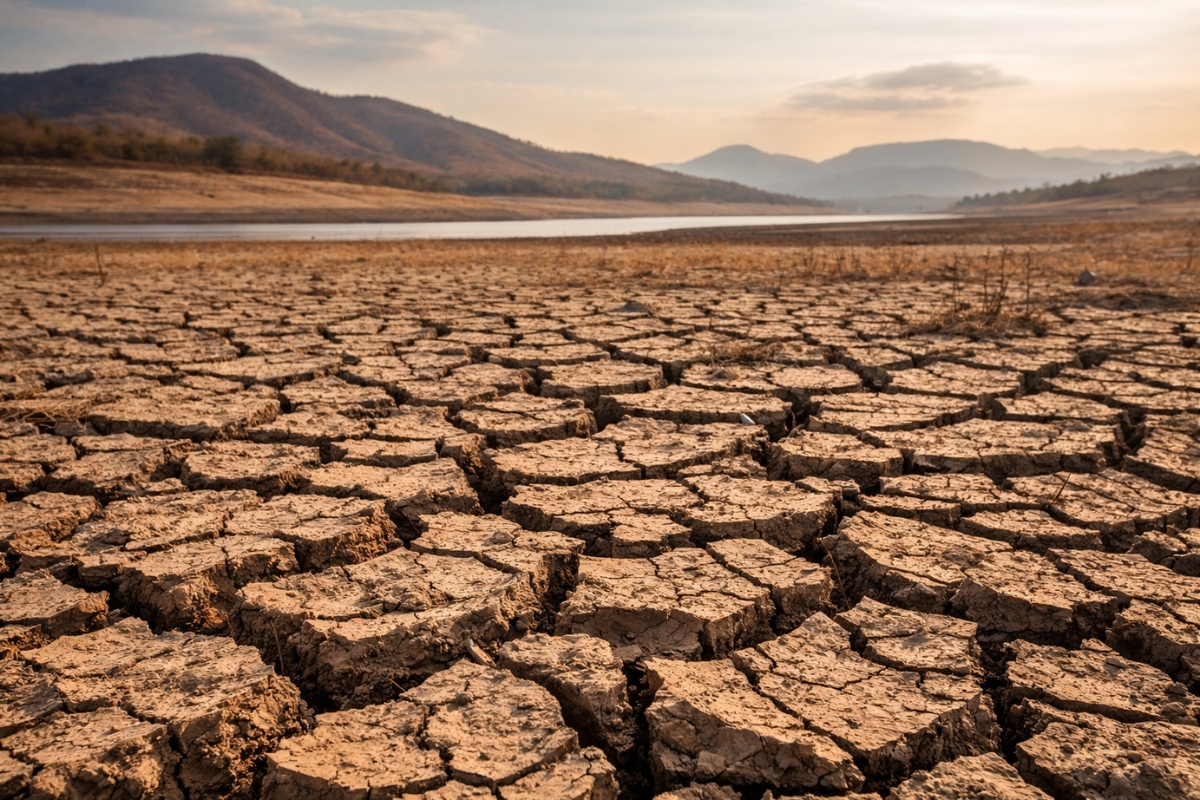



Exemplo de restituir o curso natural de rios.