





 English
  Francês
  Alemão
  Italiano
  Japonês
  Norueguês
  Portuguese
  Spanish
  4 min of reading


Modular Reactors From Russia May Be Very Useful In Brazil, But Only A Detailed Study Will Reveal Whether The Application Of Nuclear Energy In The Brazilian Energy Matrix Will Truly Have A Positive Impact
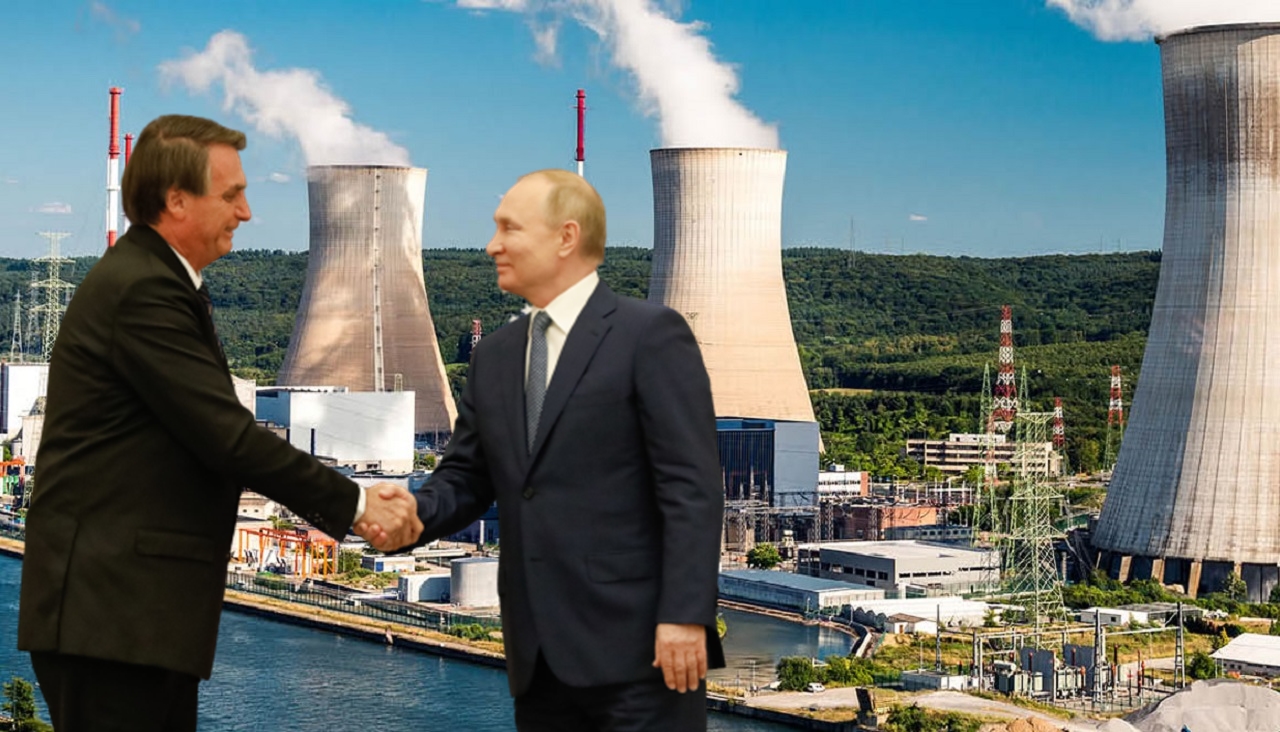
After the last trip of President Jair Bolsonaro to Russia, there was an important signal regarding the application of nuclear energy for the Brazilian market. In a meeting that lasted about 2 hours with President Vladimir Putin in Moscow, Bolsonaro emphasized the creation of closer ties with Russia in the nuclear energy segment, including mainly small modular reactors, also known as SMRs. After the meeting with Putin, the President of Brazil stated that there is a possibility for Russia and Brazil to expand business in the areas of oil and gas exploration, derivatives, and especially energy, but that they will further deepend the dialogue regarding this possibility. Bolsonaro further mentioned that the Brazilian government has a strong interest in small modular reactors.
Read Also
Global Trend Around Small Modular Reactors
According to Celso Cunha, president of the Brazilian Association for the Development of Nuclear Activities (ABDAN), the message from the President of Brazil indicates that the country is very attentive to the new global trend regarding small modular reactors.
Cunha reported that the world is all in search of this technology precisely because of the series of additional advantages it offers, unlike conventional large reactors. Russia is one of the main countries directly involved in the development of these small modular reactors through its state company, Rosatom.
-
Chinese giant worth nearly R$ 4 billion that manufactures cables for electric cars, solar energy, and robotics wants to open a factory in SC.
-
Many employers do not know, but the law guarantees domestic workers a 25% increase in salary during trips, 50% for overtime, 20% for night shifts, and 17 additional benefits that can lead to labor lawsuits if not paid.

-
Gasoline prices soar and the question arises: is ethanol more advantageous? The 70% rule reveals the limit with gasoline.

-
‘Interlocking brick’ made of earth arrives in the construction industry with cost reductions of up to 40% on the project.

Other Countries Are Also Ahead In The Development Of Small Modular Reactors
According to Cunha, China will build about 150 reactors in the next 15 years. France recently announced that it has begun the production of nuclear reactors. Other European countries are already considering including nuclear power within the range of financing considered “green.”
Regarding the United States, Cunha reported that the North American country is supporting the construction of small reactors, mainly for hydrogen production. The president of ABDAN also stated that if Brazil wants to meet the climate goals established by the last climate conference, COP-26, it cannot avoid new investments in nuclear energy.
However, Cunha recalled that the technology of small modular reactors is still very new, and various models are being developed in different countries. He also highlighted that the construction of modular reactors in the country is not possible yet, as Brazil still lacks a broad and necessary set of technical information and resources for that.
Study On Brazil’s Energy Matrix
Since January of this year, ABDAN, in partnership with the Electric Sector Study Group of the Federal University of Rio de Janeiro (GESEL/UFRJ), has been conducting a study to identify all the barriers that may impede the entry of small modular nuclear reactors into Brazil’s energy matrix.
According to the president of ABDAN, the expectation is that the study and field research will last at least four months, and the results will be announced between April and May of this year.
In 2021, ABDAN launched the Permanent Forum on Small Modular Reactors, whose panel is composed of representatives from EPE, the Ministry of Mines and Energy, the National Nuclear Safety Authority, the Directorate of Nuclear and Technological Development of the Navy, the Naval Agency for Nuclear Safety and Quality, Eletrobras Research Center – CEPEL, ABDAN, the International Atomic Energy Agency – IAEA, the Federal University of Rio de Janeiro, and other research institutes.








Seja o primeiro a reagir!