





 English
  Francês
  Alemão
  Italiano
  Japonês
  Norueguês
  Portuguese
  Spanish
  5 min of reading
  6 comments


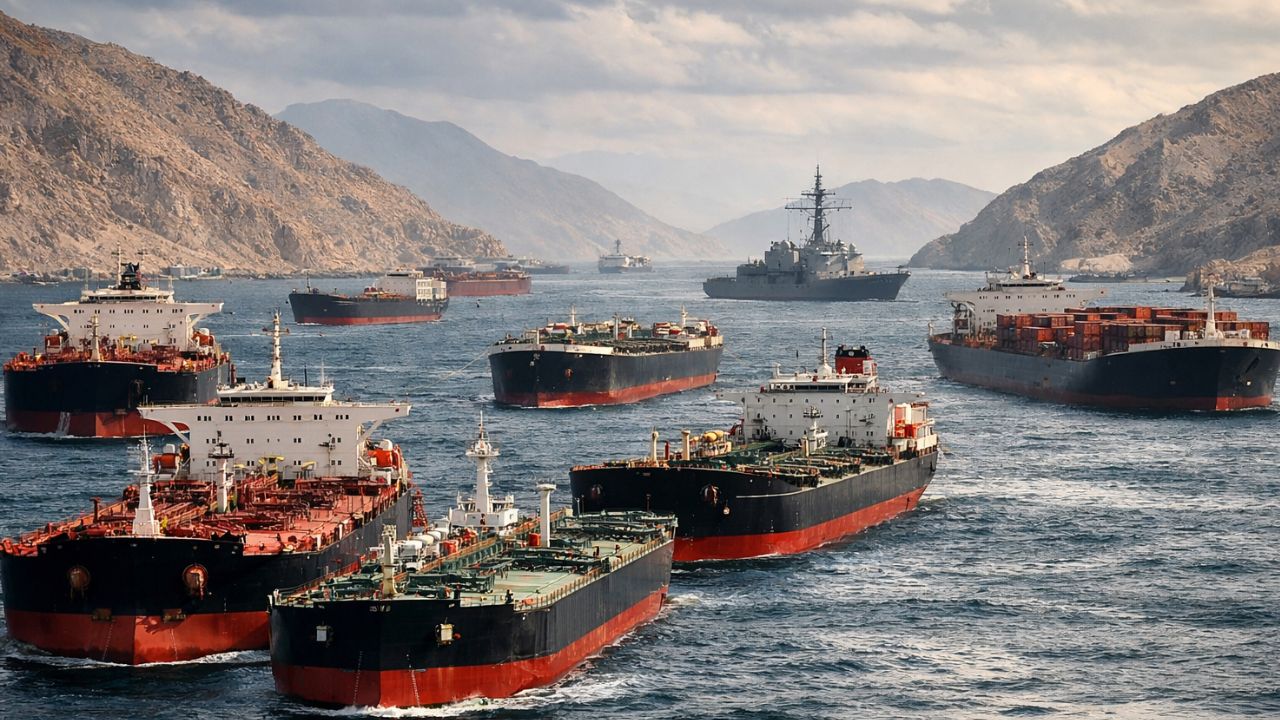


Crisis in the Strait of Hormuz Paralyzes Ships and Tankers After Military Escalation by the US in the Middle East and Threatens Global Oil Flow.
The crisis in the Strait of Hormuz intensified on Wednesday (recent conflict date), after an attack involving US forces hit an Iranian ship near Sri Lanka, worsening instability in the Middle East and amplifying the impacts on global maritime transport.
The episode occurs as hundreds of ships, including tankers, remain stopped or awaiting authorization to sail through the strategic route. The partial blockage of this waterway has lasted five days and disrupts the flow of oil and gas from the region, which is vital for global energy supplies.
The military incident occurs amid the escalation of the war involving United States, Israel, and Iran, which has raised the risk for commercial vessels.
-
Ocean Giant Could Change Everything: Nuclear Container Ship Project Promises to Transport 16,000 Containers Without Using Fossil Fuels
-
World’s Largest Electric Ship, China Zorrilla, Will Connect Argentina and Uruguay Across the Río de la Plata with a $200 Million Investment and Operations Planned for 2026
-
How A 20-Ton Anchor Holds 200,000-Ton Ships Even Under Extreme Winds And Why It Fails In The Deep Ocean
-
China Launches 10,000-Ton Electric Container Ship with 19,000 kWh in Interchangeable Batteries and Autonomous Navigation for Coastal Trade Routes
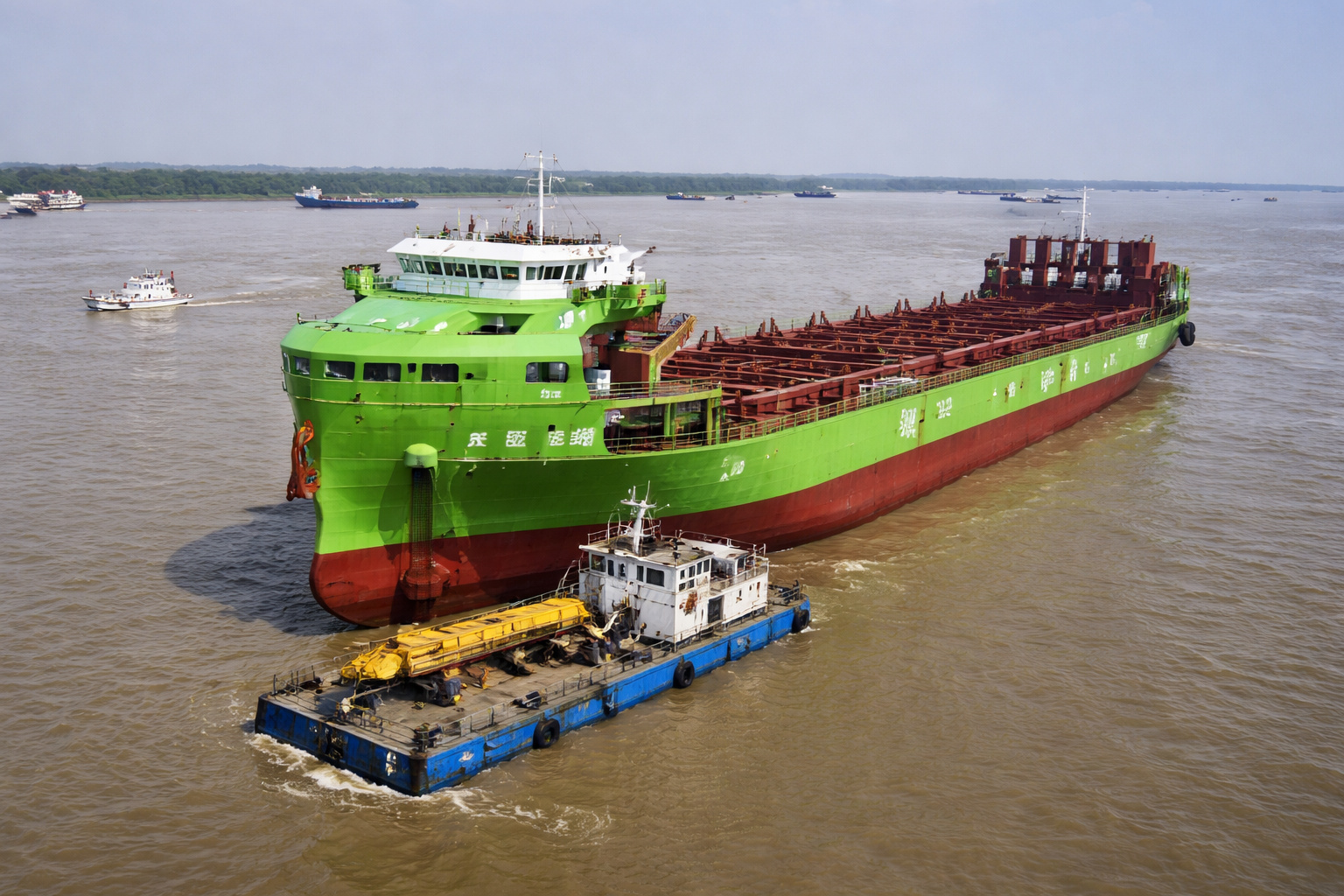

At the same time, US authorities have promised to enhance protection for tankers transporting energy through the Middle East, in an attempt to prevent an even greater crisis in the global market.
See more: Shell May Take Control of Raízen After Billion-Dollar Crisis and Deadlock with Cosan
See more: Russia Considers Suspending Gas to Europe After Energy Price Surge
Ships and Tankers Get Stuck in the Strait of Hormuz
The paralysis of maritime traffic in the Strait of Hormuz has caused an unprecedented congestion.
According to estimates based on tracking data from the MarineTraffic platform, at least 200 ships remain anchored in open waters near the major Gulf exporters.
Among them are tankers, liquefied natural gas (LNG) ships, and cargo vessels awaiting safe conditions to continue their voyages. Meanwhile, hundreds of other vessels remain outside the strait area unable to access the regional ports.
This waterway connects the Persian Gulf to open ocean and is considered one of the most important energy routes on the planet. Approximately 20% of the world’s oil passes through the Strait of Hormuz, which explains global concern over any prolonged interruption.
Attacks on Ships Increase Tension in the Middle East
In addition to the attack involving US forces, other maritime incidents have been reported since the onset of the conflict with Iran. At least eight vessels have been affected in the region.
Among the most recent cases is the container ship Safeen Prestige, which was hit by a projectile while sailing near the northern tip of the Strait of Hormuz. The crew had to abandon the vessel following the impact.
Two other ships also suffered minor damage near the port of Fujairah in the United Arab Emirates. The tanker Libra Trader registered a strong explosion caused by debris from a projectile, while the bulk carrier Gold Oak was hit directly.
Despite the scare, there were no injuries among the crews. Still, the attacks have increased fear among shipowners and shipping companies operating in the Middle East.
Energy Exports Are Affected by the Crisis
The crisis in the Strait of Hormuz is already beginning to cause direct impacts on energy production and exports in the region.
Qatar, one of the largest exporters of liquefied natural gas in the world, announced the total cessation of gas liquefaction following attacks on energy facilities. Industry sources state that normal production may take up to a month to resume.
Meanwhile, Iraq has reduced its oil production due to a lack of storage space, as many tankers are unable to load the product.
Other major Gulf producers, such as Saudi Arabia, the United Arab Emirates, and Kuwait, are also facing logistical difficulties in exporting oil.
US Promises to Protect Ships and Ensure Energy Flow
In light of the worsening crisis, the president of the US, Donald Trump, announced measures to ensure the safety of maritime transport in the region.
“No matter what happens, the United States will ensure the free flow of energy to the world,” Trump wrote on social media.
The US government intends to offer political risk insurance and financial support for companies that maintain operations in the Gulf. The proposal also includes naval escort for ships and tankers transporting oil and gas.
Even so, experts warn that protecting all vessels in the region may be unfeasible.
“Offering protection to all tankers operating in areas currently threatened by Iran is unrealistic, as it would require a very high number of warships and other military resources,” said Jakob Larsen, security director of the maritime association Bimco.
Strait of Hormuz Is One of the Most Important Energy Chokepoints in the World
Located between Oman and Iran, the Strait of Hormuz is considered a strategic point for global energy trade.
Data from the US Energy Information Administration shows that around 20.9 million barrels of oil per day passed through the route in 2023. This volume corresponds to approximately one-fifth of global liquid fuel consumption.
Additionally, the region hosts important logistical hubs, such as the ports of Jebel Ali and Khor Fakkan, which serve as redistribution centers for global container trade.
Shipping Companies Suspend Routes in the Middle East
Given the increasing insecurity in the Middle East, major shipping companies have begun suspending routes through the region.
The Danish Maersk announced it has temporarily halted all ship crossings in the Strait of Hormuz. The company warned that services calling at Gulf ports may experience significant delays.
Other shipping giants have also adopted similar measures. German Hapag-Lloyd suspended vessel passage through the strait, while French CMA CGM ordered ships to head to safe areas.
Meanwhile, MSC, the largest container shipping company in the world, has determined that all vessels operating in the Gulf remain in safe zones until the situation is reassessed.
Impacts on the Global Energy and Transport Market
Even with some drops, oil prices have accumulated an increase of about 12% since the beginning of the conflict, reflecting concern over possible prolonged interruptions in the supply from the Middle East.
Moreover, the cost of war risk insurance for ships has increased at least five times in recent days.
“Geopolitical risks have shown their uglier face more frequently and with greater severity in recent years,” stated Peter Sand, chief analyst at Xeneta.
According to experts, even a temporary blockage in the Strait of Hormuz is already sufficient to drive up energy prices, increase freight rates, and cause delays in international trade.









A culpa do bloqueio credita-se, não ao Irã, mas aos EUA e à Israel, que começaram a guerra por pura arrogância: “Nós temos armas nucleares. Você (Irã) não pode ter. Se insistir, nós vamos aí e te matamos!”
E ainda tem muitos que defendem esses ***, Trump e Netanyahu, que se sentem os donos do mundo!
A culpa do bloqueio credita-se, não ao Irã, mas aos EUA e à Israel, que começaram a guerra por pura arrogância: “Nós temos armas nucleares. Você (Irã) não pode ter. Se insistir, nós vamos aí e te matamos!”
E ainda tem muitos que defendem esses déspotas, Trump e Netanyahu, que se sentem os donos do mundo!
A culpa do bloqueio credita-se, não ao Irã, mas aos EUA e à Israel, que começaram a guerra por pura arrogância: “Nós temos armas nucleares. Você (Irã) não pode ter. Se insistir, nós vamos aí e te matamos!”
E ainda tem muitos que defendem esses d*esgr*açados, Trump e Netanyahu, que se sentem os donos do mundo!