





 Portuguese
  English
  Spanish
 4 min of reading
  0 comments


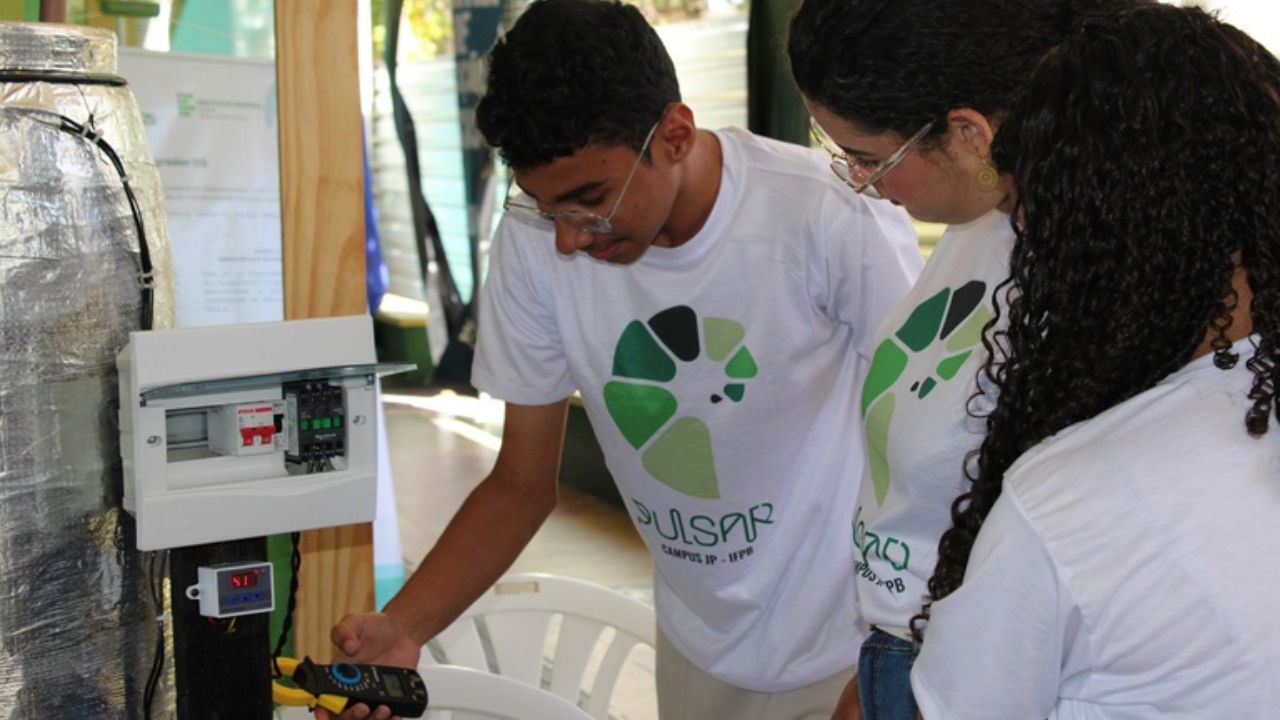
IFPB Students Present Innovative Renewable Energy Solution Focused on Social Inclusion. The New Sustainable Solar Heater Promises to Reduce Costs and Expand Access to Clean Technology in Brazil
A group of students from the Federal Institute of Paraíba (IFPB) developed an innovative project that combines sustainable technology, renewable energy, and social impact. According to a report released by IFPB itself this Thursday (16), the prototype solar heater created by the students aims to provide an economical and ecological alternative for heating water in low-income households.
How the Sustainable Technology Developed by IFPB Students Works
A practical, economical, and ecological solution. This was the proposal of students Kauã Valentim, Charles Andrade, Júlia Vitória, Gabriel Xavier, Fábio Emanuel, and Gabriel Victor, from the Integrated Technical Course in Electrotechnics at IFPB. Guided by Professor Manoel Alves, they developed a functional solar heater with low production costs and high social impact potential.
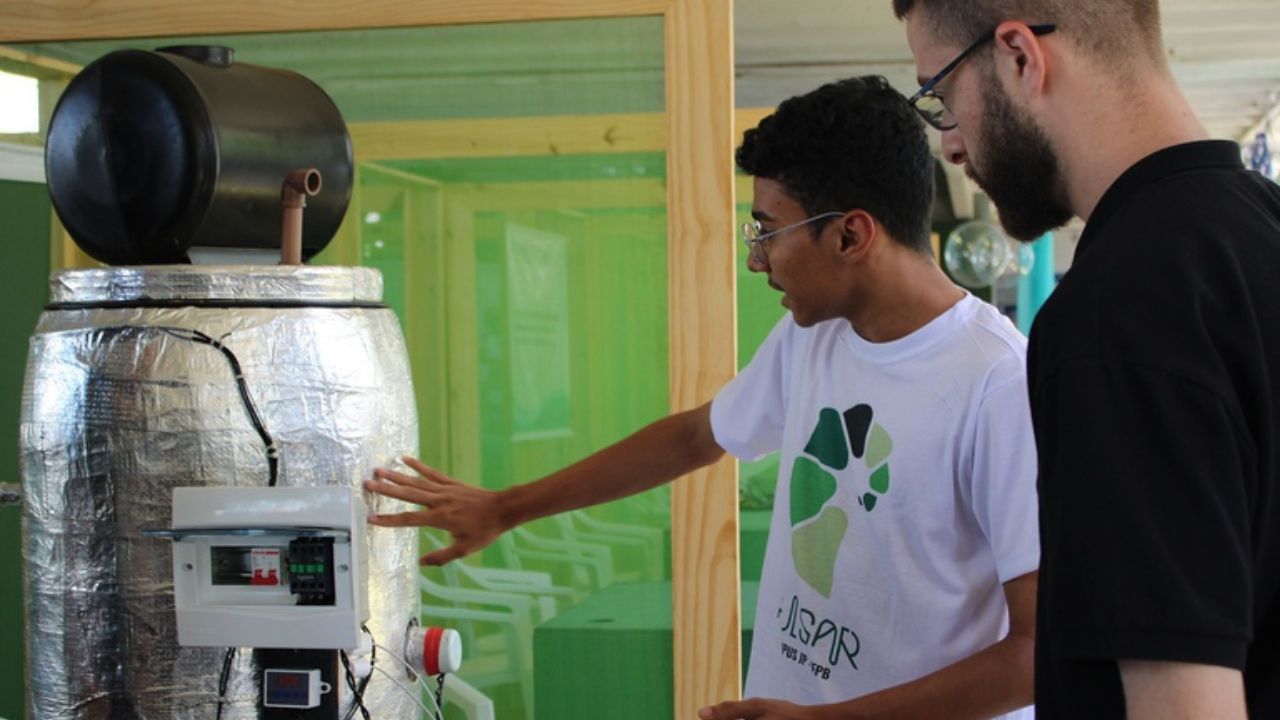
The operation of the solar heater is based on simple principles of thermal physics. The black-painted tubes absorb sunlight better, heating the water that circulates through hoses connected to the solar collector.
-
Renewable energy advances over protected areas in Brazil, and a survey by the Energy Transition Observatory reveals silent impacts that challenge environmental conservation and pressure sensitive traditional territories.

-
Rio Grande do Sul accelerates energy transition: State invests in renewable technologies and consolidates decarbonization strategies and pathways to attract billions in new industrial investments.

-
With 160,000 m² of collectors, an area larger than 20 football fields, Silkeborg, in Denmark, hosts a solar thermal plant that heats 19,500 homes and could become the largest solar heating plant in the world.

-
A study reveals the expansion of renewable energy procurement in Brazil and shows how companies are taking advantage of opportunities to reduce expenses, ensure energy efficiency, and strengthen strategic environmental commitments.


To ensure safety and efficiency, the students installed temperature sensors and circuit breakers that automatically turn off the system when the water reaches 45 °C, preventing overheating and damage to the equipment.
The system reached 46 °C during testing, demonstrating its effectiveness even with limited resources. Furthermore, the use of repurposed materials reinforces the commitment to sustainability and cost reduction. The thermal barrel covered with Styrofoam and the use of simple components make the project accessible and replicable.
Renewable Energy and Social Impact: Benefits for Low-Income Communities
More than just a technical solution, the project has a strong social bias. According to the students, the goal is to bring thermal comfort to families who do not have access to conventional heating systems. The total cost of the prototype was approximately R$ 1,000, making it viable for low-income communities.
Kauã Valentim, one of the team members, stated that they seek to show that it is possible to have comfort and savings using a renewable and accessible source. The proposal also contributes to reducing electricity consumption, especially in regions where the use of electric showers is common and represents a significant portion of the electric bill.
Additionally, the project promotes awareness about the use of renewable energy and encourages sustainable practices in the daily lives of families. The adoption of technologies like this can generate significant savings and reduce dependence on non-renewable sources.
IFPB and the Formation of Innovative Citizens in Sustainable Technology
The project was presented during the Education, Science, and Technology Show, part of the Pulsar 2025 program, which celebrates advancements in professional and technological education.
With the theme “Tides of Knowledge in Professional and Technological Education,” the event brought together initiatives that highlight the protagonism of students and the role of educational institutions in building solutions to real problems.
IFPB reaffirms its commitment to training conscious, creative professionals committed to social transformation. The students’ initiative is a clear example of how public education can create a positive impact on society.
The active participation of students in practical projects strengthens learning and encourages the development of technical and socio-environmental skills. Encouraging applied research and innovation is one of the institution’s pillars.
IFPB Students Plan Improvements to the Solar Heater
Despite the positive results, the students are already planning improvements to the system. Among the planned updates is the replacement of the tubes with copper models, which increase thermal efficiency, and the installation of glass covers to enhance solar absorption. The design will also be refined to facilitate installation and maintenance.
Another highlight is the use of a residual differential device, which protects against electric shocks and enhances the system’s safety. These improvements aim to make the solar heater even more efficient, safe, and adaptable to different social contexts.
The team also intends to develop installation manuals and train residents so they can assemble and maintain their own systems, promoting autonomy and local income generation.
Sustainable Technology as a Tool for Social Transformation
The project by IFPB students is more than just a technical solution — it is a proposal for social transformation. By developing an accessible and sustainable solar heater, they demonstrate that it is possible to unite knowledge, creativity, and responsibility to tackle real challenges.
The renewable energy is the path to a more just, clean, and efficient future. Initiatives like this, coming from young people committed to change, are proof that education is the foundation of innovation.
With low cost, high impact, and great replication potential, the project represents a significant advance in the search for sustainable solutions for vulnerable communities.
The initiative also reinforces the importance of public policies that encourage research and innovation in technical schools and universities. Institutional support is essential for ideas like this to become a reality and reach those who need it most.









-

Uma pessoa reagiu a isso.