





 Portuguese
  English
  Spanish
  5 min of reading
  0 comments


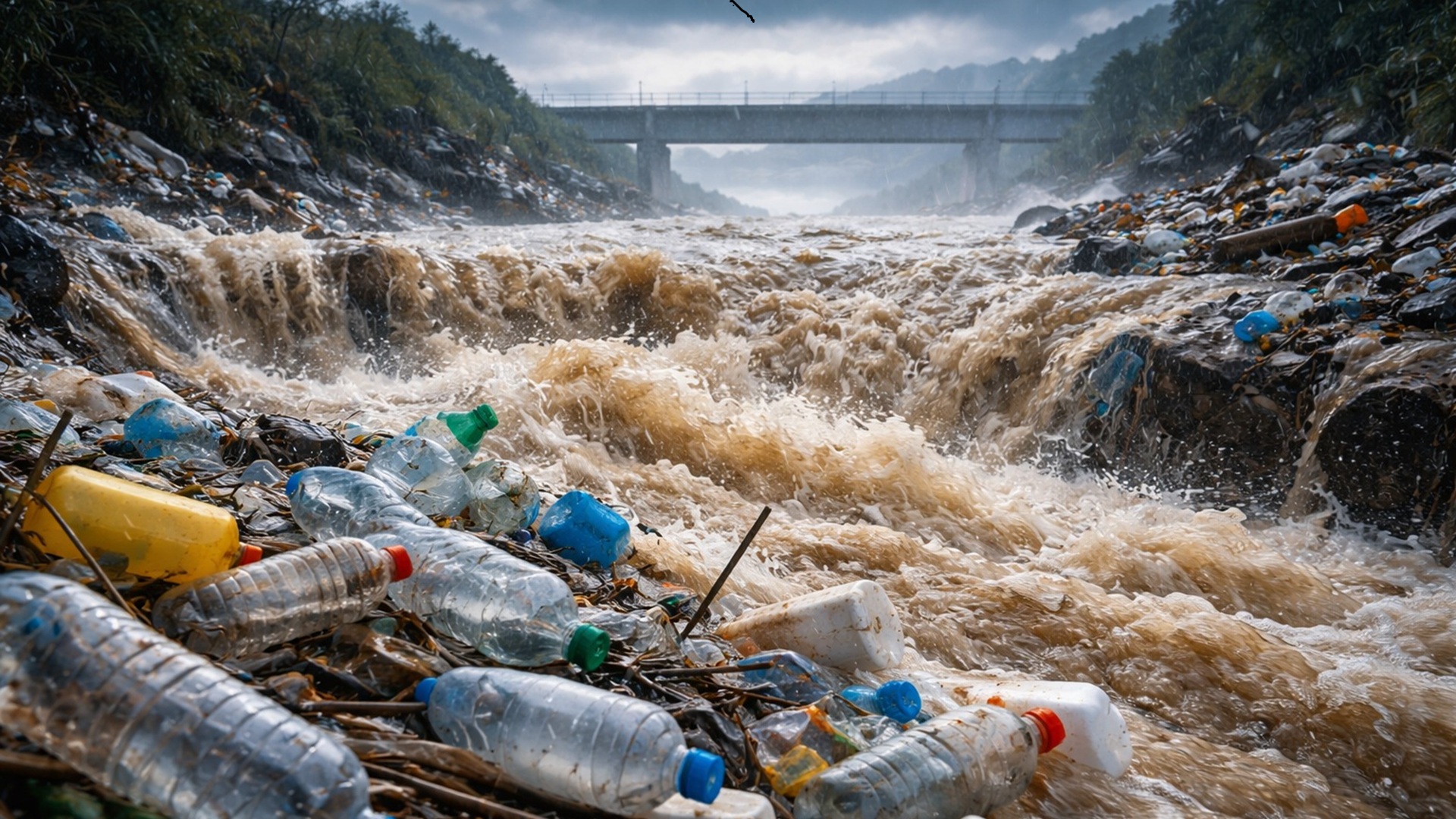
Research Conducted In Four Japanese Rivers, With Six Rain Events Between 8.8 And 117.9 Millimeters, Reveals That Floods Can Multiply Plastic Transport By Up To 10,000 Times And Concentrate 90% Of Annual Load In Just 43 Days Of Flooding.
Japanese researchers identified that floods can increase the volume of plastic transported by rivers to the ocean by up to 10,000 times, and that 90% of the annual load can be discharged in just 43 days of flooding, altering previous estimates.
For years, it was believed that rivers transported plastic to the sea in a nearly constant flow. Recent evidence, however, indicates that floods concentrate intense discharges in short periods, associated with heavy rains and flooding.
Floods are releasing much more plastic into the ocean than previously thought. When river flow increases drastically, the amount of microplastics and mesoplastics in the water also rises by orders of magnitude above normal.
-
Motorola launched the Signature with a gold seal from DxOMark, tying with the iPhone 17 Pro in camera performance, Snapdragon 8 Gen 5 that surpassed 3 million in benchmarks, and a zoom that impresses even at night.

-
Satellites reveal beneath the Sahara a giant river buried for thousands of kilometers: study shows that the largest hot desert on the planet was once traversed by a river system comparable to the largest on Earth.

-
Scientists have captured something never seen in space: newly born stars are creating gigantic rings of light a thousand times larger than the distance between the Earth and the Sun, and this changes everything we knew about stellar birth.

-
Geologists find traces of a continent that disappeared 155 million years ago after separating from Australia and reveal that it did not sink, but broke into fragments scattered across Southeast Asia.

This implies that measurements taken only on low-flow days may seriously underestimate the problem. Floods function as critical export episodes, completely altering the dynamics of plastic waste transport.
Floods And The Concentrated Transport Of Plastic
The study was conducted in four densely populated Japanese rivers, with mixed watersheds that include urban, agricultural, and forested areas. Six rain events were analyzed, with accumulated precipitation between 8.8 and 117.9 millimeters.
The methodological strategy differed from previous approaches. Instead of isolated collections, surface water samples were taken hourly for 12 to 15 hours per event, tracking the rising and falling phases of the flood.
Simultaneously, turbidity was recorded as an indicator of the amount of suspended material. This combination allowed for observing radical changes in plastic concentration as river levels varied.
The data showed that, especially during the rising phase of the flood, the water begins to carry significantly larger volumes of microplastics and mesoplastics, altering the previously considered normal pattern.
Plastic Spikes And Short Impact Windows
The measurements revealed that floods provoke plastic spikes, instead of a constant dripping. Transport occurs in short windows, with enormous impacts on the annual load discharged.
Under high-flow conditions, concentrations of micro and mesoplastics increased by one to four orders of magnitude compared to low-flow periods. This means ten, one hundred, or even one thousand times more plastic, depending on the river and the event.
Floods mobilize waste accumulated over weeks or months. Tire fragments, remnants of packaging, sun-degraded plastics, and urban litter are recruited by the force of the water.
Just as rain carries sediments, it also activates plastic fragments retained in urban soils, ditches, agricultural fields, and drainage systems. This process had rarely been directly observed in mixed watersheds.
90% Of The Annual Load In Just 43 Days
One of the most relevant findings was the temporal concentration of discharge. In one of the rivers analyzed, 90% of the annual mesoplastic load was transported in just 43 days of flooding.
The phenomenon does not distribute homogeneously throughout the year. It concentrates in specific periods associated with floods, which alters the way annual data series are interpreted.
Microplastics exhibited a similar pattern, albeit slightly less extreme. Ignoring these episodes means ignoring almost the entire transport phenomenon.
The river may seem clean most of the time, especially when observed under normal conditions. This perception can lead to incomplete estimates.
Relationship Between Flow, Load, And Monitoring
The study also examined the relationship between plastic load and river flow, a classic tool in hydrology applied to sediments and nutrients. The objective was to estimate annual discharges without the need for daily collections.
Understanding how load relates to flow allows for combining this relationship with historical flow records, producing more realistic estimates of annual plastic transport.
Each river showed its own pattern, without a direct and clear relationship to factors such as the percentage of urban area in the watershed. The dynamics proved to be more complex, influenced by local infrastructure and the interaction of storms with human activities.
The current measurements, predominantly based on calm flow periods, are considered incomplete in light of this evidence. Floods emerge as a central component in the waste transport equation.
Turbidity As An Indicator And Environmental Implications
The strong correlation between turbidity and plastic concentration opens up the possibility of expanding monitoring. Many rivers already regularly record sediments, which could be associated with plastic transport.
If this linkage is reliable, it will be possible to expand monitoring without significantly increasing operational costs. This provides a basis for more realistic and consistent data.
The plastic that floats in the ocean rarely originates there. It begins as large debris on land, fragments over time, and transforms into smaller particles that traverse ecosystems and food chains.
Floods act as amplifiers, quickly transferring large amounts of plastic from land to rivers, estuaries, and seas. This process affects sensitive habitats and increases the exposure of organisms to particles.
Assuming that pollution peaks occur during extreme events, the understanding of human pressure on aquatic ecosystems changes. The connection between terrestrial waste management and marine health becomes more evident.
The central message is that floods are not a secondary detail. They constitute one of the main mechanisms for transporting plastic to the ocean.
Any control or modeling strategy that disregards flood episodes risks producing underestimated estimates. It is not enough to measure when the river is calm.
It is necessary to observe behavior during overflows, when water drags debris and concentrates high loads in short intervals. This approach contributes to realistic data and the formulation of effective measures.
The evidence indicates that the phenomenon is more intermittent and intense than previously assumed. Floods, therefore, redefine how riverine plastic transport should be monitored and understood.
By revealing concentrated spikes and critical export windows, the study demonstrates that the dynamics of plastic in rivers strongly depend on extreme hydrological events. Ignoring them results in partial estimates and policies based on incomplete premises.








-

Uma pessoa reagiu a isso.